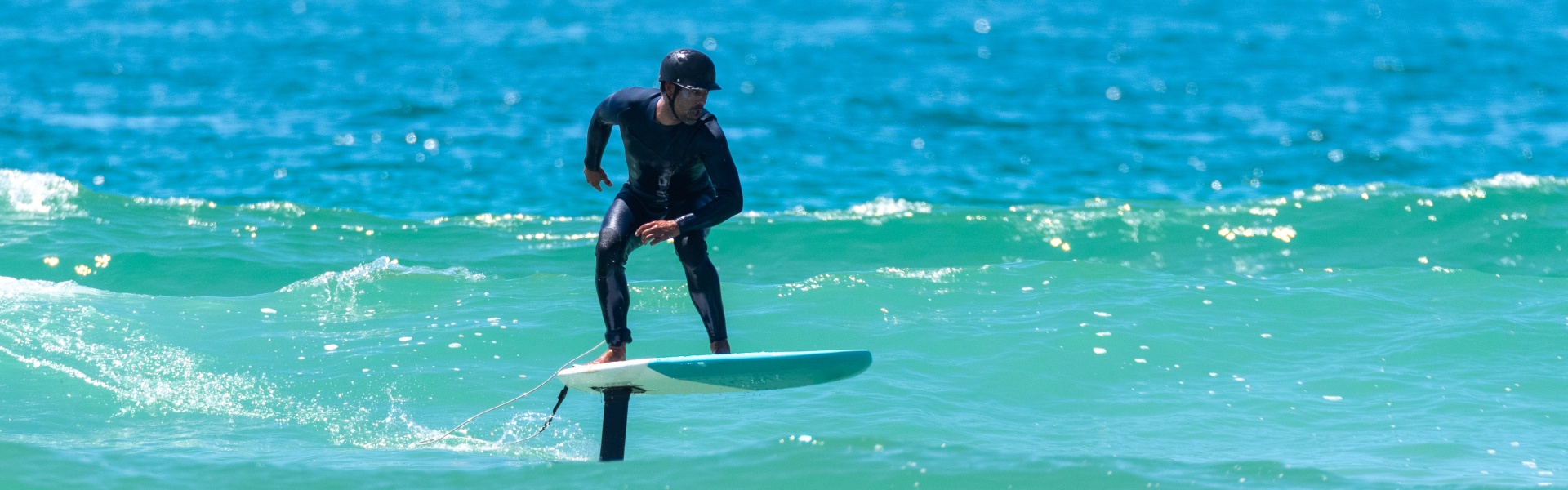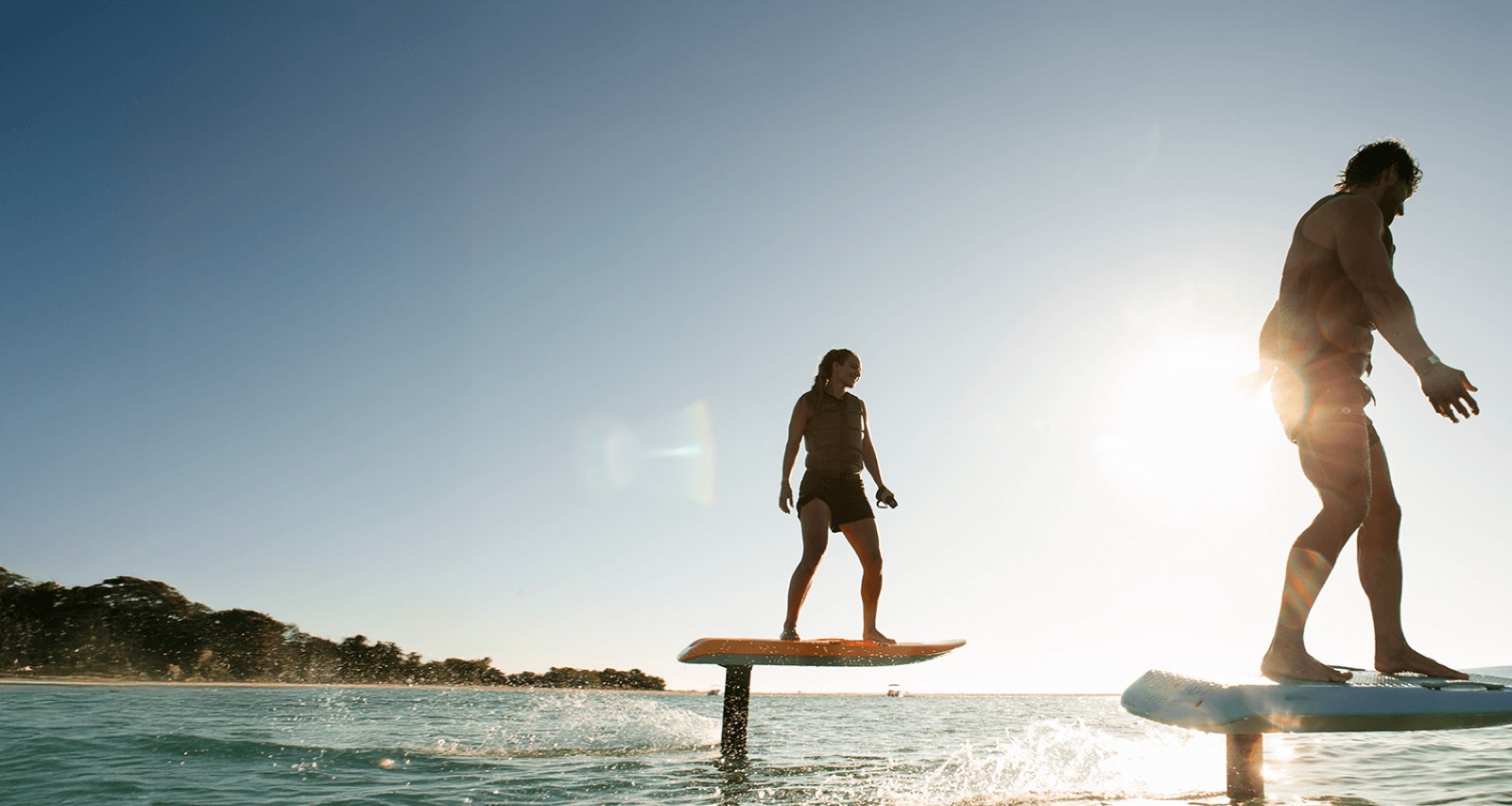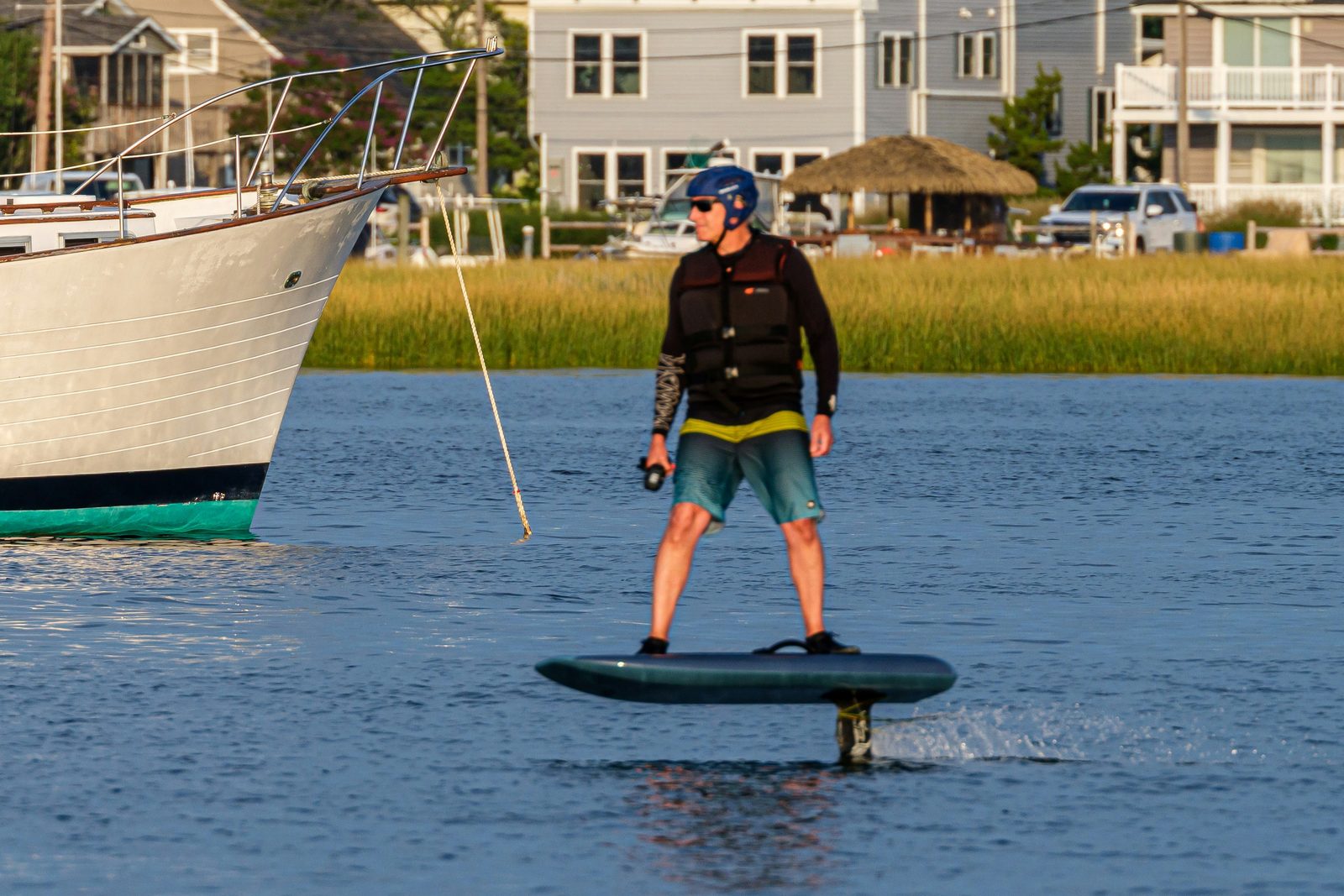
Start with the tide table
Kiters and wing riders on this coast plan the day around the wind forecast. An eFoil rider looks at the tide table first. The motor does the pulling, so a flat calm makes a good morning, and the Breton foil schools pitch the electric board, if their sites are anything to go by, as the thing to do on a day without wind.
How much it matters depends on which coast you are on. Along the south coast the range stays under 4 m. In the mer d'Iroise it is about 7 m, and in the bay of Mont-Saint-Michel it reaches 14 m at a coefficient of 120, according to the Observatoire de l'environnement en Bretagne. Mean streams mostly stay below 40 cm/s in the south and reach 80 cm/s to 1.30 m/s (about 2.5 knots) in the north.
French tables print a coefficient from 20 to 120, set for Brest by the SHOM. Above 70 is vive-eau, the springs. Below 70 is morte-eau, the neaps, and for a first session on the north coast we would book one of those weeks.
The tide moves the law with it. The Atlantic arrêté counts the 300 m band from the water line “à l'instant considéré”, so on a beach with a big range the band moves with the tide and sits much further out at low water than at high.
No Breton school prints a fixed tide window. Wing Latitude rides “au rythme du vent et des marées”, Foil Fun Ocean Drone in Brest “au rythme des marées”. Happy Kite confirms each booking by text the day before, going by the forecast. Ask the school which window it works to when you book, and fit the drive and the ferry around the answer.
eFoil Quiberon rides the bay, away from the Côte Sauvage
Quiberon's west shore, the Côte Sauvage, is eight kilometers of open Atlantic where swimming is “strictement interdite”, and the town reminds visitors that “la Côte Sauvage n'est pas un lac” (it is not a lake). No eFoil operator rides there.
The east side opens onto the baie de Quiberon, whose curved shores the Routard guide calls relatively sheltered from the wind and the ocean swell. The prevailing wind blows from the west south west, and the bay, by the lie of the map, faces away from it.
Happy Kite School, 7 Rue D'Olibarte, runs the Quiberon sessions we found. A semi-rigid boat takes you from Port-Haliguen into the bay and back, about 15 minutes of the booking, which leaves around 45 minutes on the water out of the hour and a quarter. Wetsuit, booties, buoyancy vest and a Bluetooth helmet that carries the coach's voice are included. The school also holds a damage excess on your card, and its price covers civil liability and individual accident insurance.
No car? In summer the Tire-Bouchon train runs from Auray to Quiberon, and the school is about 1.5 km from the station.
Beyond the port limits each beach has its own plan. Quiberon's, N° 2012/081 du 5 juillet 2012, closes the bathing zones to registered craft and opens channels out to open water. Saint-Pierre-Quiberon's N° 2025/109 du 30 juin 2025 closes the Penthièvre, Keraude and Kermahé bathing zones to them (art. 1er) and sets channels at Pouladen, Penthièvre and Kermahé.
Next door, the golfe du Morbihan empties through the 900 m goulet de Port-Navalo with streams near 9 knots, and 9.1 at the courant de la Jument. We would not call that beginner water. The upstream river waters are closed to all craft all year (N° 2017/023 du 10 avril 2017, modified 2021).
Brest, a roadstead with one narrow door
About 180 km² of water, open to the Atlantic only through the Goulet, a strait roughly 1.8 km wide. A door that narrow, we would expect, keeps the swell outside.
Foil Fun Ocean Drone runs eFoil lessons on the roadstead, plus guided rides of one to two hours. Despite the name, it is a separate business with no connection to this site. Its single lesson is the lowest price we read in the region, although the school does not say how long a lesson lasts.
Brest is a naval port, and the préfet's rules show it. Arrêté N° 2022/110 du 13 juin 2022, last modified by n° 2026-001 du 6 janvier 2026, applies the narrow channel rule in the goulet (art. 7) and marks out sectors around the military port and the Île Longue. We would keep an eFoil out of all of them. Off Moulin Blanc beach, arrêté N° 2018/082 du 3 juillet 2018 forbids navigating in the buoyed zone (art. 2).
Wind is the other difference. Météo-France's 1991 to 2020 normals for Brest-Guipavas count 11.5 days with gusts of at least 58 km/h in January and 2.4 in July. The sea here runs a little cooler than at Quiberon.
Down to the Loire: Pénestin, La Baule, Saint-Brevin and Noirmoutier
Three of the five schools on this page sit between the Vilaine and the island of Noirmoutier. Pénestin comes first, about 30 minutes from La Baule, Guérande and Vannes by Wing Latitude's own reckoning. The school teaches wind sports as well, and it puts riders on the eFoil, a Duotone mast motor, only on days with light wind and calm water.
Glisse Academy is based at Saint-Brevin-les-Pins, across the Loire from Saint-Nazaire, and rides Lift boards. It works four spots (Saint-Brevin pont, Saint-Brevin le Pointeau, Le Gulf Stream at La Baule and Les Évens) and picks one for the rider and the weather. A safety boat comes along. Equipment is supplied, but the school does not list what that covers, so ask about the wetsuit when you book.
La Baule's plan goes into more detail than most. Under N° 2023/121 du 26 juin 2023, registered craft are banned from the bathing zones (art. 1er), channels V01 to V12 are closed to motorized craft (art. 2), and channel M08 is their route between the shore and open water. Across the estuary, Saint-Brevin's plan, N° 2010/77 du 6 juillet 2010, leaves registered craft a single 30 m channel, M1, at the sailing base.
Noirmoutier is the end of the line. Le Bureau du Vent sits at Port de Morin in L'Épine and lists prices for every month. It supplies a 5/4 mm wetsuit and counts one to two sessions “pour les bases”, the basics. You can cross the bridge from Fromentine at any time, while the passage du Gois, the causeway, opens only around low water. L'Épine's plan, N° 2012/059 du 12 juin 2012, closes six bathing zones to registered craft, among them 540 m at the plage du Morin, and opens channels A, B and C by the port.
Choosing a school by level and tide window
What follows is our own sorting. A first-timer gains most from the boat at Quiberon, with no beach launch, calm water in a sheltered bay and a coach who follows you. Brest has the lowest listed lesson price, and its guided rides cover a roadstead big enough to feel like a trip. If you want to stack sessions or ride as a pair, the packs and duos around Saint-Brevin, La Baule and Noirmoutier fit best. Wing and kite riders stuck with a flat calm can book the eFoil at Happy Kite, Wing Latitude or Le Bureau du Vent (for the wind side, see our wingfoil guide).
Then fit the tide around your level. In our view a beginner should ask for a neap week and the school's calm window. On the south coast the tide shifts the launch point more than the water you ride on.
Happy Kite and Glisse Academy take you out by boat and follow you. Four of the five schools talk you through it by radio or a Bluetooth helmet. How fast you learn is each school's own claim, about three sessions to stand at Happy Kite and one or two for the basics at Le Bureau du Vent, so treat both as ranges. Battery time varies as well. Le Bureau du Vent gives about two hours, Wing Latitude 30 to 50 minutes, and our eFoil battery guide explains what moves those figures.
Pack swimwear, sun cream, water and a card for the excess. Le Bureau du Vent asks minors for parental consent and expects every rider to be able to swim, with AFKite insurance and civil liability cover. No national minimum age exists for a motor board at or below 4.5 kW, so the operator sets it.
Swipe sideways to see all columns
| Operator | Where | Session | Price |
|---|---|---|---|
| Happy Kite School | Quiberon, from Port-Haliguen | Supervised session, 1 h 15 incl. boat ride, about 45 min on the water | €150 |
| Happy Kite School | Quiberon, from Port-Haliguen | Duo, one board each, 1 h 15 / group of 4, 1 h 15 | €270 / €500 |
| Foil Fun Ocean Drone | Rade de Brest | Lessons: 1 / 2 / 3 / 5 (length not stated) | €90 / €175 / €260 / €420 |
| Foil Fun Ocean Drone | Rade de Brest | Guided ride: 1 h / 1 h 30 / 2 h | €90 / €135 / €175 |
| Glisse Academy | Saint-Brevin and La Baule | Initiation 1 h / 5 sessions / 10 sessions | from €120 / €500 / €900 |
| Glisse Academy | Saint-Brevin and La Baule | Two people on one board / excursion | from €160 / €220 |
| Le Bureau du Vent | L'Épine, Noirmoutier | 1 h / 3 sessions / 5 sessions / duo | €120 / €330 / €500 / €160 |
| Wing Latitude | Pénestin | Solo 1 h / duo / duo with two boards | €149 / €240 / €279 |
| Wing Latitude | Pénestin | Rental, 45 min | €100 |
Le Bureau du Vent and Glisse Academy price every month of the year, while Wing Latitude runs from early spring to late autumn, so ask before you plan a winter trip. Our guide to eFoil prices sets these figures against the wider market.
Division 240, the préfet maritime and the beach plans
The board has its own legal name. Article 240-1.02 III 4 of Division 240, in force since 7 June 2026, defines the “planche nautique à moteur” as a board under 2.5 m with a thermal or electric motor, “avec ou sans foil”. At sea an eFoil belongs to that class and is not a beach craft, the definition being that precise; the rules section of our France guide sets it out in full. Article 240-2.11 lets motor boards ride by day only and no more than 2 nautical miles from a shelter. From 300 m out you need a 50 N buoyancy aid or a buoyant neoprene or dry suit, and a waterproof light.
Along the coast, the préfet maritime's arrêté 2018/090 du 28 juin 2018 (consolidated 5 février 2019) covers everything from Ille-et-Vilaine to the Spanish border. Article 2 sets 5 knots inside the 300 m band. An eFoil cannot fly that slowly, so in practice you cross the band off the foil, board in the water. Article 3.1 bans motor boards from buoyed bathing and beach craft zones. Where a plan reserves channels for them, they ride only inside those, at 5 knots; elsewhere they may only cross between the shore and open water, at 5 knots and as perpendicular to the beach as possible. Keep 100 m from a divers' signal (art. 3-4). Inside port limits the arrêté does not apply (art. 5).
No local text quoted here names the eFoil. They sort craft as motorized or not, registered or not, and each beach plan below is taken by those words alone. Out to 300 m from the water line, the mayor answers for bathing and for beach and unregistered craft under article L2213-23 of the Code général des collectivités territoriales.
Article 9 of the arrêté sets the penalties. Breaking it is at least a 2nd class contravention, a fine of up to 150 euros, and riding in a banned zone or period can reach the délit of L5242-2 of the code des transports.
On the north coast, where the Portsmouth ferry lands, there are beach plans but nobody teaching. Saint-Malo's plan, N° 2004/54 du 6 juillet 2004, measures its beach channels 600 m from the high water mark. The zones around the Rance barrage are closed (N° 2016/030 du 30 mars 2016, modified 2025/104), and a 50 m buffer surrounds the îlet at La Richardais all year (N° 2024/028 du 21 mars 2024).
Some water is best left alone altogether. The list is a personal one, drawn from the texts above:
- buoyed bathing zones, and channels reserved for other craft
- the zones around the Rance barrage and the buffer at La Richardais
- the goulet de Brest, the military sectors and the Moulin Blanc zone
- the upper golfe du Morbihan, plus the golfe passes and the Côte Sauvage out of prudence
The paragraphs above follow the official texts as they stood in October 2026 and are no substitute for legal advice. Before you ride your own board, check the beach plan in force with the town hall or the préfecture maritime.
A sea of 10 to 18 °C, and the suit to go with it
Ten degrees in winter and 16 to 18 in high summer is the Breton sea in round numbers, with Brest a little cooler. At Quiberon the typical monthly averages hold at 10 °C from January to March, climb through 14 in May and 17 in June, and peak at 18 from July to September. October still averages 16.
Rip Curl's thickness guide puts a 2 mm suit at 18 to 24 °C, a 3/2 at 16 to 18, a 4/3 with booties at 13 to 16, and a 4/3 or 5/4 with booties and gloves at 9 to 13. Laid over the Quiberon averages, that comes out, by our reckoning, at roughly a 4/3 from late spring to autumn and a 5/4 with booties in winter. A beginner spends a lot of time in the water, so err warm.
Swipe sideways to see all columns
| Month | Water, °C | Suit (our reading) |
|---|---|---|
| January to March | 10 | 4/3 or 5/4, booties and gloves |
| April | 12 | 4/3 or 5/4, booties and gloves |
| May | 14 | 4/3 with booties |
| June | 17 | 3/2 |
| July to September | 18 | 3/2 |
| October | 16 | 3/2 or 4/3 |
| November | 15 | 4/3 with booties |
| December | 12 | 4/3 or 5/4, booties and gloves |
On a lesson the school handles most of this. Happy Kite lends a wetsuit with booties, Le Bureau du Vent a 5/4 mm suit, and Wing Latitude includes one in the price. Glisse Academy says only that equipment is supplied.
Off the ferry from Plymouth, Cork or Portsmouth
Brittany Ferries sails from Plymouth to Roscoff, from Cork to Roscoff and from Portsmouth to Saint-Malo. Off the Roscoff boat, Brest is the nearest school on this page. From Saint-Malo you drive south for Quiberon, Pénestin and the Loire coast.
Anyone who learned in Cornwall is used to a printed tide window. The Fal River guide gives Loe Beach's best tide as three hours either side of low water. In Brittany the school sets the window on the day.
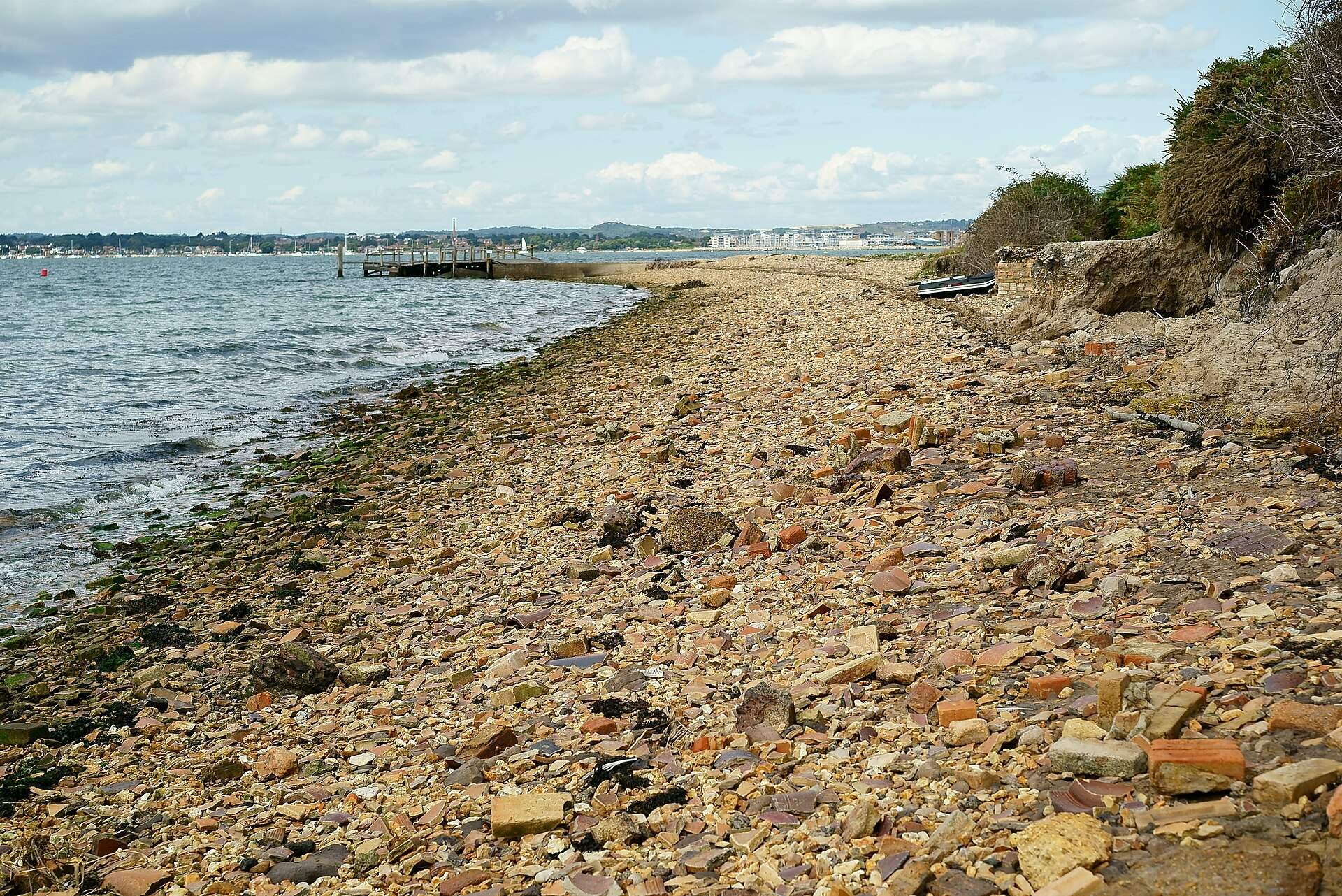
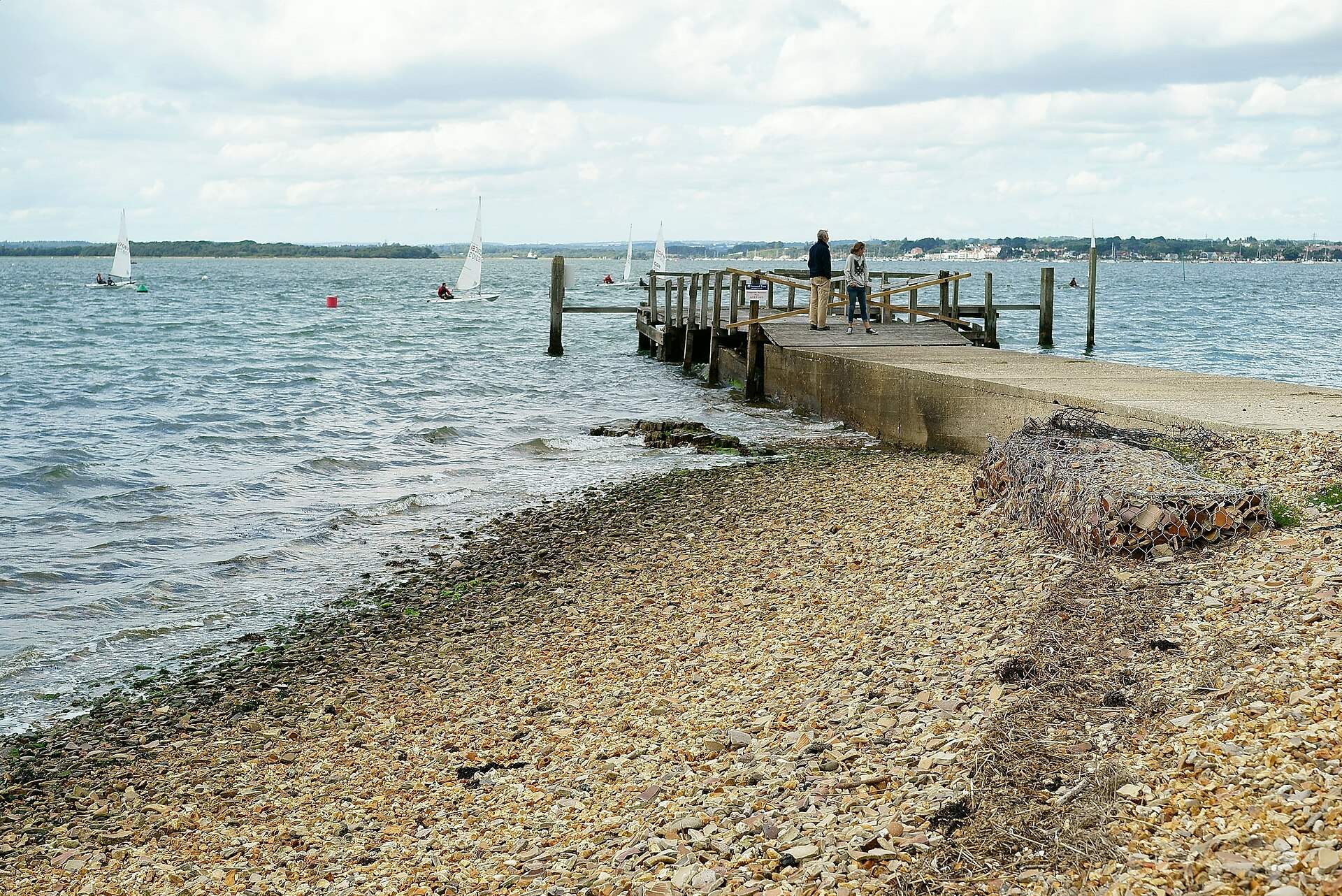
Riders from Dorset will find the south Breton tide familiar. Poole Harbour has a mean range of 1.8 m at springs and 0.6 m at neaps, which we would place nearer Quiberon than the big ranges of the Breton north coast.
The water is a touch kinder. Cefas means give Newlyn 8.1 °C in February and 14.5 °C in August, and Plymouth 16.0 °C in August. Set against those, south Brittany's winter sea runs a degree or two warmer than the English side of the Channel on our comparison, and summer comes out close. For prices on the English side, see the Cornwall price list and the Dorset price section; the wider picture is in eFoil UK and, for the rest of France, in eFoil France.