The Rand Boats story
Rand Boats is a Danish boat brand that takes the Scandinavian design tradition out onto the water. The range consists of clean-lined leisure boats and dayboats, laid out for slow hours in good company. Think of a lap into the sunset, a swim stop off a quiet shore, or an afternoon at anchor with friends.
The interesting part is the motor. Electric drivetrain options hold a permanent place in the lineup, and they were not bolted on late to catch a trend. Going electric is one of the standard ways a Rand is built. That places the brand firmly in the modern, quiet, emission-free style of boating described in our electric boat guide.
Those restrained shapes have a job to do. Clear lines and carefully worked surfaces make it easier to switch off once you are aboard. A Rand skips the showy trim and the fussy detailing. What you get in their place is generous seating, controls that need no explanation, and a layout that works for swimming, sunbathing and a group of people who came to talk to each other. The same restraint keeps the boats from looking dated, because they are drawn for a calm, comfortable way of using the water and not for the taste of a single season.
In Scandinavian design, function traditionally decides the shape and the material provides the look. Translated to a boat, that shows up in small, unglamorous ways: seating you can sit on for four hours without shifting, surfaces you can rinse the sand off, and a cockpit that does not make you climb over three people to reach the swim platform. A wall of chrome looks more striking in a photo, but on a Saturday afternoon these quiet details are what you actually notice.
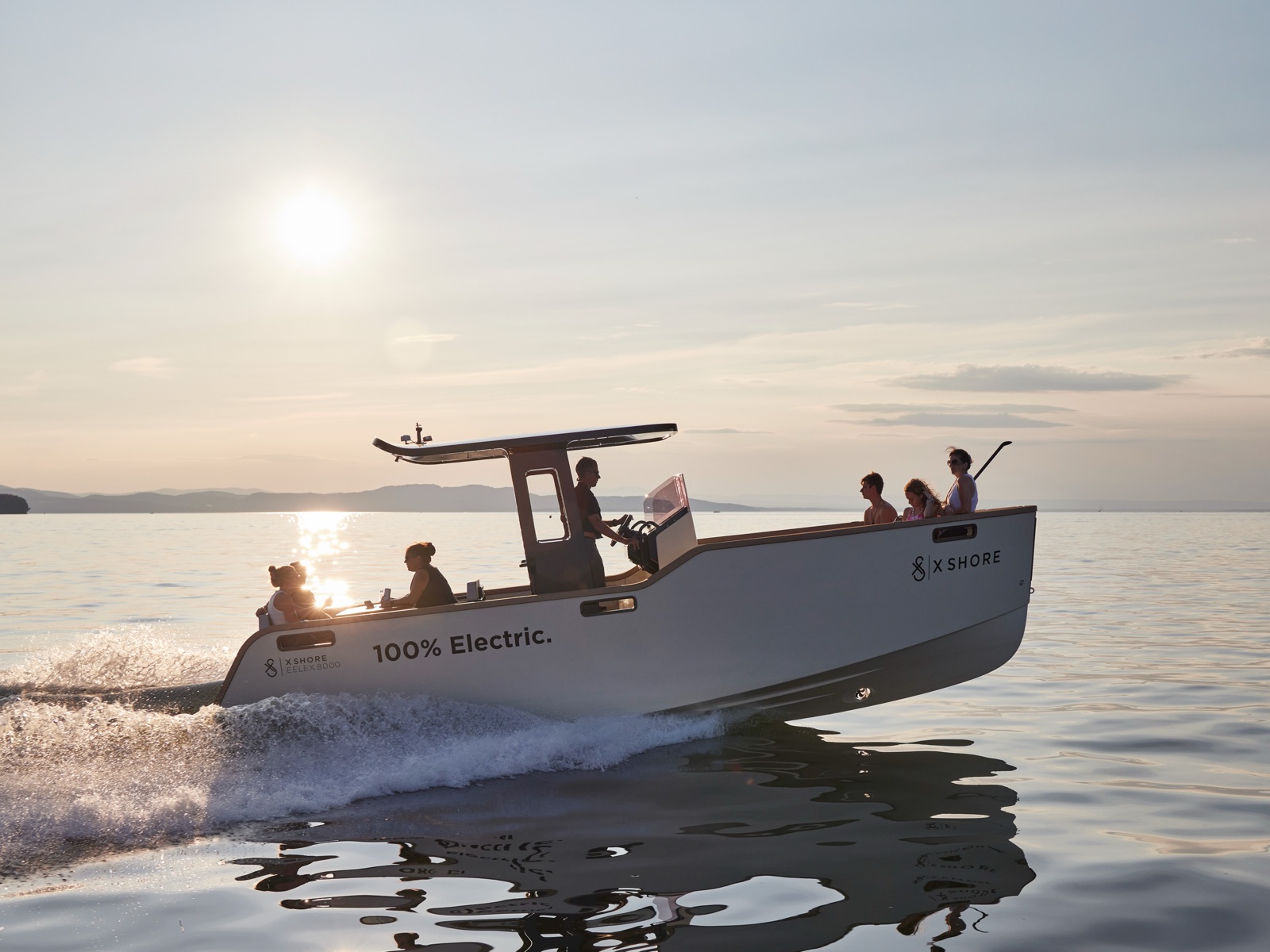
The Danish approach is part of a broader European shift. Premium leisure-boat builders take quiet, clean propulsion seriously and no longer treat it as a novelty. To see how other yards read that brief, put Rand next to Sweden's X Shore or Austria's Frauscher. The three yards have their own styles, yet they are after a very similar experience on the water, one that is modern, uncluttered and quiet.
Rand Boats on the water
For official photography and the full current lineup, go to randboats.com ↗
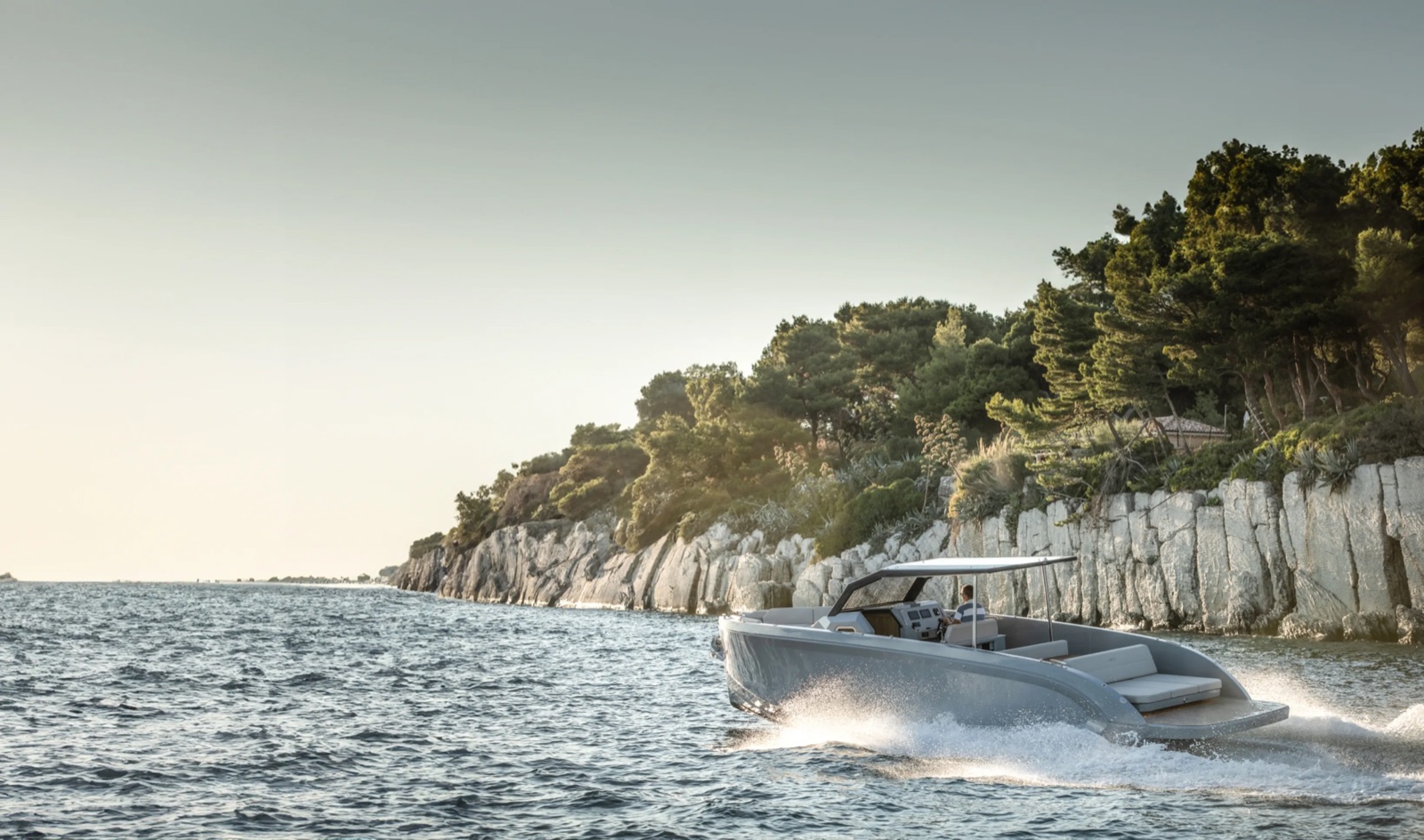
The models: Leisure 28 and the wider range
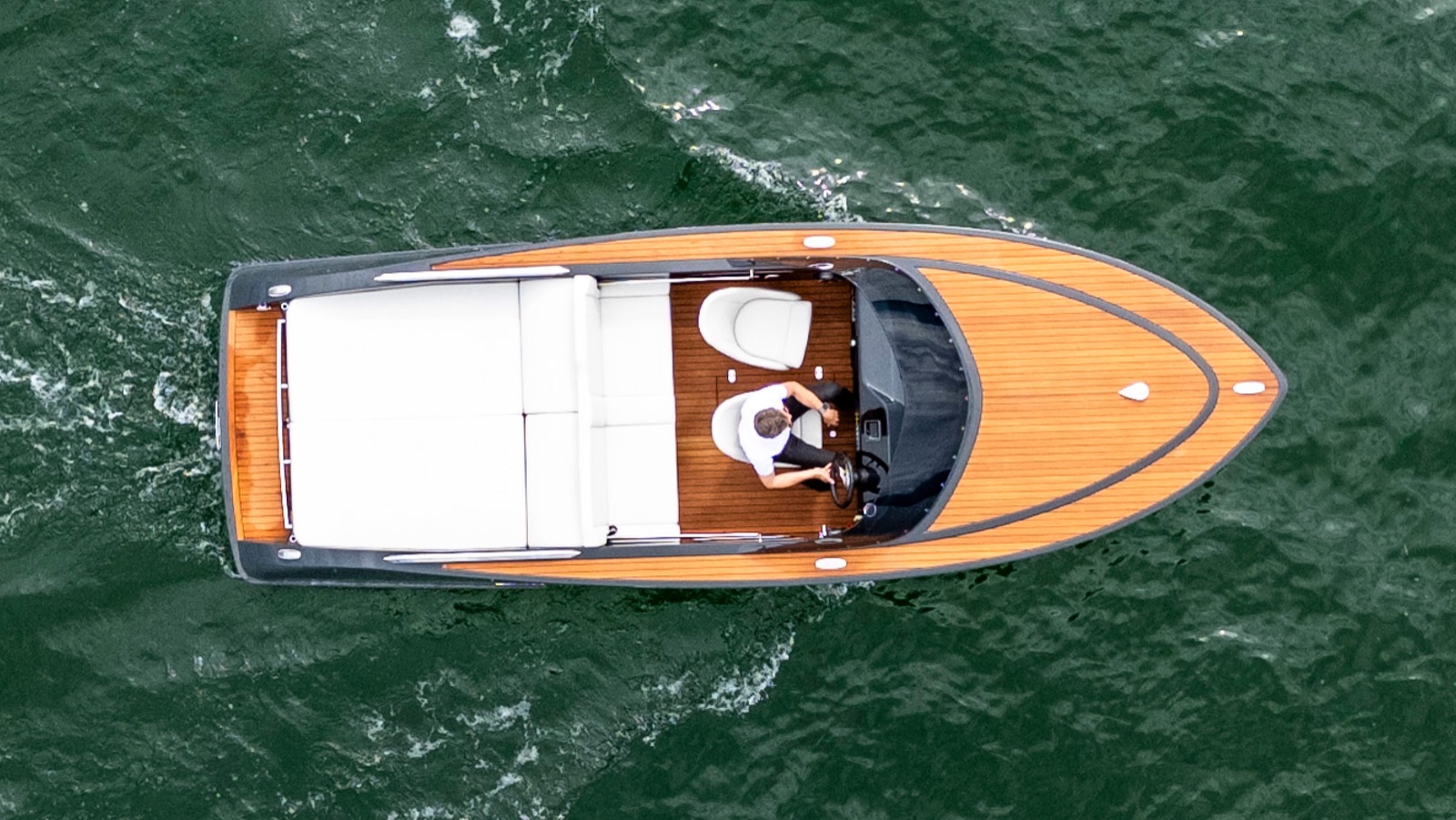
This page looks closely at one boat, the Leisure 28, a roomy dayboat, 8.44 meters long, built around shared days on the water. Two electric configurations are on offer. The model page on randboats.com lists one with 170 kW of motor output and a 78 kWh battery, and a stronger one with 265 kW and 117.5 kWh. The configurator on that site gives the stronger drivetrain as 245 kW with 117 kWh. Ask the dealer which of the two figures a quote is based on.
RAND prints its prices, but its own pages do not agree on them. The model page, read on 5 October 2026, lists the boat from €165,900 and says nothing beside the figure about whether tax is included. The configurator, read the same day, never goes that low. The cheapest Leisure 28 there, with a gasoline engine, comes to €179,900, the 170 kW electric version to €265,900 and the stronger electric version to €309,900, and every total is marked as excluding VAT and delivery costs. Options come on top of those figures.
Swipe sideways to see all columns
| Configuration | Motor output | Battery |
|---|---|---|
| Leisure 28, base electric drivetrain | 170 kW | 78 kWh |
| Leisure 28, stronger electric drivetrain | 265 kW | 117.5 kWh |
Any model in the Rand range can be ordered with an electric drivetrain, and RAND also sells its boats with gasoline and diesel engines. On the Leisure 28 the two electric drivetrains sit next to three combustion options: a Mercury F 300 outboard, a 350 hp Mercruiser 6.2L gasoline inboard and a 270 hp Mercury Diesel 3.0L inboard. Where your home water limits combustion engines, only the electric versions need close study, and from them you can work back to the rest of the specification.
RAND's model page separates the two electric drivetrains by top speed and range: 30 knots and 64 km at 8 knots for the base version, 40 knots and 97 km for the stronger one. In the configurator the step up from one to the other costs €44,000. For calm, even-tempered boating the base version is often plenty, especially when a typical outing means leisurely cruising and a relaxed hop between swimming bays. The stronger configuration earns its place when you want headroom, say with a full boat of people, or on an open stretch of water you would prefer to cross briskly. The bigger number on paper matters less here than how you will use the boat. Think realistically about how many people usually come along, the distances and the speed you normally travel at.
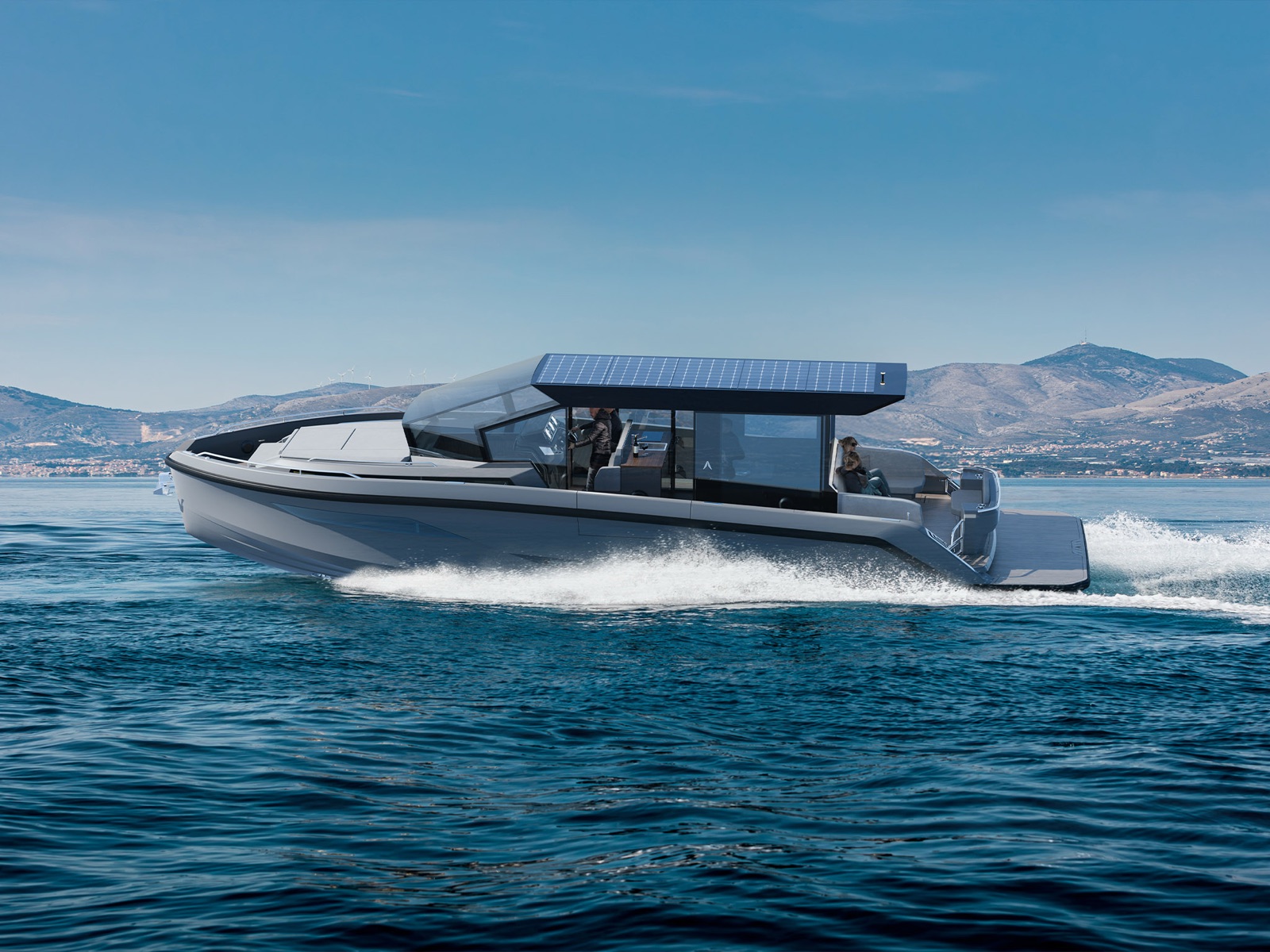
There is more to the catalog than the Leisure 28. The photographs on this page show other boats from the brand: the Escape 32, the Realm 45 with its solar roof, and the Solara 33 catamaran. Model ranges move around from season to season. For what is offered right now, and how each hull can be configured, randboats.com is the reference.
One word, dayboat, holds most of the design brief. A boat of this kind is built for day trips, a few hours or a full day afloat, so it gets comfortable seating, space to lie in the sun and sensible details around the swim stop. The Leisure 28 carries more than the label suggests. RAND lists a full kitchen and a toilet, plus a two-person cabin on the lower deck. The cockpit, though, with its triple aft sun lounge and an expandable U-sofa, is drawn around the day. As a category, the dayboat is a natural fit for inland lakes and sheltered coastal bays, where the typical outing is a well-spent afternoon and not a multi-day cruise.
Who a Rand is for
No single boat fits every idea of a good day on the water, so before you fall for the photographs, work out how you would use one. A Rand typically appeals to owners who want relaxed, sociable boating, with clean design and a quiet, clean drivetrain high on the list. The profiles below give you a quick way to tell whether that describes you:
- Families who want a safe, comfortable platform for days out with the kids.
- Groups of friends who treat a boat as a floating terrace for sunbathing, swimming and a drink as the light goes.
- Anyone who chooses a day on the water without engine noise or exhaust fumes because lower-impact boating matters to them.
- Owners planning for the calm water of a lake or a sheltered bay, not for ocean passages.
Plans that run to multi-day trips, long distances or truly open sea point past the Leisure 28. RAND files its bigger boats under a separate yacht heading. The Escape 32 has an overnight cabin with its own toilet and shower, and RAND describes the Realm 45 as designed for extended voyages. The Leisure 28 is at its best on the unhurried day close to shore. Decide early which kind of boating you mean, or you risk buying a glossy catalog picture instead of the boat that fits the way you live.
Count the season while you are at it: the number of days the boat will be used, and how many people will be on board each time. A boat that goes out forty times a summer with six on board justifies a very different specification from one that leaves the berth on a handful of weekends. That number tends to decide how happy an owner ends up, more than any brochure figure does.
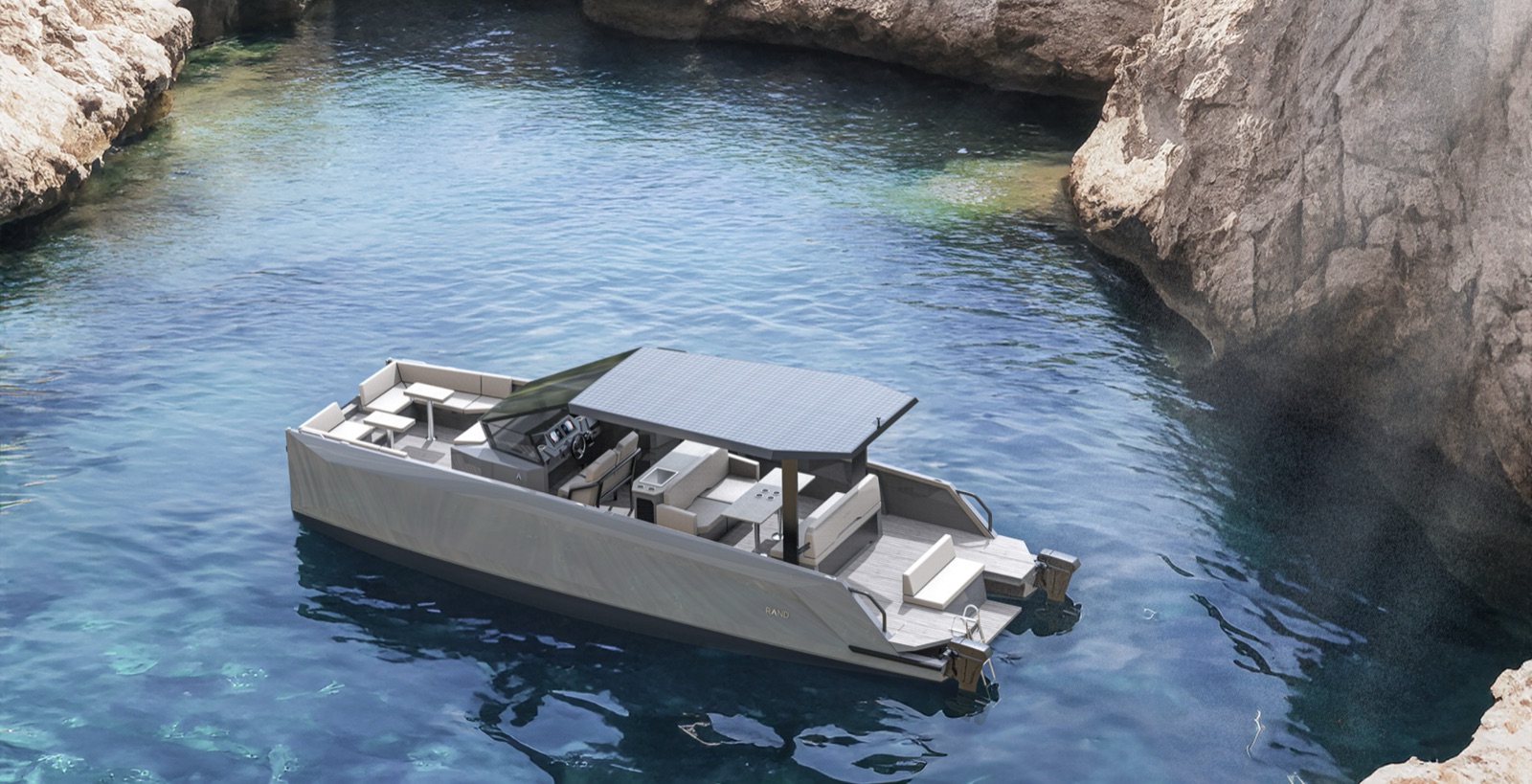
How electric boating feels on the water
Ask people on their first electric outing after years on gasoline boats, and almost all of them start with the quiet. Where there used to be engine drone and vibration, you mostly hear water. Conversation works at normal volume, and nothing smells of exhaust. That silence alone changes the character of a day out. Your attention goes to the scenery and the people you brought, not to the machinery underneath you.
You do plan the day a little differently. Charging takes the place of the fuel stop, and the comfortable setup is a berth with a charge point, where the boat waits fully charged for the next outing. Speed has a strong say in usable time and range. Slow, easy cruising is far gentler on the battery than sustained fast running. For the practical detail on charging and range, see our electric boat guide.
Some of the change sits in small moments nobody thinks to ask about. No warm-up before you leave, no cool-down when you arrive. Low-speed maneuvering around a crowded pontoon is precise, since the motor answers the throttle immediately and holds a slow speed without hunting. A long day takes less out of you as well. Engine noise and vibration wear you down gradually, and you tend to notice it only once they stop.
Charging fits the way a day on the lake already runs. If your usual program is an afternoon lap, a swim stop and a slow run home into the sunset, charge planning turns into routine, not a burden. With a couple of small habits you hardly register the difference from the old fuel-dock ritual.
Many owners come to like the change. Boating gets a little more deliberate and a lot calmer, quieter and cleaner, and that combination is exactly what suits time off by the water.
Where a Rand fits best
Inland lakes, reservoirs and sheltered coastal bays are almost a perfect match for a boat in the size class of the Leisure 28. This is the sort of dayboat you take out for an afternoon with family or friends, and nobody buys it to cross oceans. A quiet drivetrain belongs in that setting, since calm water and a quiet boat suit the same easygoing frame of mind.
The more concrete argument is legal. Many inland lakes restrict or ban combustion engines for private use while allowing pure electric propulsion, so quiet boats keep appearing in the very places where engine noise is unwelcome. Our electric boat page goes deeper into how that plays out on the water. Few parts of boat ownership vary as much from place to place as licensing. Some places ask for a full license before you take a boat of this power out. Others want a short certificate or a registration, and the thresholds that trigger any of it are set locally. Rules differ by country and often by individual lake or stretch of coastline, so check what applies where you plan to keep the boat before you buy. Meanwhile the infrastructure keeps getting better. Shore power at the berth is standard in many marinas, and charge points are being added year by year.
Picture leaving the harbor at an easy pace in the morning and anchoring in a quieter bay for a swim before noon. After lunch you cross to the far shore for a coffee, and in the evening you watch the sunset from the water, rocking gently at anchor. The Leisure 28 is sized for that loose, exploratory kind of day: big enough that several people have room to spread out, and not so big that docking and maneuvering turn into a project on a busy summer weekend. If you are seriously thinking of buying, the right berth for the boat's size and charging needs matters at least as much as the boat itself.
Before you buy: the practical points
A purchase of this size calls for going through a few practical questions one by one. The list does not replace a conversation with a dealer, but it means you walk into that conversation prepared:
- Final price and specification: the total moves a long way with the drivetrain and the options, so always get a written quote for the exact configuration you have in mind.
- Sea trial: try not to choose from a catalog alone. Whether a boat's character suits you only shows on the water, and demonstration days are a good chance to do that.
- Berth and charging: settle in advance where the boat will live and whether you can charge it there.
- Winter storage and servicing: ask how out-of-season storage, routine service and battery care are handled, and by whom.
- Use and passengers: build a realistic picture of how many people you will carry and what you will do with the boat, because those answers decide which configuration is right.
The purchase price is only the first line. Owning a boat is a stack of line items, with the berth, winter storage, regular servicing and insurance all sitting on top of what you paid for the hull. How large those items are depends on your choices and on what is available locally, so nobody can quote you a single number. Owners who budget for them from the start get fewer surprises in the second and third season. The boat was bought for quiet days on the water, after all, not for a running headache.
With these questions worked through in advance, you decide with a good deal more confidence, and the time with the dealer goes on the details that matter instead of on clearing up the basics.