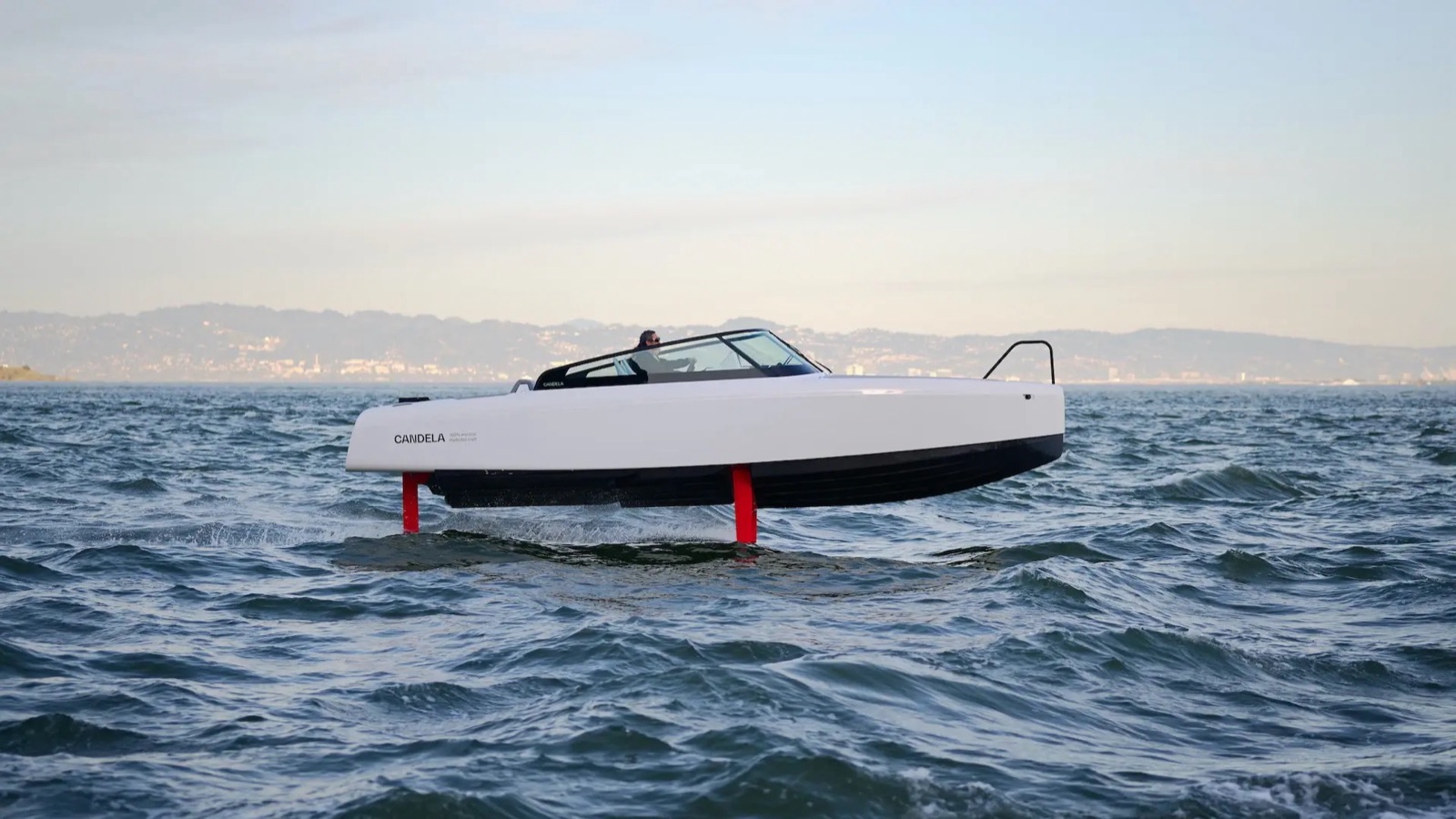
What is a hydrofoil boat?
Under the hull of a hydrofoil boat sit wing profiles known as foils, and they give the craft its other name: foiling boat. Push past a certain speed and those wings make enough lift to raise the hull clear of the water. At that point the boat stops traveling through the water and glides above it instead, carried by its wings.
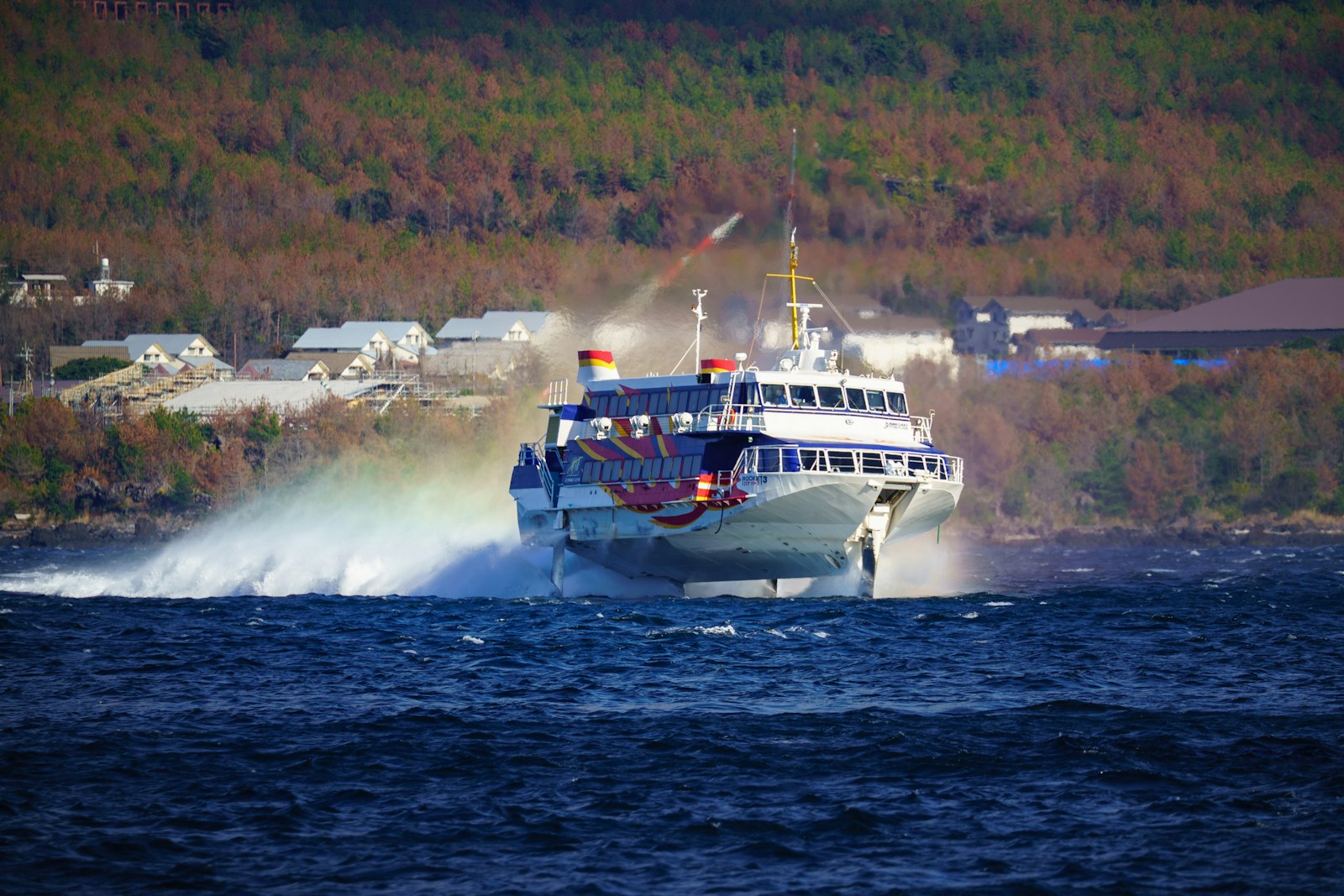
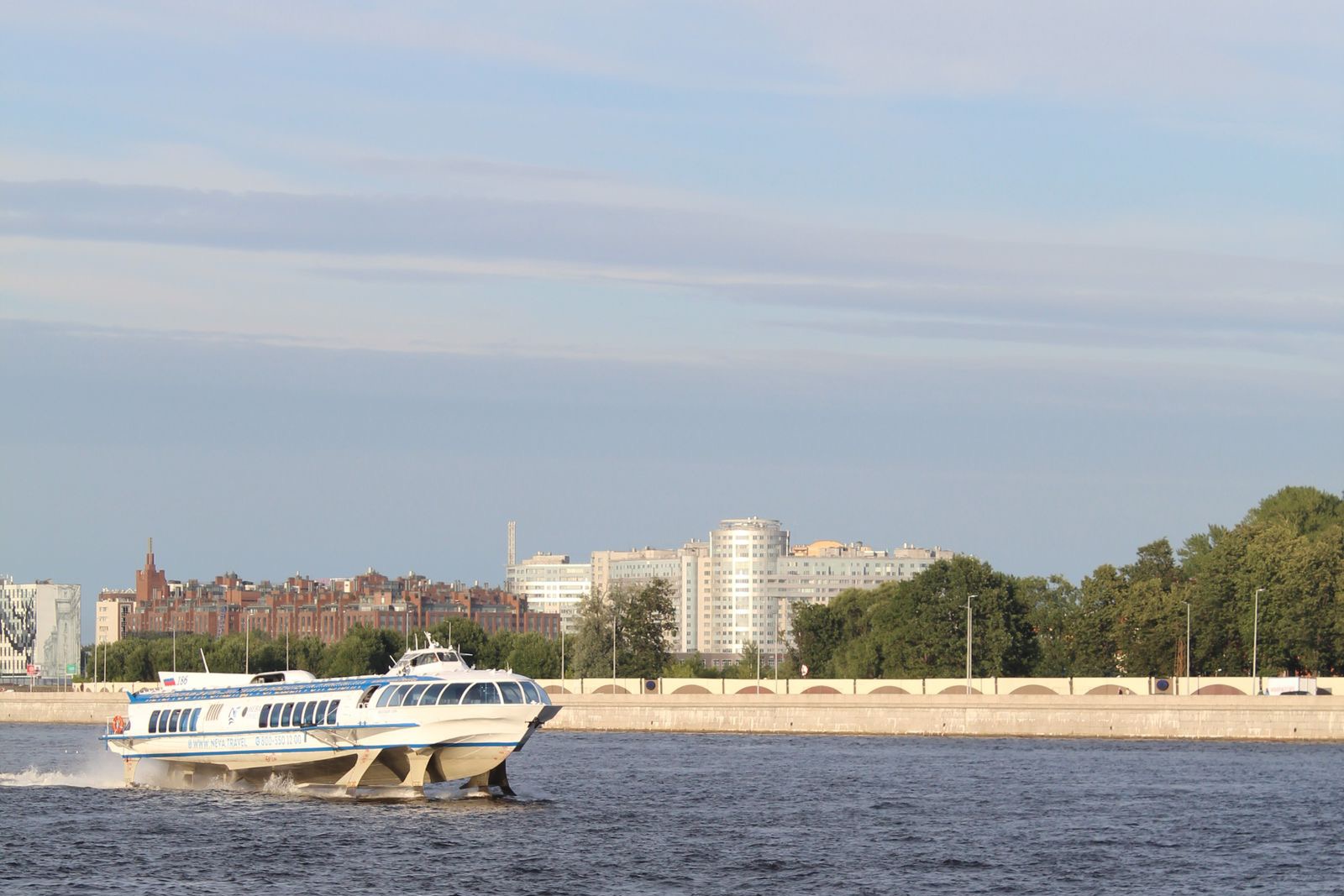
The idea itself is old. Fast hydrofoil ferries have carried passengers on big rivers and short sea crossings for decades, and from the 1970s Boeing jetfoils linked Hong Kong and Macau.
Today's foiling boats have little in common with those forerunners. Light materials, electric drive and, on many models, computer stabilization make the flight smooth and economical. If it is the wing technology itself you are curious about, our hydrofoil guide explains in detail how lift builds up under water.
Foil is just another word for wing, and a hydrofoil is a wing that works in water. The physics is roughly that of an aircraft wing, except that the fluid flowing around the profile is water, not air, and water is far denser. So a wing much smaller than an aircraft would need to carry that weight can lift an entire boat. The old passenger hydrofoils were heavy machines with combustion engines. Modern foiling boats follow the opposite logic: the lighter the build and the less energy it takes to get airborne, the better the result, so efficiency counts for more than raw power. That change of perspective explains why an idea people have known about for decades suddenly looks interesting again.
Candela in action
How a foiling boat works
The short answer is drag. A conventional boat pushes its entire hull through the water, and that eats an enormous amount of energy. Once the foils lift the hull out, only the slim struts, the wings and the drive stay wet. The wetted surface shrinks to a fraction of what it was, and the boat runs with dramatically less drag.
With an electric drivetrain, that drop in drag decides everything. Holding a given speed costs noticeably less energy, so a single battery gives you considerably more range. Something else comes with it: a boat gliding above the surface throws almost no wake and travels close to silently. The principle is the one that lifts an eFoil, scaled up to the size of a boat.
Getting up on the foils costs more energy than the flight that follows. First the boat has to accelerate to the speed at which the wings can carry it, a short run-up of sorts. The efficient part of the ride begins once it is up, and after that point the foil saves energy instead of costing it.
Nor does flight start the moment you open the throttle. The hull rises only once the boat reaches a threshold speed. That moment is called takeoff, and for whoever is at the helm it is one of the defining parts of driving a foiling boat.
Takeoff and landing
A foiling boat has a critical speed, the point at which the wings make enough lift to raise the hull out of the water. Below it the boat behaves much like any other craft, sitting on its hull and shoving water aside. Above it, the boat switches into the state the whole design exists for. The hull climbs into the air, and only the struts, the wings and the drive are left in the water.
That flight would not be stable by itself. Waves, weight shifts and turns all unsettle an underwater wing, and left alone it would start to wobble in a hurry. So many models rely on active computer stabilization. Sensors track the attitude of the boat, and the system adjusts the wings many times a second with tiny corrections, keeping the deck level and calm. In a moderate chop the flight stays soft and predictable. Candela says waves up to 1.1 meters pass beneath the hull of its C-8, and that in rougher water the boat runs on its planing hull like any other.
Landing runs the process in reverse. Ease off the speed, lift falls away, and the hull settles gently back onto the water. If you slow down gradually and not abruptly, the boat touches down softly, without much of a splash. If you are new to it, practice the rhythm of takeoff and landing on open water with no traffic before you venture into tighter or busier areas.
Turns feel different from a conventional boat as well. Standing on its wings, the boat makes soft turns and leans gently into them, a little like a bicycle. The foils also reach down below the hull, so in shallow, rocky or weedy water you go more carefully than you would in a flat-bottomed boat, at low speed as much as in flight. Candela gives the C-8 a draft of 0.8 meters while foiling, 1.5 meters at low speed with the foils extended and 0.5 meters in its shallow mode.
This is less complicated than it sounds, even if it takes a few outings to sink in. A few things make takeoff easier:
- Accelerate evenly, since the wings need a moment to build up lift.
- Keep the load balanced. Where your passengers sit matters.
- Practice on calm water, because a strong chop makes a steady climb harder.
Electric foiling boats
Combine a foil with an electric drivetrain and you get one of the more interesting new waves in boatbuilding. Its best-known name is Candela, a Swedish builder of electric foiling boats, and the Candela C-8 has become the face of the category. Modern electric foiling boats typically manage 20 to 30 knots. In flight they cover a given distance on a fraction of the energy a similarly sized electric boat with a conventional hull would need.
Candela is far from alone. More builders around the world, and more city transport projects, are experimenting with electric foiling craft, from small runabouts up to water taxis. Our page on electric foiling boats walks through the main builders of 2026. The technology is maturing quickly. Candela's founder has named bringing production costs down to the level of conventional fossil fuel boats as the company's main challenge.
The boats plainly fly, so the technology itself is no longer in doubt. The more interesting question is why the category is picking up speed right now. Two developments arrived together. Batteries store more energy for their weight than they used to, and control electronics have become reliable and affordable enough to trim the wings in real time by themselves. Automatic foil control as such is not new. The Boeing jetfoils launched in 1974 already trimmed their fully submerged foils with an automatic control system. What was missing was control electronics small and cheap enough for a leisure boat, plus batteries to match. Without those building blocks a foiling boat of that size would have been either too heavy or too twitchy for everyday use.
This page leaves out model-by-model price comparisons, and that is deliberate: Candela, Navier and Vessev print no list prices on their model pages. The direction the market is taking, by contrast, is far easier to read.
Day to day, an electric foiling boat has a lot in common with an electric car. Charging happens while the boat sits still, usually at the dock, and you plug it back in once the day is over. Your planning therefore covers more than the boat itself. It also covers where you can charge comfortably, because a well-placed charge point is as much part of the experience as the drivetrain. On bigger water that means thinking through your day's route and stops in advance. The further shoreside infrastructure spreads, the easier that question gets.
What it feels like on board
Some of what matters about a foiling boat never shows up in a spec sheet, yet you notice it within minutes of stepping aboard: how it feels to travel on. A classic motorboat works its way from wave to wave with the engine droning in your ears the whole time, and at speed every single wave slams into the hull. A boat above the water skips that rhythm altogether.
Once the hull leaves the water, most of the bouncing and slapping disappears and the boat seems to hover, quiet enough that you can hold a conversation. You hear the wind and the water, and the drivetrain drowns out none of it. Candela sells the C-8 on that calm as much as on its speed, promising the sounds of nature in place of roaring engines. A longer, steady leg stops being a grinding fight against the chop and turns into comfortable gliding.
Constant pitching wears people down over distance. The people on board all feel the difference when the motion turns steadier and more predictable, as it does on a foiling boat. On a settled deck it is easier to eat, drink, take photos or just watch the shoreline go by without having to hold on the whole time. That steadiness is also why these boats are easier to drive than they look: on models with active stabilization the computer does the constant wing trimming, so the person at the helm mostly steers and picks a speed.
There is more to that calm than comfort. A boat that pounds less and moves predictably tires you less on long runs, and you find it easier to keep track of what is around you: other people on the water, how close the shore is, weather rolling in. A comfortable, quiet ride ends up encouraging considerate, attentive behavior out on the water.
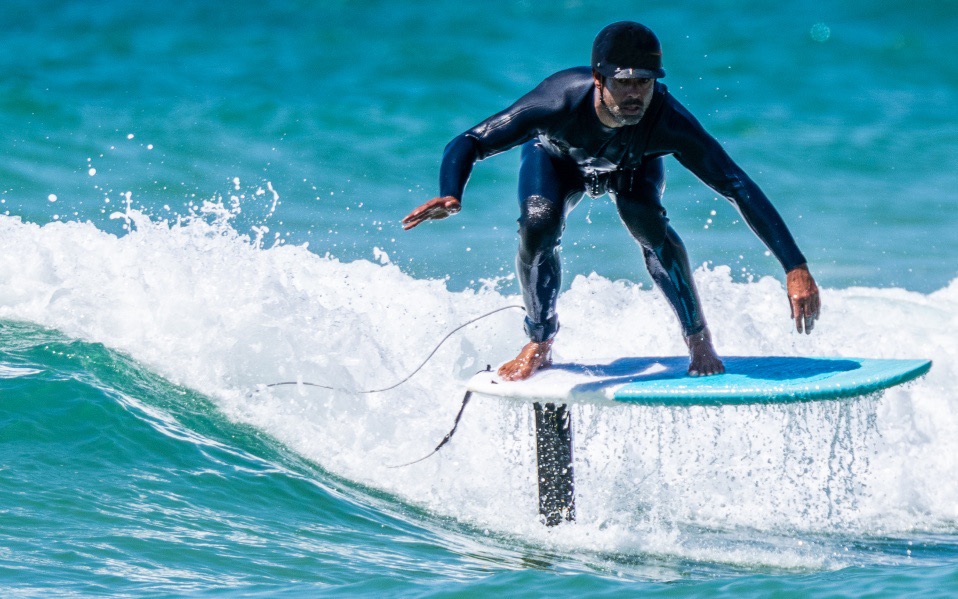
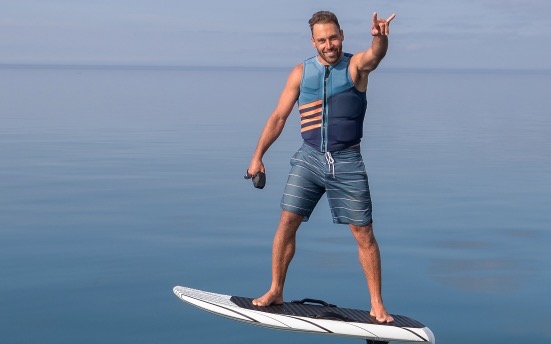
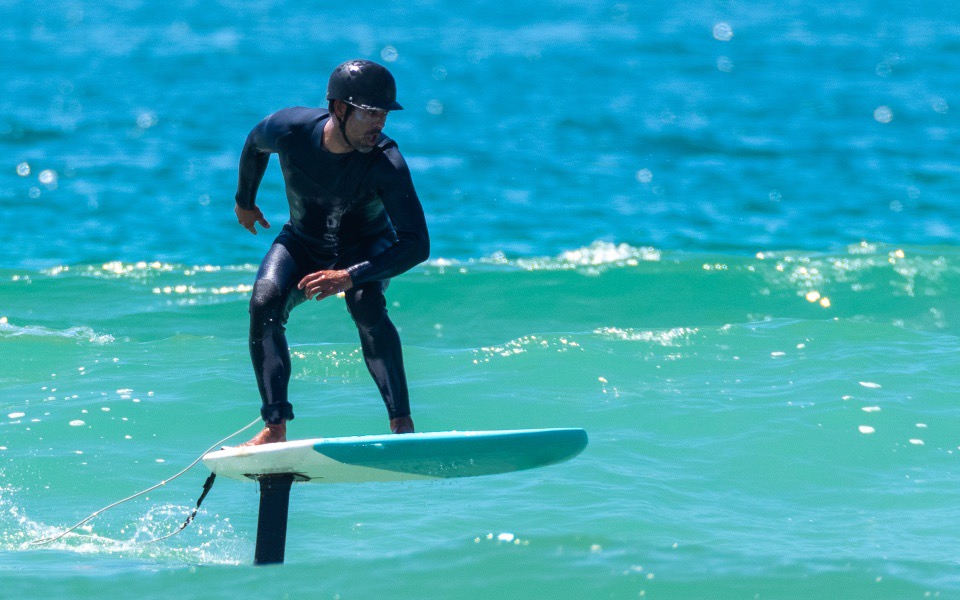
You do not need a whole boat to feel what hovering above the water is like. Much smaller, personal craft run on this principle too. On an eFoil board you get that lift standing up, right under your feet. The boat delivers all of it bigger, more comfortably and for more people: the feeling of riding on a wing, in a different package.
Why everyone benefits
The advantages of a foiling boat do not stop at the people on board. Efficiency cuts energy use, and with no wake to speak of, the shoreline gets off lightly. Waves thrown by motorboats can wear away banks and reed beds over time, while a boat on foils passes by almost without a trace. And because it runs quietly, swimmers and the wildlife along the shore are disturbed far less.
That is what sets a foiling boat apart: a large share of what it offers belongs not to its passengers but to everyone else out on the water or along the bank.
A foiling boat is easy company wherever many different water users share a lake or bay, swimmers and rowers as much as other boats, because it asks so little of the people around it.
- For the people on board: a more comfortable, quieter ride with more range.
- For swimmers and rowers: fewer waves and less noise nearby.
- For nature along the shore: reeds and banks are not ground down by constant wash.
- For the water itself: less noise and vibration across the whole surface.
On busy water, how well everyone gets along depends partly on how much noise, wake and disturbance each of us leaves behind. In that respect a foiling boat makes a good neighbor, since it hardly gets in anyone's way and adds very little to what the water already has to absorb. That helps explain why quiet electric boats are catching on most where a lot of people share a limited surface.
Swipe sideways to see all columns
| Classic motorboat | Electric hydrofoil boat | |
|---|---|---|
| Ride | The hull plows through the water | The hull glides above the water |
| Wake | Substantial, hard on the shoreline | Minimal, easy on the shoreline |
| Noise | Loud engine note | Close to silent |
| Energy demand | High, the whole hull creates drag | Low, a fraction of the drag |
| Emissions | Exhaust fumes over the water | No local emissions |
Who is a foiling boat for?
People come to an electric foiling boat for different reasons, so start by working out what you want from one. Relaxed days out with the family, a loop around the lake, a stop for a swim along the way: for days like these, the quiet and the gentle flight deliver just what got you into boating in the first place.
For anyone drawn in by technology and efficiency, the appeal is that a foiling boat gets more out of a given amount of energy. That means less charging and more time on the water. If staying close to nature matters most to you, the wake-free, noise-free ride is the strongest argument of all. A foiling boat barely intrudes on the water it passes over.
Ask yourself a few plain questions before you decide. How often do you want to be out? Alone, or with company? Short loops or long day trips? How big is the water you use most? An easy afternoon on a small lake calls for something different from long passages across open water, and the foil shows its strengths most clearly in the second case, on long, steady legs. With those answers worked out, the real decision gets much easier. Do you want a boat at all, or something smaller and more personal?
For some people a whole boat is too big a step. The smaller, personal forms of foiling can be the way in. The wing idea runs from the basics of the hydrofoil all the way to the eFoil board, each time in a different size and at a different speed. Among electric surfboards, the eFoil is the one that flies; a jetboard planes on the surface with no wing at all. Start wherever suits your local water and your budget. If you want to rise above the surface without waiting for wind or waves, the eFoil is the board built for that.
What this means for lakes and coasts
On many inland lakes, running a combustion engine is heavily restricted or banned outright, and on those lakes the future is likely to belong to electric boats. Rules differ by country and often by individual lake or stretch of coastline, so check your local regulations before you make plans. Range has always been the big open question with electric propulsion. That is where the foil comes in, because lower drag can multiply the distance you get out of a single charge.
Sheltered inland lakes, protected coastal bays, flat water in general: this is the kind of water an electric foiling boat looks made for. Requirements also shift over time. Check again before a bigger trip, and do not simply trust what applied last season. Where things are heading is clear enough, though. Boats on this kind of water are getting quieter, more of them run on electricity, and more of them fly.
What surrounds the boat is shifting in its favor as well. Where combustion engines are not permitted at all, electric drive has a clear run, and the more electric boats there are out there, the greater the incentive for marinas to put charge points on the dock. A boat on wings belongs in that kind of setting, and the technology and the conditions around it are moving the same way.
Planning a day on a foiling boat starts with the questions you would ask before any day on the water. Where can you launch and charge? How far are you going? What does the forecast say? On big, open water, the foil earns its place on the long, steady legs between stops. The last question is what the rules say where you are heading, since they can differ from one lake or stretch of coastline to the next.