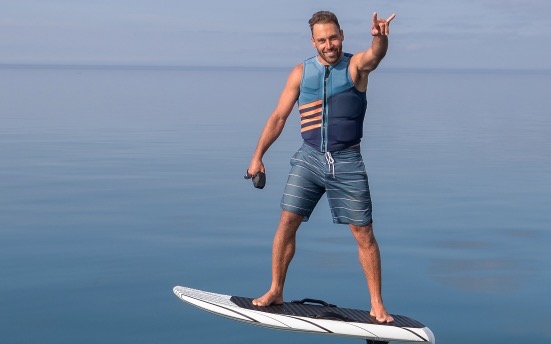
What is an electric surfboard?
Electric surfboard is an umbrella term for any water board driven by an electric motor, not by wind, waves or a tow rope. One distinction runs through the whole category and decides most purchases. Some boards plane on the surface, and some lift off it. A jetboard skims across the water. An eFoil rises above it on a hydrofoil wing and flies. Everything else, from price to learning curve, follows from that one difference.
The same machines are also sold as e-surfboard, electric surf board or just e-surf. Different names, but they all describe one family of gear. All of them share one appeal: the motor supplies the push, so you are no longer tied to swell or a wind window. That is why these boards work on inland lakes where the conditions for classic surfing never show up.
What really drove the boom is how easy a session has become to plan. No studying forecasts, no waiting on a front, no dawn start for the one good wave of the week. A free hour and some water nearby will do. Add a drive that runs quietly and produces no exhaust, and it is little wonder that electric boards stopped being a coastal-only sight long ago and now turn up on inland lakes and sheltered bays worldwide.
The three main types
Three types of electric water board have settled in over the years, and underfoot they could hardly feel more different from one another.
A jetboard(the kind Awake sells as the RÄVIK; Radinn built them too until it went bankrupt in November 2023) planes on the surface of the water, roughly the way a wakeboard does, minus the rope and the boat. You get hard acceleration, tight carving turns and up to 55 km/h (34 mph) on Awake’s RÄVIK Ultimate. This is the sporty, adrenaline-led end of electric surfing, and for many people it is also the first thing that comes to mind when they hear the phrase electric surfboard.
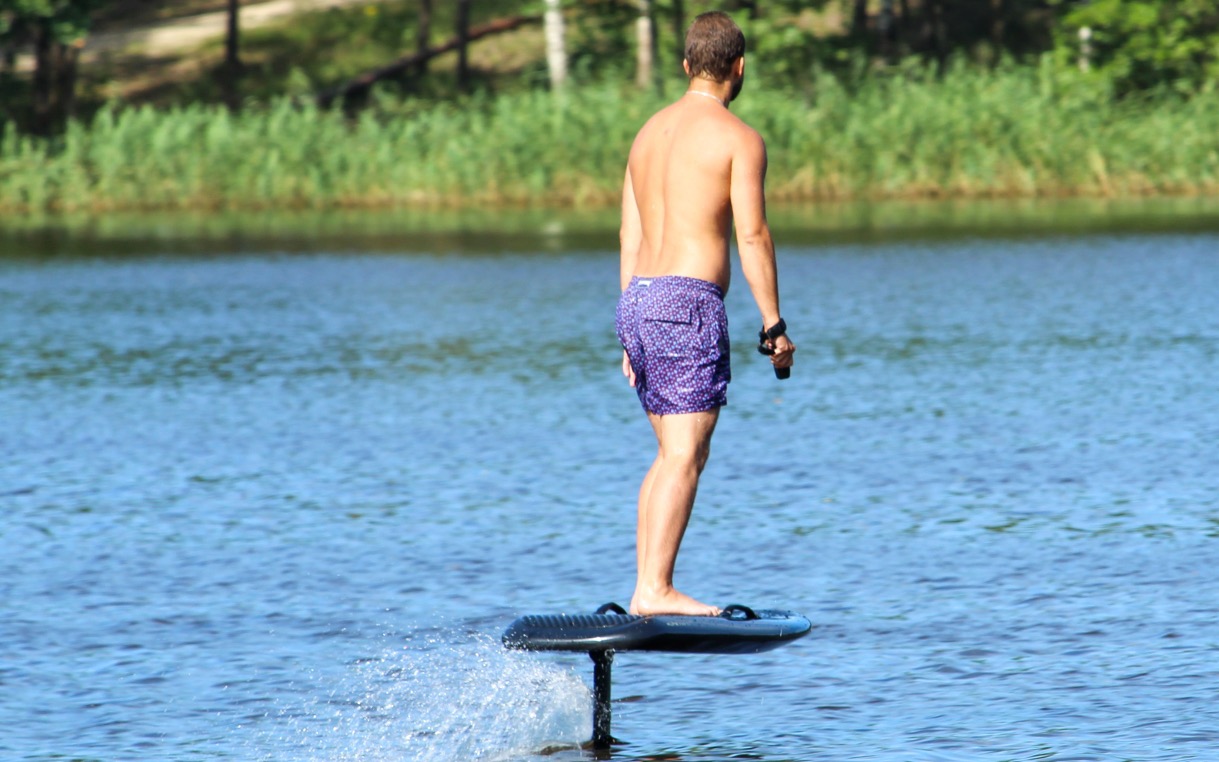
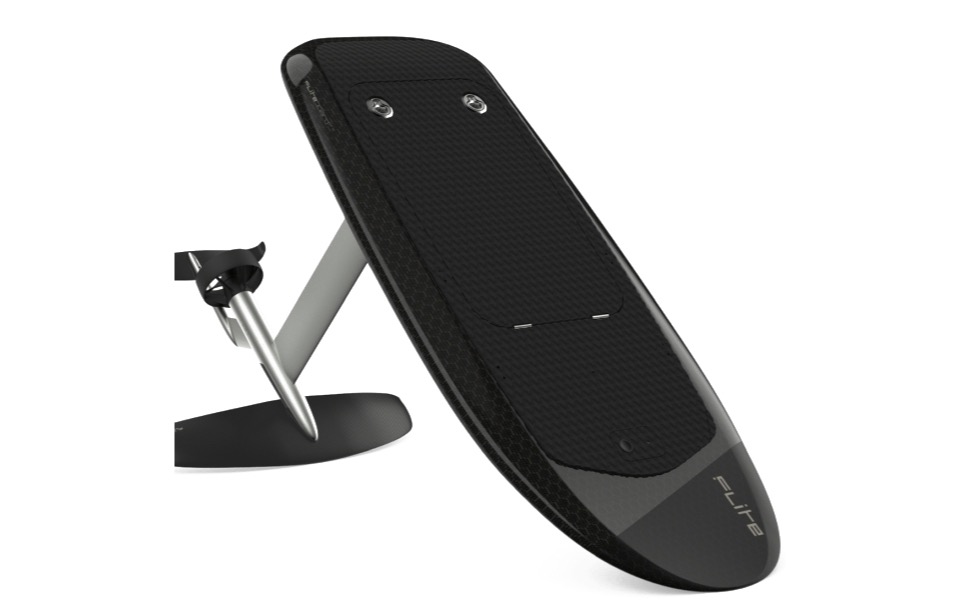
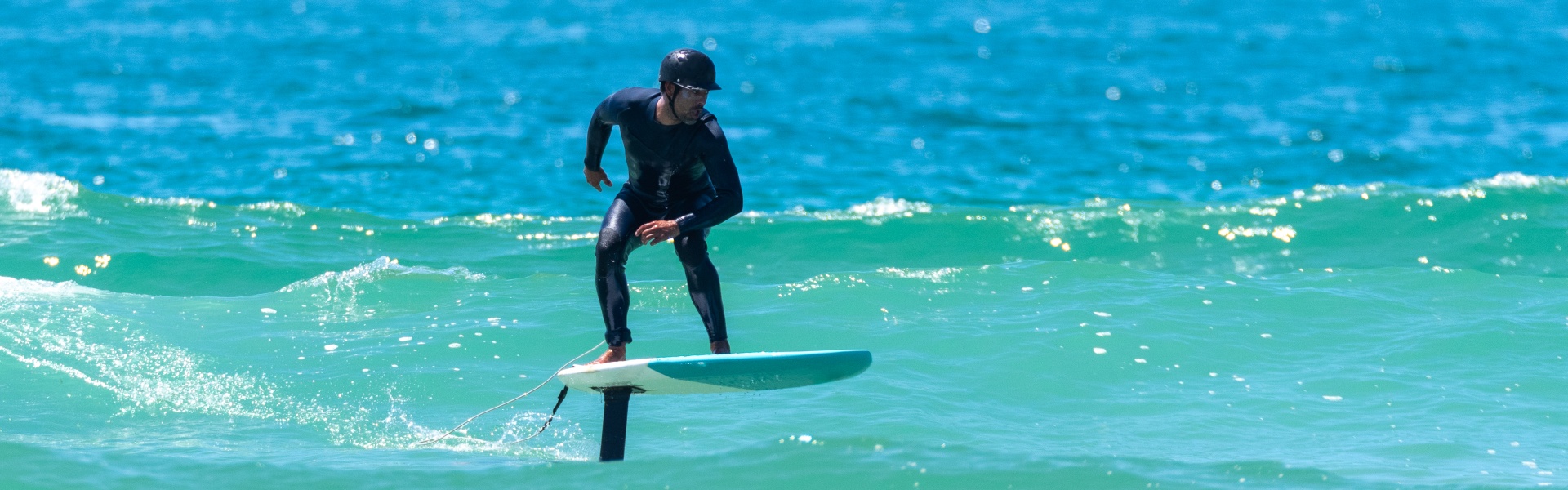
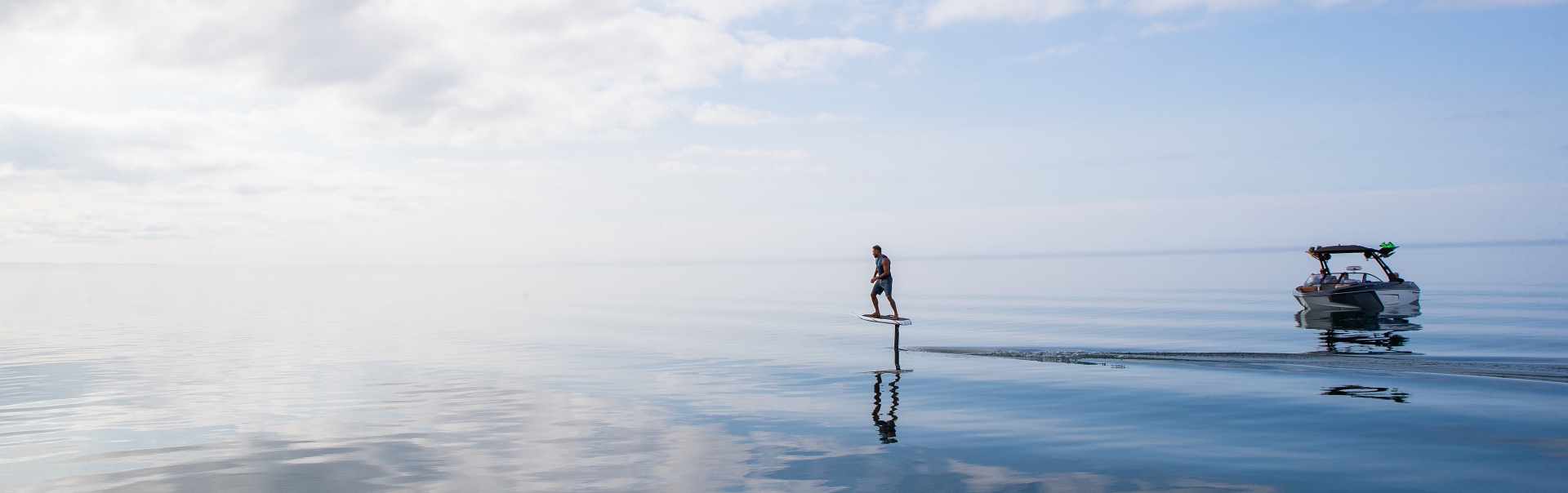
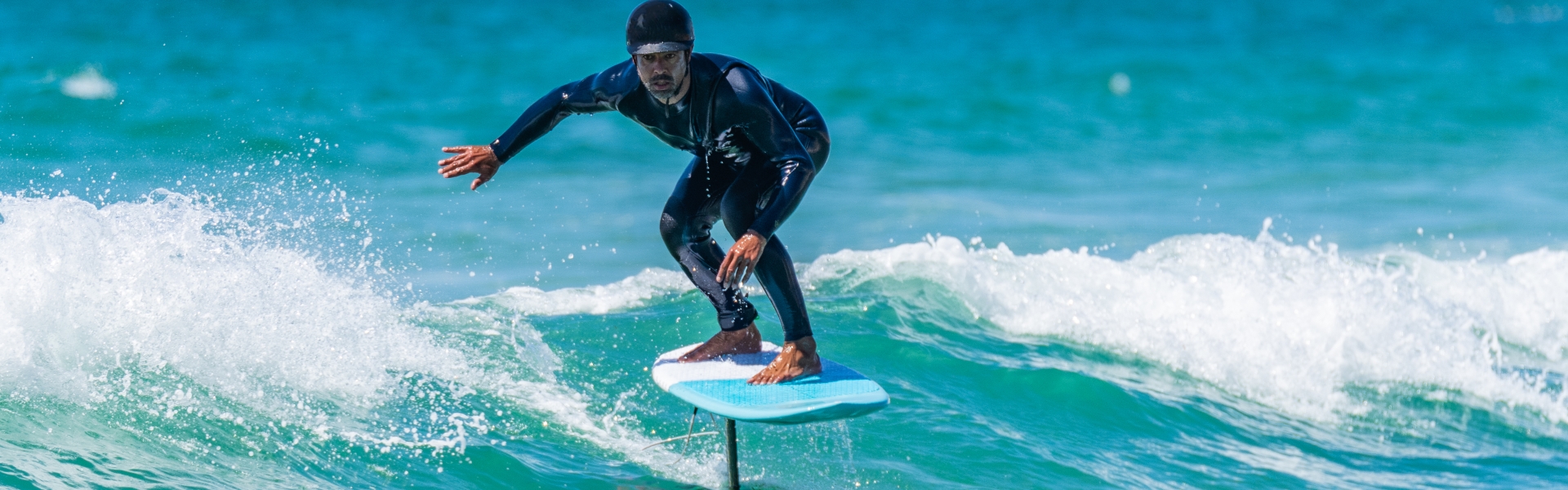
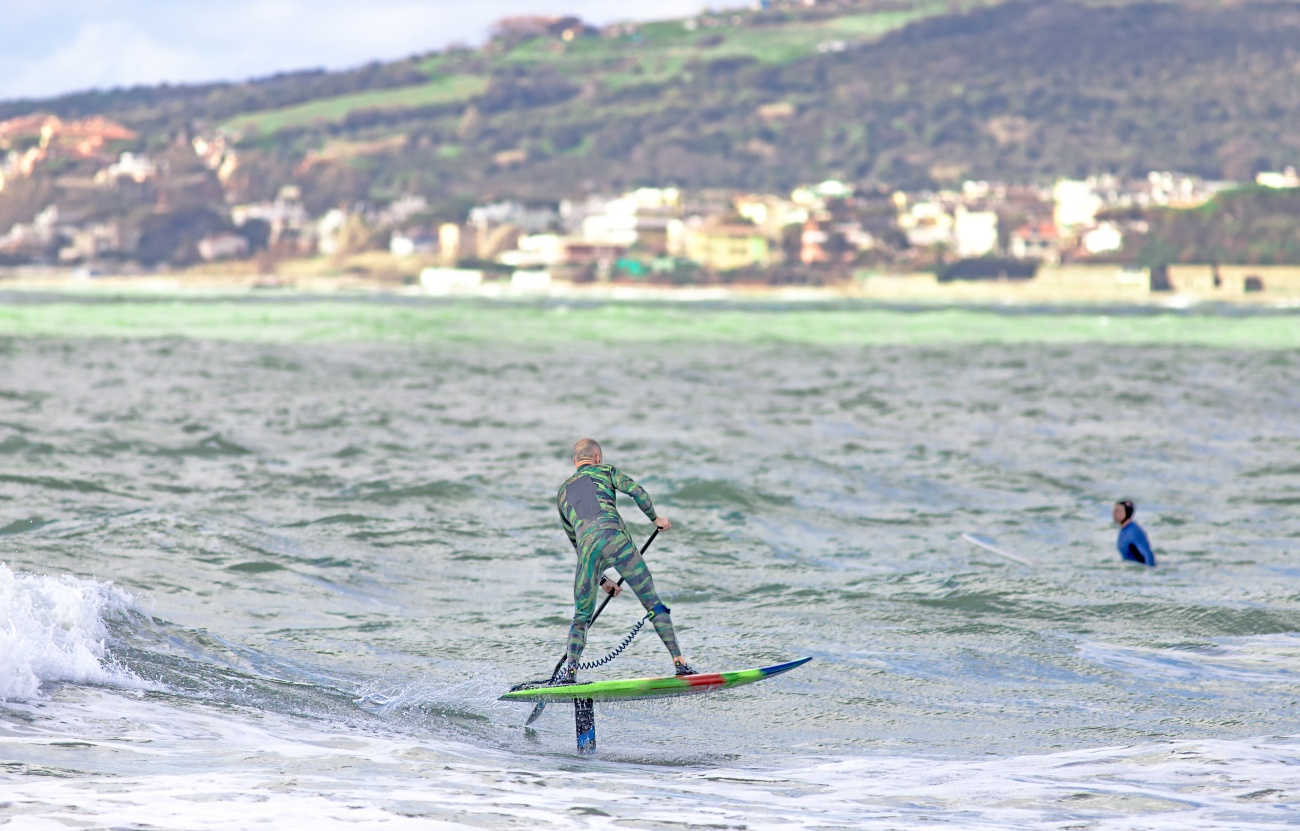
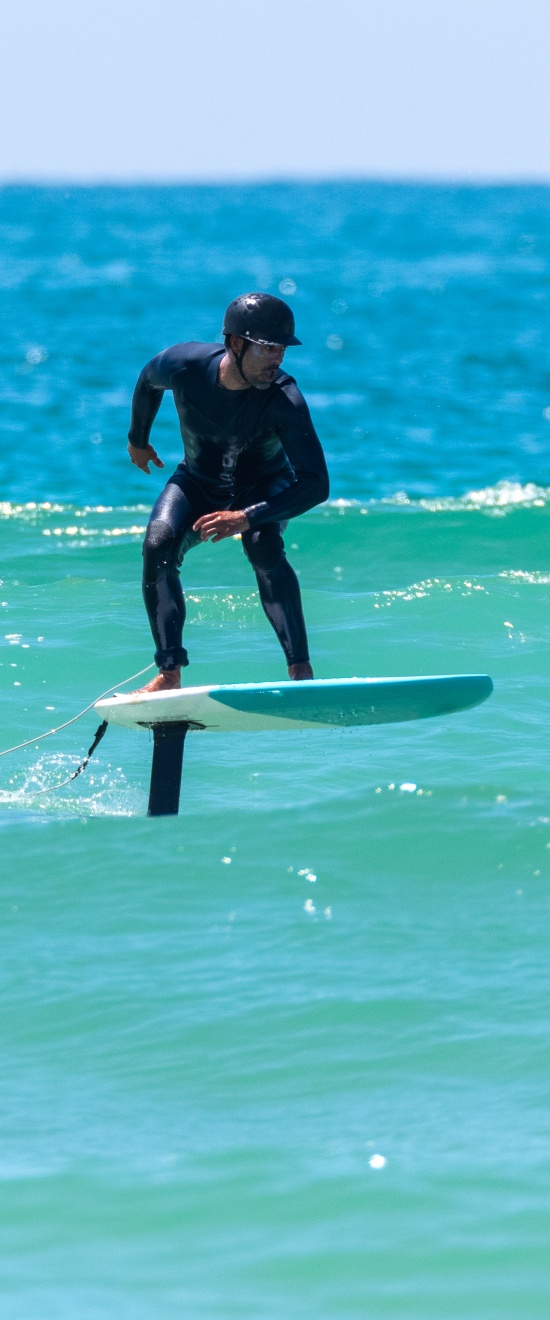
An eFoil carries a hydrofoil under the board, a wing that lifts the whole thing out of the water once you pass a certain speed. From that point you literally fly above the surface. The mast and wing are the only parts still in the water, so the ride is close to silent and unusually smooth, and nothing else in watersports feels quite like it.
The electric SUP is a stand-up paddleboard with an electric assist drive that moves you along at a relaxed pace, with or without a paddle in your hands. No other type here is picked up this fast or asks this little of you, so it is the natural pick for touring and for taking the family out.
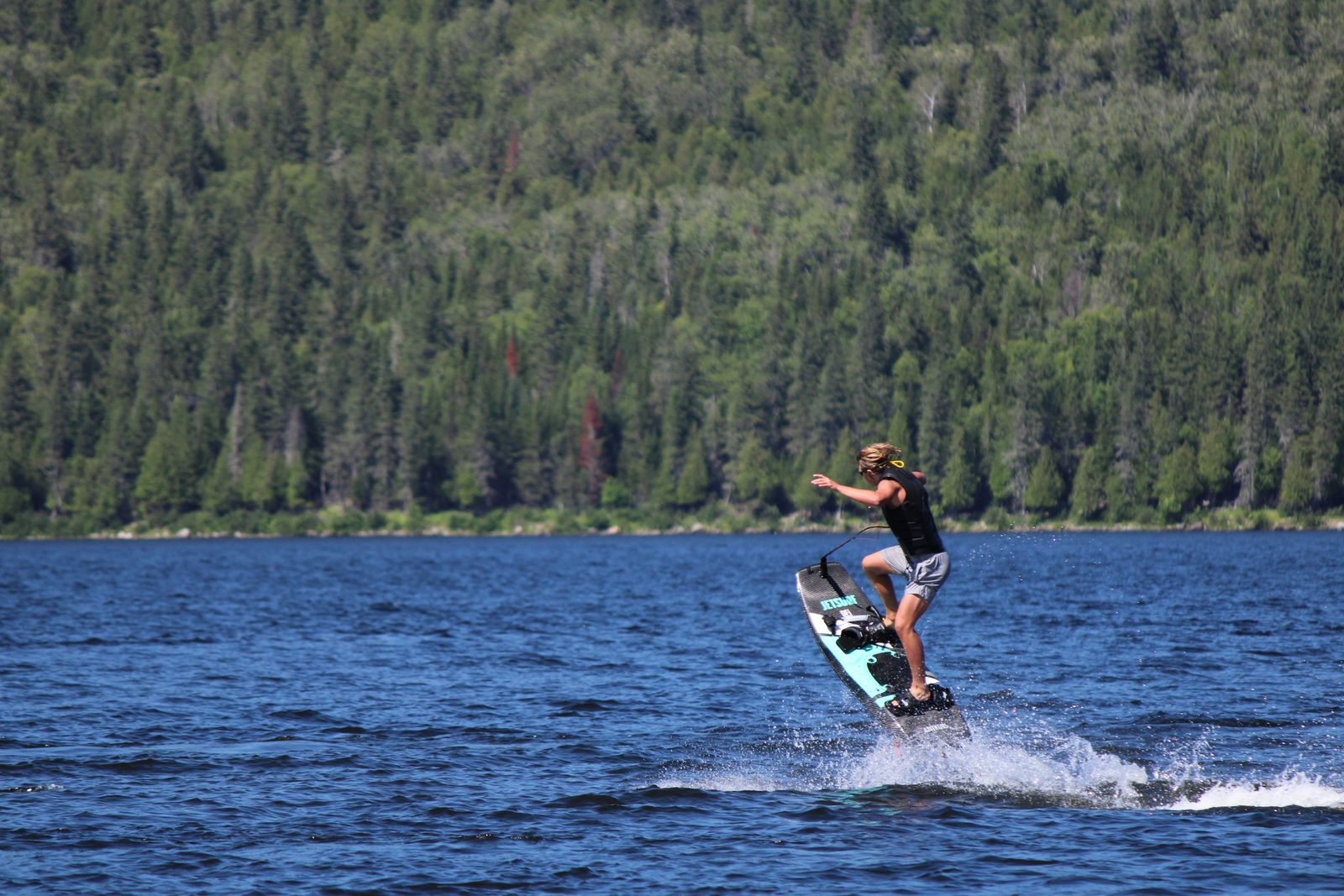
Before you choose, it helps to understand why planing and flying feel so different. A jetboard stays in contact with the surface, so it pushes water aside the whole time. You feel every ripple through your feet, you leave a proper wake behind you, and the drive works audibly harder. A foil, once it is up, has almost nothing left in the water except the mast and the wing. Drag collapses, the noise drops away, and small chop passes underneath you instead of through you. The same difference explains why an eFoil draws less power at cruising speed, while a jetboard trades efficiency for punch.
Swipe sideways to see all columns
| eFoil | Jetboard | Electric SUP | |
|---|---|---|---|
| Ride feel | Flying above the water | Planing on the water | Relaxed touring |
| Speed | about 35-60 km/h (22-37 mph), depending on the model | up to 55 km/h (34 mph), Awake RÄVIK Ultimate | 3-4 knots, about 5.56-7.41 km/h (3.5-4.6 mph) |
| Learning time | a few hours of practice | a few attempts | a few minutes |
| Who is it for? | Anyone chasing the feeling of flight | Speed and adrenaline fans | Calm cruising on the water |
| Noise and wake | Near silent, barely any wake | Louder, noticeable wake | Quiet, minimal wake |
The lines between the categories are slowly blurring. Awake, the Swedish brand, builds its jetboards (RÄVIK) and its eFoils (VINGA) on one swappable-battery platform, so a single system gives you two ride feels. Alongside them a fourth category is emerging, the foil assist: compact electric drives that help a foil rider get up onto the wing. Foil Drive pioneered the idea with a kit that adapts to the foil gear you already own, Fliteboard now builds a system of its own around a dedicated board with the jet built in, and Lift goes after the same feeling with the LIFTX, a light hybrid eFoil. A beginner is still better off starting with the three main types, which are the most developed of the lot and also the easiest ones to go and try.
How the technology works
Whichever type you are drawn to, the basic layout does not change. A high-capacity battery inside the board feeds an electric motor, and you set the pace with a waterproof Bluetooth remote held in your hand. You throttle up in steps, and the board slows the moment you let go.
How long a charge lasts depends first on the type. With a Flex XR 4 battery in either board, Awake quotes 120 minutes of ride time for its VINGA Carve eFoil and 35 to 60 minutes for its RÄVIK jetboards. Among the eFoil makers we cover, the figures run from 45 minutes on Lift’s LIFTX and on Fliteboard’s smallest Flitecell to 2.5 hours on Fliteboard’s largest, and an electric SUP runs longest, with SipaBoards quoting up to 3.5 hours on its standard pair of batteries. Charging runs off a normal wall socket and takes anything from under an hour on a fast charger to several hours on a basic one. On most models the battery can be swapped, so with a second pack along you keep going. The electric drive is quiet and produces no exhaust, so you barely disturb the water you are riding on.
Two drive designs have become standard, the open propeller and the enclosed jet drive, in which the impeller spins fully inside a housing. The German maker Aerofoils builds its boards around the enclosed jet; the first ones went out under the Audi e-tron foil name, and that shielded drive is often described as particularly beginner- and school-friendly. Both systems work well.
One rule, the most important of all, holds for every board on this page: release the remote, the motor cuts, and the board coasts to a stop by itself.
How much ride time you get out of a battery depends heavily on you. Body weight, speed and water conditions all feed into it. Cruising calmly gets you much further than a series of sprints, and on an eFoil the drag drops away the moment you are flying, taking your consumption down with it. Build one habit early. Always keep a reserve for the trip back and glance at the charge level while you are out, so you never end up sitting a long way from shore with a flat pack.
How your first time on the water goes
Take a typical first lesson on a summer afternoon. You arrive, and the coach starts on dry land with the things that matter: how to hold the remote, how to stand on the board, and what happens when you let go of the throttle. Nothing dramatic happens. The motor stops, and the worst that can come of it is a decent splash.
Then you get in. Nobody starts an eFoil session standing up. You ride the first laps lying down, then on your knees, getting a feel for the throttle and for how the board behaves. Once that is solid you stand, skimming along the surface at first, until the moment comes when the foil lifts you clear of the water and everything around you goes quiet.
How long that takes varies. Lift says most riders get up on their first session. According to Fliteboard, most people can learn in less than one hour, even with no board sports behind them, although its own step-by-step guide adds that it might take a few sessions before you feel comfortable foiling. Anyone who has stood on a wakeboard, on skis or on a surfboard typically gets there sooner. The jetboard is quicker still, with steady planing for most riders after a handful of attempts, and an electric SUP is yours within minutes.
The most common beginner mistakes are easy enough to head off:
- Standing up too early. Get the kneeling position stable first, then go up.
- Staring at the nose of the board instead of the horizon. You tip toward wherever you look.
- Grabbing a fistful of throttle. Smooth, stepped acceleration gives a far calmer ride.
- Riding with locked legs. Bent knees act as suspension and soak up the small wobbles.
Falling in is not failure here; it is part of learning. The water is soft, and a coach knows which correction to make and when. By the end of that first session, the usual question on people's minds is a single one: when can they get back out?
Which one fits you?
Mostly, you are choosing a sensation. If you want the freedom of flight, that near-weightless hovering above the surface, the eFoil is your board. Speed and adrenaline point to the jetboard, which delivers the sportiest ride in the category. Calm, unhurried cruising on the water, perhaps with family along, makes the electric SUP the best call, and it is the quickest of the three to learn on top of that.
If you are torn, three questions tend to settle it:
- Who are you going out with? With the whole family along, the electric SUP is the most accessible; eFoils and jetboards are closer to a solo sport.
- How much learning time are you willing to put in? Electric SUPs and jetboards give you a win on day one; the eFoil asks for a few patient hours and pays you back with a feeling that no other board gives you.
- What are you looking for out there? Switching off, working out, or time together. Your answer will normally tell you which type to go for.
With the type settled, the question of brand comes next. Two names define the international eFoil market: Lift Foils of the United States, frequently described as the market leader, and Australia’s Fliteboard with its broad range. Holding up the premium end are Sweden’s Awake and the German Aerofoils boards, which you may still find listed under their earlier name, the Audi e-tron foil. Shop on value for money and you usually end up at Waydoo or at SiFly, whose seat in Sofia we checked against the Bulgarian company register on 14 September 2026. SiFly puts its boards together in the EU, or so the maker says, and its own store prices them in euros for every market except the United States, which gets a separate dollar price list.
Ride the model you have in mind before you buy, and be realistic about where and how often you would use it. Our eFoil buying guide goes through the criteria, the main brands and the whole process in detail.
Rent or buy is the other big decision. Side by side, the two compare like this.
Swipe sideways to see all columns
| Renting | Buying | |
|---|---|---|
| Who is it worth it for? | Anyone still getting to know the experience, or riding only a few times a year | Anyone who wants to ride regularly and on their own schedule |
| Cost | A fee per session, with no up-front investment | One larger outlay, then unlimited use |
| Gear and maintenance | Handled by the operator | Your job: storage, charging, upkeep |
| Learning | With a coach and supervision | At your own pace, ideally after a few rented hours first |
| Models you can try | Several types and models | You commit to one board |
Who it suits, and who it doesn’t
Electric surfing is not for everyone, and it pays to find that out before you buy, not after. The two short lists below make that call a quick one.
It fits you if…
- you enjoy taking on new watersports and a bit of learning time does not put you off;
- you live near water where these boards are legal to ride, or take your vacations somewhere that allows them;
- the conditions for classic surfing or wakeboarding, meaning wind, swell or a cable park, are rarely there for you;
- a quiet time on the water with no exhaust fumes matters to you.
Think twice if…
- you would only get out once or twice a year; renting almost always works out better than ownership at that rate;
- storage and transport are unresolved; a board plus a battery needs real space and real attention;
- you would buy without a test ride; stand on a rental board first, every time;
- you are not a confident swimmer; that ability is the baseline requirement.
If the second list sounds like you, you still do not have to give up on the experience. Rental operators exist for people in that position, with all of the upside and none of the commitments.
What does an electric surfboard cost?
Start with broad brackets. eFoils and jetboards are a mid four-figure to five-figure purchase, while electric SUPs come in considerably cheaper. The bulk of the number is set by the battery capacity, the material the board is built from and the power of the motor.
An entry-level eFoil generally costs around €5,000 to €7,500, and premium models typically land between €10,000 and €15,000. Construction also makes a clear difference, since carbon is pricier than composite or an inflatable build. Jetboards start higher than the cheapest eFoils. On 12 September 2026 Awake listed its RÄVIK boards at €9,990 to €15,990 excluding VAT, and JetSurf asked €12,490 excluding VAT for the ELECTRIC 2. On the used market nothing counts more than the state of the battery and whether any warranty is still in place. The battery is the biggest single item for price and for safety alike, so never commit without a test ride.
Prices by category, running costs and what to watch for when you buy second-hand have a guide of their own: electric surfboard prices in detail.
Care, storage and the season
Electric water boards need very little maintenance, but what little they need should be done every single time. Rinse the gear with fresh water after every session, paying attention to the motor and the plug connections, dry it off, and check whether weed or fishing line has wrapped itself around the drive. After a session in salt water, that rinse matters even more. The foil wing and its mounting bolts need a regular look too, always following what the manufacturer specifies.
No component is more valuable or more delicate than the battery, so it gets the most care. Keep it out of direct sun and out of a hot car, charge it somewhere dry and well ventilated, and follow the manual whenever it is going to sit unused for a while. The manufacturer states the exact charge level a pack should be stored at. Treat a battery well and it holds its capacity for years. Neglect it and it turns into the most expensive spare part on the whole board.
In temperate climates the season runs roughly from late spring into early fall, and a wetsuit stretches it in both directions. On warmer coastlines there is no off-season to speak of. When you do pack up for the winter, clean the gear thoroughly and store it dry and temperature-controlled. A cold garage may be acceptable for the board; for the battery it rarely is. Before the first outing of the new season, run a short check over the connectors, the bolts and the charge in the remote, so that the first session of the year is about riding and nothing else.
Safety and etiquette on the water
Electric surfing is a fundamentally safe sport. A worry-free session still rests on a handful of good habits, and the gear is the easy part: always wear a flotation vest, and add a helmet on an eFoil. The reason is not that something goes wrong all the time. Both simply cost very little for the safety they give you.
The system looks after you as well. Let go of the throttle and the motor stops at once, so the board cannot run away with you.
A short routine before you launch pays for itself, covering four points that you check every time:
- remote and battery charged with enough left over for the trip back;
- the drive spins freely, with nothing caught in it;
- foil and bolts are properly tight;
- you have read the water: where are the swimmers, the anglers and the other boats, and where is your clear, quiet lane?
Keep your distance. Out on the water, that one rule matters more than the rest. Stay well away from swimmers and other craft, position yourself so you always have time and room to slow down, and look ahead, not down at the board. On an eFoil the wing hangs well below the board, so in shallow water near the bank you do not lift off. You ride out first to where the gear has comfortable room beneath the surface.
Quiet, exhaust-free running is one of the strongest arguments for electric surfing, and etiquette is how riders protect it. Ease off the throttle near shorelines and docks, and on a jetboard remember that your wake lands on somebody else. Fishing spots and reed beds get a generous berth. Ride like that and you will be welcome back on any water.
Where to try one
In a lot of places, getting onto an electric surfboard for the first time has become straightforward. Schools, demo days and rental operators have spread well beyond the classic surf coasts and now sit on inland lakes, reservoirs and sheltered coastal bays alike. Flat, protected water suits a quiet electric drive better than anything else, and it is also the easiest place to learn.
Wherever you start, sort out the rules in advance. Regulations for motorized water boards differ by country and even by individual lake or stretch of coast, ranging from open access to a permit requirement, so check what applies to your spot before you go. Plan around the time of day as well. Early morning and late afternoon usually bring flatter water and less boat traffic, which makes learning easier and keeps a safe gap between you and anyone swimming.
Not sure yet which type suits you? Renting is the best possible first step. You get a coach and a full set of gear, with no money committed to a board yet. Ride an eFoil and a jetboard back to back if a local operator has both, and you will usually know which one is for you.