Pamlico Sound, the flat side of a barrier island
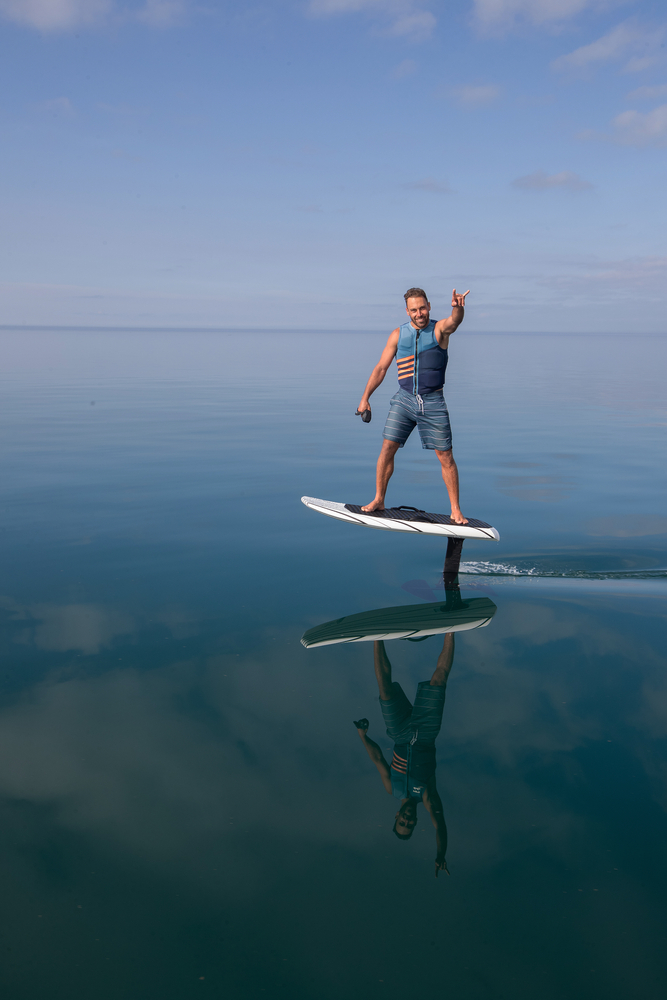
The Outer Banks are a thin line of barrier islands, and every eFoil school we could find on them works from the back side, facing the mainland. Rodanthe, Avon, Buxton, Hatteras and Ocracoke all lie along the western shore of the islands, on Pamlico Sound, which is usually described as the largest lagoon on the North American East Coast, about 80 miles long and 15 to 20 miles wide. Surf breaks on the Atlantic beaches across NC 12, and the lessons stay on the sound.
Depth explains most of it. NOAA's Coast Pilot calls the water behind the Outer Banks shallow and sandy bottomed. Out in the middle, Pamlico Sound runs 14 to 24 feet deep, yet in many places the shoals reach out for miles from the shore. At Rodanthe the school describes warm, shallow water where you can stand waist deep. A beginner on an eFoil falls off more than once, and with sand within reach of your feet you climb back on from standing instead of treading water beside the board.
Those shoals turn rough in a blow. When the wind is strong from any direction, the Coast Pilot warns, the exposed parts of the sound build “a short, choppy sea uncomfortable to small craft.” Currents are negligible away from the inlets, which leaves the wind to set the day. Outer Banks Kiting says so on its own site: “The wind and conditions change daily in the Outer Banks.” Kitty Hawk Kites offers its eFoil sessions for light and no wind days. When it blows, that shoreline belongs to kites and wings.
Kitty Hawk, the name and the place
Search for an eFoil in Kitty Hawk and you land on Kitty Hawk Kites, a company that carries the town's name. Its eFoil lessons are not held there. They run at Rodanthe, on Hatteras Island. Kitty Hawk itself lies on the north side of Kitty Hawk Bay, at the east end of Albemarle Sound, where the Coast Pilot gives depths of about 3 to 8 feet, and the town's rules, as the visitors bureau summarizes them, prohibit launching engine-powered watercraft from its beaches.
Fliteboards on the sound at Rodanthe
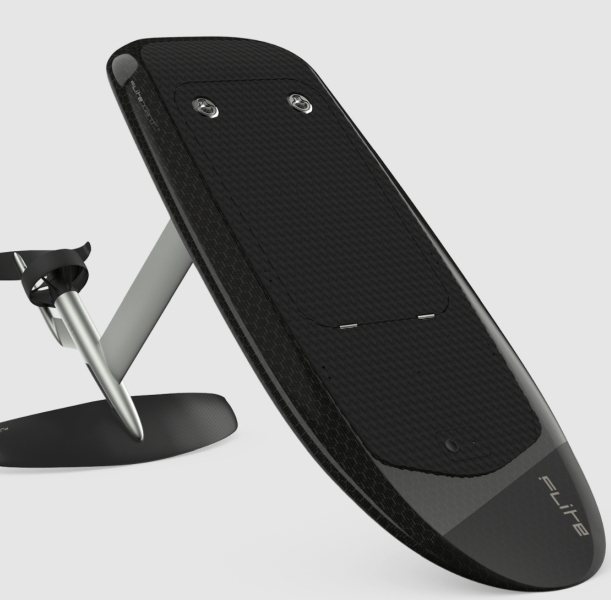
Kitty Hawk Kites teaches eFoil from its Kiteboarding Center at Waves Village Watersports Resort in Rodanthe, milepost 40, and it pitches the spot as “the calm waters of the Pamlico Sound”: warm, shallow, flat, with a sandy bottom that suits beginners. The boards are Fliteboards.
A session lasts 2 hours, private or in a group. No board sports background is needed, and the school says most people are up on the board within an hour, working from lying on the belly to standing. Riders have to weigh between 90 and 265 lbs. The list price is $400 per person plus a 6% online convenience fee, read on October 23, 2026.
The kit list fits in a beach bag: a swimsuit with a rash guard or a T-shirt over it, water shoes (the school makes them compulsory), sunscreen, a towel and bottled water. From March to May and from September to November it recommends a wetsuit. Anyone under 18 needs a parent or guardian to sign the waiver.
Kitty Hawk Kites advises booking early for June to September and for holidays. If plans move, a cancellation at least 48 hours ahead gets a full refund, and a lesson can be rescheduled up to the day before.
E-Surfing is not eFoiling
Kitty Hawk Kites also runs E-Surfing at Rodanthe, Nags Head and Whalebone, on YuJet electric surfboards that have no foil, from $150 plus the 6% online fee. A YuJet stays on the surface.

Waves and Avon, farther down NC 12
REAL Watersports, based in Waves, keeps a fleet of eFoils and writes its curriculum around riding within the first hour on the flat Pamlico Sound. Sessions are 1:1 and private, 2 hours long, from $400, and the booking page also shows a semi private 2:1 option.
REAL teaches more than the battery board. Its “On The Fly” format coaches foil skills behind a jet ski, one coach to one rider, 2 hours, from $400, and the list of disciplines runs from wing foil, surf foil, kite foil and parawing to foil drive and eFoil.
Outer Banks Kiting in Avon works from the water. It teaches from a skiff, with WaveRunner chase craft, and it will come to guests who are staying soundfront. Its eFoil prices are $500 for up to two people and $1,000 for up to four, which works out to $250 a head when two share. Every lesson the company sells is a half day or a full day, and the site does not say which length each eFoil price buys, so ask before you compare it with a 2 hour session elsewhere. If weather stops a lesson, you get 100% credit, valid for 12 months.
Further north, a Waydoo listing names Efoil OBX in Duck as an outfit riding Waydoo eFoils. The listing is undated, the business has no website of its own, and we could not confirm that it is operating.
Swipe sideways to see all columns
| Operator | Where | Session | Price |
|---|---|---|---|
| Kitty Hawk Kites | Waves Village, Rodanthe | eFoil lesson, 2 hours, private or group | $400 per person plus 6% online fee |
| REAL Watersports | Waves | eFoil, 1:1 private, 2 hours | from $400 |
| Outer Banks Kiting | Avon | eFoil, up to 2 people, half or full day (not stated) | $500 |
| Outer Banks Kiting | Avon | eFoil, up to 4 people, half or full day (not stated) | $1,000 |
Lessons for the windy days
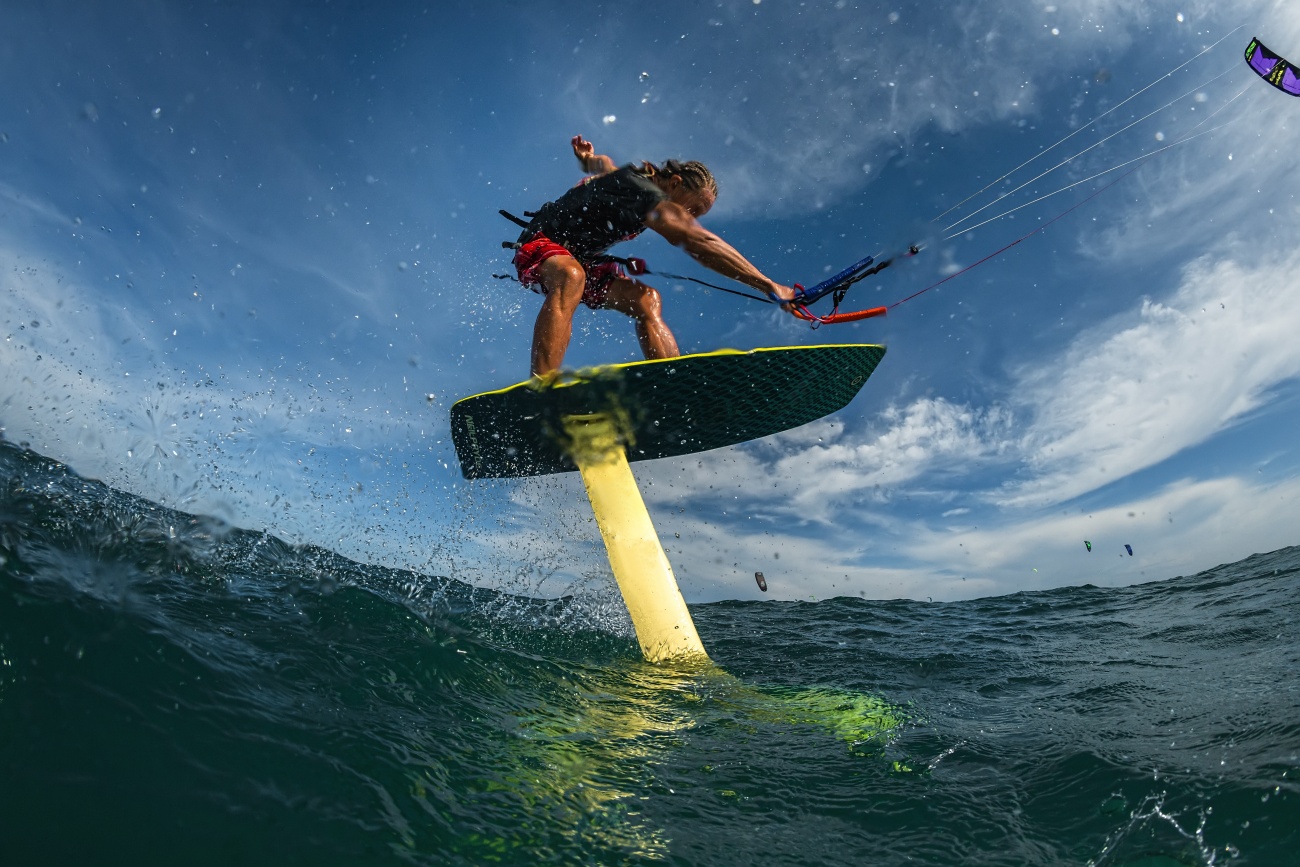
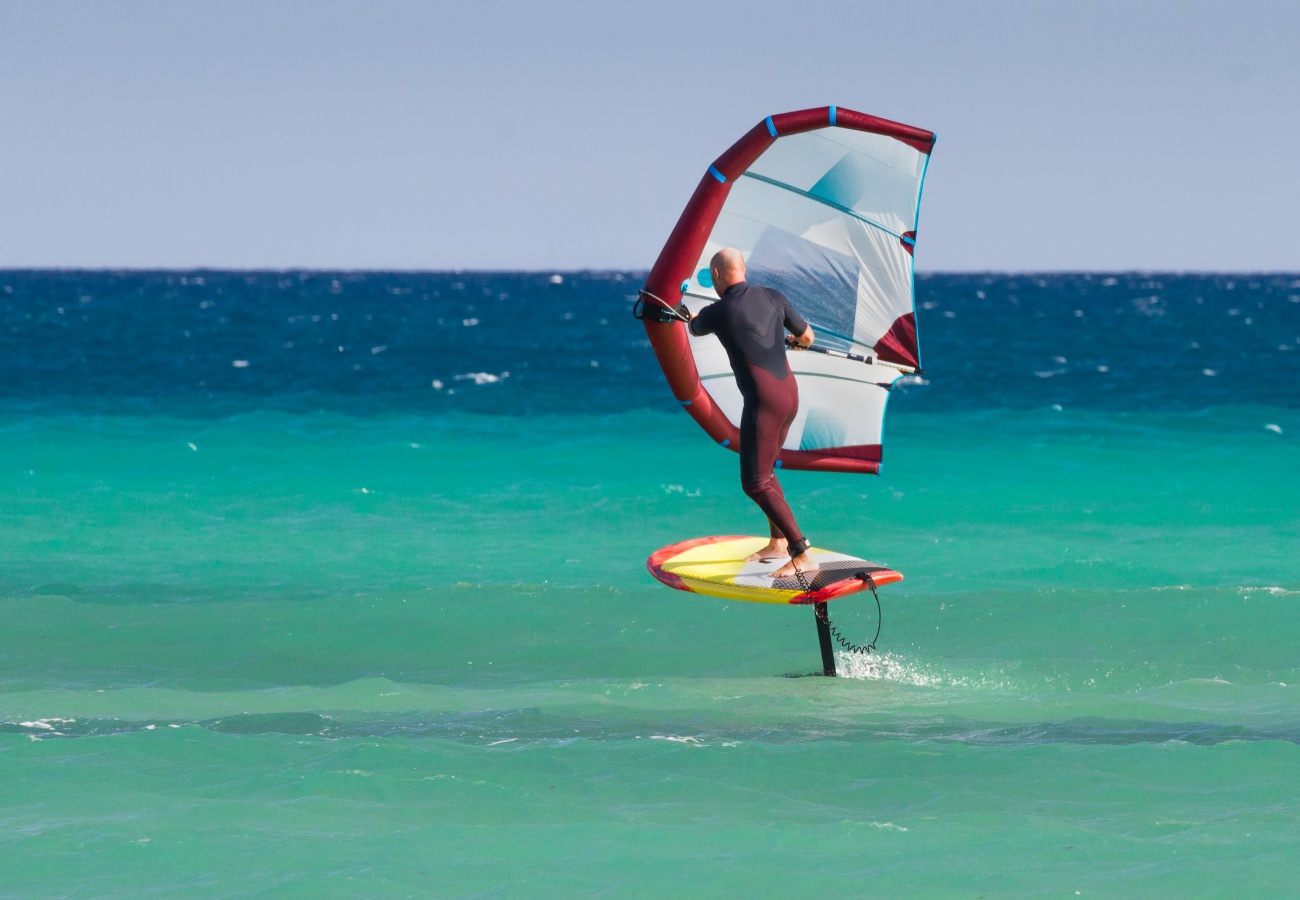
Kitty Hawk Kites runs winging, foiling and electric surfing lessons from Waves Village in Rodanthe, and it teaches kiteboarding from March to November.
Its Intro to Winging asks for no experience. It opens on land, with wing handling and ground school, and then puts you on a SUP-wing board. The syllabus covers hydrofoil board basics, water starts, tacking and jibing, safety and wind awareness, and wetsuits can be rented. For 2 hours the intro costs $300 plus the 6% online fee. Private coaching is $400 for 2 hours and $600 for 3.
REAL Watersports builds its wing program in steps. Wing Foil 101 is an on-land class of 1.5 hours from $100 per student, open to ages 6 to 75 and up. Its Zero to Hero camp costs $1,695 per person for 3 days of 5 hours with 2 students per coach, ages 12 to 75 and up. Private coaching starts at $600 for a half day of 3 hours and $1,200 for a full day of 6. In Avon, Outer Banks Kiting charges $500 for a half day of wing lessons, $1,000 for a full day and $1,500 for a 3 day private Waterman's OBK Package that adds eFoiling.
Our reading of REAL's camp calendar puts the teaching season on Hatteras Island at roughly March to November. The basics of the sport are in our wingfoil guide, and the kite side has its own page on kitefoiling.
Public launches the Park Service names
For riders with their own kite or windsurf kit, the National Park Service lists the places it considers ideal on Cape Hatteras National Seashore, depending on the weather. For kiteboarding these are Haulover (Canadian Hole), Kite Point and the Salvo Soundside Beach Access on Hatteras Island, plus Springer's Point on Ocracoke. For windsurfing it names Haulover, Salvo Soundside and any soundside access on Ocracoke. Haulover Day Use Area sits on the sound side of NC 12 between Avon and Buxton and has been a windsurfing focal point for decades.
The Park Service warns about overhead obstacles such as powerlines near the road and expects the best conditions in spring and fall. Its page says nothing about foils or motorized boards. A spot that works for a kite is no permission to launch a battery board there.
North Carolina boat law, read for a battery board
No North Carolina rule mentions eFoils by name. The state's boating authority is the North Carolina Wildlife Resources Commission (WRC), and its pages speak of motorized vessels, sailboats and personal watercraft. Where we read a rule onto an eFoil, we say so. This is a summary, not legal advice; for a board you own, ask the Commission before you ride.
Registration and title
The WRC requires every motorized vessel used on public waters to be registered, jet skis included. Only boats moved by oars, paddles or the current are exempt. Its registration form VL-1, in the edition dated 10/2026, spells out that this covers vessels with an electric trolling motor, so an electric drive is no way out. Registrations run for 1 or 3 years. A title is needed for motorized vessels and sailboats of 14 feet or longer and for every personal watercraft.
On VL-1, registration without a title for a craft under 14 feet that is not a personal watercraft costs $38 for one year or $102 for three, with renewals under 26 feet at $36 and $100 (read October 23, 2026; transaction fees vary online and by phone). Applications go through gooutdoorsnorthcarolina.com or a wildlife service agent. Our reading is that a privately owned eFoil falls under this line. A boat registered in another state and kept in North Carolina for more than 60 consecutive days must move its registration to North Carolina.
Boating course, life jackets and accidents
General Statute G.S. 75A-16.2, as the WRC summarizes it, requires anyone born on or after January 1, 1988 to complete a NASBLA approved boating course before operating a vessel with a motor of 10 HP or more on public waters. The condition is the motor rating. Whether a particular eFoil reaches 10 HP is a question for its maker's specification, and we do not give a verdict here.
On boats under 26 feet, children under 13 must wear a life jacket while underway. For personal watercraft the rules are stricter: no operator under 14, a life jacket at all times, the kill switch lanyard attached, and no riding between sunset and sunrise. Whether North Carolina treats an eFoil as a personal watercraft is not stated anywhere we found, but the lanyard and the vest are cheap insurance either way.
Town ordinances and Cape Hatteras National Seashore
The beach towns add their own layer, all of it aimed at personal watercraft or engine-powered craft. In the visitors bureau's summary, Kitty Hawk prohibits launching engine-powered watercraft from its beaches and keeps personal watercraft 600 feet from the ocean beach. Nags Head keeps them 600 feet from the sound or ocean shoreline and from piers, allows them in and out only at no wake and 5 mph, and bans motorized watercraft at the Danube Street Sound Access and at Jockey's Ridge State Park. Duck, Southern Shores and Kill Devil Hills set distances of their own, from 300 feet to 400 yards, and Duck and Southern Shores add a minimum age of 16.
Inside Cape Hatteras National Seashore, personal watercraft may not launch or land at Park Service accesses and may not be operated within the Seashore. The federal definition in 36 CFR 1.4 (eCFR text of October 1, 2026) describes a personal watercraft as a vessel usually under 16 feet using an inboard internal combustion engine powering a water jet pump. Our reading is that a battery eFoil with a propeller does not fit that wording, and 36 CFR 7.58, the special regulations for Cape Hatteras, contains no watercraft provision. Still, no source we found settles whether the Seashore counts an eFoil as a personal watercraft. The cautious course is not to launch a motorized board from town shorelines or Park Service accesses and to ride from a school's soundfront base.
Water temperature on the sound, and the hurricane months
Oregon Inlet Marina and Hatteras measure the inside waters, Duck the open ocean off the northern beaches, and NOAA keeps monthly averages for all three.
Swipe sideways to see all columns
| Month | Oregon Inlet Marina | Hatteras | Duck (ocean) |
|---|---|---|---|
| March | 51.9 | 56.6 | 46.3 |
| April | 60.7 | 64.1 | 52.3 |
| May | 68.9 | 71.4 | 60.3 |
| June | 76.4 | 78.4 | 67.9 |
| July | 80.6 | 81.5 | 70.5 |
| August | 80.1 | 81.3 | 74.0 |
| September | 76.1 | 78.5 | 75.0 |
| October | 68.1 | 70.5 | 68.7 |
| November | 58.0 | 60.9 | 59.7 |
June shows the gap best. At Duck the ocean averages 67.9°F, about 8 to 10°F below the two sound stations by our comparison, while Hatteras is already at 78.4°F (near 26°C). By July both inside gauges are above 80°F. Kitty Hawk Kites recommends a wetsuit from March to May and from September to November, the shoulder months on either side of that warm stretch.
Hurricanes are most likely on this coast in August and September, the Coast Pilot notes. Build a spare day into a late summer trip.
For wing and kite riders the Park Service expects the best conditions in spring and fall. A May or late September week can hold both sports, with water in the high 60s to high 70s.
Reaching Hatteras Island by road and ferry
The closest big airport is Norfolk International (ORF), around 100 miles north of the Seashore. Raleigh-Durham (RDU) is some 200 miles away. From either one, the drive leads to the junction of US 64 and NC 12 in Nags Head, the northern entrance to Cape Hatteras National Seashore, and NC 12 then carries you down Hatteras Island past Rodanthe, Waves and Avon to Hatteras Village.
Ocracoke, with the Springer's Point kite launch, is a ferry ride beyond the road. The Hatteras Inlet ferry from Hatteras Village takes roughly 70 minutes and needs no reservation. The ferries from Cedar Island and Swan Quarter to Ocracoke Village take about 2 1/4 and 2 1/2 hours, and both have to be reserved. None of the eFoil schools on this page is based on Ocracoke, so the island works as a wing or kite day trip, not as an eFoil base.