The Lift brand
A new Lift eFoil costs between $10,999 and $14,999 on Lift's US price list, read in October 2026, and which of the three current lines you pick decides where in that range you land (only the Laird Hamilton signature board costs more). Lift is based in Puerto Rico and describes itself as a family-run business since 2010. The company started out as a father-and-son project in a garage. By Lift's own count, its boards have since gone to riders in more than 40 countries. Co-founder Nick Leason had the eFoil idea in 2015, and in 2018 Lift launched the LIFT1, which the company calls the world's first commercial eFoil.
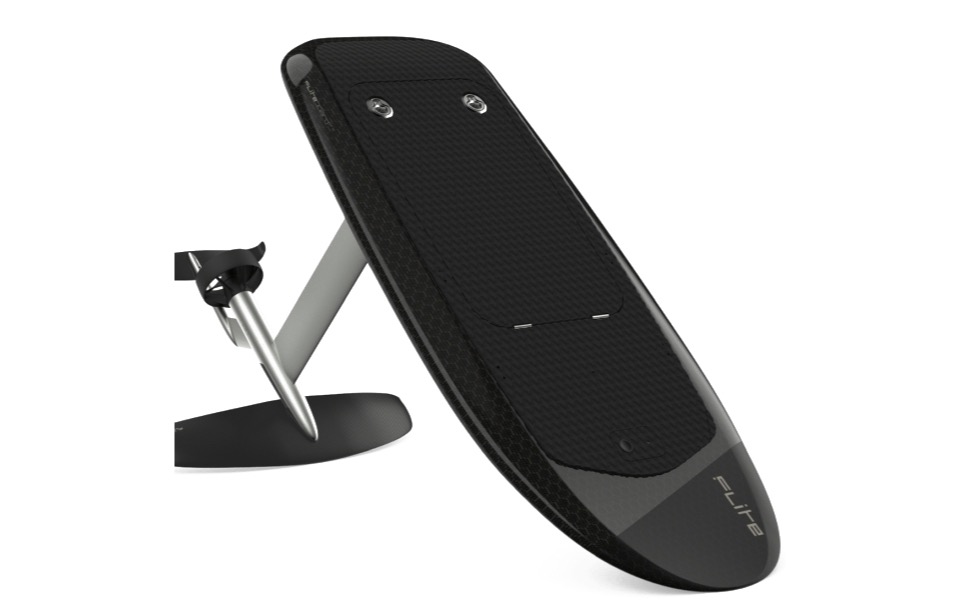
Several generations have come and gone since. The 2026 range stands on three lines: LIFT5, the carbon flagship; LIFT5 F, the fiberglass way in; and the ultralight LIFTX series. Signature editions from Laird Hamilton and John John Florence sit alongside them. Lift has had a name for careful build quality and good materials from its earliest boards on.
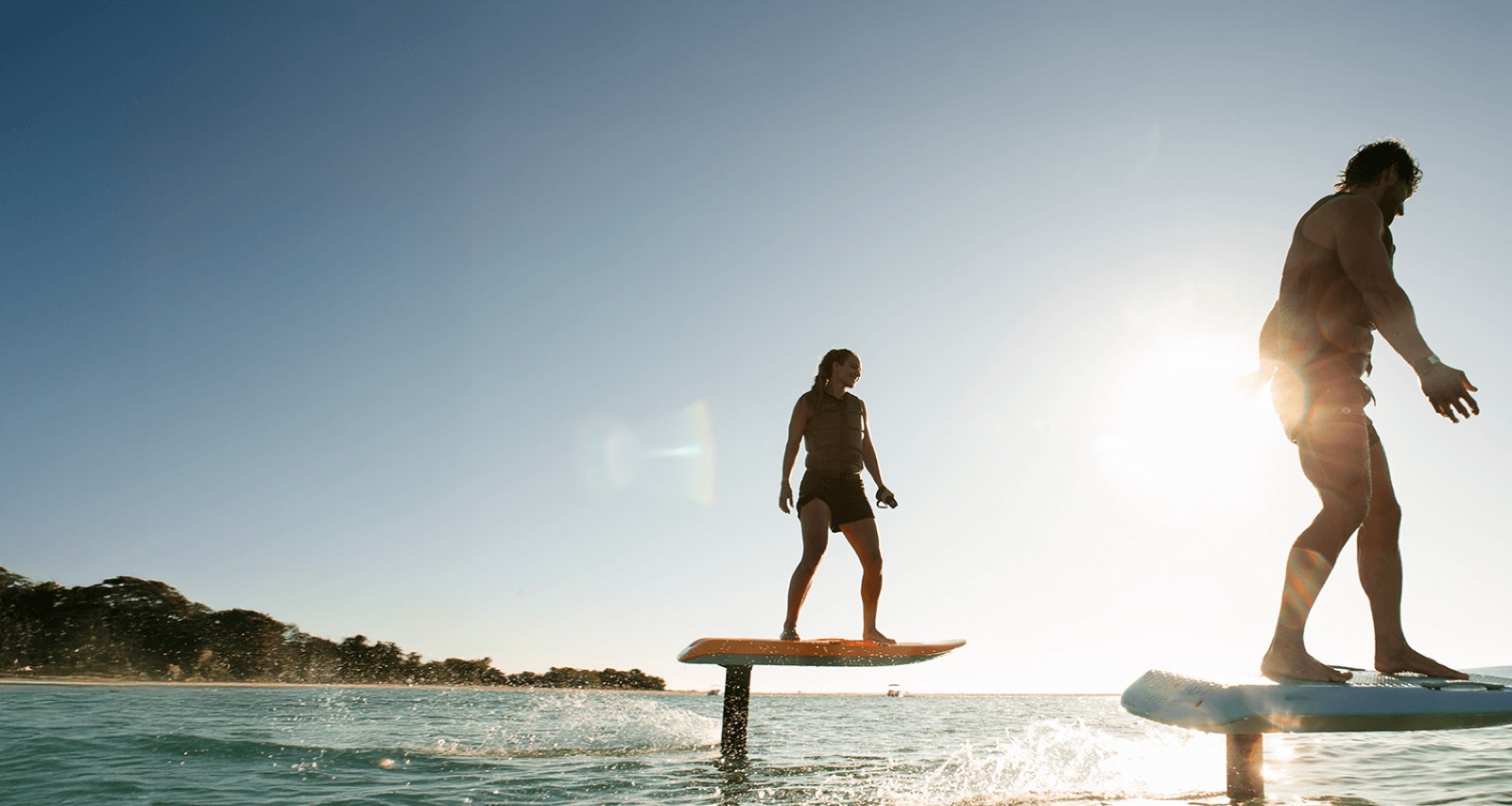
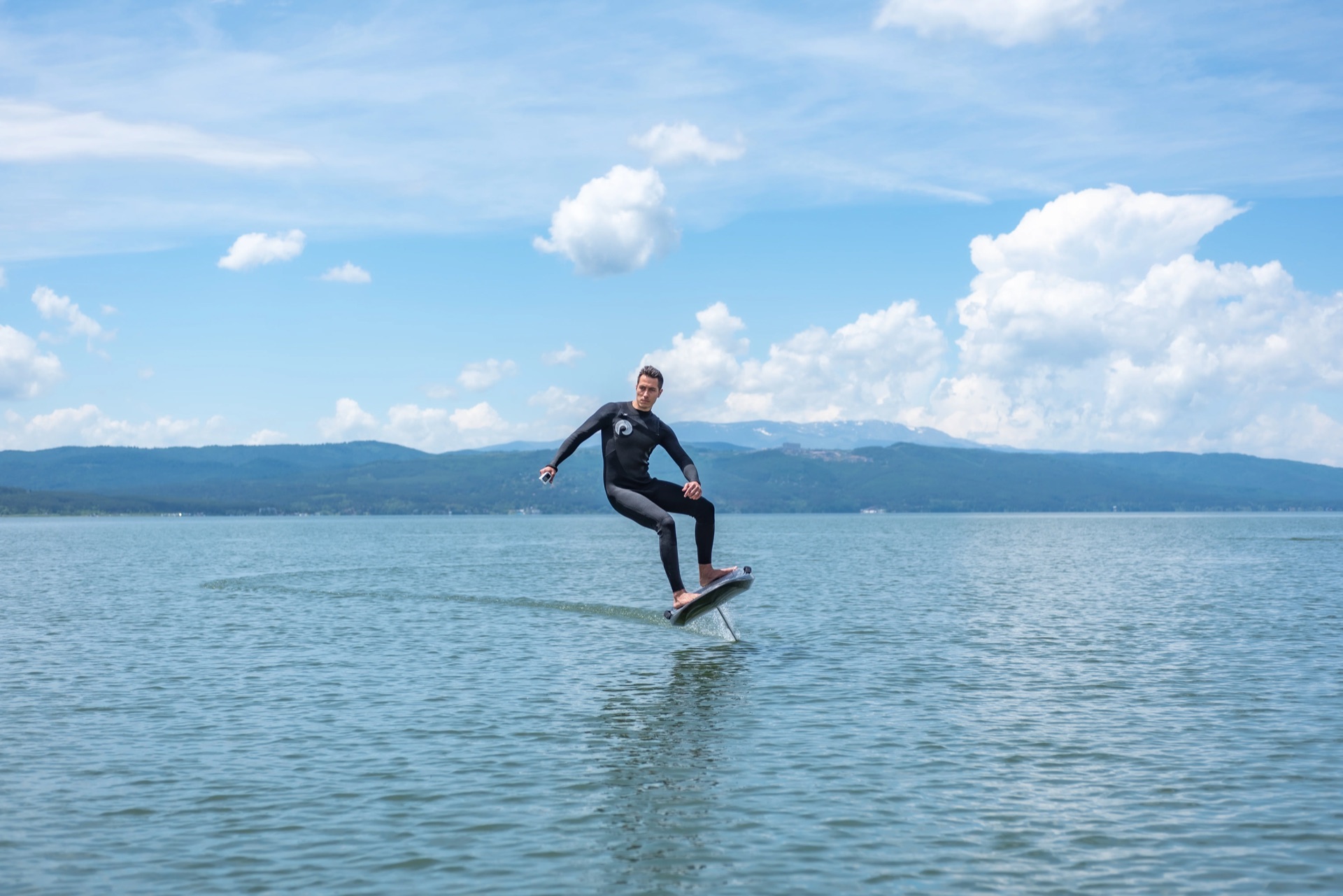
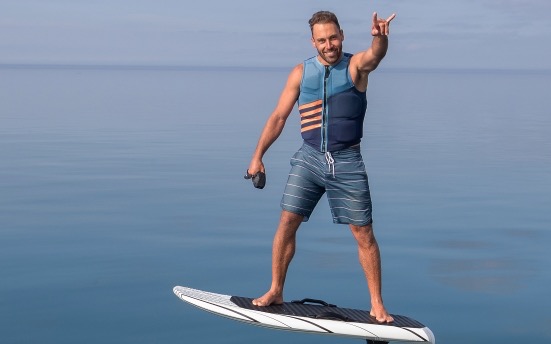
Lift in action
More videos and the full gallery are on the manufacturer's official site: liftfoils.com ↗
Models and prices (2026)
Each Lift model line comes in size variants, meaning several board lengths, and the length decides who a given board is for. Bigger boards sit steadier on the water and forgive more while you learn. Smaller ones turn quicker. Size makes no difference to the price, which is set per line. The exceptions are the two signature boards, the Laird 5′2 LIFT5 at $15,499 and the Florence 4′7 LIFTX at $14,749, which cost more.
LIFT5 LIFT5 (2026)
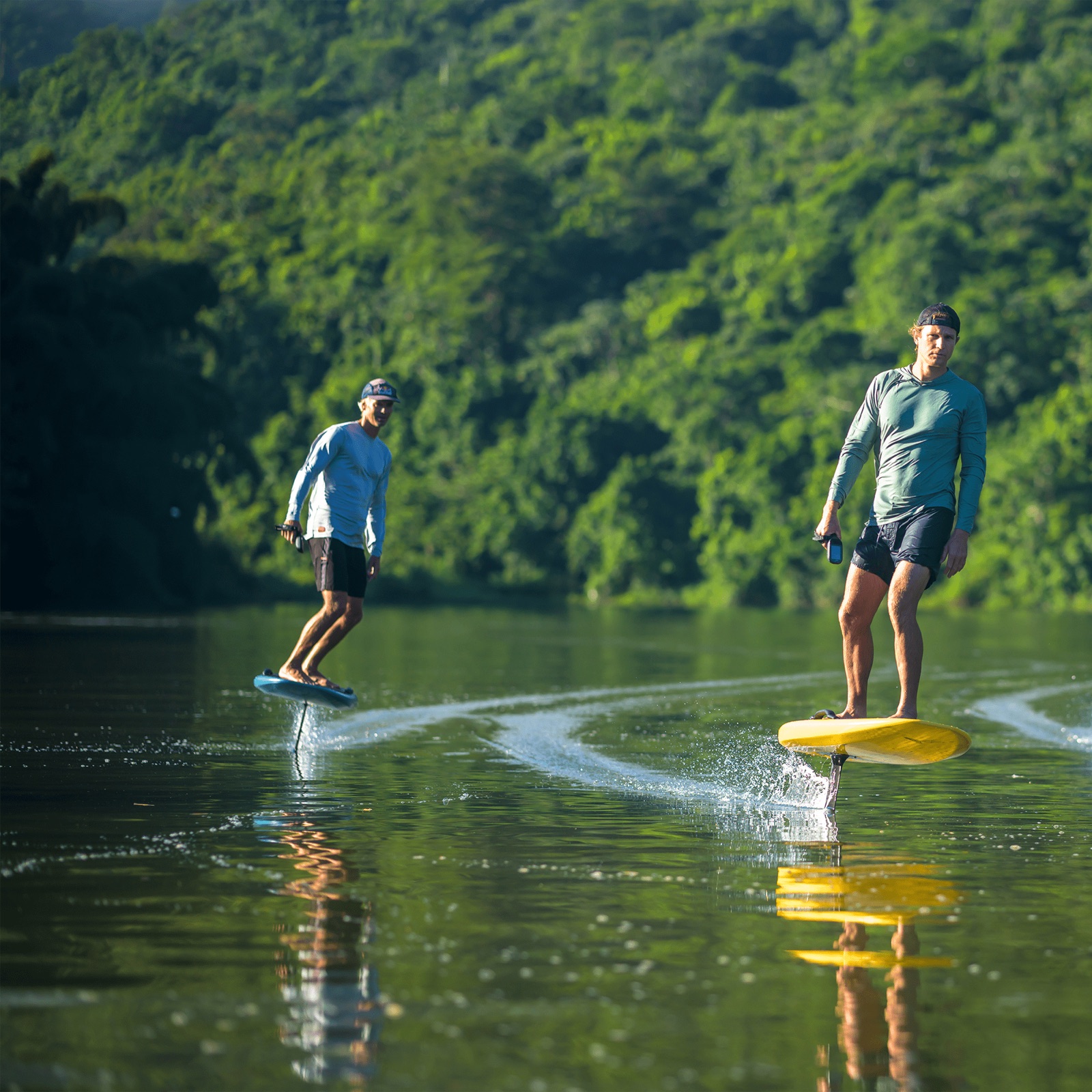
Lift's flagship carbon series in four sizes (4′4 Pro, 4′9 Sport, 5′4 Cruiser and the 5′2 Laird Hamilton signature edition), with the Gen5 battery and Elite controller. Lift lists the Laird 5′2 at $15,499 and the other three at $14,999 (Lift store, 5 October 2026).
- Board size
- 4 sizes: 4′4 (132 cm) / 4′9 (145 cm) / 5′2 (157 cm) / 5′4 (163 cm)
- Volume
- 55 / 67 / 64 / 83 l
- Weight
- complete set 28.62-31.98 kg
- Battery
- Gen5 Full Range, 2.2 kWh
- Flight time
- up to 90 min
- Charge time
- 80% in approx. 1 h
- Max. rider weight
- 86-113 kg (depending on size, more with Blowfish except on the Laird 5′2)
- Construction
- carbon
- Price (approx.)
- $14,999 (Laird 5′2: $15,499)
Manufacturer figures (as of 2026-10-05). Prices are for guidance only.
LIFT5 F LIFT5 (2026)
Lift in fiberglass with the same Gen5 propulsion: the power of the LIFT5, tuned for learning, with an aluminum mast and a system that can be upgraded later for an extra charge.
- Board size
- 2 sizes: 4′9 (145 cm) / 5′4 (163 cm)
- Volume
- 67 / 83 l
- Weight
- complete set 30.84-32.21 kg
- Battery
- Gen5 Full Range, 2.2 kWh
- Flight time
- up to 90 min
- Charge time
- 80% in approx. 80 min
- Max. rider weight
- 100-113 kg (up to 129 kg with Blowfish)
- Construction
- fiberglass, aluminum mast
- Price (approx.)
- $10,999
Manufacturer figures (as of 2026-07-05). Prices are for guidance only.
LIFTX LIFTX (2026)
Lift's lightweight series: the complete set weighs just 19.96-21.5 kg, the battery is smaller (0.9 kWh), and the electric assist 'disappears' as soon as you don't need it. Available in a John John Florence signature edition.
- Board size
- 4 sizes: 4′3 / 4′8 / 5′2 / 5′4 (130-163 cm)
- Volume
- 42-70 l
- Weight
- complete set 19.96-21.5 kg
- Battery
- LIFTX battery, 0.9 kWh
- Flight time
- up to 45 min
- Charge time
- 80% in approx. 30 min
- Max. rider weight
- 79-100 kg (depending on size)
- Construction
- lightweight carbon
- Price (approx.)
- $13,999
Manufacturer figures (as of 2026-08-30). Prices are for guidance only.
Previous generation (no longer sold new)
6′2″ Explorer(formerly $12,000)
Was the largest, most stable board of the previous generation; that role has since passed to the LIFT5 F 5′4 Cruiser.
5′6″ Cruiser(formerly $12,000)
Was the popular mid-size of the previous generation; its successor is today's 5′4 Cruiser.
5′0″ Sport(formerly $12,000)
Was the sporty mid-size of the previous generation; its direct successor is today's 4′9 Sport.
4′4″ Pro(formerly $12,000)
Was the smallest, most agile board of the previous generation; today the 4′4 LIFT5 PRO carries the name forward.
Which Lift is right for you?
The line is the big decision. Go for the LIFT5 F if price and the learning curve come first, the LIFT5 if you want the full carbon build with nothing held back, and the LIFTX if a light, surf-like ride matters more to you than long flight time.
Swipe sideways to see all columns
| LIFT5Recommended | LIFT5 F | LIFTX | |
|---|---|---|---|
| Price (approx.) | $14,999 (Laird 5′2: $15,499) | $10,999 | $13,999 |
| Volume | 55 / 67 / 64 / 83 l | 67 / 83 l | 42-70 l |
| Battery | Gen5 Full Range, 2.2 kWh | Gen5 Full Range, 2.2 kWh | LIFTX battery, 0.9 kWh |
| Flight time | up to 90 min | up to 90 min | up to 45 min |
| Best for | Uncompromising carbon flagship series | The entry into the Lift world, built for learning | Ultralight, close to the feel of surfing |
Archive: the 2021 models
Lift's 2021 range was made up of these four boards. None of them is sold new anymore. Used boards keep turning up on the second-hand market, though, so we've left the original write-ups in place below.
Lift eFoil 6'2" Explorer

The biggest eFoil from Lift was also the most stable board in the lineup and the easiest one to learn on. Beginners, schools, rental fleets and heavier riders were the buyers it suited best.
Four front wings were on offer: the 110 Classic for pros, the 170 Classic as the standard choice, the 200 Classic for more stability and the 250 Surf for beginners.
- Length: 188 cm
- Flight time: 60-90 minutes
- Charge time: 120 minutes
- Top speed: 40 km/h (≈ 25 mph)
- Price: was about $12,000
Lift eFoil 5'6" Cruiser

The Cruiser was the all-rounder of the Lift family, a board practically anyone got along with. Plenty of stability, solid performance, and still some room for a thrill.
Wing choice was unchanged from the Explorer. The 110 Classic was meant for pros and the 170 Classic was the standard, while the 200 Classic gave more stability and the 250 Surf suited beginners.
- Dimensions: 167 x 71 cm
- Flight time: 60-90 minutes
- Charge time: 120 minutes
- Top speed: 40 km/h (≈ 25 mph)
- Colors: black, white, blue
- Price: was around $12,000
Lift eFoil 5'0" Sport

Newcomers found the Sport a notch more demanding, and Lift recommended it mainly for advanced riders under 100 kg. In return it allowed a more aggressive riding style and quicker turns.
Same four wings again: 110 Classic (for pros), 170 Classic (the standard), 200 Classic (more stable) and 250 Surf (for beginners).
- Dimensions: 153 x 64 cm
- Flight time: 60-90 minutes
- Charge time: 120 minutes
- Top speed: 40 km/h (≈ 25 mph)
- Colors: black, white, blue
- Price: was roughly $12,000
Lift eFoil 4'4" Pro

The Pro was the smallest board in Lift's 2021 range and was made strictly for very experienced riders. Nothing else in the range turned as sharply or gave you as much freedom of movement. Riders could weigh at most 90 kg. Being so compact, it was also the easiest to stow.
Buyers once again picked from the same four wings, 110 Classic for pros, 170 Classic as the standard, 200 Classic for stability and 250 Surf for beginners.
- Length: 132 cm
- Flight time: 60-90 minutes
- Charge time: 120 minutes
- Top speed: 40 km/h (≈ 25 mph)
- Colors: black, white, blue
- Maximum rider weight: 90 kg
- Price: was close to $12,000
Lift rider reviews on video
Lift and the competition
Every other maker gets measured against Lift, the brand that invented the category, and the carbon LIFT5 is still the reference board. The strongest challenger is Australia's Flite. At the light end, Lift's LIFTX line is a set of ultralight, surf-flavored eFoils that give up flight time for a surf-like ride. Flite answers with its ULTRA, which Flite calls its lightest production eFoil.
Our eFoil comparison table puts every current model from the active brands side by side.
Who a Lift is for
A Lift makes the most sense if you want the original and plan to keep it for years. The Lift Hand Controller is listed as compatible with every Lift from the LIFT3 on, and all current boards share one connection system, LCS, between board, propulsion and battery.
That shared system does not extend to batteries. The older Gen4 pack does not work with a LIFT5 or a LIFTX, and the LIFTX runs its own smaller battery. Lift's one-year warranty covers only the original buyer and does not pass to a second owner, something to keep in mind if you might sell the board one day.
The fiberglass LIFT5 F costs $4,000 less than the carbon LIFT5. So the current lineup is no longer only for buyers with no budget ceiling, and it now suits anyone shopping for a first premium board as well. Lift has taken this route before, with the fiberglass LIFT3 F, launched in 2022 from $9,995. If a starting price of $10,999 (€10,998 in Lift's euro store) is still more than you want to spend, look at the more affordable SiFly or at Waydoo instead.
Lift on your home waters
A Lift is quiet and electric and leaves almost no wake. Because it barely disturbs the water and won't annoy anyone on shore, it fits inland lakes and calm coastal bays well. Rules for those waters differ by country, and often from one lake or bay to the next, so check the local regulations before you ride.
Ride before you buy. An hour on a rented eFoil teaches you things no spec sheet can, and our eFoil buying guide covers what else is worth settling before you buy.