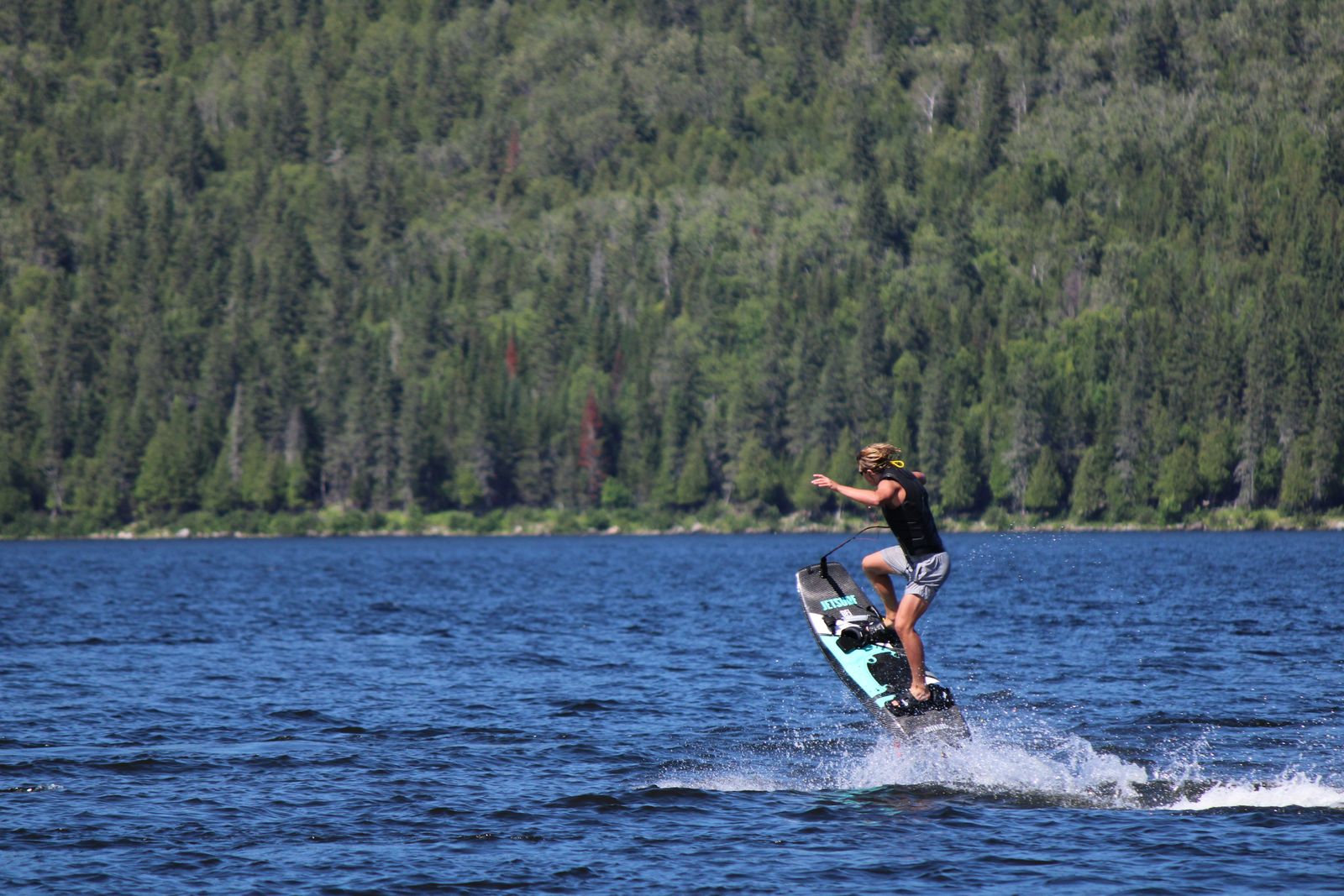
Incline Village, Carnelian Bay and South Lake Tahoe
A state line runs through the water. Incline Village and Sand Harbor are in Nevada, while South Lake Tahoe, Meyers and Carnelian Bay belong to California, and that split decides which state's paperwork applies to a board of your own. The lake itself is big for something this high up, with 72 miles of shoreline (about 116 km) wrapped around 191 square miles of water (roughly 495 km²). Nevada State Parks calls it the largest alpine lake in North America.
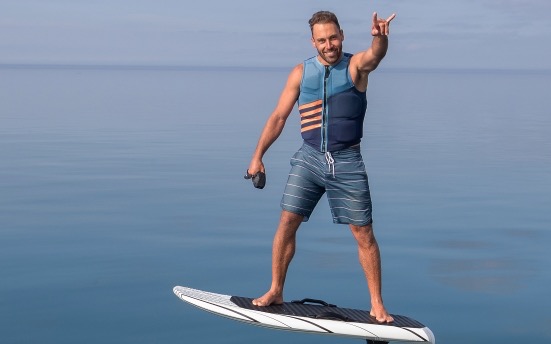
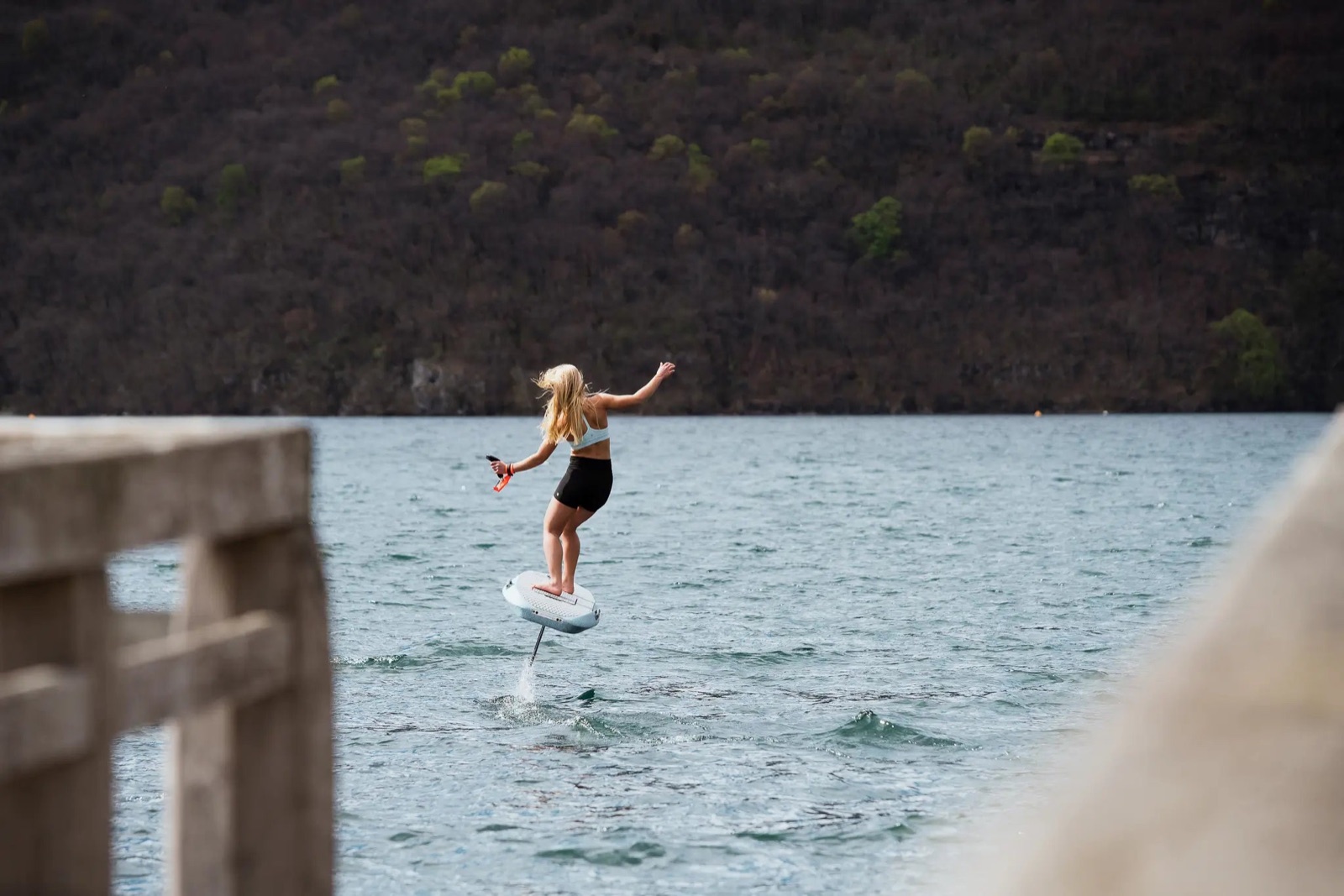
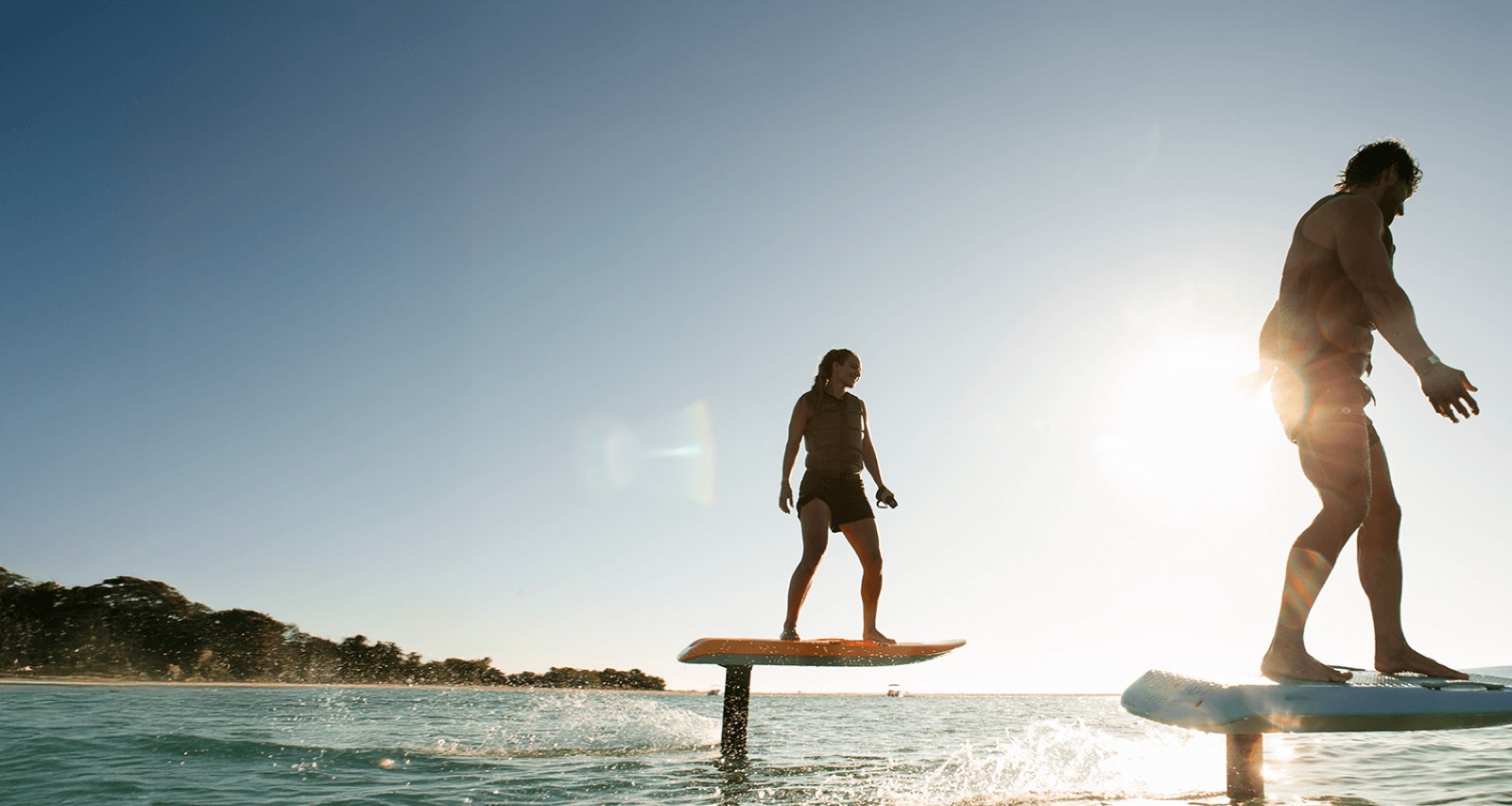
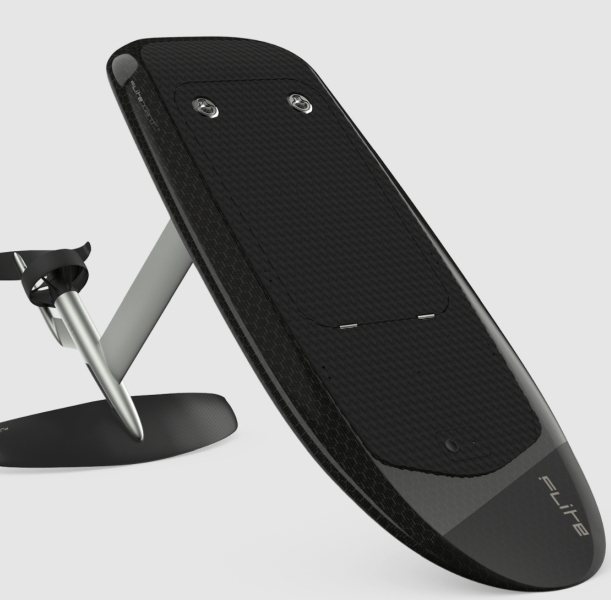
We could confirm two outfits that teach eFoiling on Lake Tahoe itself. Efoil Tahoe is the one Fliteboard names as its Lake Tahoe partner on its own location page, with an address at 926 Incline Way in Incline Village, Nevada. It rides Fliteboard boards and works as a mobile school. You name a spot around the lake and the crew brings the eFoil to you, so the Incline Village address matters less than it looks.
To pick that spot, Efoil Tahoe points riders to tahoepublicbeaches.org, which lists more than 40 public beaches with a filter for motorized and nonmotorized boating, links live water temperature, wave and wind data, and reminds you to check the state agencies for algae warnings.
Group lessons and the Flitescooter do have a fixed base: Tahoe Waterman's Landing, 5166 North Lake Boulevard in Carnelian Bay, on the California side of the north shore. We found no eFoil base in Tahoe City or Kings Beach, the towns on either side.
South Lake Tahoe has the second school. Adventures Lake Tahoe is a multi activity outfitter with ATV tours, e bikes, kayak fishing and snow trips on its menu, and it lists an “Electric hydrofoil (Efoil) lesson and activity” on the lake. Before you get wet there is a medical questionnaire and a liability waiver. No price is published, so ask when you book.
What a lesson costs and what it includes
Efoil Tahoe prices its lessons by group size. Solo is, in the booking page's words, “One rider, one instructor, all-in for 1.5 hours”; Duo and Trio put two or three riders with one instructor, and Group means four or more. The catalogue sets the minimum age at 12, so check it when you book a teenager in.
Swipe sideways to see all columns
| Format | Lake Tahoe | Donner Lake (Truckee) |
|---|---|---|
| Solo, one rider | $275 | $295 |
| Duo, two riders | $225 | $245 |
| Trio, three riders | $195 | $220 |
| Group, four or more | $185 | Not listed in the catalogue |
Two friends on a Duo spend $450 between them, $100 less than two Solo lessons, and share one instructor for the session. For a sense of how $275 compares with owning a board, our eFoil price guide runs through what the boards themselves cost.
Fliteboard's partner page promises a certified instructor, current Fliteboard gear, an impact vest and a helmet, with a wetsuit on request; Efoil Tahoe's own site lists wetsuits, helmets and lifejackets as included. Nobody goes out without being able to swim, and the vest stays on the whole time. Pack swimwear, a towel, a water bottle and sunscreen.
The catalogue also has a one hour eFoil rental session (no price published), memberships, gift cards, corporate events and the Flitescooter Cruise, sold with “no experience needed” for ages 14 and up, 30 to 60 minutes from Tahoe Waterman's Landing. Owners of a Fliteboard can bring it in for maintenance and repairs or rent a Flitecell battery (our eFoil battery guide explains pack sizes). Booking runs through FareHarbor.
The free Tahoe sticker for electric boards
Tahoe's boat inspection program, set up against aquatic invasive species, has a category for hand launched electric watercraft: anything with electric propulsion that one person can reasonably launch without a trailer. Its own list names eFoils, eSUPs, eSurfs, underwater scooters, seabobs, electric wakesurf boards and kayaks with trolling motors. An electric SUP is covered just like an eFoil.
Such a craft has to be inspected at a Tahoe station at least once per calendar year before it launches anywhere in the Tahoe Region. After that it may go in away from the designated ramps, without a seal, as long as you hold the annual electric Tahoe AIS sticker and signed proof of the inspection. The sticker is free, and so is the decontamination. A trailered motorboat, by contrast, pays $70 or $115 for its sticker, depending on length, plus decontamination fees.
The sticker comes with a signed affidavit. Clean, Drain and Dry the board before and after every launch, have it reinspected after any use outside the Tahoe Region and before Fallen Leaf or Echo Lakes, and keep this year's sticker on it every time you launch. Seven days of dry time, the program adds, significantly reduces the risk.
Since 2025 every watercraft that passes inspection is also decontaminated, a step made mandatory against the invasive golden mussel. Kayaks and plain SUPs are pointed to TahoeKeepers.org. In winter only the Meyers Inspection Station, 2175 Keetak Street in South Lake Tahoe, inspects, by appointment booked 48 hours ahead.
Launching without the sticker, or out of compliance with the affidavit, counts as a violation of TRPA Code of Ordinances section 63.4. In a release of 13 June 2023, TRPA (the Tahoe Regional Planning Agency) reported that two boaters who had launched across private property without an inspection settled with its Governing Board. As we read it, the sticker binds private owners; on a lesson the school takes care of its own boards.
Six hundred feet of slow water
Close to shore, Lake Tahoe is slow by rule. TRPA's 2018 Shoreline Plan, as summarized in the agency's June 2023 release, keeps motorized boats under 5 mph (about 8 km/h) within 600 feet (about 183 m) of the shore, within 100 feet (about 30 m) of paddlers and swimmers, and within 200 feet (about 61 m) of shoreline structures. In Emerald Bay the 5 mph limit applies everywhere.
The plan does not name eFoils. We take it to cover them, since a board with a motor is a motorized craft, and that puts the flying part of a session beyond the 600 foot line. The 100 foot rule around paddlers holds wherever you meet them.
TRPA's free Tahoe Boating app (from tahoeboating.org, the App Store or Google Play) shows your position against the no wake zones and carries safety notes, AIS rules and emergency contacts. At boat rental locations the agency also shows a video on cold water shock, safety and the no wake zones.
California and Nevada paperwork for your own board
US Coast Guard Policy Letter 01-22 of 26 August 2022 treats an eFoil, which it calls a mechanically propelled personal hydrofoil, as a vessel subject to the laws for vessels propelled by machinery, and notes that such craft can go faster than 35 mph. The letter then lists what follows from that: state numbering with a hull identification number, the Certificate of Number on board, a life jacket, a whistle, the Inland Navigation Rules (33 CFR 83) with lights at night, and the engine cut off switch where fitted.
California has spelled out the registration part. DMV notice VIN 2023-12 of 20 December 2023 says motorized eFoils and jetboards must be titled and registered, with CF numbers, before they are used on California waters. The rider needs paperwork as well: under Harbors and Navigation Code section 678.11 you need a California Boater Card to operate a motorized vessel on California waters, at any age since 1 January 2025. The Division of Boating and Waterways exempts people operating a rental vessel, riders supervised by a card holder aged 18 or over, and non residents who have been in California for under 60 days and meet their own state's rules. Anyone relying on an exemption carries proof of it.
Lake Tahoe is shared water, and the DBW names it when it explains residence. A California resident needs the card even for a boat registered in another state, and a vacation home on the lake does not count as residence. What the DBW pages leave open, as far as we can see, is how a hand launched eFoil fits into all of this.
Across the state line the rules say less about boards. The Nevada Department of Wildlife requires anyone born on or after 1 January 1983 to complete an NDOW approved boater education course before operating on Nevada's interstate waters, and recommends it for all. We found no mention of eFoils on its pages, and the fee list ($20 for a title, $20 a year for craft under 13 ft, plus a processing fee) does not say whether a board gets registered at all.
Nevada's own AIS decal is spelled out more plainly. It costs $13 for motorized and $6 for non motorized watercraft, it applies on Nevada waters with Lake Tahoe included, and paddleboards and water toys are exempt. California registered vessels have been exempt on Tahoe's interstate waters since 24 May 2013. A Tahoe sticker does not replace the decal. We would expect an eFoil without California registration that launches on the Nevada side to need one, though that is our reading and not NDOW's wording.
Swipe sideways to see all columns
| Item | California shore | Nevada shore |
|---|---|---|
| Tahoe AIS inspection | Once a year, free electric sticker and free decontamination | Once a year, free electric sticker and free decontamination |
| Registration | Title and CF numbers (DMV VIN 2023-12) | Not stated for eFoils; $20 title, $20 a year under 13 ft |
| Rider education | California Boater Card, all ages since 2025, with exemptions | NDOW course if born on or after 1 January 1983 |
| Nevada AIS decal | Not needed for a board with California registration | $13 motorized for a board registered elsewhere (our reading) |
| Life jacket | Carry or wear one (USCG Policy Letter 01-22) | One per person on any boat, SUPs and kayaks included |
The Nevada life jacket rule comes from the Washoe County Sheriff, who adds that children 12 and under wear theirs at all times. Every line in the table assumes a board of your own, and picking that board is what our eFoil buying guide is for.
Texts cited as they stood when we checked them on 23 October 2026. This is our interpretation and not legal advice; TRPA, the California DBW and DMV, NDOW and the Coast Guard have the final word.
Truckee and Donner Lake
Truckee is not on Lake Tahoe. The connection is the river, since Tahoe drains only through the Truckee River at Tahoe City. The town's own lake is Donner Lake, where Efoil Tahoe runs its Donner Beach Marina lessons, at $295 solo, $245 per rider in a Duo and $220 in a Trio for 1.5 hours, ages 12 and up.
A third party booking listing fills in the routine, so treat the details as secondary. You meet at the Tahoe Donner Beach Club Marina, 12915 Donner Pass Road, start with a briefing on dry land, then get 60 minutes of water time per rider with coaching through two way radio helmets. A full wetsuit and a Coast Guard approved impact vest are part of it, riders can weigh up to 250 lb (about 113 kg), and a parent or guardian signs the waiver for anyone under 18.
Donner Lake has its own rule for private craft. Title 14 of the Town of Truckee code requires a self inspection of motorized or trailered craft before their first launch of the season, and the sticker comes from the lobby of the Truckee Police Department. A valid Lake Tahoe sticker is accepted too, provided the craft has been in no other water.
Water temperature and wind
The natural rim of the lake sits at 6,223 feet, about 1,897 m above sea level, and the surface moves around it. In 2021 it ranged from 6,225.71 ft in February to 6,222.90 ft in October, according to the UC Davis Tahoe Environmental Research Center (TERC).
TERC measures the water with buoys 5 feet below the surface over the deepest part of the lake. The July average for 1999 to 2021 is 65.2 °F (18.4 °C). July 2021 averaged 68.7 °F (20.4 °C), the warmest July since 1999, and the warmest single day of that year peaked at 73.5 °F (23.1 °C) on 24 July. Spring water is far colder: on 10 March 2021 the daily maximum reached only 42.0 °F (5.6 °C), the lowest of the year. Read together, those figures make a wetsuit standard kit at Tahoe rather than an extra.
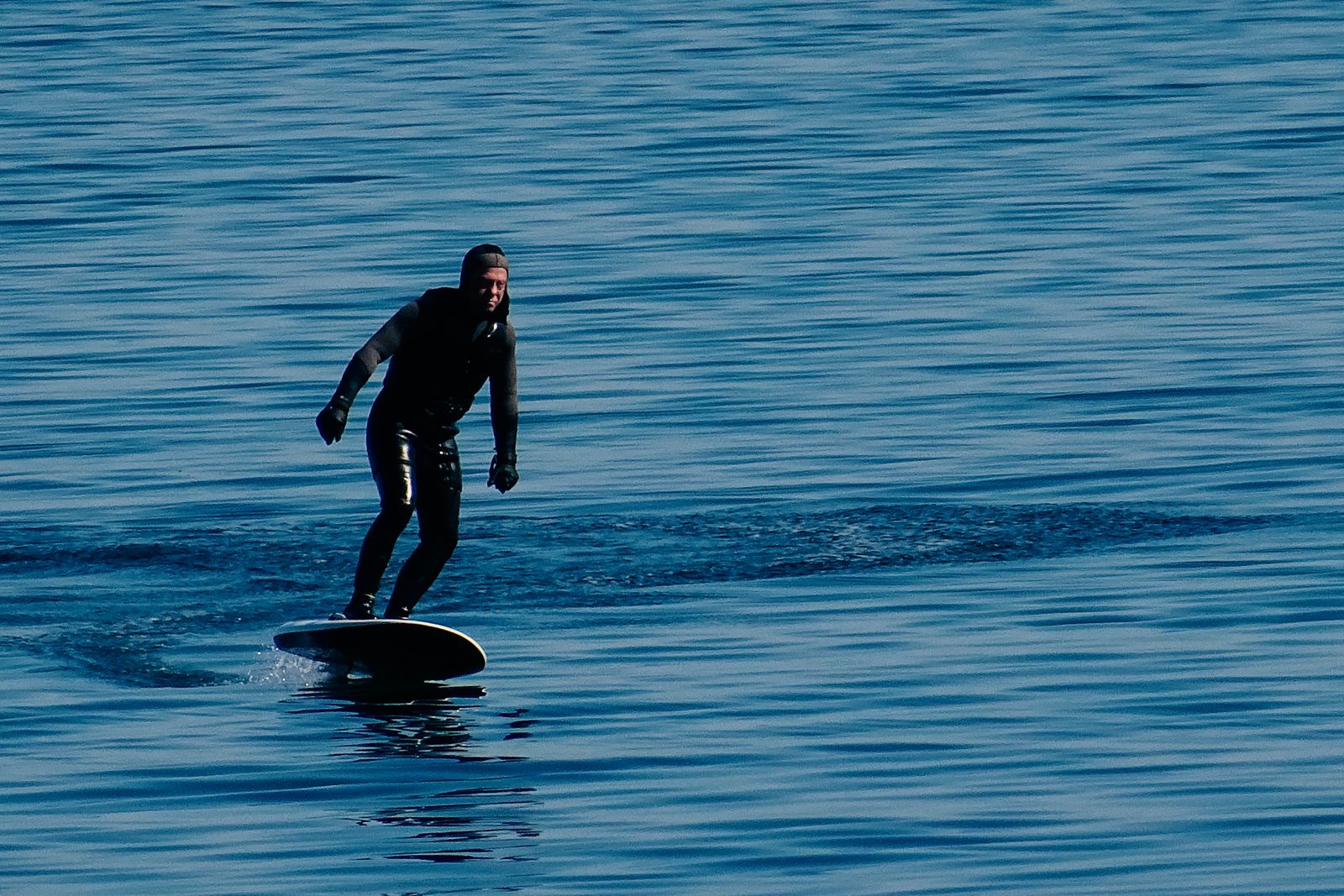
The Washoe County Sheriff names cold water shock, an involuntary gasp reflex on sudden immersion, as a common cause of drownings on the lake. Most drownings happen within minutes or seconds. The sheriff's advice is a life jacket, and on a lesson that part is settled, because the impact vest stays on from start to finish.
As for wind, Efoil Tahoe says the best days are calm and sunny and that mornings are usually smoother. The National Weather Service office in Reno publishes a Lake Tahoe forecast with wind speed, gusts and wave graphics plus a text version, and it issues Lake Wind Advisories. One advisory reposted by a Reno TV station (the repost shows no year) called for east to northeast wind at 15 to 30 mph, gusts to 40 and waves of 2 to 4 feet, and told small boats and paddleboards to stay off the lake.
Which months work
We found no published eFoil season for Tahoe. Ramp hours at Sand Harbor change by season, the inspection stations follow the boating months, and the Donner Lake sticker is issued per season. In 2021, a typical year in its pattern according to TERC, the surface was coldest in February and March and warmest in August, and July is when the water is usually at its warmest and the lake at its busiest. Put together, we read that as a practical season from late spring to early autumn, with July and August the warm core.
Sand Harbor, on the Nevada shore, has two wave protected double ramps with docks, and Nevada State Parks warns that its parking fills early on summer weekends; inspections are required there as everywhere on the lake. A weekday or an early start helps on both counts.
Book a lesson and most of this is off your hands: the school brings the board, the vest, the helmet and the wetsuit, and you sign its waiver. For other places to ride, see our pages on eFoiling in Hawaii and eFoil on Lake Garda, another big lake where the rules depend on which shore you launch from.