eFoil schools within reach of Chicago
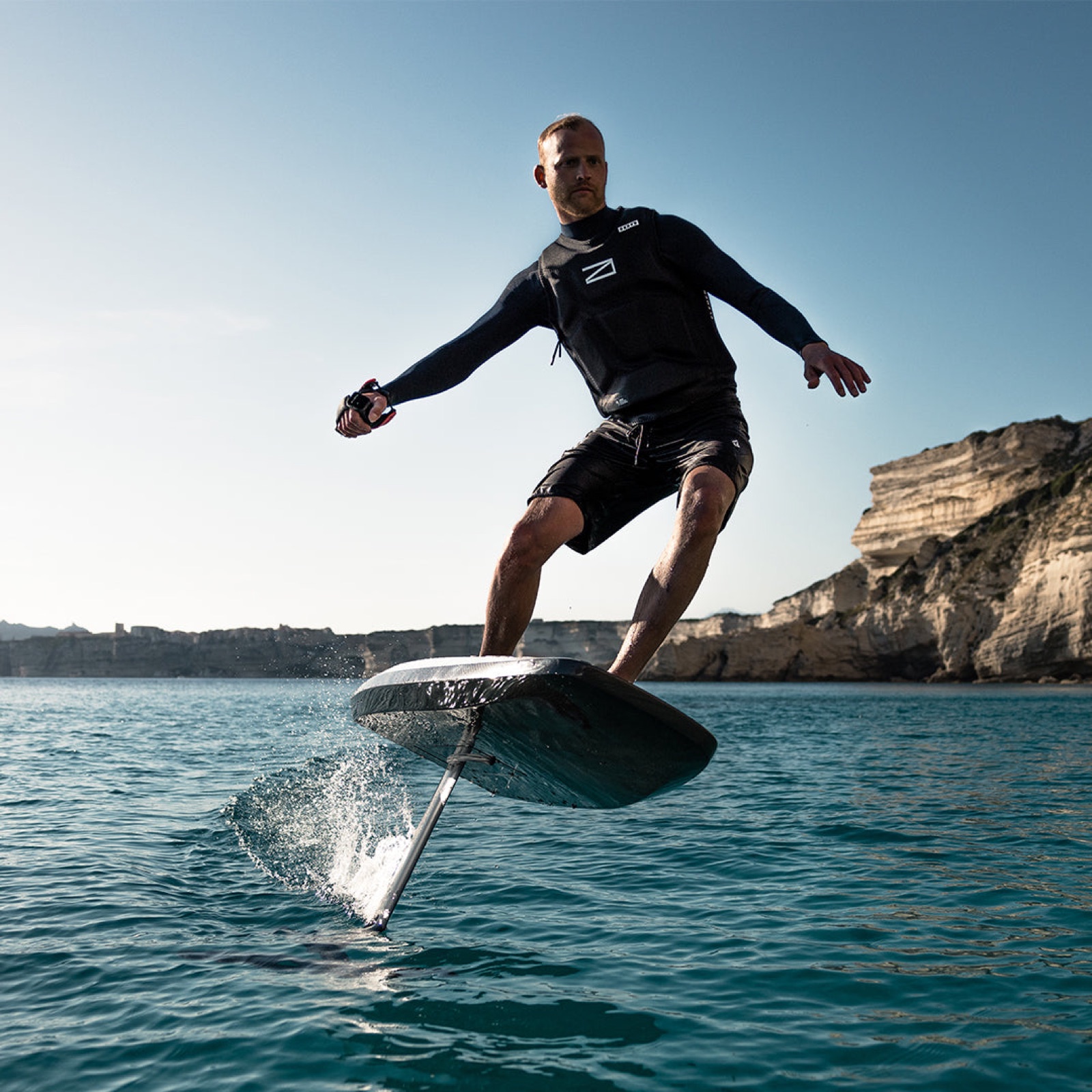
Chicago has its own eFoil school. CHI eFoil is headquartered near Montrose Beach, about 10 km (6 mi) from downtown as the crow flies by our calculation, and teaches on Fliteboards as an authorized partner.
Around the bottom of the lake, South Shore eFoil teaches Fliteboard in Michigan City, Indiana, roughly 64 km (40 mi) away in a straight line. Of the operators we checked, it is the only one that lists rentals, and only for experienced riders aged 18 and over.
Further out, about 175 km (109 mi) by the same measure, MACkite in Grand Haven, Michigan, teaches on a protected lake and says it works regularly with visitors from Chicago. That trip has its own page, eFoil lessons in Michigan.
Lake Michigan is the second largest Great Lake by volume and the only one wholly within the United States. The water stays cold into June and builds waves on a north wind. Ashore, the beaches and harbors fall under Park District rules that, as far as we could find, never mention an eFoil at all.
Learning with CHI eFoil by Montrose Beach
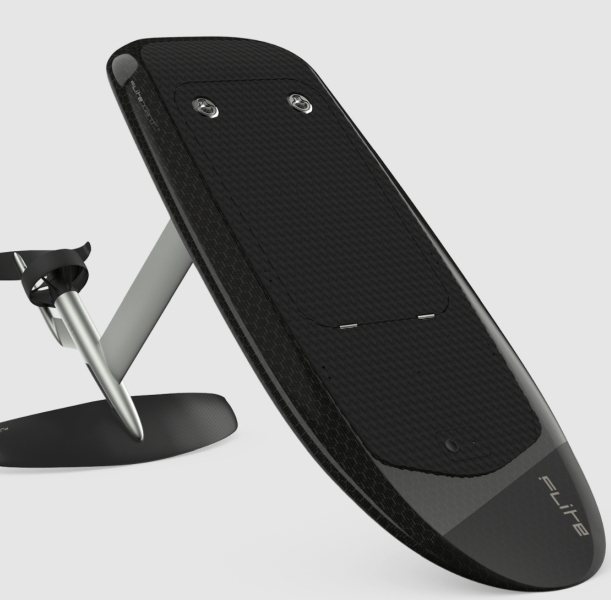
CHI eFoil calls itself “Chicago's Premier eFoil Destination”, the school's phrase and not our ranking. It is a Fliteboard authorized partner and Fliteschool, offers lessons, support and Fliteboard sales, and carries the full range of Fliteboard models, which our Fliteboard overview walks through.
Every lesson includes a USCG approved life jacket and a helmet with a hands-free intercom. Before anyone stands up there is a mandatory safety briefing of 20 to 30 minutes.
The school's listing on The Adventure Collective, a booking platform that sells the lesson but does not run it, describes a one-hour private lesson for swimmers, coached through waterproof Bluetooth headsets, that moves from prone starts to standing and then turning. The booking listing gives 10 as the minimum age, with minors accompanied by a guardian; check with the school before you book for a child.
Montrose is the only Chicago beach where the Park District allows kiteboarding, and one of two, with 57th Street, open to surfing and stand-up paddling in season. The school names the exact meeting point with the booking, as far as we can tell. Its site shows lessons and no rentals, so anyone who already rides a Fliteboard and only wants the board should ask.
South Shore eFoil in Michigan City, Indiana
Search Fliteboard's school locations for Michigan and “Michigan City” comes up. It is in Indiana, on the south shore of Lake Michigan, and has nothing to do with the state of Michigan or its rules. For a Chicago rider the mix-up works out well, since Michigan City is far closer than Grand Haven.
South Shore eFoil LLC, at 1115 N. Roeske Trail, lists four offers on its Fliteboard page:
- The Flite Experience, two hours, ages 12 and up.
- Group Lessons of four hours, also from 12.
- Flitecell battery rental.
- Fliteboard rentals for experienced riders, ages 18 and up.
No prices are published. A session comes with the latest Fliteboard equipment, safety gear and Fliteboard-trained instructors, and wetsuits are available. You bring a towel, water, sunscreen and a neoprene top, plus a full wetsuit in spring and fall. Every rider must be able to swim.
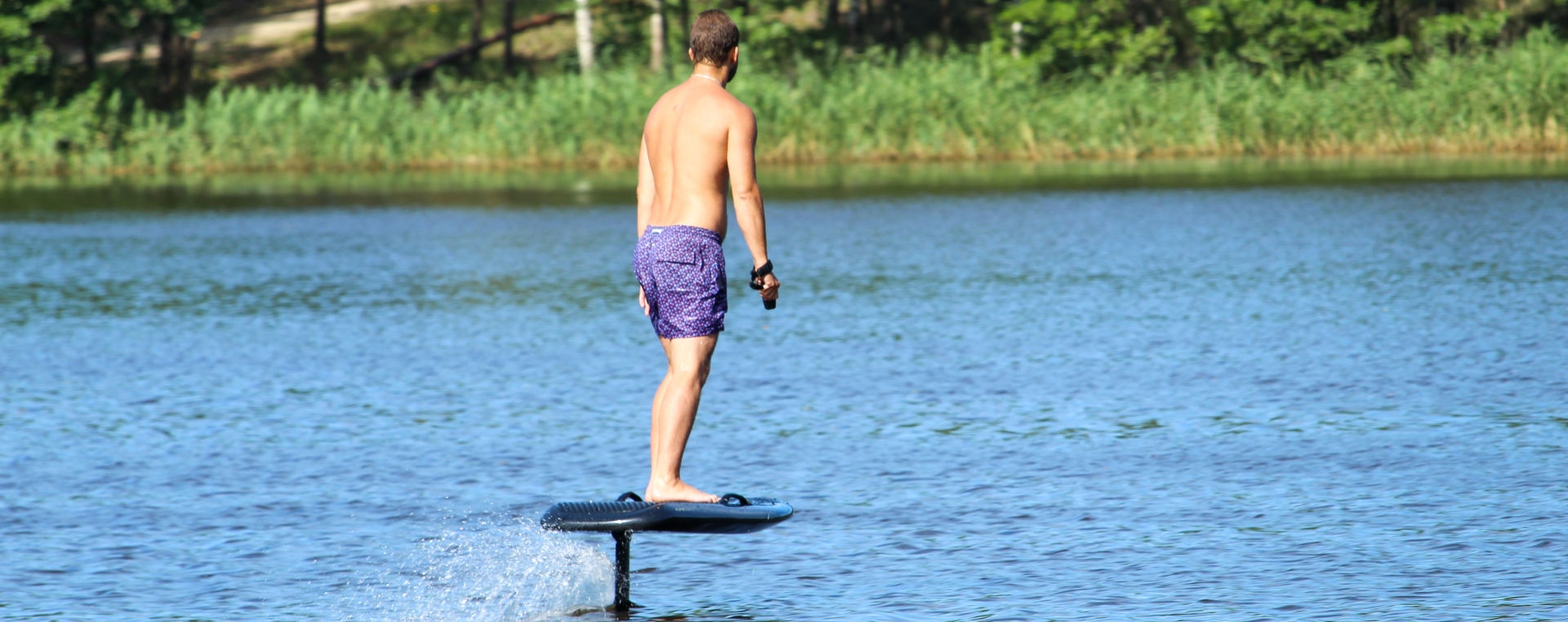
The spot is set after booking. Usually that is Duneland Beach on the open lake, sometimes Pine Lake, an inland lake of 564 acres in LaPorte County, which we see as the sheltered alternative. The school does not say when it moves there. Michigan City sits at the southern tip, where north winds arrive after crossing the whole length of Lake Michigan. By our reading, a calm Chicago morning says little about Duneland Beach.
Chicago lesson prices next to Michigan City and Grand Haven
Two of the three operators publish prices. The table holds what each one listed when we read the sites on October 24, 2026, with its age rule alongside.
Swipe sideways to see all columns
| Operator | Offer | Price | Age |
|---|---|---|---|
| CHI eFoil, Chicago | 1 hour, one rider | $400 | 10+ (booking listing) |
| CHI eFoil, Chicago | 1 hour for two, or 2 hours for one | $750 | 10+ (booking listing) |
| CHI eFoil, Chicago | 2 hours for two | $1,400 | 10+ (booking listing) |
| CHI eFoil, Chicago | 1.5 hour intro plus three 1 hour lessons | $1,300 | 10+ (booking listing) |
| South Shore eFoil, Michigan City | The Flite Experience, 2 hours | Not published | 12+ |
| South Shore eFoil, Michigan City | Group Lessons, 4 hours | Not published | 12+ |
| South Shore eFoil, Michigan City | Rental, experienced riders | Not published | 18+ |
| MACkite, Grand Haven | 2 hours, 1.5 hours ride time | $299, $200 per extra person | 16+, driver's license |
An hour alone with CHI eFoil is $400. MACkite's $299 buys two hours with an hour and a half of riding, before you count the trip to Grand Haven. If you already know one hour will not be enough, CHI eFoil sells a package: $1,300 for a 1.5 hour intro and three lessons of an hour each.
The minimum age moves with the shore: 10 in Chicago if the school confirms its listing, 12 in Michigan City, 16 with a driver's license in Grand Haven. A beginner ends up in a lesson at all three, by our reading of the offers: South Shore rents only to experienced riders, and MACkite does not rent eFoils. MACkite's protected lake and the Michigan rules are on the Michigan eFoil page; what a board of your own costs is in our eFoil price guide.
What the Chicago Park District rules say about beaches and harbors
No Park District rule we found mentions eFoils by name. That gap does not amount to a green light, because several general rules still apply to anything on the water.
Chapter 7 of the Chicago Park District Code (revision of September 2025), section B.4.b.(1), allows entry into Lake Michigan from Park District land only at the authorized bathing beaches, among them 12th Street, 31st Street, 57th Street, 63rd Street / Jackson Park, Calumet, Foster Avenue, Montrose Avenue, North Avenue, Oak Street, Ohio Street, Rainbow and South Shore. People may be in the water only during the bathing season, not during storms, not where no swimming signs are posted and not more than fifty yards from shore. No sport or activity is allowed in the water where injury or inconvenience might result, except in designated locations. The chapter says nothing about eFoils, motorboats or personal watercraft.
The beach season runs from the Friday before Memorial Day through Labor Day. Swimming anywhere else on the lakefront is prohibited, conditions are posted daily, and a red flag means you stay out. Kiteboarding is allowed at Montrose only. Surfing, stand-up paddling included, is limited to Montrose and 57th Street in season and never allowed in an active swim area. At lifeguarded beaches, only CPD Aquatics staff may teach.
State law adds 625 ILCS 45/5-7 and 45/5-12. As the Illinois boating handbook (2026, p. 10) states it, no vessel may operate in an area clearly marked for bathing, fishing, swimming or otherwise restricted, or above slow, no wake speed (at most 5 mph) within 150 feet of a public launching ramp. Our reading is that an eFoil stays out of marked swimming areas.
Park District harbors and launch ramps
Chapter 8 (version of June 11, 2025) defines a “Boat” as any motorboat, vessel, Personal Watercraft or other watercraft except a dinghy, and Personal Watercraft as jet drive craft under 12 feet. Harbor Season runs from May 1 to October 31, and the Harbor System takes in every Park District launch ramp on Lake Michigan. A launch needs a Daily or Seasonal Launching Permit, issued only to owners of trailerable Boats. Rule 35 bans swimming, diving, water skiing, fly boarding, windsurfing and any other unapproved device in the Harbor System, and rule 39 caps speed at 5 mph.
We read that as no foiling in Park District harbors; only the Harbor office can give a firm answer. Outside the harbors, these texts neither clear nor forbid a launch, so we would book a school or put the question to the Park District before the first ride. All of this is our summary of public texts, not legal advice.
Registering an eFoil in Illinois
A board you own and ride from Illinois needs numbers. Under 625 ILCS 45/3 the state asks for a Certificate of Number and decals, with two exemptions: non-powered craft such as paddleboards, and a vessel registered in another state that uses Illinois waters for less than 60 consecutive days. An eFoil has a motor, so in our reading it registers. No title is needed at 21 feet and under, and a registration runs three years, expiring September 30 (handbook 2026, p. 3). Forms are at dnr.illinois.gov/boating/watercraftapplications.html, and the Illinois DNR answers questions on 1-800-382-1696. Keep the card on board and show the number on each side of the bow in the IL 1234 AB format, block letters at least three inches high (p. 3 to 4).
The US Coast Guard took the same line nationally. Policy Letter 01-22 of August 26, 2022 treats eFoils as vessels subject to all laws for recreational vessels propelled by machinery and notes they can exceed 35 mph. It points to a certificate of number from the state of principal operation (33 CFR 174.17 and 174.19), lets states list the board as “Personal Watercraft” or “Other”, and asks riders to carry the certificate, a PFD as state and federal rules require, and a sound device such as a whistle. The letter is guidance, not a rule.
- 625 ILCS 45/5-18: anyone born on or after January 1, 1998 needs a Boating Safety Certificate for a motor of more than 10 hp; under 10 no motorized vessel at all; ages 10 to 17 face limits above 10 hp. Whether an eFoil counts as over 10 hp is not stated (p. 5).
- 625 ILCS 45/4-1: one USCG approved wearable PFD per person on every vessel; on a PWC or specialty prop-craft it must be worn, and inflatables do not qualify. The handbook does not say whether an eFoil is either (p. 6).
- If your board is registered as a PWC: no riding between sunset and sunrise, the cut-off lanyard attached or the wireless cut-off activated, and no weaving through congested traffic (625 ILCS 45/4-1, 4-11, 5-2, 5-18 and 5-20; p. 14).
- 625 ILCS 45/4-12: vessels on Lake Michigan carry USCG approved visual distress signals. The handbook does not say how that applies to a board; our advice is to ask the school (p. 7).
Where we say “our reading”, that is our interpretation and not the state's; treat the whole list as orientation rather than legal advice.
Indiana rules at Michigan City
Cross the state line and the Indiana boating handbook (2024) takes over. Under IC 9-18.1-14.5-1 a certificate of registration is required on public waters. Non-motorized vessels are exempt, electric trolling motors are not, and a boat registered in another state is exempt for 60 consecutive days or less; registration happens at a BMV License Branch (p. 23). We read that to mean an electric eFoil registers, while an Illinois-registered board ridden at Michigan City for a day falls under the 60-day exception.
IC 14-15-11-6 calls a boat with an electric motor a “motorboat”, except one with a single motor rated at 10 hp or less (p. 28). A personal watercraft, per IC 14-8-2-202.5, is powered mainly by an inboard motor driving a water jet pump (p. 29); our reading, not an official one, is that a propeller eFoil does not fit.
If the board is a motorboat, IC 14-15-11-9 asks for a valid driver's license, or from age 15 a state ID card plus an approved boating education course (p. 29). IC 14-15-3-17 and IC 14-8-2-129 keep motorboats at idle speed (the slowest possible, at most 5 mph) within 200 feet of the shore line of a lake or its channel; the handbook does not say whether that covers Lake Michigan (p. 51 to 52). Between sunset and sunrise, IC 14-15-3-8 limits every boat to 10 mph (p. 42). Our summary, not legal advice.
How cold Lake Michigan runs from May to October
A thermometer at Montrose will often disagree with this table. Each figure is our own mean for the lake as a whole, taken from NOAA GLERL's GLSEA surface data for 2015 to 2023, and the water off one beach on one day can sit well above or below it.
Swipe sideways to see all columns
| Month | °C | °F |
|---|---|---|
| May | 6.6 | 44 |
| June | 13.1 | 56 |
| July | 19.9 | 68 |
| August | 21.7 | 71 |
| September | 19.5 | 67 |
| October | 14.6 | 58 |
Set those numbers beside the beach season and the schools' kit lists, and June to September look like the realistic months to us. South Shore eFoil asks riders to bring a neoprene top, and a full wetsuit in spring and fall; at either end of that window we would plan on a wetsuit in Chicago as well.
Wind and waves on the Chicago lakefront
The Chicago shore faces east. In our reading that makes any wind with an east component onshore, while north and northeast winds run down the length of the lake and can build big waves. A west wind is offshore and pushes a rider away from the beach. Michigan City, at the south end, gets the full fetch of a north wind.
NWS Chicago issues the Nearshore Marine Forecast for the Illinois and Indiana waters of Lake Michigan. Two zones cover the city: LMZ741 from Wilmette Harbor to Northerly Island and LMZ742 from Northerly Island to Calumet Harbor, with wind in knots and waves in feet.
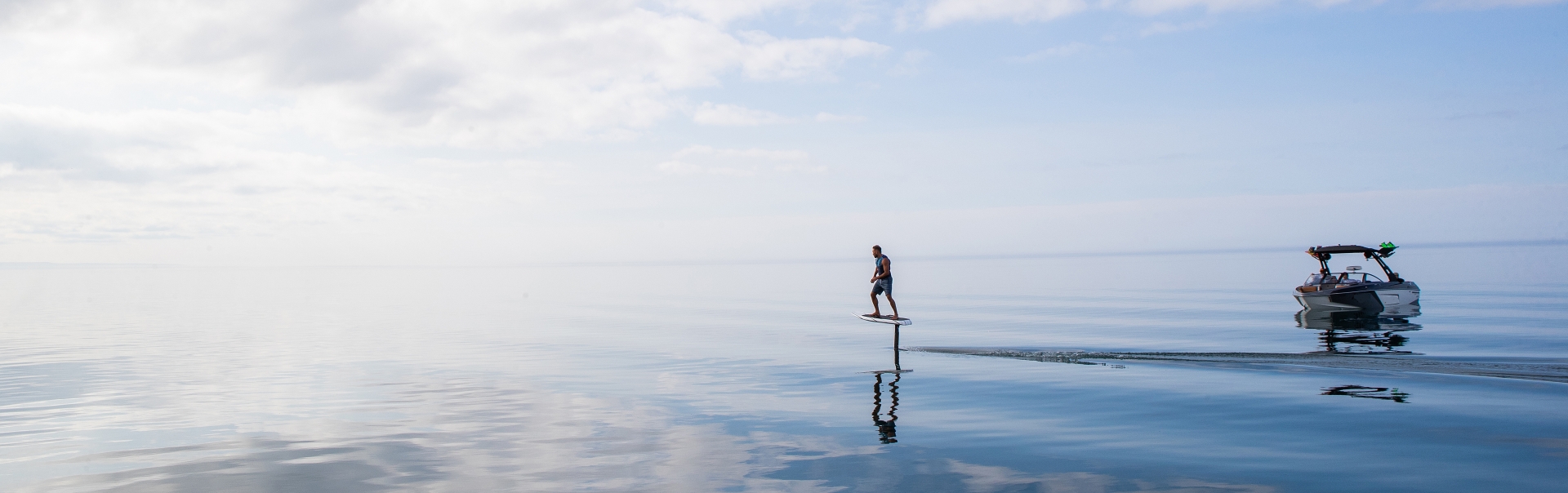
A Small Craft Advisory means sustained winds or frequent gusts of 20 to 33 knots (regionally defined), waves of 4 feet or more, or both (NWS Instruction 10-315 of June 25, 2025, p. 20). With one up for LMZ741 or LMZ742 we would call it no eFoil day. Either way, the school decides each session.
For live numbers, NDBC buoy 45198, the Chicago Buoy, sits in 9 m of water off the shore and reports wind, waves and water temperature while deployed; we take it to be a seasonal buoy. Buoy 45007, South Michigan, 43 nautical miles east southeast of Milwaukee, is the open lake buoy for the southern basin. The NWS also suggests checking the local beach forecast before you leave and offers Great Lakes rip current safety videos.
Both schools outside the city have a calmer lake to fall back on: MACkite's Pottawattomie Park Lake and, sometimes, Pine Lake for South Shore. Neither operator says when it moves off the open lake. For another Great Lakes picture, from the Canadian side, see eFoil in Ontario.