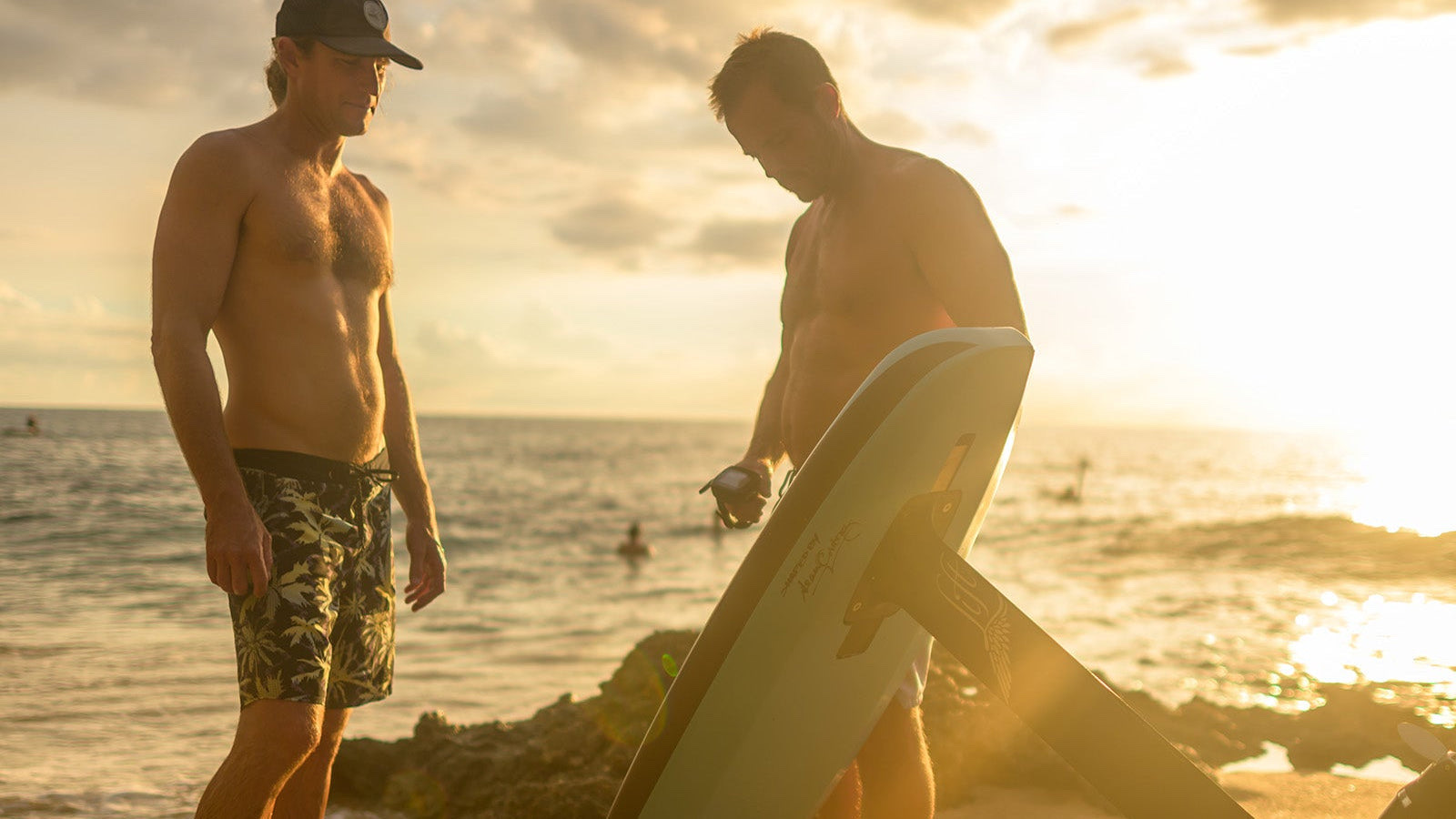
Jimbaran Bay and Nusa Dua, where Bali's eFoils fly
One company. That was all we could find on 24 October 2026 when we looked for an eFoil operator in Bali taking bookings at a beach it names, and it rides in the south of the island. Airborne Bali, which also goes by Airborne Adventures, runs lessons and tours from a beach club in Jimbaran and from a beach in Nusa Dua that it only calls a “secret beach”. The company describes itself as a watersports tour and instruction outfit partnered with Airborne eFoils. If the board itself is new to you, our guide to the eFoil explains the motor, the mast and the wing before you pay for two hours on one.
Jimbaran Bay is the better known of the two bases. Indonesia's tourism board describes a beach about 4 km long behind an unbroken coral reef, and says the reef keeps the water mellower than on other parts of Bali. The bay is also known for its beachfront seafood restaurants at sunset. Airborne has folded that into its offer: its partner venue is Bali Sea Beach House in Jimbaran, and sessions there end with refreshments and seafood at the venue.
Jimbaran is a 15 minute drive south of Ngurah Rai airport, and about 20 minutes from Legian, Seminyak and Sanur by the toll road, according to the tourism board, which adds that you can watch planes take off and come in to land from the beach. By our arithmetic a session fits into an arrival or a departure day, as long as the flight leaves room for two hours on the water, the drive and a shower.
Nusa Dua is the vaguer half. Airborne names no beach there. Pickup from your hotel or villa is part of the package, so you will not have to find the spot on your own, but if you want to know where you will ride, ask when you book.
Jimbaran's shelter, in our view, matters more than its sunsets. The bay lies on the west side behind its reef. Sanur, on the east coast, looks straight into the east wind that arrives with the dry season. For a first timer whose whole job is to stand up and stay up, flat water beats any view.
Airborne Bali: pickup, two hours and a photographer
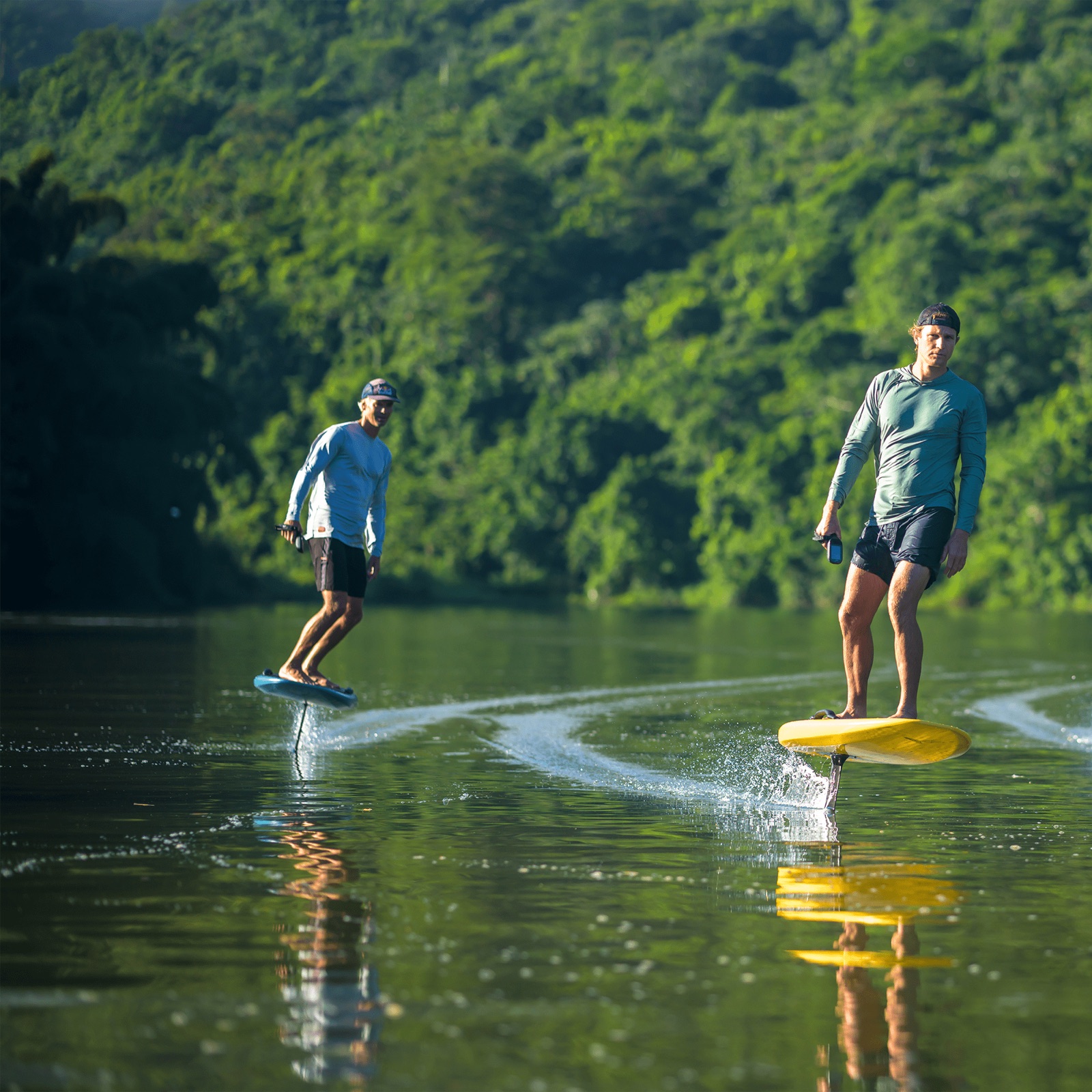
Airborne sells its eFoil time as an all inclusive package. A driver collects you from your hotel or villa and takes you to the beach club in Jimbaran or the beach in Nusa Dua, where you spend about two hours learning with an instructor. A photographer shoots the whole session on a DSLR, and the photos arrive as a Google Drive link within 12 hours. Up to three riders share one booking, and the company calls the package beginner friendly.
Three ways to split one booking
Figures are in Indonesian rupiah (Rp, also shown as IDR), copied from Airborne's booking page on 24 October 2026. They are list prices for the two hour package. A hotel desk or an agent reselling the session may quote something else.
Swipe sideways to see all columns
| Riders | What you get | List price | Per rider |
|---|---|---|---|
| 1 | 2 hours, instructor, photographer, pickup | Rp 2,900,000 | Rp 2,900,000 |
| 2 | 2 hours, instructor, photographer, pickup | Rp 3,900,000 | Rp 1,950,000 |
| 3 | 2 hours, instructor, photographer, pickup | Rp 4,900,000 | about Rp 1,633,000 |
Each extra rider adds Rp 1,000,000 to the total, so a pair or a trio pays far less per head than someone booking alone. The per rider column is our own division of the list price. For a sense of how a lesson relates to owning a board, the eFoil price guide sets out what boards cost to buy.
Flying time, speed and who is turned away
Two hours is not two hours on the foil. The resale listing of Airborne's lesson puts the flying in the core lesson at about an hour. On our reading the rest goes on the briefing, getting out to the riding area and, in a group booking, on taking turns.
Airborne's site says its eFoils reach “up to 60 KM/H”, about 37 mph. That is the company's own figure. A beginner spends the session learning to rise onto the foil and stay there, and top speed barely comes into it.
That resale listing says the lesson is not suitable for children under 12, pregnant women, people with back problems or non swimmers. Read that as a list to raise before you pay, not after the driver has collected you.
Sanur's lagoon and an eFoil school on pause
Sanur would be the obvious second name. Rip Curl School of Surf is based at Hotel Prama Beach on Jl. Cemara in Sanur, and it built a full eFoil program there. Its Sanur page still describes the course, under a line saying the lessons are “temporarily unavailable”; the page was last modified on 26 May 2026. When we checked the school's ticket shop on Megatix, it sold towed, surf, kite, SUP and wing foil lessons from Legian and Sanur, and no eFoil ticket.
The paused course still shows what a structured eFoil school in Bali looked like. It ran in three levels, called Getting Going, Mastering Altitude and Turning, and Harnessing the Power. A taster for 13 to 18 year olds used a smaller board. The boards came from Lift, with 15 power settings on the motor. Rip Curl also lists Legian, Kuta, Jimbaran, Canggu and Yeh Gangga among its locations, though none of them was selling an eFoil lesson when we looked.
The water at Sanur is shaped by reef. A long string of offshore reefs encloses large, warm, shallow lagoons, and Rough Guides puts the reef about 1 km out. At low tide a huge expanse of the shore is exposed and the reef breaks can be very shallow. Beyond the reef the currents are strong, and on our reading that is no place for a powered board with a beginner standing on it.
Two things follow for an eFoil, as we read it. A foil mast needs depth under it, so sessions in Sanur belong to the higher part of the tide. In the dry season the east wind blows straight onto this coast, which is the opposite of Jimbaran's shelter. South of Sanur lies Pulau Serangan, Turtle Island, which people once reached only by wading across at low tide or by boat. We take that as a fair measure of how far the water drops here.
Foiling without a motor carries on in Sanur. A paddle board outfit at Villa Puri Ayu Resort on Jalan Cemara rents hydrofoils and teaches on them, priced per hour in rupiah. These boards have no battery and no propeller, so they belong with the hydrofoil basics and not with the eFoil.
Tanjung Benoa, Canggu and Lembongan without an eFoil
Most visitors would look for an eFoil at Tanjung Benoa first. It is Bali's water sports strip, where the menu runs from banana boats and parasailing to seawalker helmets, flying fish rides, diving and snorkeling. Not one operator there offered an eFoil in our search on 24 October 2026.
Canggu, Uluwatu and Nusa Lembongan gave the same result, with no eFoil operator we could find in any of the three. Bali's eFoil map is small, and knowing that before you land saves an afternoon of asking around at beach bars and dive shops.
One more website, efoilbali.com, offers eFoil lessons but names no base, so we cannot place it on a map. If you come across an offer like that, or someone selling rides on the beach, ask where it launches, who instructs and whether a boat with life jackets is on the water with you.
Australians know a busier picture from home, where our Australia page follows eFoil schools across several states. Bali, by our count, had one operator.
East wind, west wind and the tide table
Bali's year turns on the monsoons. Indonesia's meteorological agency, BMKG, says the shift from the west wind of the Asian monsoon to the east wind of the Australian monsoon marks the start of the dry season, and that across Bali the dry season usually peaks around August. That comes from a BMKG press release of 4 March 2026 and describes the general pattern, not a forecast for any particular year.
Rough Guides, writing about Sanur, gives April to October as the dry season and October to March as the monsoon. The busiest weeks for visitors fall between mid June and mid September and over Christmas and New Year. Those are the weeks we would book well ahead.
The wet season belongs to the surfers on the east coast. The tourism board describes reasonable breaks about 1 km off Sanur in the northwest wind season, roughly October to March, and Rough Guides puts the reef breaks at their best from September to March. An eFoil lesson wants the opposite of a breaking wave: flat water inside the reef, with enough depth for the mast.
Read together, the sources suggest a rule of thumb, and the rule is ours, not theirs. Through the dry months Jimbaran, on the west side behind its reef, is the sheltered choice, while Sanur faces into the east wind. In any month the tide matters on a reef coast, and at Sanur most of all, where much of the shore dries at low water and a foil needs the higher tide to fly without touching bottom. Ask the operator which part of the day it plans to ride, and why.
Reef and wind set the riding day on Oahu, Maui and Kauai too, and our Hawaii page walks through how the months play out there.
The tourist levy, its legal basis and the rules on the water
One payment applies to every foreign visitor, rider or not. Since 14 February 2024 the Province of Bali has charged a foreign tourist levy of IDR 150,000 per person, paid once per trip. The province asks you to pay online before departure at lovebali.baliprov.go.id. The UK government's travel advice lists the same 150,000 rupiah levy and says it can be paid online or on arrival.
The province's levy notice gives its legal basis as Law 15/2023 on the Province of Bali and Bali Regional Regulation 6/2023, as amended by Regional Regulation 2/2025. The payment procedure sits in Governor Regulation 2/2024, as amended by Governor Regulation 25/2025. The notice cites no article numbers, and we have not added any.
What the sources say about eFoils at Benoa and Sanur
Very little. We found no published rule that names the eFoil, either for the Tanjung Benoa water sports zone or for the Sanur lagoon, and no source we read sets a license, a speed limit or a riding zone for powered boards in either place. That is a statement about our sources, not proof that no local rule exists.
The operators' own conditions are easier to pin down. Airborne sells eFoil time only with an instructor, in two hour packages for one to three riders, and the resale listing of its lesson excludes children under 12, non swimmers, people with back problems and pregnant women. Rip Curl's program, now paused, set its taster at 13 to 18 and ran Lift boards with 15 power settings. These are company terms, not law.
We read the straightforward route for a visitor as a session inside an operator's package, with its instructor on the water. Whether a private rider may take a board out alone in Bali is a question none of the sources we read answers. This page summarizes what we read and is not legal advice; ask the operator, and for anything beyond a lesson, the local authorities.
Flying in from Australia, the UK or Ireland
The entry and safety points below come from the UK government's travel advice for Indonesia, read on 24 October 2026. Australian and Irish travelers should read their own government's advice, which can differ in the detail.
Passport and visa
A British passport needs at least six months of validity left after the day you arrive, plus two blank pages. A visa is required as well, so check the current visa on arrival rules before you fly.
Insurance and the boat that goes out with you
The FCDO tells travelers to check that their insurance covers the activity they plan, and to check an operator's credentials and the safety equipment on its boat. Applying that to an eFoil lesson is our step, and an easy one: ask your insurer whether a powered board counts as an excluded motorized sport, and ask the operator to show you the life jackets. The FCDO's sea travel advice also warns that conditions can change rapidly and that safety standards vary between providers.
Why you will rent and not fly your own board
IATA's lithium battery guidance for 2026 lets battery powered vehicles with more than 100 Wh fly only at a state of charge of 30% or less, and above that only with approval from the states involved. An eFoil pack is far above 100 Wh, as the sizes in our eFoil battery guide show. We read that as making a rental in Bali the practical route for nearly every visitor, and your airline decides the rest.
Fitting a session around the flights
The short hop from Ngurah Rai to Jimbaran works in your favor. On paper a morning landing leaves room for an afternoon on the water, and a last session can come before an evening departure, provided you collect the pictures at home once the photographer's 12 hours have run. Paying the levy online before you leave is one less thing to do on arrival.
If you ride at home, Australians can compare Bali with the schools on our Sydney page, and riders across the Tasman with our New Zealand guide. British riders will find spots and rules on the UK page, and Irish riders on the Ireland page.