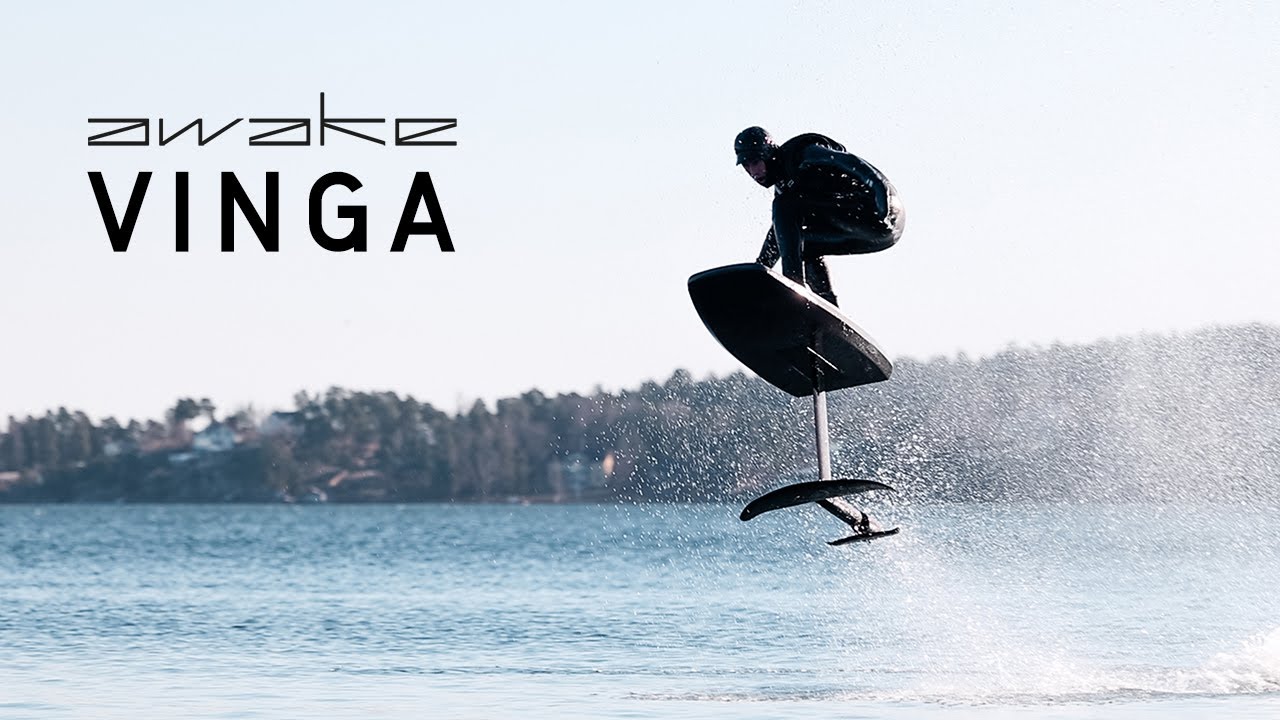
The brand
Awake designs and develops electric watersports boards in Scandinavia. The brand was founded in Sweden in 2017. Today the company behind it is Ride Awake ApS in Copenhagen, and orders ship from Awake’s manufacturing facilities in Poland. Few brands in this market have a profile this sharp. Awake does not stick to one product category but builds jetboards and eFoils, and it has tied the two together into a single shared system. That double role, eFoil maker and jetboard maker in one, still defines the brand.
The Scandinavian roots go deeper than the address. Awake presents itself as a premium brand. The shapes are clean and minimalist, the materials are high grade, and the small details of each product have clearly had real attention. That is the styling Scandinavian design is known for. At first glance the boards have more in common with a sports car or a piece of high-end electronics than with a classic surfboard, and the manufacturer presents them in just that light.
The location has a practical side. Awake is a European manufacturer based in the EU, and with sports gear in the five-figure range, warranty handling, service and spare-parts availability matter at least as much as the board itself. For riders in Europe that proximity tends to keep things simple. If you are buying from further afield, ask how warranty cases and delivery are handled for your region. Wherever you live, confirm the details before you order, because conditions change from time to time.
Awake also has a motorsport link. In August 2022 the brand shared a clip that Carlos Sainz Jr., the Formula 1 driver, had posted on his own Instagram, showing him flying a VINGA. An F1 name fits the message the brand is built on (precision, speed and top-shelf engineering), only here the track is water and not asphalt. Awake’s own pages describe no sponsorship or ambassador deal behind that clip. Read it as a famous rider on the board, not as a partnership.
A word on the names before going further. Awake is a manufacturer, not “an eFoil”, and it sells two product families. VINGA is the eFoil line, RÄVIK the jetboard line. If even the basics are new to you, say the difference between a board that flies above the water and one that planes on it, start with our eFoil guide, which walks you through the whole category from your first wobbly attempts onward.
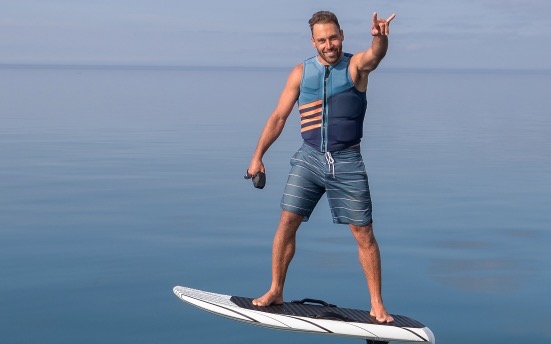
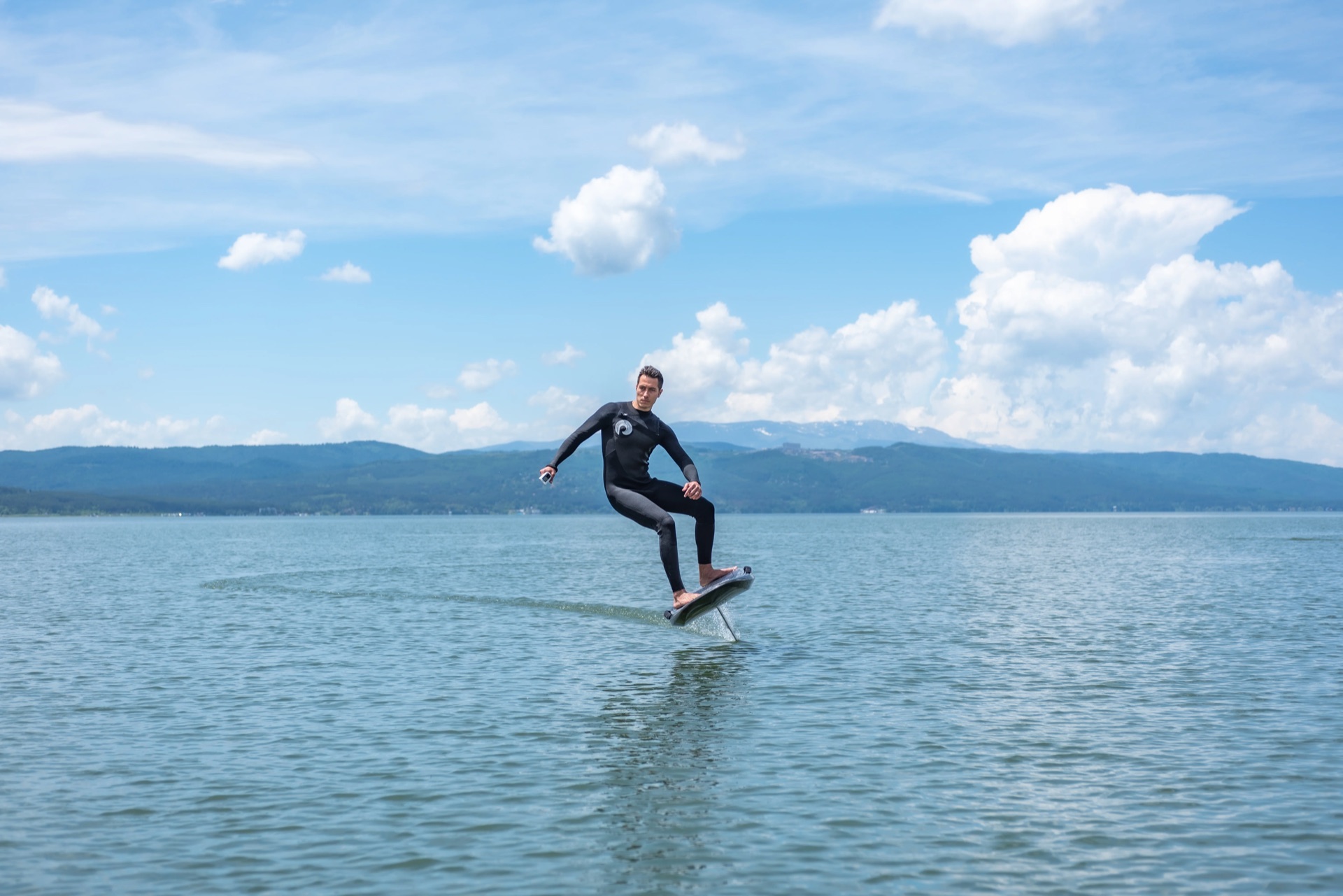
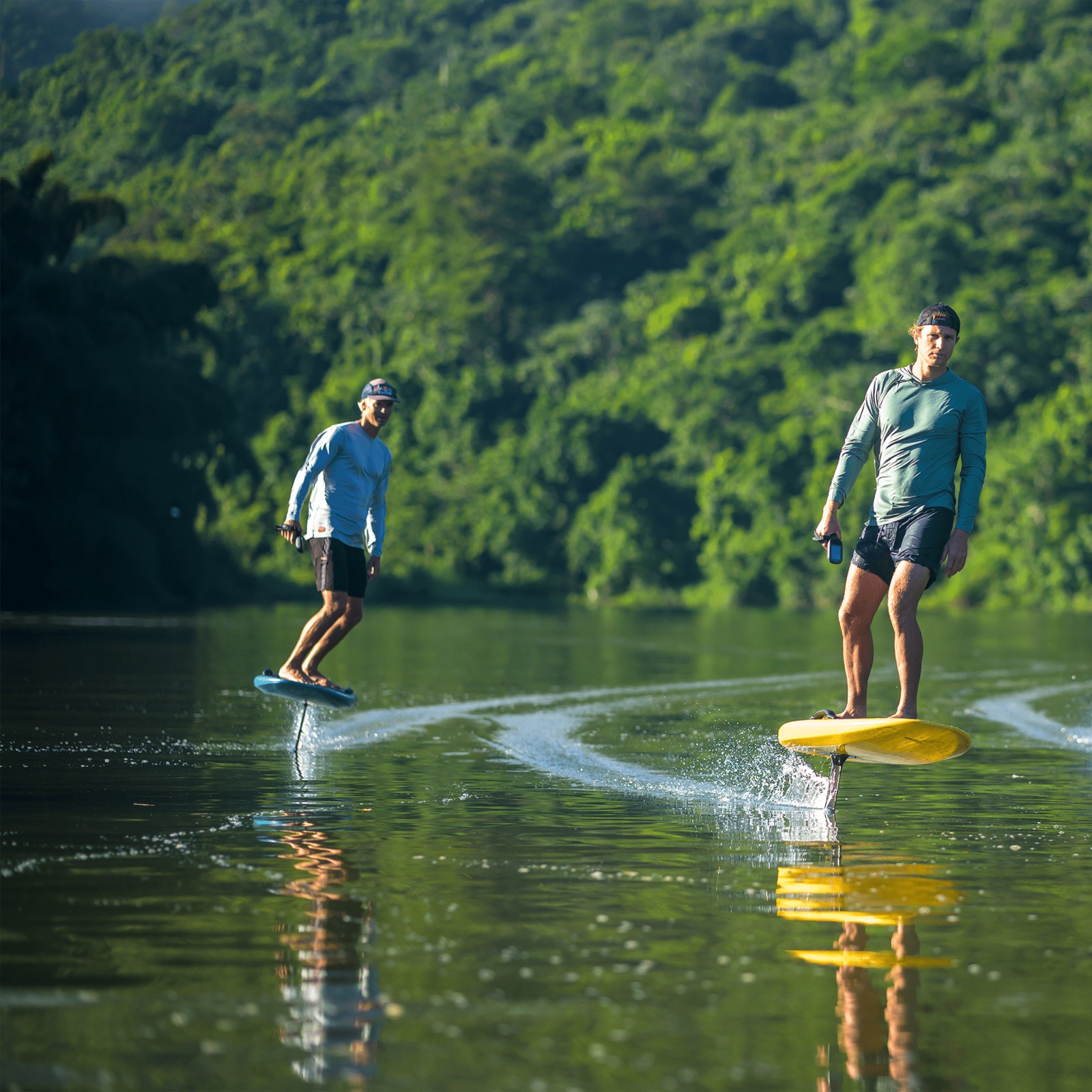
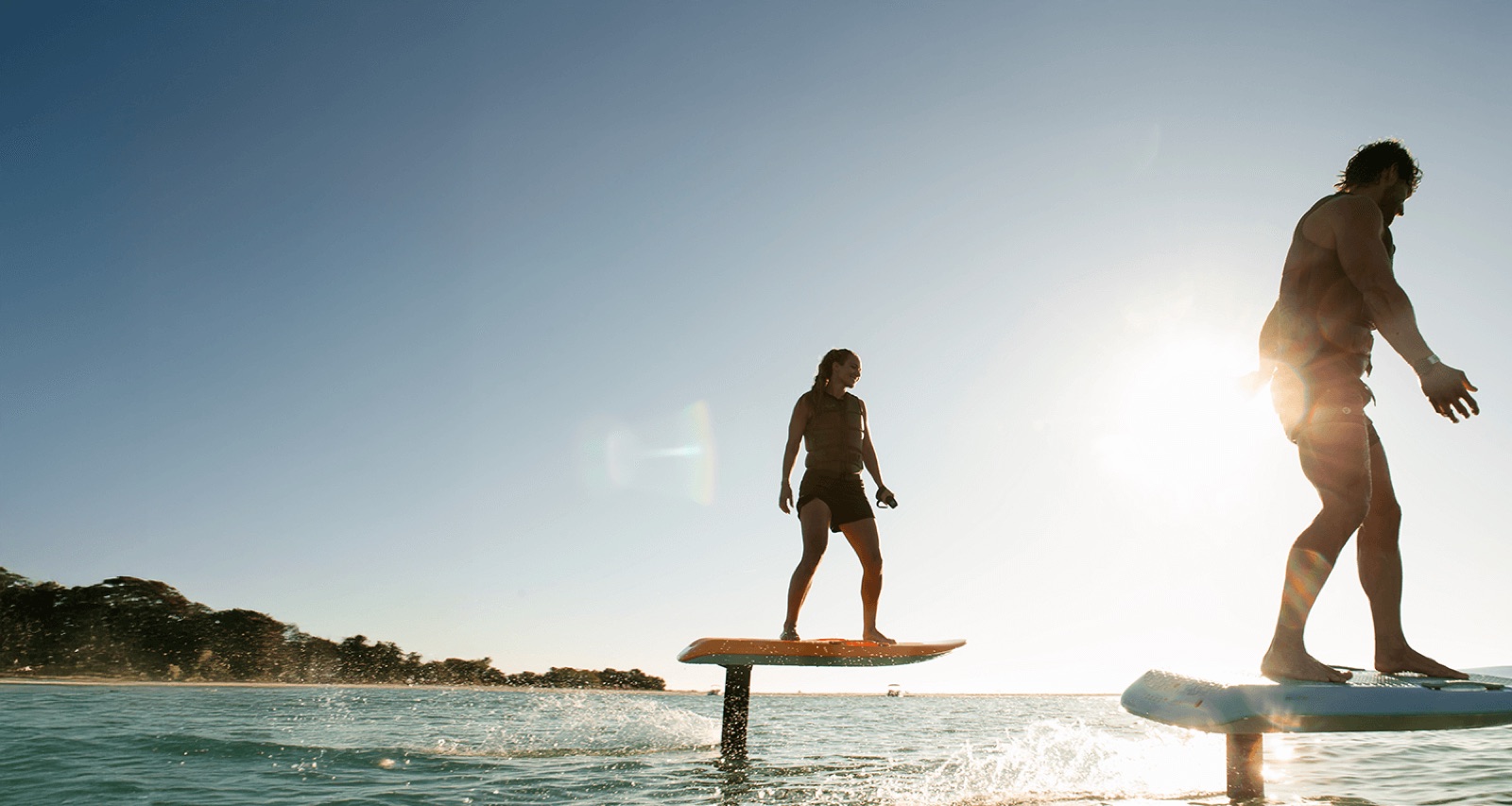
Awake in motion
Official imagery and the full lineup are on awakeboards.com ↗
Models and prices
Awake’s lineup rests on two families, an eFoil and a jetboard, joined by a shared battery platform. Both are introduced below, followed by the battery that connects them.
VINGA: flight above the water
In 2026 Awake’s eFoil family, VINGA, consists of a single model, the VINGA Carve. The earlier S, Adventure and Ultimate variants have been retired. As on any eFoil, a hydrofoil wing sits beneath the board. At the right speed it lifts the hull clear of the water, and you ride above the surface in near silence. Makers quote top speeds of about 35 to 60 km/h (roughly 22 to 37 mph) for today’s eFoils, and Awake gives 45 km/h for the VINGA Carve. The exact figure depends on the model and the wing size. Everything about the VINGA is built around that soft, silent glide, and on glassy early-morning water few rides in watersports come close to it.
Learning on the VINGA follows the proven eFoil progression. You practice lying down first, then kneeling, then standing, and only after that do you start to fly. For most people the board starts to feel comfortable after 4 to 5 hours of practice, and riders with prior watersports experience sometimes manage their first flight within 20 minutes. While you are starting out, take the bigger wing, because its extra stability makes holding altitude easier. Smaller wings are faster, and they belong in advanced hands. Our eFoil page walks through the learning steps in detail.
RÄVIK: planing on the surface
Awake’s jetboard family, RÄVIK, comes in three variants: Explore, Adventure and Ultimate. A jetboard never lifts off but planes on the surface of the water, like wakeboarding without the rope, with hard acceleration, tight carving turns and, on the RÄVIK Ultimate, speeds up to 55 km/h (about 34 mph, going by Awake’s own spec sheet). The VINGA gives you the calm of flight. The RÄVIK gives you pure adrenaline, and both come from one brand and sit inside one system.
The learning curve is even friendlier than on an eFoil. With no ride height to balance, most people are planing confidently after a few tries. As on the VINGA, you set the speed in steps on a waterproof remote and steer with your body weight, so the board goes wherever you tip it. Stay in the lower power levels at first and move up only once your turns feel solid.
Flex: the shared battery platform
What holds the two families together is the battery. Both share Awake’s battery platform, which goes by the name Flex (current generation: Flex 4), and a single pack drives the VINGA eFoils and the RÄVIK jetboards alike. One battery set, one charging routine, two completely different experiences on the water. Awake is the only major manufacturer with a cross-board platform like this.
Day to day, everything in the system turns on the battery. How long a charge lasts depends on the board as much as on how you ride. Awake rates the VINGA Carve at about 60 minutes with the LR 4 and about 120 with the XR 4, while the XR 4 in a RÄVIK lasts up to 60 minutes on the Explore, 45 on the Adventure and 35 on the Ultimate. Awake publishes no charging time for its Flex 4 packs, so ask before you plan a day around a single battery. The battery is swappable, which means a second pack doubles your daily ride time. The Flex platform takes that logic one step further. Your spare battery does not belong to one of your boards; it belongs to all of them.
VINGA Carve 2026
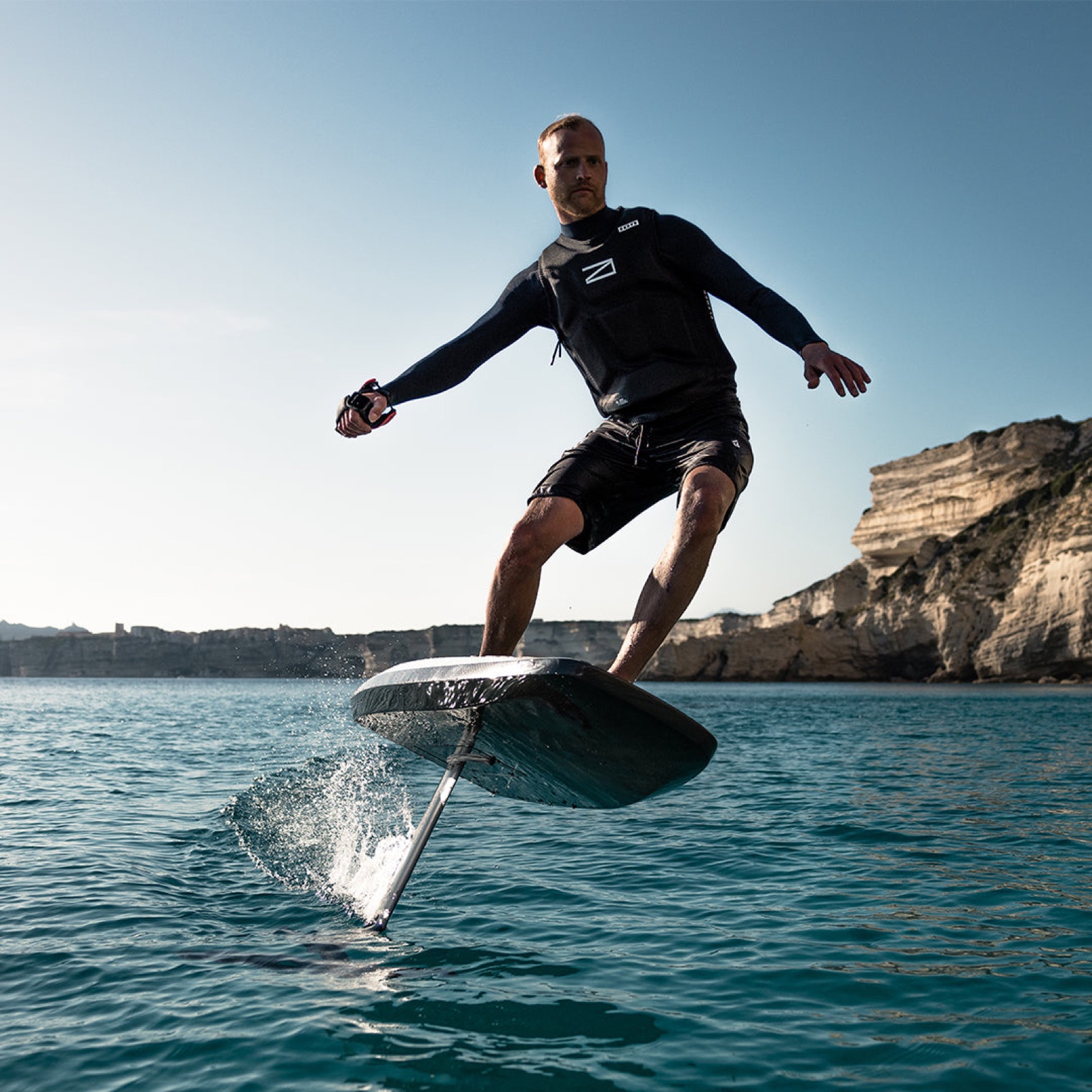
Awake's entire current eFoil range consists of a single, clear model: a light board with a direct feel for cruising and carving, on the same Flex battery platform as the RÄVIK jetboards.
- Board size
- 5′2″, 80 cm mast
- Volume
- 77 l
- Weight
- 16 kg without battery (board 7.5 kg + drive 8.5 kg)
- Battery
- Flex LR 4 (approx. 60 min) or Flex XR 4, 2.55 kWh (approx. 120 min)
- Flight time
- 60-120 min (depending on battery)
- Top speed
- 45 km/h
- Motor
- 4-8.2 kW Linear Jet
- Price (approx.)
- €12,990-13,990 plus VAT, depending on battery
Manufacturer figures (as of 2026-08-30). Prices are for guidance only.
RÄVIK Explore 2025
Awake's easiest jetboard to learn on: 121 liters, a stable board with a high load capacity.
- Volume
- 121 l
- Weight
- 21 kg
- Battery
- Flex XR 4 (included in the set)
- Flight time
- up to 60 min
- Top speed
- up to 40 km/h
- Motor
- 11 kW
- Price (approx.)
- €9,990 plus VAT
Manufacturer figures (as of 2026-07-03). Prices are for guidance only.
RÄVIK Adventure 2025
A jetboard with a V-hull and 71 liters for longer tours on the water: elegant, adaptable, dynamic.
- Volume
- 71 l
- Weight
- 23 kg
- Battery
- Flex XR 4 (included in the set)
- Flight time
- up to 45 min
- Top speed
- up to 50 km/h
- Motor
- 11 kW
- Price (approx.)
- €13,990 plus VAT
Manufacturer figures (as of 2026-07-03). Prices are for guidance only.
RÄVIK Ultimate 2025
The top of the performance jetboard line (successor to the RÄVIK S): 51 liters, a light 16 kg hull, up to 55 km/h.
- Volume
- 51 l
- Weight
- 16 kg
- Battery
- Flex XR 4 (included in the set)
- Flight time
- up to 35 min
- Top speed
- up to 55 km/h
- Motor
- 11 kW
- Price (approx.)
- €15,990 plus VAT
Manufacturer figures (as of 2026-07-03). Prices are for guidance only.
Previous generation (no longer sold new)
Earlier VINGA models (S, Adventure, Ultimate)
Awake has discontinued the earlier VINGA S, VINGA Adventure and VINGA Ultimate; since 2026 the single VINGA Carve has taken their place.
Swipe sideways to see all columns
| VINGA (eFoil) | RÄVIK (jetboard) | |
|---|---|---|
| Experience | Flying above the water: quiet, soft, almost weightless gliding | Planing on the surface: hard acceleration, sporty carving turns |
| Who is it for? | Riders who want the freedom of flight and calm, silent cruising | Riders who want speed, adrenaline and the wakeboard feel |
| Category | eFoil (electric hydrofoil) | Jetboard (electric surfboard) |
| Variants | Carve | Explore, Adventure, Ultimate |
The model blocks above carry the key figures from the manufacturer’s current data sheets. Lineups and specifications shift from one model year to the next, though, so before you buy, go by the current data sheet and a test ride of your own. The sheet gives you the numbers; the ride is what tells you if you actually like the board.
Choosing between variants works the way it does with any electric watersports board. For beginners, the bigger, more stable configuration is the right starting point. On an eFoil the larger wing makes learning easier and also uses less energy, which buys you longer ride time. Advanced riders get more out of a smaller, more agile setup. Awake itself names no body weight at which to switch wings. What it does give is a recommended rider weight limit of 110 kg (about 242 lbs). The VINGA Carve ships with the Cloud wing set, so if you are on the heavy side, ask Awake or a dealer which larger wing suits you before you order. Whatever the variant, look closely at battery capacity and Awake’s rated ride time. Between them, those two figures decide how much time you spend on the water.
Which Awake is right for you?
Start with the experience and leave the model for later. Do you want to fly above the water (VINGA Carve) or tear across its surface (RÄVIK)? Among the jetboards, the Explore is the stable entry point and the Ultimate the sporty top end. Between them sits the Adventure, which rides on a V-shaped hull. Awake pitches it for expedition rides, yet rates it for up to 45 minutes against the Explore’s 60.
Swipe sideways to see all columns
| VINGA CarveRecommended | RÄVIK Explore | RÄVIK Adventure | RÄVIK Ultimate | |
|---|---|---|---|---|
| Type | eFoil | Jetboard | Jetboard | Jetboard |
| Price (approx.) | €12,990-13,990 plus VAT, depending on battery | €9,990 plus VAT | €13,990 plus VAT | €15,990 plus VAT |
| Volume | 77 l | 121 l | 71 l | 51 l |
| Battery | Flex LR 4 (approx. 60 min) or Flex XR 4, 2.55 kWh (approx. 120 min) | Flex XR 4 (included in the set) | Flex XR 4 (included in the set) | Flex XR 4 (included in the set) |
| Flight time | 60-120 min (depending on battery) | up to 60 min | up to 45 min | up to 35 min |
| Top speed | 45 km/h | up to 40 km/h | up to 50 km/h | up to 55 km/h |
| Best for | Awake's only current eFoil, built for progression | Entry-level jetboard, stable and rugged | Jetboard for adventure touring | Flagship jetboard, fast and agile |
How Awake compares
Among premium eFoil makers, Awake is the Swedish one, and on price the VINGA Carve goes up against the top models from Lift and Flite. The brand’s real signature is the two-platform system. No other major manufacturer runs an eFoil and a jetboard on one battery set.
To see every current model from all active brands side by side, open our eFoil comparison.
What sets Awake apart
The usual pattern is for a manufacturer to commit to one category. Lift and Flite are fixtures of the eFoil segment, for instance, while other brands build nothing but jetboards. Awake covers both categories, and it treats neither one as a sideline. If you want the eFoil fundamentals first, start with our eFoil guide.
The reason this matters is that the battery is one of the biggest line items on an electric watersports board. Awake sells every board as a complete package with its own battery, hand controller and charger, so a second board type still arrives with a pack of its own. The shared Flex platform pays off from that point on, once you own more than one board. The XR 4 runs the VINGA Carve and all three RÄVIK boards. That pack moves freely between them, and a spare XR 4 bought later fits any of the four. Chargers and hand controllers are universal across Awake’s range.
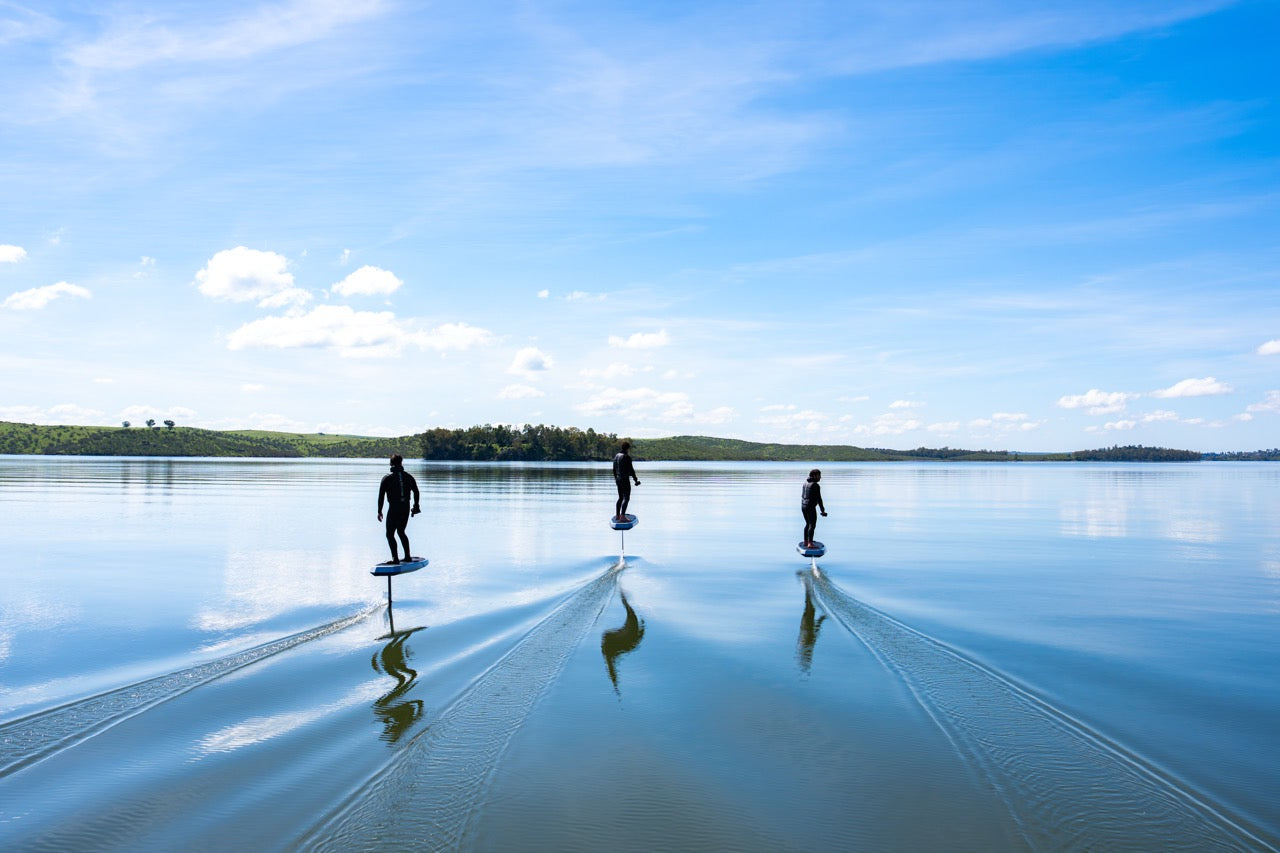
A summer day at the lake. At dawn the water is smooth as glass. On the VINGA you fly along in silence, the foil leaves hardly any wake, and all you hear are the birds. Late morning you come back in, swap batteries and put the empty pack on the charger. In the afternoon the shore gets lively, friends arrive, and the RÄVIK gets its turn with sprints and carving turns. By evening one battery set has given you two fundamentally different experiences, and you never had to haul, charge and maintain two separate systems. Among the major manufacturers, Awake is the one built around that idea.
Last comes the Scandinavian premium approach itself, with a unified design language, well-considered details and a product philosophy that treats the whole lineup as one system. Choosing Awake means more than buying a board: you get a product family where eFoil and jetboard are two sides of one experience, not separate worlds.
Who is Awake for?
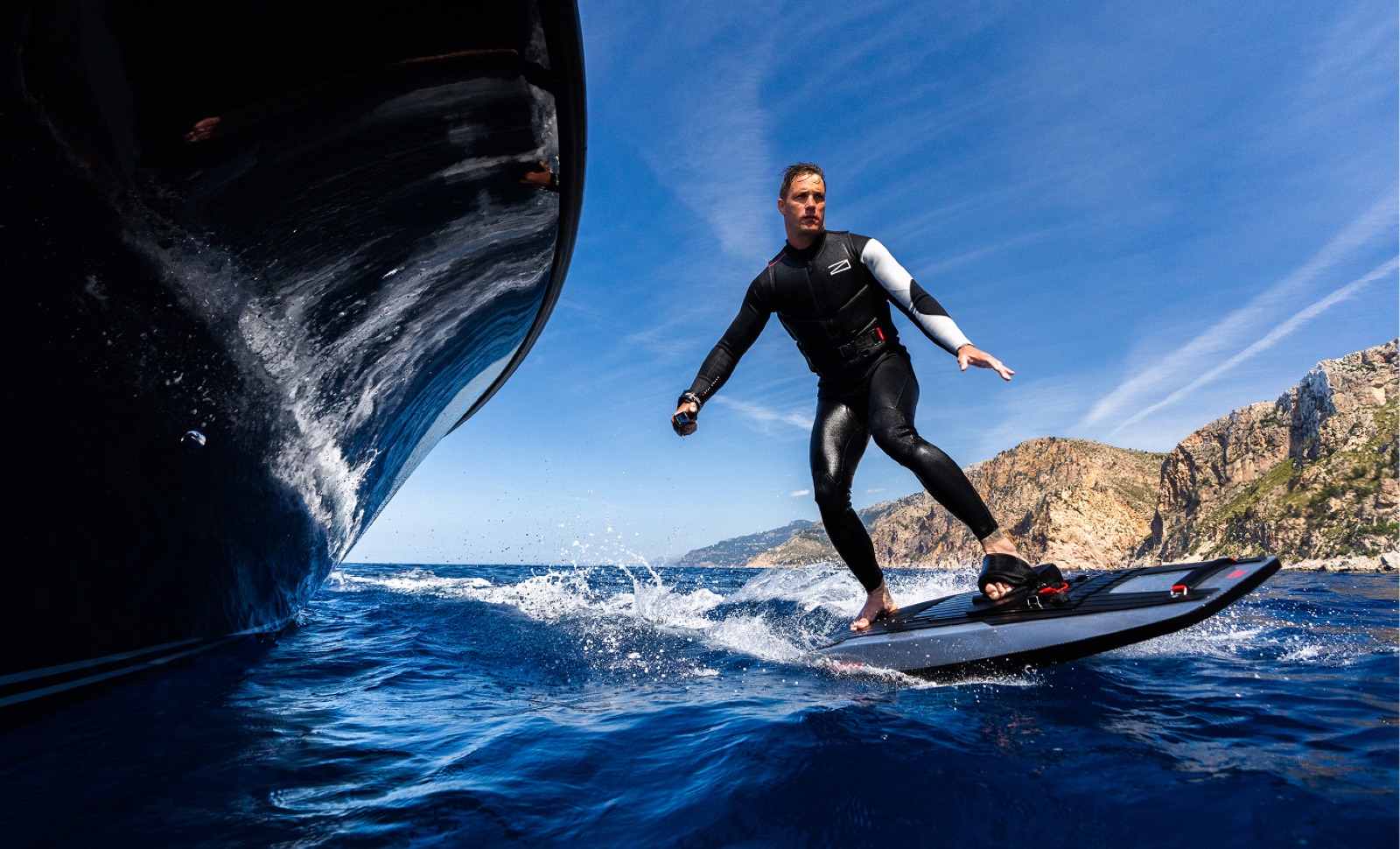
One typical Awake buyer wants both experiences, the calm flight in the morning and the speed in the afternoon. Families and groups of friends are in a similar position, since it is rare for everyone in the group to want one thing. One person loves relaxed gliding; another lives for speed. A single system on a shared platform covers both of them without two separate setups to run. Boat and yacht owners fit that pattern too, and Awake courts them directly. The brand has shown its boards at yacht shows in Monaco and Cannes, and on its own site it calls itself the go-to brand for superyachts.
Another profile is the premium buyer, for whom design, material quality and brand experience carry as much weight as the spec sheet. Awake builds for that buyer. Each model’s list price sits in the model blocks above, so here the order of magnitude is enough, and it puts Awake in the upper bracket. Premium eFoils usually mean an investment of about €10,000 to €15,000, while entry-level models from other manufacturers start at around €5,000 to €7,500.
Rental operators, surf schools and waterfront resorts make up a third group. Anyone renting out electric boards as a guest experience can cover the mellow option (eFoil) and the adrenaline option (jetboard) with a single brand and a single battery pool. Running that fleet is clearly simpler than keeping two manufacturers’ systems going side by side.
Awake is not the obvious pick if you are on a tight budget and shopping for your first eFoil. In that case it pays to look at the wider field, and our eFoil buying guide lays out the criteria and the reliable brands. Whichever way you lean, get on the water and try it before you buy. A rental session or an intro lesson is the cheapest way to do that.
Awake on your local waters
Calm lakes and sheltered coastal bays are superb territory for both Awake experiences. An eFoil needs neither wind nor waves, and the drive runs quietly and without exhaust. Whether you may actually launch there, though, depends on the specific body of water. Many lakes and coastal zones have their own rules for motorized watersports equipment, protected areas tend to be stricter, and the details differ by country and sometimes by individual lake. Check the local regulations before your first session. The VINGA adds one more thing to plan for, because the foil hangs below the board and needs sufficient water depth. On gradually sloping shores you either wade out a stretch or pick a deeper entry point from the start.
On lakes the eFoil has an advantage all of its own. The chop kicked up by a freshening afternoon breeze hardly bothers you, because the board flies above the water, only the mast cuts through the surface, and the small waves mostly pass beneath you. A jetboard planes on the surface, so it meets that chop head on. That said, Awake’s own comparison of the two gives the jetboard more control in choppy and even rough water, with more room for tricks and jumps.
Calm water is still the easier classroom. For your first RÄVIK sessions, aim for early morning and wind-sheltered bays.
A jetboard calls for an even closer look at the rules. The electric drive is still an advantage, but the RÄVIK rides on the surface, makes more noise and throws a more noticeable wake than an eFoil. Rules differ from one body of water to the next, and how the craft is classified can also play a role. Before every launch, check the current rules for that particular lake, stretch of river or piece of coastline. A few minutes of reading can save you a lot of trouble.
Whichever Awake board you start with, always wear a helmet and an impact vest. Pick a spot where no swimmers are within 100 meters (about 330 feet) and other water users are well clear. That is a ground rule, for your safety and for everyone else’s. On temperate-latitude lakes the season typically runs from late spring into early fall. A good wetsuit adds a couple of months, and in warm coastal regions the window stretches further still.
Getting the gear to the water is straightforward. Awake lists the VINGA Carve at 16 kg (about 35 lbs) without its battery, split into a 7.5 kg board and an 8.5 kg drivetrain. The LR 4 battery adds 12 kg (about 26 lbs) and the XR 4 adds 18.5 kg (about 41 lbs), while the RÄVIK boards weigh 16 to 23 kg (about 35 to 51 lbs) before the XR 4 goes in. All of it fits comfortably into a station wagon or a larger car, although a second pair of hands is welcome when you load up at the shore. The foil can be taken apart, so for transport the whole system breaks down into smaller pieces.
If you are just getting started, ride first and buy second. A guided intro session with a coach does more than tell you whether the sport suits you, because it also shows you which ride is yours, the windless flight at dawn or the adrenaline-charged planing in the afternoon. In Awake terms, you find out whether the VINGA or the RÄVIK is your board.