Why electric boats are gaining ground
Across the world’s big open cruising grounds, the switch to the electric boat is only getting started. On inland lakes the argument was settled years ago. Where drinking water, noise limits or nature protection are in play, private boats with combustion engines are commonly capped, tied to a handful of permits that are almost never reissued, or kept off the water altogether. Ride under power on a lake like that and the electric drive is the only option on offer, rather than one choice among several.
Being the only option hardly makes it second best, though. An electric boat moves almost silently across the water, with no fuel smell and no oil sheen behind the transom; what you hear is water against the hull. Meanwhile marinas are retrofitting charge points, and electric rental fleets grow from one season to the next. Below you will find how to track down the rules that apply where you ride, the main European brands and what they cost, the motors you can fit to a boat you already own, and how to decide between renting, converting and buying.
Candela under way
We cover the Swedish builder on its own page: Candela boats
Where you can ride: find the local rules first
Motorboating has no global rulebook. Rules differ by country, and often by individual lake, river or stretch of coastline; two lakes an hour apart can be governed in completely different ways. One pattern does repeat almost everywhere: it is the combustion engine that gets restricted, banned outright in some places and elsewhere tied to a permit that is rarely issued to anyone new. Electric drives have an easier time nearly everywhere, and on a fair number of lakes they are the only kind of propulsion you are allowed to use.
Licensing works along similar lines. Many countries set a power or length threshold below which no certificate is required, and the license-free rental fleets you see at lake resorts are sized to sit just under it. That number is local, and it changes. A threshold that lets you take out a rental boat in one country may not exist across the border. Registration, insurance, speed limits and no-wake zones near swimming areas vary just as much. This is general information, not legal advice, so check the current rules with the local authority or harbor office before you cast off.
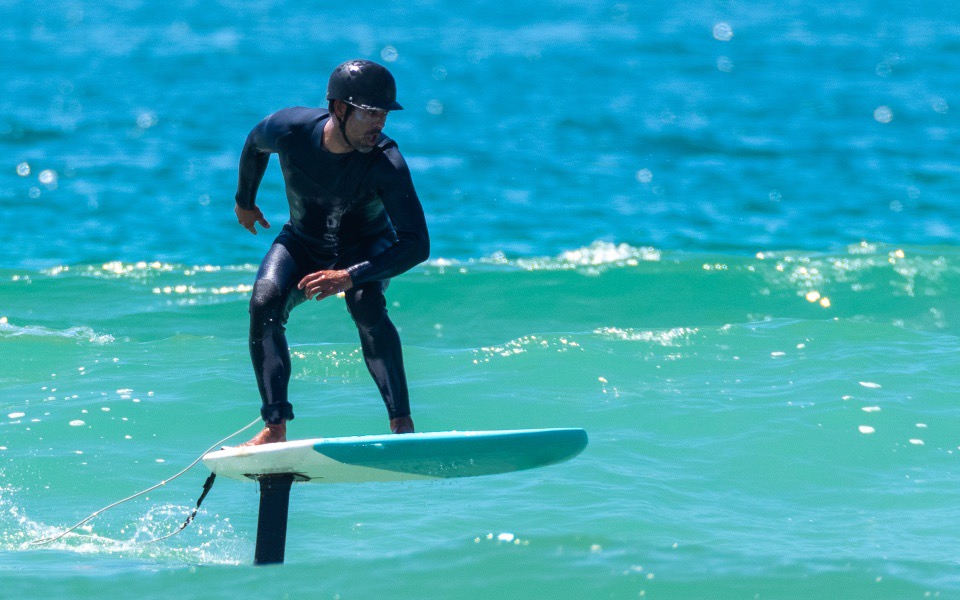
The small electric craft that share these waters, from jetboards to the eFoil, fall under this patchwork as well. Ask “can I ride here” and the answer is almost always local, not national, so a word with the harbor office or the operator beats reading any general summary.
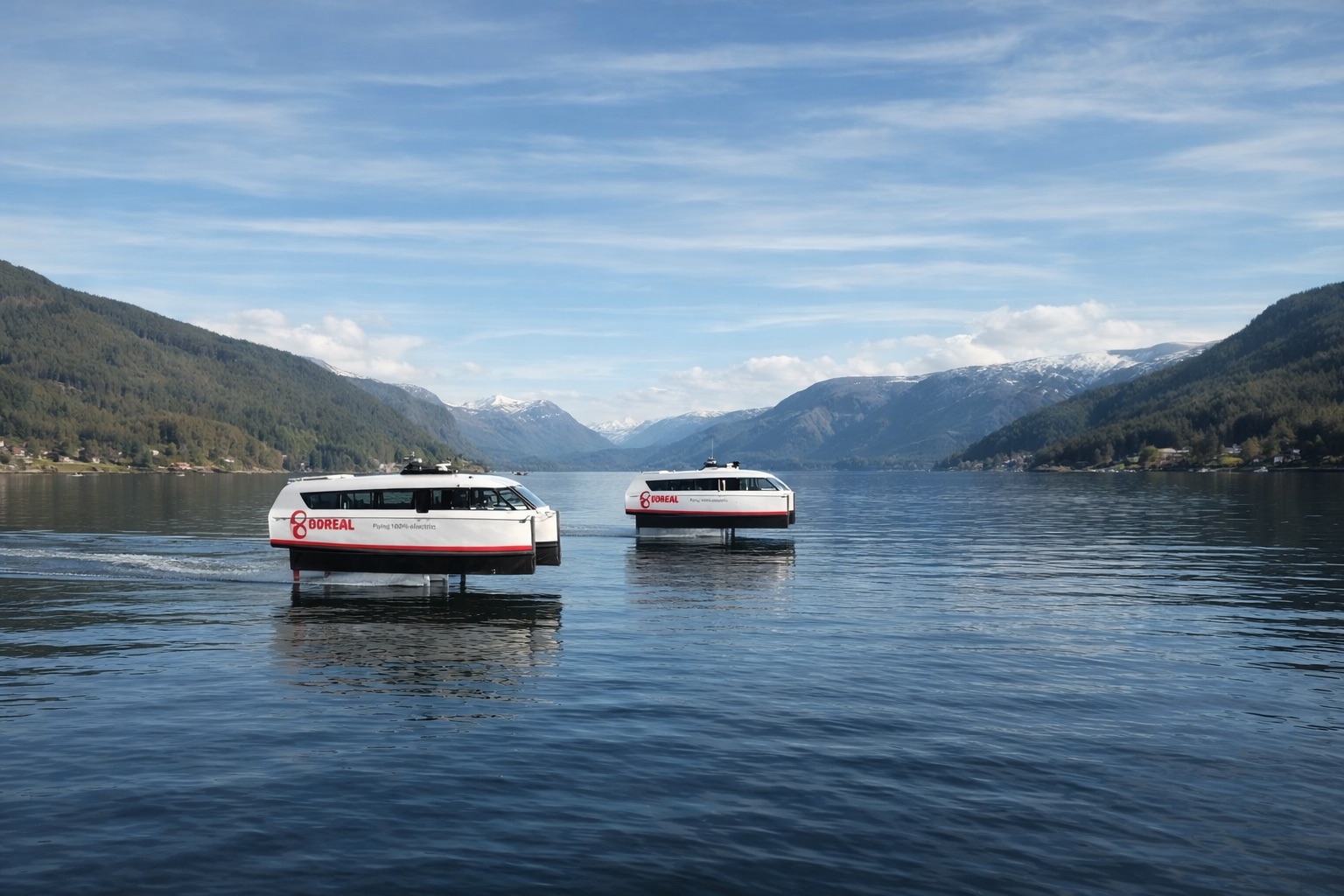
The most efficient boats in the category lift clear of the surface on wings, and they have a page of their own. Our guide to electric foiling boats covers the technology, the models and where things stand for 2026.
Electric boat brands in Europe
Over the past few years Europe’s electric boat market has visibly grown up. The strongest names come from around the Alpine lakes and their neighbors, which is no accident. Combustion engines have been limited on those waters for decades, and the tradition of electric boatbuilding there runs deep: Frauscher has been building electric boats since 1955. The table gives the main brands at a glance, and the paragraphs after it take them one at a time.
Swipe sideways to see all columns
| Brand | Country | Positioning | Known model |
|---|---|---|---|
| Frauscher | Austria | Luxury dayboats and sports boats | 740 Mirage Air |
| Marian | Austria | All-electric premium dayboats | M 800 |
| Alfastreet | Slovenia | Upmarket lake boats, 5 to 11 m | 23 Cabin Electric |
| Greenline | Slovenia | Hybrid-electric cruising yachts | Ranges from 39 to 58 ft |
| X Shore | Sweden | Scandinavian premium e-dayboats | Eelex 8000 |
| Rand Boats | Denmark | Leisure boats with Danish design | Leisure 28 |
| Candela | Sweden | Electric hydrofoil boats | C-8 |
Frauscher is the veteran of the category. The yard sits in Ohlsdorf, keeps its own harbor in Gmunden on Lake Traun, and has been building electric boats since 1955. No model page carries a price (frauscherboats.com, read on 5 October 2026). The only figure we found on its own site is a launch price from 2023 for the first edition of the Frauscher x Porsche 850 Fantom Air; the sums that circulate from dealers and magazines are left out here. The smallest model in the electric range is the 610 San Remo, 6.10 m long, with the 650 Alassio one step above it. The 740 Mirage Air sits in the top tier of the market, with the maker’s own ladder of 50 to 137 kW motors and 48 to 63 kWh batteries. The 850 Fantom built with Porsche is rated at 400 kW. That is a peak figure; the continuous rating is 170 kW.
Marian, from its yard in St. Wolfgang, Austria, builds nothing but electric premium dayboats, and the M 800 is the best-known model. Both the German and the English model page list it from €226,000 excluding VAT, and the figure climbs with the build. The power is printed too, but the figures do not agree. The model page heads the M 800 with 220 kW, 126 kWh and 73 km/h; the German spec block offers motors of 80, 120, 160 and 220 kW with batteries of up to 126 kWh; and the range calculator further down still lists motors of 10 to 150 kW with up to 125 kWh (marianboats.at, read on 5 October 2026). Both Austrian brands have picked up a little automotive shine along the way. Frauscher showed the 850 Fantom together with Porsche, and Marian built the limited M 800-R series with ABT.
Slovenia’s Alfastreet built its name on lakes where combustion engines are off the table. Our records list 14 models between 5 and 11 meters, a size class made for inland water and sheltered bays. Electric boats sat at the core of that catalog, which also carried inboard and outboard series. The list predates a move: when we opened alfastreet-marine.com on 12 September 2026, the old domain was parked and up for sale. The yard now trades as Alfastreet Yachts at alfastreet-yachts.com, and that is where to check the current lineup.
Greenline, also Slovenian, plays a different game: a hybrid pioneer since 2008, the yard builds cruising yachts from 39 to 58 feet. On the maker’s propulsion page the H-Drive hybrid does 7 knots in electric mode and the full electric E-Drive 11 knots, in complete silence for as long as the batteries hold. Neither layout drops the diesel. That page lists a generator for the hybrid and a range extender for the E-Drive.
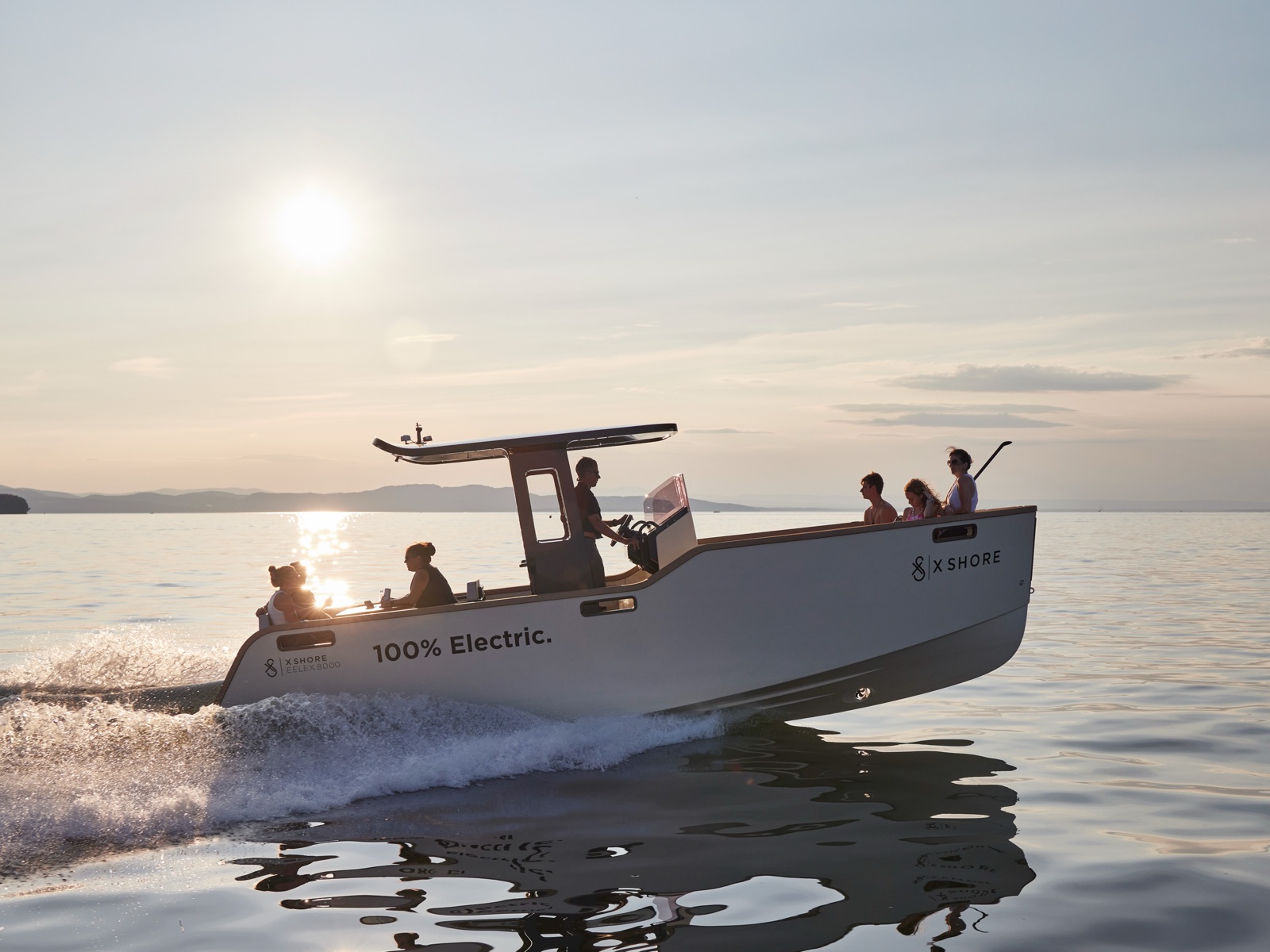
Sweden’s X Shore brings Scandinavian minimalism onto the water. The Eelex 8000 runs a 170 kW drivetrain, manages roughly 30 knots and promises around 100 nautical miles (nm) at slow speed. Like Marian, the yard prints prices for more than one model. On the European list the Eelex 8000 starts from €249,000 and the X Shore 1 from €129,000, tax treatment not stated. Rand Boats of Denmark builds sharply drawn leisure boats with a prominent electric option and publishes a full price list of its own, on which the Leisure 28 starts from €165,900, again with no word on tax (both sites checked on 12 September 2026).
Candela, also Swedish, is in a category of its own, with boats that rise out of the water on wings and, according to the builder, get where they are going on 80 percent less energy. The builder rates the C-8 daycruiser at 57 nautical miles on a charge. Besides their brand page, the flying boats appear in our guide to hydrofoil boats.
To find your way through that field, start with the kind of boating you do. For short runs of a few hours close to shore, the compact lake dayboats fit best in both size and handling, the 5-to-11-meter class Alfastreet made its name with. Unhurried cruising over several days points toward the larger Greenline yachts. Frauscher, Marian and X Shore speak to buyers chasing premium design and a premium experience who are ready to pay what that costs. However much a spec sheet tells you, it is still no substitute for a run on the water before the final call, and many models can be tested before you commit.
Electric motors for a boat you already own
You do not have to buy a complete electric boat. If you own a rowboat, a dinghy or a small sailboat, an electric boat motor puts you on the water for a fraction of the money. A handful of names shape that market.
Torqeedo has been part of the Yamaha Motor Group since April 2024 and calls itself a leading company for electric propulsion on the water. The lineup starts with the portable Travel Ultralight and Travel motors (the equivalent of 1 to 5 hp), continues through the Cruise family (6 to 25 hp) and ends with the fixed Deep Blue installations of 25 to 100 kW. According to Torqeedo, joining Yamaha puts Yamaha Motor’s global sales and service network behind the brand.
ePropulsion makes portable Spirit motors with an integrated battery; the 1 kW Spirit 1.0 carries 1,276 Wh. Next come the Navy Evo outboards at 3 and 6 kW, and above them the X-Series covers the higher power range from 12 to 40 kW (epropulsion.com, read on 5 October 2026).
From the traditional outboard giants comes Mercury’s Avator series. At the small end sits the 7.5e, whose 1 kWh battery Mercury calls swappable. The 20e and 35e run on one 2,300 Wh battery or up to four linked through a Power Center. At the top, the 75e and 110e link up to four 5,400 Wh batteries through the Avator 5400 Power Center and charge them from a single point.
The insider pick comes from Slovenia. Remigo is a fully integrated motor shaped like a rudder blade. The current RemigoOne Go weighs 13 kg and runs at 1,000 W with a 1,500 W Boost (the original RemigoOne weighed 12 kg at 1,000 W). That makes it a practical answer for small boats and dinghies, and the maker points to multiple design awards.
Choose the motor power to suit the size of the boat and how you use it. A light boat or a dinghy is well served by a portable unit with modest output; a heavier boat carrying several people asks for a larger, fixed-mounted drive. Portability matters as well. A removable motor with an integrated battery is something you lift into the boat on your own and take home to charge, while a built-in system stays aboard. Talk to the dealer about your boat’s size and how the motor mounts before you order, so the motor really fits. A few minutes of that homework saves a lot of grief.
Renting and charging infrastructure
For most people, electric boating does not start with a purchase. In a growing number of countries, lake and coastal resorts keep electric rental boats on the water, bookable online in slots that begin at one or two hours. Many operators keep those fleets under the local threshold that triggers a licensing requirement, which means a large part of this market can be booked without a boating license. As a result, the license-free rental boat has become one of the most popular summer outings on the water.
The shoreline is moving too. One harbor after another is retrofitting charge points, new pontoons are planned with power from the start, and berths designed around electric boats are appearing at more marinas each season. Coverage is far from complete. The direction is not in doubt.
Boat shows make the clearest case that the subject has gone mainstream. Electric propulsion now gets its own category and its own floor space, not a curiosity stand at the edge of the hall.
Renting comes with a few practical points of its own. In high season and on weekends the good time slots go quickly, so book online early. Group size matters. A small electric boat is fine for a relaxed hour or two with one other person; for a family or a group of friends, a bigger boat with six to eight seats is far more comfortable. Where a boat stays below the local licensing threshold, you steer it yourself after a short briefing. Ask the operator about local navigation and mooring rules all the same, and once you are out, give swimmers and sailboats a wide berth.
Charging and range, day to day
Range is what people ask about most, meaning how far you get on one charge, and the answer depends on the boat, on the battery size and above all on speed, and speed and consumption do not rise in step. At a slow, unhurried pace below planing speed an electric boat goes strikingly far, and gliding silently like that is much of what the category promises. Open the throttle fully and range drops away sharply, because consumption climbs much faster than speed does.
If you cruise the shoreline, range will hardly cross your mind; a plan built on sprinting means shorter legs between charges. Charging itself is becoming less of an obstacle. Modern marinas put charge points on the pontoon, and every round of marina upgrades adds more berths that are wired and ready. Charge when the boat would be sitting still anyway, overnight at the berth or during a longer break ashore. Renters can skip all of this. You normally take over a fully charged boat, and the operator makes sure the charge covers your booked time. A few good habits help all the same:
- Start with a full battery and plan the route in advance, with a reserve for the way back.
- Speed is your range control. When the charge is running low, ease off the throttle.
- Use longer stops ashore for charging wherever the harbor offers it.
Rent, convert or buy new: how do you choose?
Three routes lead into electric boating, and it pays to pick the one that fits your situation. Renting lets you try the experience with no commitment, no maintenance, no storage and no winterizing, which suits anyone who gets out a few times a year or wants to build up some experience first. Converting makes sense if you already have a boat or a small sailboat. An electric motor puts you on the water for considerably less money, and you keep the hull you know. The third is a factory-built electric boat of your own: the most freedom of the three, and also the biggest commitment.
One question does most of the deciding: how often would you use the boat, and for what? If you are on the water regularly, owning can work out against rental fees over time. For occasional outings, renting wins comfortably. Prices cover an extremely broad scale: a retrofit motor is the cheapest way in, European premium dayboats sit in the six-figure euro range, and the exact number depends on brand, size and specification. Whichever route you take, the sensible first step is the same: get aboard and try it on the water before you decide.
Where the electric boat market is heading
Industry analyses agree that the global electric boat market is growing. Where it is largest, they do not agree. IMARC puts Europe first for electric boats and ships, with 36.7 percent of the market in 2025, while Fortune Business Insights gives North America the lead in electric boats, with 34 percent in that year (both read on 5 October 2026). IMARC credits Europe’s share to advances in batteries and electric propulsion and to government initiatives for sustainable shipping. Meanwhile the industry is sorting itself out. Yamaha has taken over Torqeedo, the big engine manufacturers are entering the segment one after another, and the car industry is polishing the category’s image with prestige projects from Porsche and ABT. Far from lagging behind, engine-restricted lakes are where the change arrived first, and the restrictions, the growing charging infrastructure and the larger rental fleets all point the same way for the next few years: toward more electric boating.
Nor does the momentum stop at boats. Electric drivetrains are rebuilding the motorboat and reshaping everything else people ride on the water, from the electric surfboard to the eFoil. What ties it together is quiet riding without exhaust, and with every season there are more ways to enjoy the water without engine noise.
The next big jump lifts the hull clear of the surface, on boats that glide on wings and use less energy still. Our article on hydrofoil boats covers them.