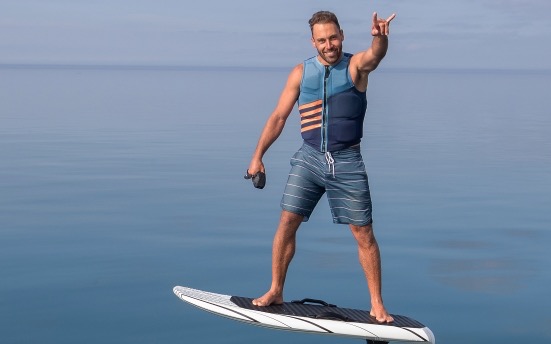
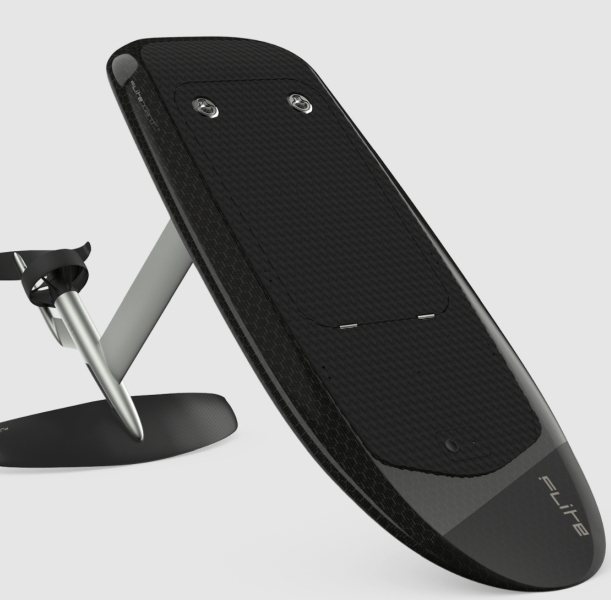
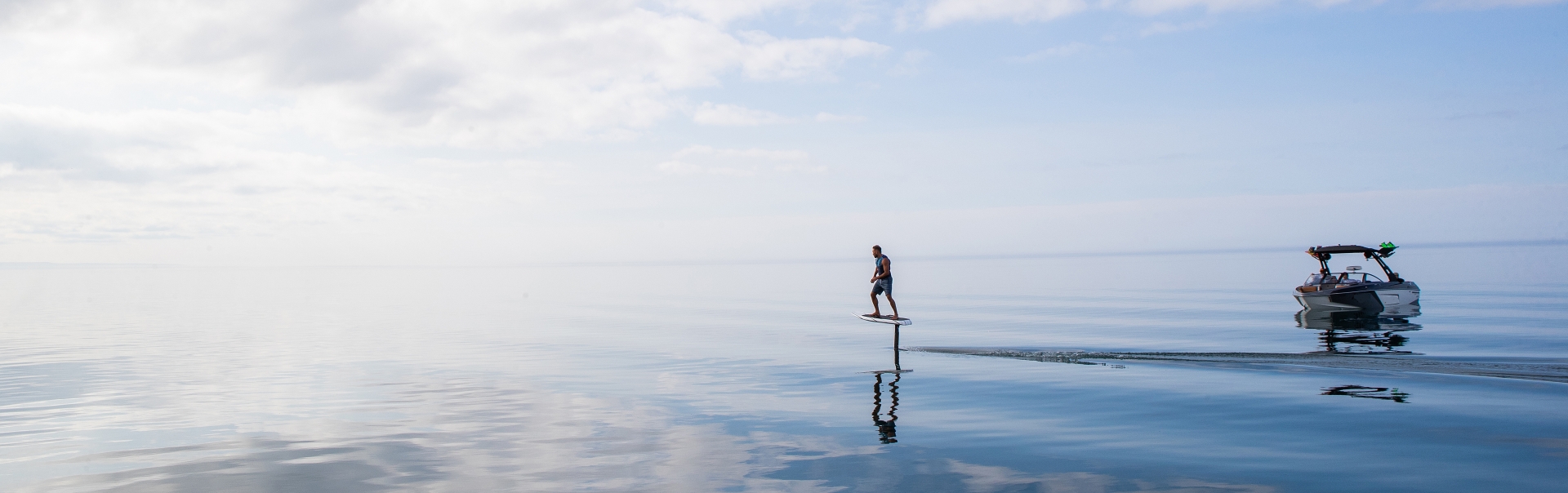
A Fliteboard country, with two exceptions
The footer of Flite's website reads “Designed in Byron Bay, Australia”, and Fliteboard is a division of Brunswick Corporation. When Brunswick announced the Sydney school in November 2025, the press release quoted Flite's president in four words. “Flite originated in Australia.” The school map looks like it. Flite's Australian directory lists schools in Queensland, New South Wales, Victoria and Tasmania, and seven of the nine operators on this page teach on a Fliteboard.
The other two go their own way. Future Rides in Jervis Bay teaches on Lift boards, and eFoilgc on the southern Gold Coast sells Lift, Jetwave and Hydroflyer without saying which one you learn on. If you have never stood on a powered board, the eFoil hub covers the basics, and the Fliteboard page covers the board most of these schools will put you on.
Prices below are the operators' own list prices in Australian dollars, read on 23 October 2026. The vocabulary shifts a little too. Australian schools say hire where a European school says rental, and PFD (personal flotation device) for a life jacket, so this page does the same. The seasons are reversed from Europe, with summer from December to February and winter from June to August.
Swipe sideways to see all columns
| School | Water | Board | Minimum age |
|---|---|---|---|
| Fliteschool Sydney | Bobbin Head, NSW | Fliteboard | 12 |
| Foil Time | Botany Bay, NSW | Fliteboard | 13 |
| GlideTime | Smiths Lake, NSW | Fliteboard | not stated |
| Future Rides | Jervis Bay, NSW | Lift | not stated |
| Fliteschool Gold Coast | Surfers Paradise, QLD | Fliteboard | 12 |
| eFoilgc | Currumbin Creek, QLD | not named | not stated |
| Fliteschool Noosa | Noosa River, QLD | Fliteboard | 14 |
| Fliteschool Melbourne | Port Phillip, VIC | Fliteboard | 12 |
| eFoil Tas | Hobart, TAS | Fliteboard | 12 |
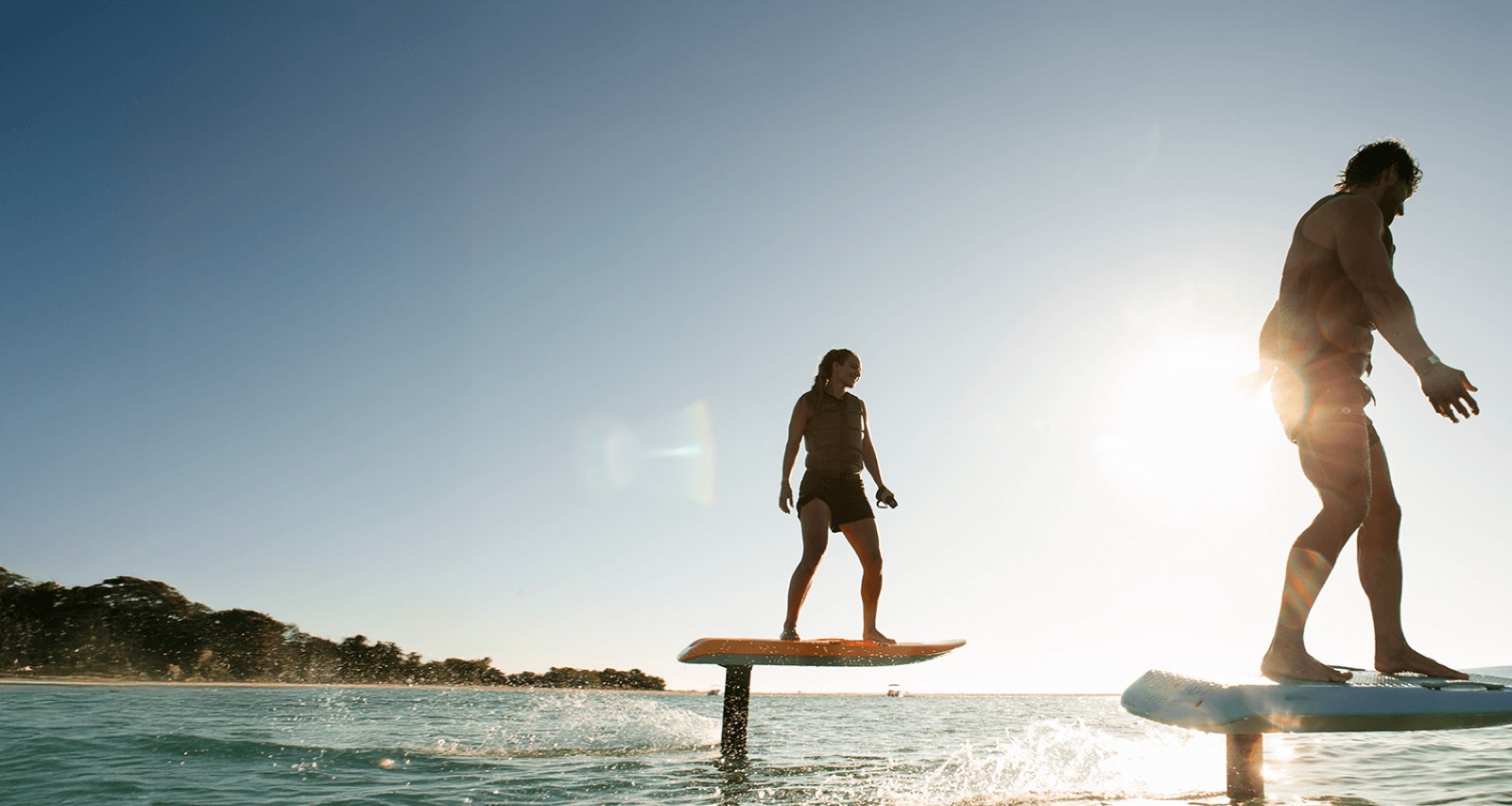
Bobbin Head, inside Ku-ring-gai Chase National Park
Ku-ring-gai Chase, in Sydney's north, is the second oldest national park in Australia according to NSW National Parks. Bobbin Head is the park's picnic and boating hub. Flite runs Fliteschool Sydney here, a school Brunswick announced on 5 November 2025. The lesson water lies inside the park and the school takes you out by boat, so friends who come along cannot watch from the shore.
The group lesson is called the Flite Experience and takes up to three riders. Flite lists it at “as low as $225*for 2 hours”, and the asterisk refers to a group booking of three. A gift voucher for a two hour lesson starts at $275. Private lessons for one or two riders include a guided tour from the boat. Beyond lessons, the school helps with Fliteboard sales, service and repairs, and it holds community ride days.
The boat transfer is included, along with a current Fliteboard, a life vest, a helmet and a wetsuit. Pack water, a towel, a hat, sunscreen, swimwear with a rashie or swim shirt, and dry clothes. You must be able to swim. Riders start at 12, anyone under 16 comes with an adult, and the weight limit is 120 kg.
The drive from the CBD takes about 40 minutes. Bobbin Head Road leaves the Pacific Highway and enters the park at the North Turramurra gate, while Ku-ring-gai Chase Road comes off the M1 and NorthConnex to the Mount Colah gate. Without a car, the train goes to Turramurra and a taxi covers the last ten minutes or so. Vehicle entry is $12 per day. Anyone waiting ashore has picnic areas and the historic Bobbin Inn Café.
Foil Time on Botany Bay, across the city
Sydney's other school sits at the opposite end of the city, in the south east. Foil Time teaches on Botany Bay, and Flite lists its lessons on the New South Wales page of its own site. Riders meet at Foil Time HQ, Unit 28, 19 McCauley Street, Matraville NSW 2024. Lessons and hire are booked on the web only. Both Sydney schools are compared side by side on our eFoil in Sydney page.
A Flite Experience here takes up to two riders, and there are one on one private lessons. A session called “Advanced Rider Return” covers carving, board control, foot positions and new wing and board setups, with the option of heading out onto the ocean. A PFD and helmet are included. Foil Time is stricter on age than Flite's own school. The minimum is 13, and anyone under 18 needs an adult along.
Neither Sydney school rides on Sydney Harbour. The harbour is the state's Personal Watercraft Exclusion Zone, and an eFoil may not ride there without a specific exemption.
NSW counts an eFoil as a personal watercraft, with exemptions
Transport for NSW keeps a page of its own on motor powered hydrofoil boards, and it cites the Act, the Regulation and the Government Notices it relies on. Under the Marine Safety Act 1998 an eFoil is a personal watercraft (PWC). NSW Government Notices dated 29 March 2019 then exempt eFoil riders from certain requirements that clause 140(1) of the Marine Safety Regulation 2016 would otherwise place on PWC operators. The exemption ends at 25 knots. Above that speed the full PWC rules apply.
The exemption comes with conditions, and some rules apply regardless:
- no riding in the Personal Watercraft Exclusion Zone on Sydney Harbour without a specific exemption;
- no riding between sunset and sunrise;
- a lifejacket appropriate for a PWC, as clause 120 of the Marine Safety Regulation 2016 specifies, with high visibility clothing strongly encouraged;
- a general boat driving licence once the board is operated at 10 knots or more;
- registration for a board with an engine above 4.0 kW, as a vessel and not as a PWC, with the number on each side in figures at least 50 mm high that contrast with the hull.
The licence line is tied to speed, so in our reading it matters mainly to private owners who ride fast. Anyone who owns a board should hold its motor rating up against the 4.0 kW line before the first ride. All of this is our summary of the Transport for NSW page, and that page is the one to trust if they differ.
Smiths Lake and Jervis Bay, north and south of Sydney
Up the coast on the Barrington Coast, near Forster, Pacific Palms and Seal Rocks, GlideTime rides Smiths Lake as an authorised Fliteboard partner. You meet at the Smiths Lake boat ramp car park, and the school's site also names Myall Lake.
The formats are small. There is a 90 minute introduction for one rider, 90 minutes shared by two, a Glide Party for up to four and a learn to foil course of three lessons. GlideTime publishes no prices. It describes its sessions as happening on “nice sunny days, smooth waters”, so the weather has a say in when you ride.
South of the city, Future Rides runs Lift eFoil lessons in Jervis Bay, about 20 minutes south of Nowra, around Huskisson, Vincentia and St Georges Basin. No other school on this page names Lift as its lesson board.
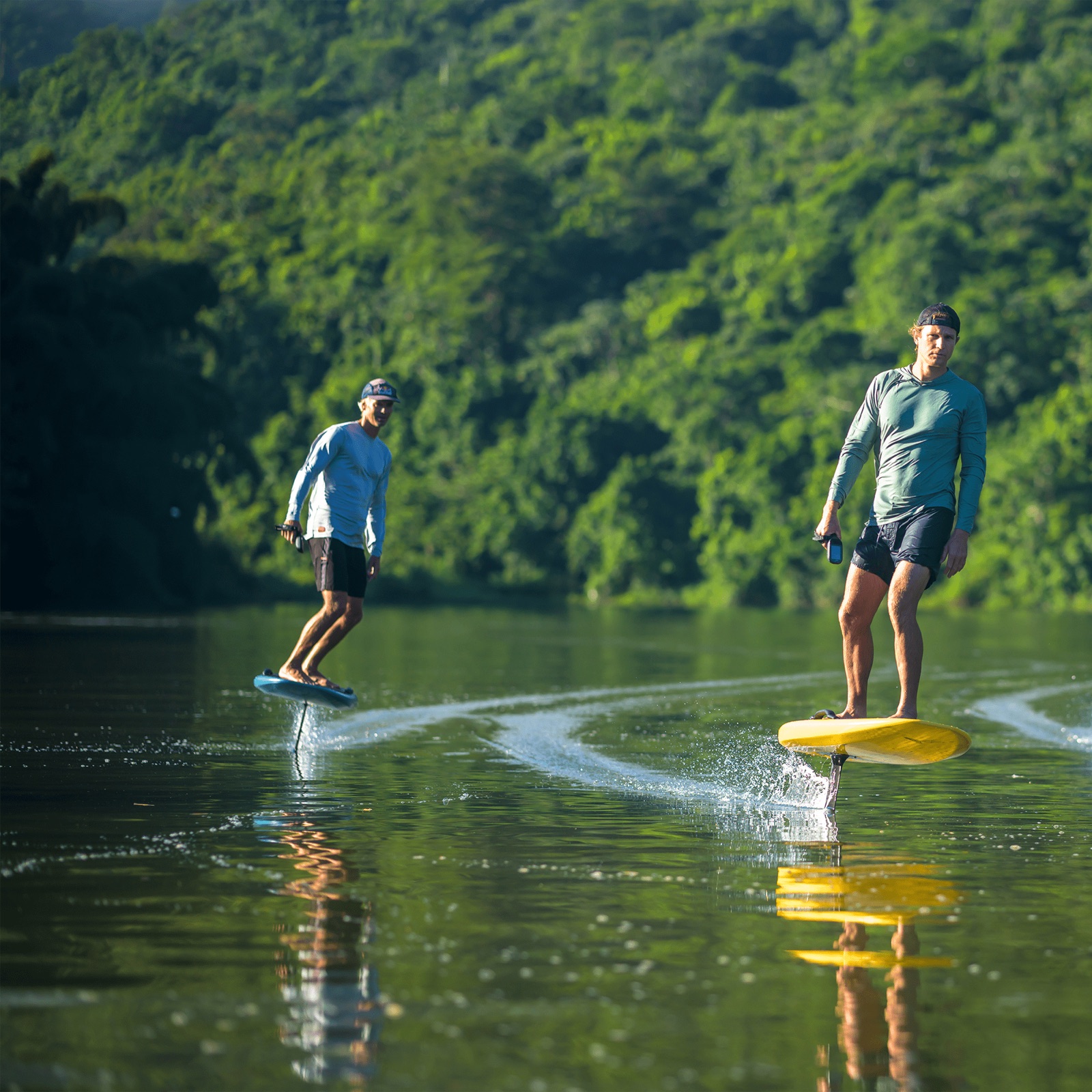
Gold Coast lessons at Surfers Paradise and on Currumbin Creek
Fliteschool Gold Coast works out of Marriott Marina, 158 Ferny Ave, Surfers Paradise 4217. The school sends drivers to street parking near 36 Paradise Place, then along the boardwalk behind the resort to the marina. The JW Marriott resort has paid parking, and the nearest G:link tram stop is Surfers Paradise North.
Lessons last around two hours. You can join a group Flite Experience of up to three riders, take a one on one private lesson, or bring colleagues to a corporate class of up to six. A Flitescooter can be hired for one rider. Board, life vest, helmet and a secure locker are included, and photos and video are on sale. The limits match Bobbin Head: swimmers only, 12 at the youngest, under 16s with adults, up to 120 kg. The marina doubles as an authorised Fliteboard service centre and sales location.
Down at Currumbin, on the southern Gold Coast, eFoilgc teaches private lessons only. Coaching is one on one with live radio feedback, and the sessions run on Currumbin Creek. Its list prices are $380for the Learn to Foil private class of 90 minutes, $460 for Advanced Foil on flat water or in the ocean, and $490 for Accessible Adventures. The business sells eFoils (Lift, Jetwave and Hydroflyer), repairs them under the name “eFoil Doctor”, and sells an eFoil and skydive combination.
Noosa River sessions from Gympie Terrace
On Gympie Terrace in Noosaville, at number 172, Fliteschool Noosa takes riders out on the Noosa River every day.
It has the longest menu here. The group eFoil Experience takes up to three riders with no experience required, and a private version exists. On the Flitescooter you stand holding handles for balance and need no board skills. Coaching comes as a Progression Session. From September to April there is also a private two hour sunset session on the river.
The Fliteboard, a PFD, a helmet, a wetsuit and a secure locker come with the booking. Swimming is required. Noosa sets its minimum age at 14, higher than any other Flite school in Australia, and asks you to call about riders aged 12 or 13. The maximum weight is 120 kg.
Queensland law and its general engine thresholds
We found nothing in Queensland to match the NSW page. Marine law there sits in the Transport Operations (Marine Safety) Act 1994 and the Transport Operations (Marine Safety) Regulation 2016 (SL 2016 No. 154), current as at 1 February 2026. No Queensland government page we searched names eFoils. Flite's own registration article says the rules vary by state and sends Queensland riders to qld.gov.au.
What the Regulation does have is a pair of engine thresholds. Section 26(2)(a) takes a ship that is not powered, or has an engine of less than 3 kW, out of registration under part 5, division 1 of the Act. Section 55(d) takes a ship that is not powered, or has an engine of 4.5 kW or less, out of the licensing requirement in part 5, division 2. Separately, a PWC licence is needed to operate a personal watercraft, defined as “a powered ship with a fully enclosed hull that does not take on water if capsized and is designed to be operated by a person standing, crouching or kneeling on it or sitting astride it”. The PWC licence comes on top of a recreational marine driver licence (or a commercial master's licence), unless a licensed person is aboard.
On our reading of those texts, a board of 3 kW or more falls into registration, and one above 4.5 kW into licensing. A standing rider on a sealed powered board fits the PWC wording. Whether Maritime Safety Queensland treats an eFoil as a PWC is stated nowhere we looked, so owners should ask it directly before riding.
The Gold Coast Waterways Authority adds distance limits that apply with or without signs. Boats keep to 6 knots within 30 m of moored or anchored boats, jetties, pontoons, boat ramps and people in the water. For a PWC that distance is 60 m, measured also from the shoreline (with some exceptions) or a bathing reserve, and 10 knots is the cap within 30 m of another moving vessel. Which set binds a private eFoil depends on the open PWC question. Our view is that keeping to the 60 m distances satisfies both. None of this is legal advice.
Melbourne, Hobart, and the WA rules for owners
Melbourne rides Port Phillip. Fliteschool Melbourne launches from Sandridge Beach along The Boulevard, Port Melbourne VIC 3207, at Perce White Reserve, where you can park. Groups here are capped at two riders, and there are private lessons or guided tours for one, corporate sessions for up to six and a three lesson package. A wetsuit and safety gear are included. Riders start at 12, under 16s with an adult, and must swim.
Flite's Tasmania page names eFoil Tas as the state's only authorised Flite agent, based at 106 Gormanston Road, Moonah TAS 7009. The riding spot depends on the weather, most typically Long Beach or Sandy Bay in Hobart. Sessions take up to two riders and there is a five lesson pack. Helmet and PFD are included, the wetsuit is an extra hire, and the age rules follow Melbourne.
Western Australia has no school on this page, but its Department of Transport sets out its eFoil rules in detail. An electric hydrofoil board with a motor above 4.5 kW (6 hp) is a vessel. It has to be registered, follow speed limits and collision rules, and the rider needs a Recreational Skipper's Ticket. Such a board rides only between sunrise and sunset. The numbers go on both sides above the waterline in plain block digits at least 50 mm high and 12 mm wide, and the rider wears a Level 50 lifejacket or higher. Beyond 400 m from shore in unprotected waters add an EPIRB or PLB and flares; beyond 4 nautical miles, a marine radio.
The number, daylight and lifejacket conditions come from exemption WAMA-2025-207904 of August 2025, made under section 115A of the Western Australian Marine Act 1982 from regulations 45B(7)(a), 50B(3) and 52A(2) of the Navigable Waters Regulations 1958. It runs until 1 August 2027 unless revoked sooner. Collision rules, speed limits, the skipper's ticket and the offshore safety gear come from other law and apply regardless.
From year round Queensland water to the cold sea off Hobart
Nine schools in four states ride in very different water.
Swipe sideways to see all columns
| Place | Warmest month | Coldest month |
|---|---|---|
| Sydney | February, about 23.7 °C | September, about 18.6 °C |
| Gold Coast | February, about 27.2 °C | July, about 21.7 °C |
| Noosa | February, about 27.2 °C | August, about 21.2 °C |
| Melbourne | February, about 18.8 °C | September, about 14.6 °C |
| Perth | March, about 23.2 °C | September, about 18.7 °C |
| Hobart | February, about 16.9 °C | August, about 12.7 °C |
Going by those averages, Queensland water sits above about 21 °C in every month, so the Gold Coast and Noosa work all year. Sydney falls to about 18.6 °C at its coldest. Melbourne and Hobart stay cool even in February. Bobbin Head, Noosa and Melbourne include a wetsuit in the lesson, and eFoil Tas hires one out.
At some places the weather matters more than the month. GlideTime goes out on calm, sunny days, and eFoil Tas picks its spot by the conditions. Several schools ride what we would call sheltered water, among them Currumbin Creek, the Noosa River and the Ku-ring-gai Chase waterways. Daylight is also a legal limit in two states. NSW allows no eFoil riding between sunset and sunrise, and WA keeps boards above 4.5 kW to daylight.
Across the Pacific, our page on eFoil in California looks at the schools on the American side, and eFoil in Hawaii covers the islands in between. Far to the north, there is our page on eFoil in Canada. Closer to home, across the Tasman, we have a page on eFoil in New Zealand, and to the north west there is eFoil in Bali.