The Flite brand
Flite comes from Australia. Pro surfer David Trewern founded the company, and its first boards shipped to customers in late 2018. Flite plays in the same league as Lift: both make high-end eFoils that are quick to learn on. The two top boards in its range, the ULTRA and the RACE, cost about 4 to 6% less than Lift's carbon LIFT5.
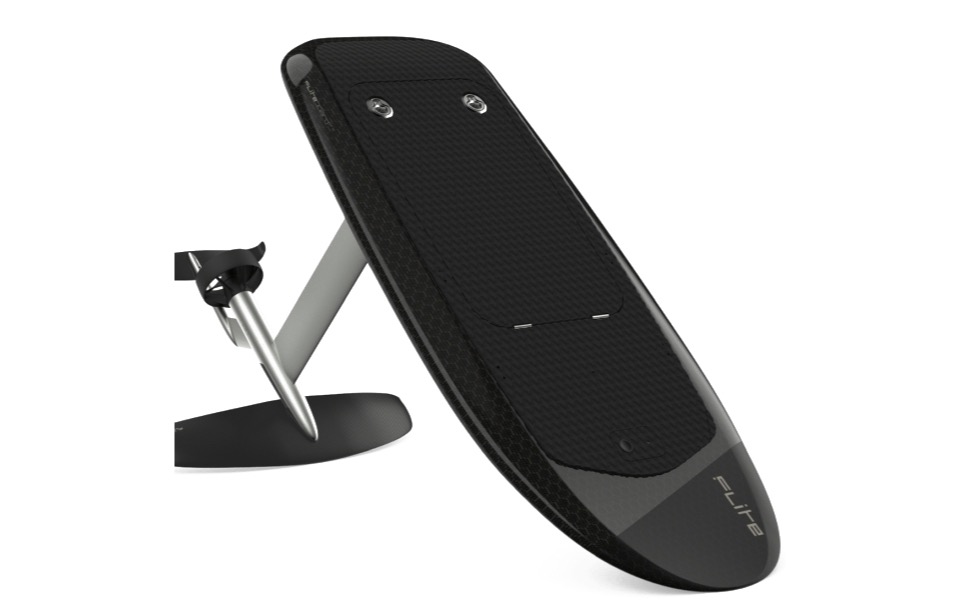
In the years since, the brand has become one of the benchmarks of the category. Flite started out with a range of three boards. The current lineup, the sixth generation (Series 6), is a family of seven models, running from the all-around ICON to the RACE, co-developed with Mercury Racing, and on to the limited-edition series designed by Marc Newson.
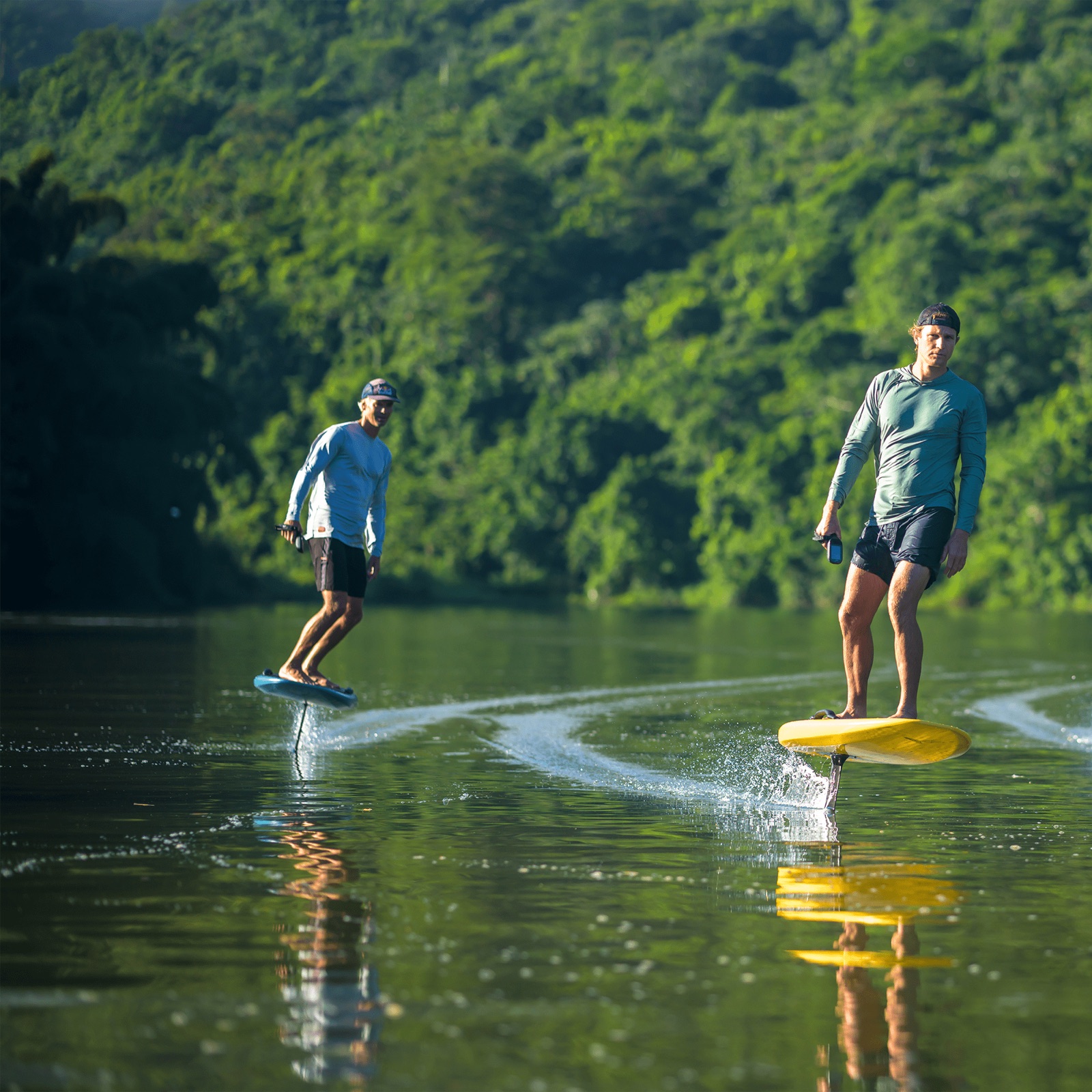
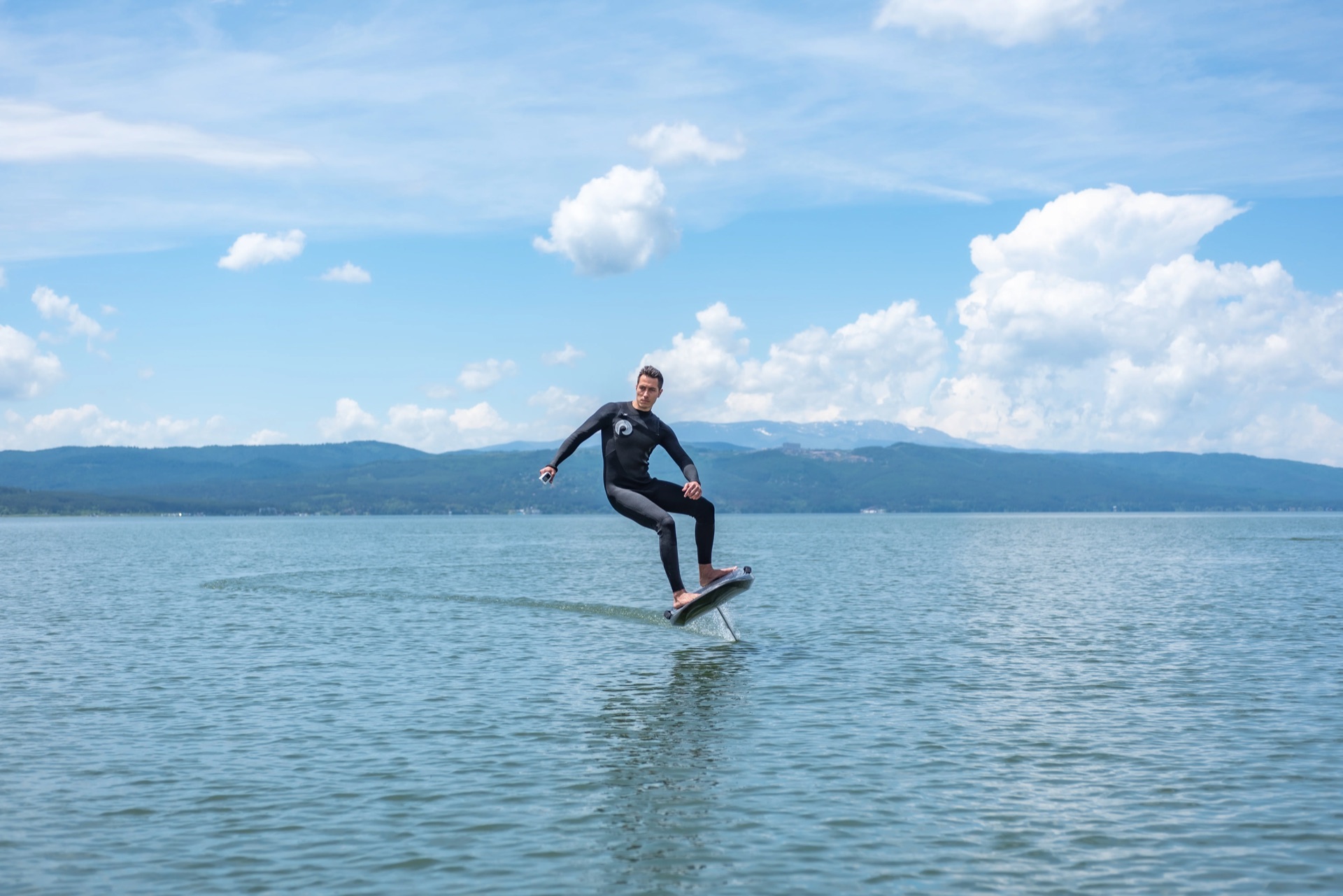
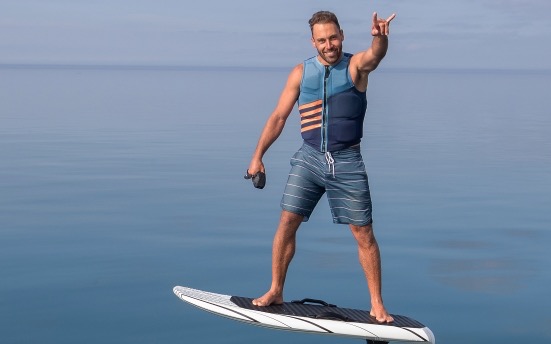
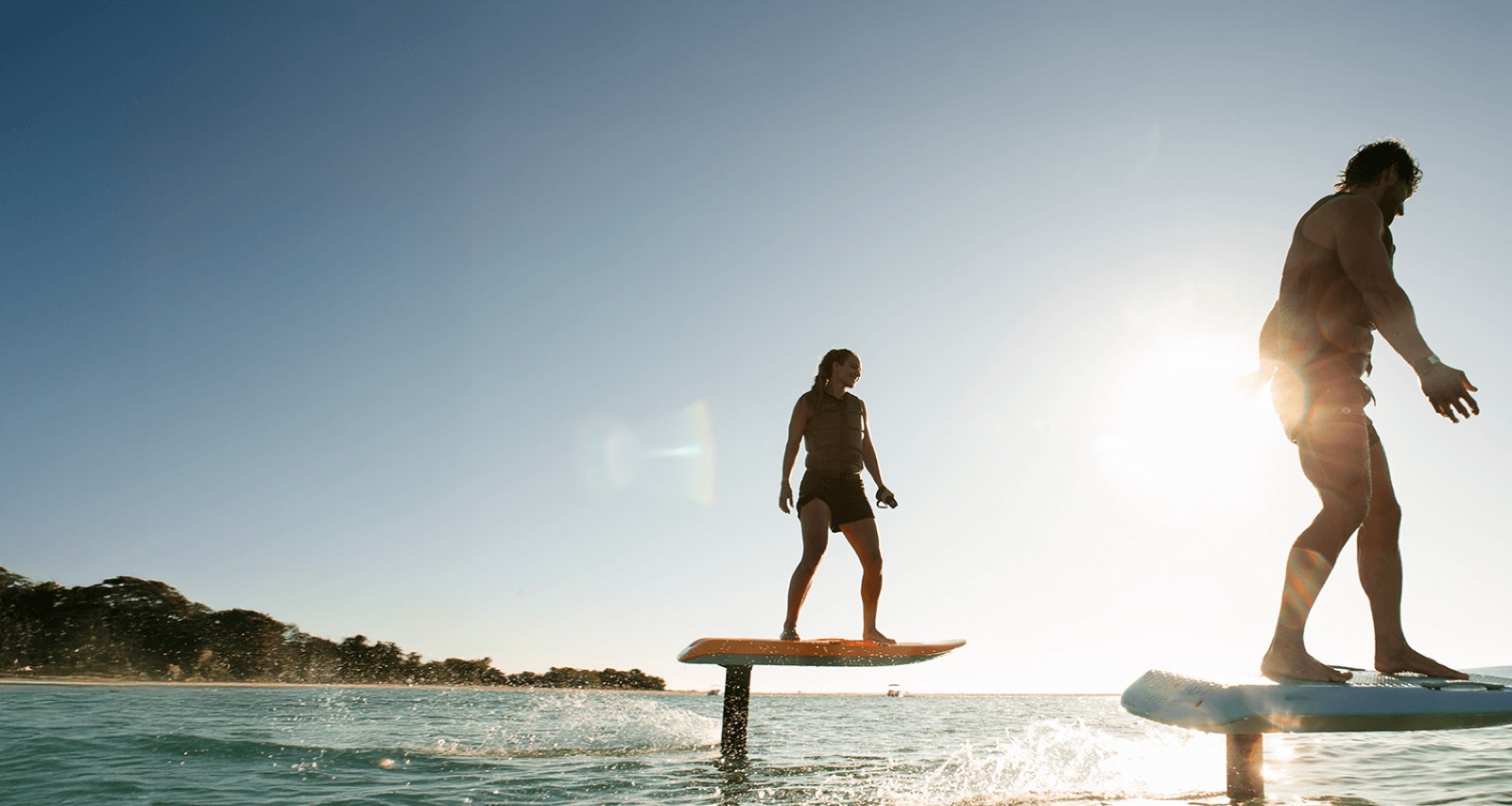
Flite in motion
More videos and a full gallery live on the manufacturer's site: fliteboard.com ↗
Models and prices (Series 6)
Each of the seven models in the 2026 Series 6 lineup has its own job. The ICON is the all-arounder and base model, the PRO the sportier middle ground. The ULTRA L3 is the lightest race machine, and the RACE is the fastest Fliteboard. The inflatable Flite AIR serves as the travel-friendly entry point and the Flitescooter as the learner board with a handlebar, while the Marc Newson series sits at the top as the limited design piece.
At Flite, price and flight time depend mainly on the Flitecell you choose (Nano 806 Wh / Sport 1.6 kWh / Explore 2.1 kWh). Every price in this section is a starting price, and flight times follow the battery, not the model.
ICON Series 6
The base model of Series 6 (successor to the earlier 'Fliteboard'): a 100-liter all-rounder that can be configured with three Flitecell batteries.
- Board size
- 5′8″ × 28″
- Volume
- 100 l
- Weight
- approx. 30 kg (with Flitecell Nano)
- Battery
- Flitecell Nano 806 Wh / Sport 1.6 kWh / Explore 2.1 kWh
- Flight time
- up to 45 min / 1.5 h / 2.5 h (depending on battery)
- Charge time
- approx. 50 min to 2 h with fast charger (depending on battery)
- Max. rider weight
- 120 kg
- Price (approx.)
- from $10,999
Manufacturer figures (as of 2026-07-03). Prices are for guidance only.
PRO Series 6
A sportier 67-liter board: more agile than the ICON, but easier to handle than the race-tuned ULTRA.
- Board size
- 5′0″ × 28″
- Volume
- 67 l
- Weight
- approx. 24 kg (with Flitecell Nano)
- Battery
- Flitecell Nano / Sport / Explore
- Flight time
- 45 min to 2.5 h (depending on battery)
- Max. rider weight
- 120 kg
- Price (approx.)
- from $10,999 (depending on configuration)
Manufacturer figures (as of 2026-07-03). Prices are for guidance only.
ULTRA L3 Series 6
The lightest Fliteboard ever: 49 liters, made for riding waves and for gliding even without power. Flite gives no separate board weight, only the complete set with the Flitecell Nano: 18.1 kg in its comparison table and 18.3 kg in the page header.
- Board size
- 4′4″ × 21″
- Volume
- 49 l
- Weight
- 18.1 kg (with Flitecell Nano; 18.3 kg in the page header)
- Battery
- Flitecell Nano / Sport
- Flight time
- 45 min to 1.5 h (depending on battery)
- Price (approx.)
- from $14,444
Manufacturer figures (as of 2026-10-05). Prices are for guidance only.
RACE x Mercury Racing Series 6
The fastest Fliteboard, developed together with Mercury Racing: up to 55 km/h with the RACE impeller, which comes with the Jet C drive. That Jet C version is the one Flite's RACE page prices from $14,395; with the Prop C propeller drive the cheapest configuration starts at $14,065 (Flite store, 5 October 2026).
- Battery
- compatible with all Flitecell options
- Top speed
- up to 55 km/h (with the RACE impeller of the Jet C version)
- Price (approx.)
- from $14,065 with Prop C, from $14,395 with Jet C
Manufacturer figures (as of 2026-10-05). Prices are for guidance only.
Flite AIR Series 6
Inflatable Fliteboard in two versions (AIR ICON 110 l, AIR PRO 80 l): rugged, travel-ready, and a good choice for learning too. Both run on the Flitecell Nano or Sport battery (the larger Explore does not fit), so how long a session lasts depends mostly on which of the two packs you drop in.
- Board size
- AIR ICON 5′8″ / AIR PRO 5′2″
- Volume
- 110 / 80 l
- Battery
- Flitecell Nano / Sport (Explore not compatible)
- Flight time
- 45 min to 1.5 h (depending on battery)
- Construction
- inflatable
- Price (approx.)
- from $8,999
Manufacturer figures (as of 2026-09-12). Prices are for guidance only.
Flitescooter Series 6
An eFoil with a handlebar and 237 liters of volume on which complete beginners learn to fly in minutes: just step on and go.
- Board size
- 7′0″ × 35″
- Volume
- 237 l
- Weight
- approx. 38 kg (with Flitecell Explore)
- Battery
- Flitecell options, including Explore
- Construction
- with handlebar (Flitebar)
- Price (approx.)
- from $11,999
Manufacturer figures (as of 2026-07-03). Prices are for guidance only.
Marc Newson Series Series 6, limited edition
Designer edition by Marc Newson with a monocoque build of Japanese high-modulus carbon, limited to 999 configurations (MN60, MN60 Wave, MN86).
- Board size
- MN60/MN60 Wave 4′6″ / MN86 5′4″
- Weight
- 7.2-9.25 kg (board)
- Battery
- MN Flitecell Nano / Sport / Explore (MN60 Wave: Nano or Sport only)
- Construction
- Japanese carbon monocoque
- Price (approx.)
- from $20,999
Manufacturer figures (as of 2026-07-03). Prices are for guidance only.
Previous generation (no longer sold new)
Series 5 (Fliteboard, AIR, Flitescooter)
The fifth generation (successor to the 2021 Fliteboard / Pro / Air) was replaced by Series 6, and the maker no longer treats it as a current line. Series 5 boards (Fliteboard, Flitescooter S5 and AIR PRO S5) appear from time to time on the used market. If a dealer still has one new, ask about warranty and spare parts before you buy.
Which Fliteboard is right for you?
If you are new to foiling, the Flitescooter or the inflatable AIR gets you on the water with the least fuss. For most buyers the ICON is the obvious pick. Advanced riders reach for the PRO, and if waves or racing are on your mind, you'll end up on the ULTRA L3 or the RACE.
Swipe sideways to see all columns
| Model | Type | Price (approx.) | Flight time | Best for |
|---|---|---|---|---|
| ICON | eFoil | from $10,999 | up to 45 min / 1.5 h / 2.5 h (depending on battery) | All-round base model for every level |
| PRO | eFoil | from $10,999 (depending on configuration) | 45 min to 2.5 h (depending on battery) | Nimbler than the ICON, more forgiving than the ULTRA |
| ULTRA L3 | eFoil | from $14,444 | 45 min to 1.5 h (depending on battery) | The lightest board, for carving waves |
| RACE x Mercury Racing | eFoil | from $14,065 with Prop C, from $14,395 with Jet C | n/a | For advanced riders hungry for speed |
| Flite AIR | eFoil | from $8,999 | 45 min to 1.5 h (depending on battery) | Rugged inflatable board for travel |
| Flitescooter | eFoil with handlebars | from $11,999 | n/a | For beginners, learnable in minutes |
| Marc Newson Series | eFoil | from $20,999 | n/a | Limited-edition design flagship series |
Archive: the 2021 models
These three boards made up Flite's range in 2021. You can't buy them new anymore, but they keep turning up on the used market, so we've kept our original overview of them here.
Fliteboard

The base model is the right pick for most riders and suits beginners and intermediates between 50 and 90 kg. The board is big enough to handle easily, yet nimble and simple to transport.
There are four mast lengths to pick from. The 60 cm mast is for beginners and shallow water, and it gives the easiest and safest ride. The 70 cm also suits beginners, the 85 cm is for intermediates, and the 90 cm for experienced riders and deep water. For the wing you choose between the Cruiser, very stable and the best choice for beginners and heavier riders, and the Flyer, made for lighter riders and good for up to 45 km/h (about 28 mph).
- Dimensions: 172 x 71 cm
- Weight: 28-34 kg
- Battery: 40 Ah / 2.1 kWh or 30 Ah / 1.65 kWh
- Flight time: 40-60 minutes
- Charging time: 3 hours (Fast 20A) / 2 hours (Premium 25A)
- Top speed: 34-45 km/h
- Max. rider weight: 100 kg
- Colors: White, black, light brown
- Price: around €11,000 at the time
Fliteboard Pro

A smaller board, meant for experienced athletes, that turns tighter and reacts more directly than any other Fliteboard.
The Pro uses the same masts and wings as the bigger board. The mast comes in 60 cm (beginners and shallow water, easiest and safest), 70 cm (beginners), 85 cm (intermediates) and 90 cm (experienced riders, deep water), and you get the two wings, the Cruiser (stable, good for beginners and heavier riders) and the Flyer (for lighter riders, up to 45 km/h).
- Dimensions: 152 x 62 cm
- Weight: 28-34 kg
- Battery: 40 Ah / 2.1 kWh or 30 Ah / 1.65 kWh
- Flight time: 40-60 minutes
- Charging time: 3 hours (Fast 20A) / 2 hours (Premium 25A)
- Top speed: 34-45 km/h
- Max. rider weight: 100 kg
- Colors: White, black, light brown
- Price: around €11,000 at the time
Fliteboard Air

The inflatable eFoil in the range, made for complete beginners, schools, rental fleets and families. Of all the Fliteboards this is the largest, and no other model makes learning to fly as easy. The build is rugged, and the board is easy to store and easy to transport.
The Air comes with one mast length only, the 60 cm, which is the beginner and shallow-water option and gives the easiest, safest handling. The wing choice is again between the Cruiser (stable, the best choice for beginners and heavier riders) and the Flyer (for lighter riders, up to 45 km/h).
- Dimensions: 198 x 76 cm
- Weight: 28-34 kg
- Battery: 40 Ah / 2.1 kWh or 30 Ah / 1.65 kWh
- Flight time: 40-60 minutes
- Charging time: 3 hours (Fast 20A) / 2 hours (Premium 25A)
- Top speed: 34-45 km/h
- Max. rider weight: 100 kg
- Color: White
- Price: around €11,000 at the time
Flite and the competition
For years the premium market has had two poles. Lift and Flite are the two reference brands, and everyone else gets measured against them. Flite's traditional strengths are a broader lineup (from the inflatable AIR to the Flitescooter) and slightly friendlier prices. Flite also has the RACE, its quickest board, and the most exclusive series in the category, the one by Marc Newson. The safety-focused Aerofoils and SiFly, the brand that leads on value, are coming at that duopoly from different directions. Waydoo sits at the other end of the price list, and our Waydoo vs Fliteboard comparison looks at what the extra money for a Fliteboard buys.
Every active brand and its current models sit side by side in a single table in our eFoil comparison.

Who is Flite for?
Flite suits riders who want a premium eFoil that will last for many seasons and who value having options. Complete beginners (Flitescooter, AIR), everyday cruisers (ICON) and racers (ULTRA, RACE) all find a board of their own in this range. Because of the Flitecell system, you can add to the setup later, for instance a bigger battery or new wings. On a tighter budget, the used market is worth a look. Previous-generation Series 5 boards are sold there, and they get you into the Flite world for less.
Flite on lakes and coastal waters
Calm inland lakes and sheltered coastal bays suit a Fliteboard well. The electric drive is quiet, the board throws no big wake, and it won't disturb the peace on shore. Rules for electric watercraft differ by country, and often from one lake to the next, so check your local regulations before you ride. Try a board before you buy one, if you can. Flite dealers and eFoil schools around the world run demo sessions, and a single hour on the water says more about how a board flies than any brochure.