
Who buys their own eFoil
Owning an eFoil can be worth the money, above all for rental operations and surf schools. They are not the only ones buying, though: private riders, watersports fans, and yacht owners are bringing this new kind of sports gear on board too.
Board size
Apart from the budget, nothing matters more than your skill level. We steer beginners toward a bigger board and advanced riders toward a smaller eFoil. A large board sits steadier on the water, which makes learning easier. Small boards turn more easily and run faster. That is why most established eFoil brands keep several models in their lineup to cover both ends.
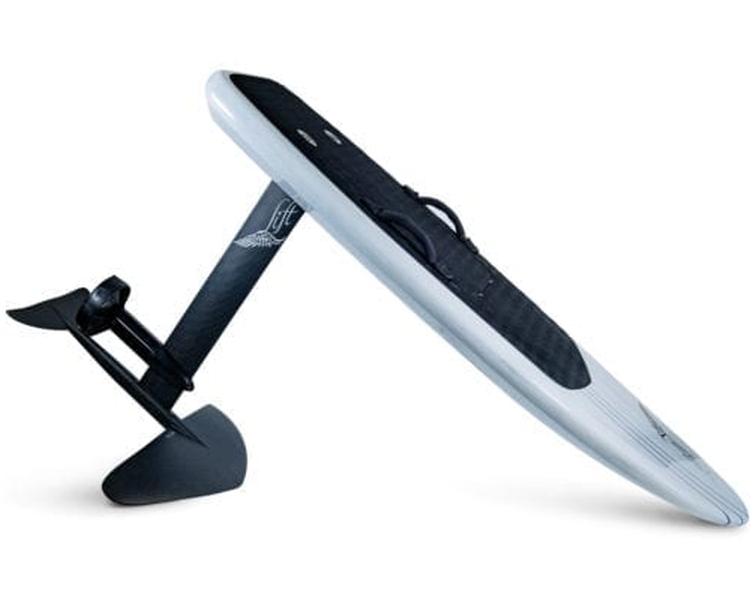
Flite, for example, calls the Flitescooter a beginner board and puts both the ICON and the inflatable Flite AIR at beginner to intermediate. Of the two AIR versions, Flite says the roomier AIR ICON suits all kinds of riders, beginners in particular. The PRO is rated intermediate to advanced, the ULTRA advanced. Lift builds the LIFT5 F for learning and leaves the ultralight LIFTX to experienced hands. Waydoo draws the same line through its range: the EVO Max Plus is aimed at newcomers, the EVO Master at advanced riders.
Once you know roughly what size you need, our comparison of all seven eFoil brands puts every current model we cover side by side, with prices, flight times, and a verdict on who each board suits.

Front wing size
Sizing does not stop at the board. Front wings come in sizes too, and the smaller the wing, the more experience it demands. Larger wings suit beginners, schools, and rental fleets. Small wings are faster.
If you weigh more than 80 kg (about 175 lbs), go for a larger front wing. That 80 kg line is our own rule of thumb. Flite's advice leans the same way. It says larger wings let you foil earlier at slower speeds, and it calls its biggest wing well suited to heavier riders. A larger wing also lifts you at a lower speed and asks less of the motor, so a charge lasts longer.
Mast length
The mast turns that logic around. Beginners are better off with a shorter mast, and longer masts are for more experienced riders. A short mast is also easier to transport. The long one needs deeper water, and in return it handles choppier conditions well.
What else belongs on your checklist
Battery capacity and charging time belong on every buyer's list, and so do transport and storage. Inflatable models travel easily, and Flite describes its inflatable AIR as stable and forgiving. The trade-off is that an inflatable responds a little less sharply on the water than a hard board does. Stick to proven brands such as Flite, Lift, or SiFly, and please don't order an eFoil from Alibaba or AliExpress. Saving on a cheap board makes little sense if, a few years from now, nobody will honor its warranty or sell you a propeller, a remote or a new battery.
Rent an eFoil before you spend serious money and try a few different types. A session or two at a school or rental near you will show you which board suits you. You can also book a test ride while on vacation. Between them, the schools on Lake Garda put riders on Flite, Lift and Audi e-tron foil boards.