The brand
For years the biggest hurdle in eFoiling has been the price. Boards from the premium brands, say Lift or Fliteboard, typically cost between €10,000 and €15,000, serious money for most watersports fans. Waydoo goes straight at that hurdle, and the Chinese manufacturer has grown into the front-runner of affordable eFoiling and the best-known name in the entry-level class.
Across the 2026 crop of tests and comparisons, one finding keeps coming back. A Waydoo delivers roughly 80% of the premium experience at a much lower price, and more than one 2026 ranking lists the brand as “Best Value,” the eFoil that gives you the most for your money. That figure is a tester's call, not a lab measurement. Still, the verdict behind it is remarkably consistent. Waydoo isn't competing with the luxury class; the question it puts to you is how much the difference is worth.
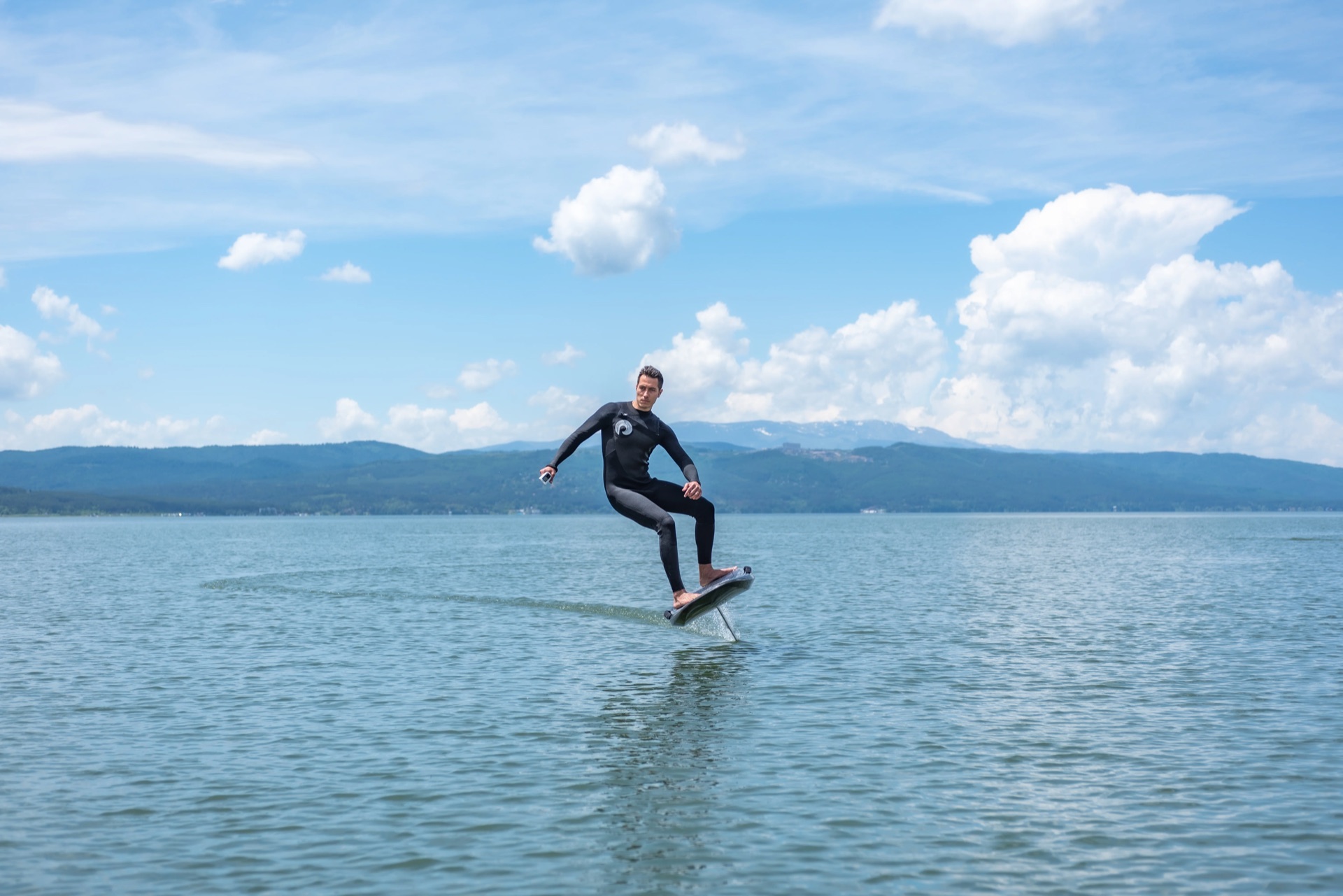
The physics of flight does not change from one eFoil to the next. Above a certain speed, the hydrofoil wing under the board lifts you out of the water, you glide almost silently, and you control your ride height with your body weight. Our eFoil guide explains how that works in detail. An entry-level board gives you that core experience in full. What the premium surcharge buys is refinement, materials, and the service behind them.
For price-conscious buyers, Waydoo is an especially relevant brand. An entry-level eFoil costs about €5,000 to €7,500. That is still a lot of money, though in the same range as a decent jet ski or a used sailboat, and it comes to around half to a third of what a premium board runs. If the price has kept you renting so far, Waydoo's class is where a board of your own starts to look realistic.
Before you narrow things down, take a look at the wider field. Lift and Fliteboard share the top spot. Aerofoils from Bavaria (plenty of riders still search for it under its earlier Audi e-tron foil name) is the safety-first premium pick. In the affordable segment, two names compete for your attention, Waydoo and SiFly, a company seated in Sofia whose boards, by the maker's own account, are assembled in the EU. Waydoo's strengths are price and name recognition. No brand comes up more often in the entry-level class, and several 2026 tests rank it first on value for money.
Waydoo in action
The video comes from Waydoo itself. The EU store lists all of the current models: waydoo.tech ↗
Models and prices
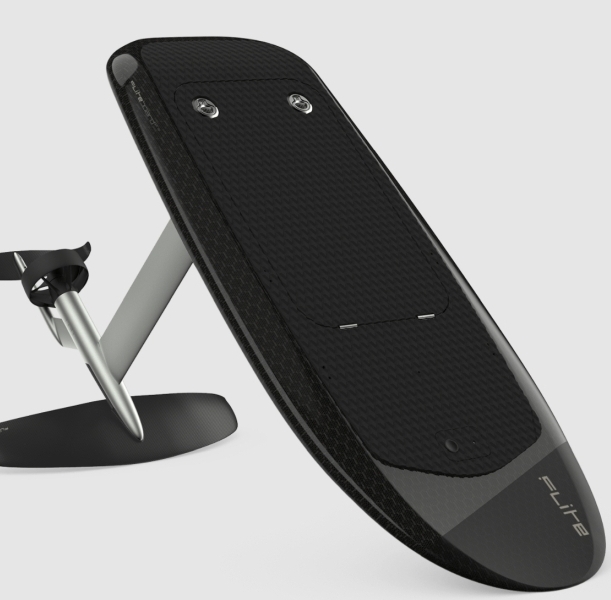
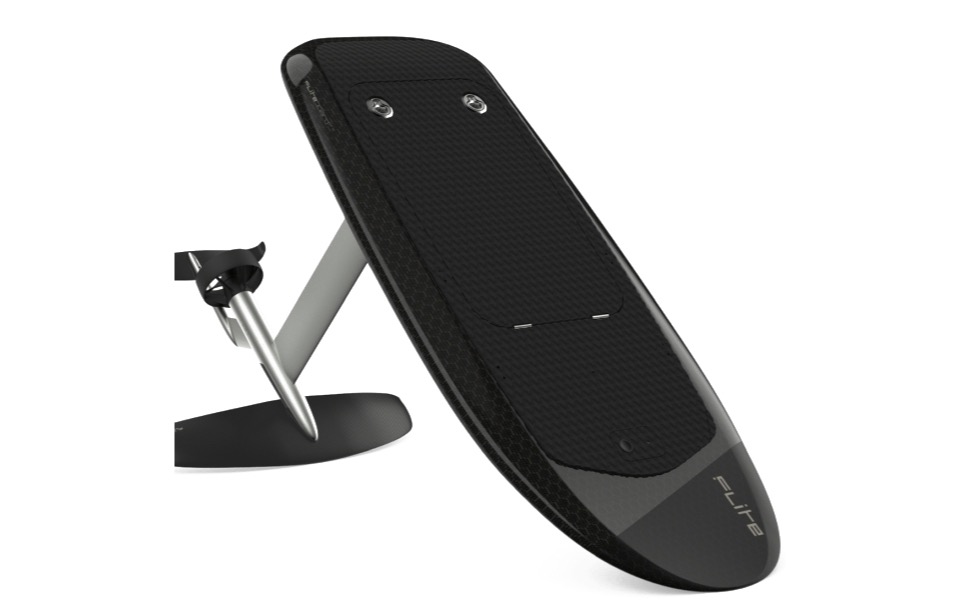
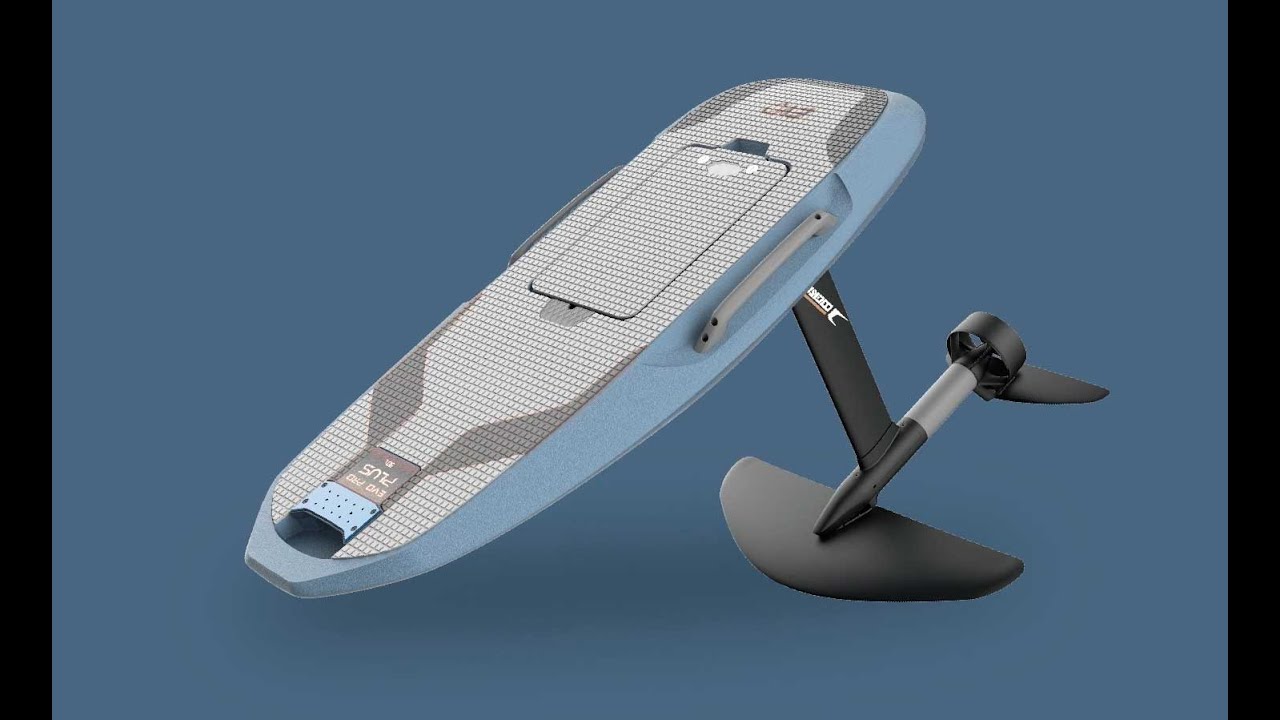
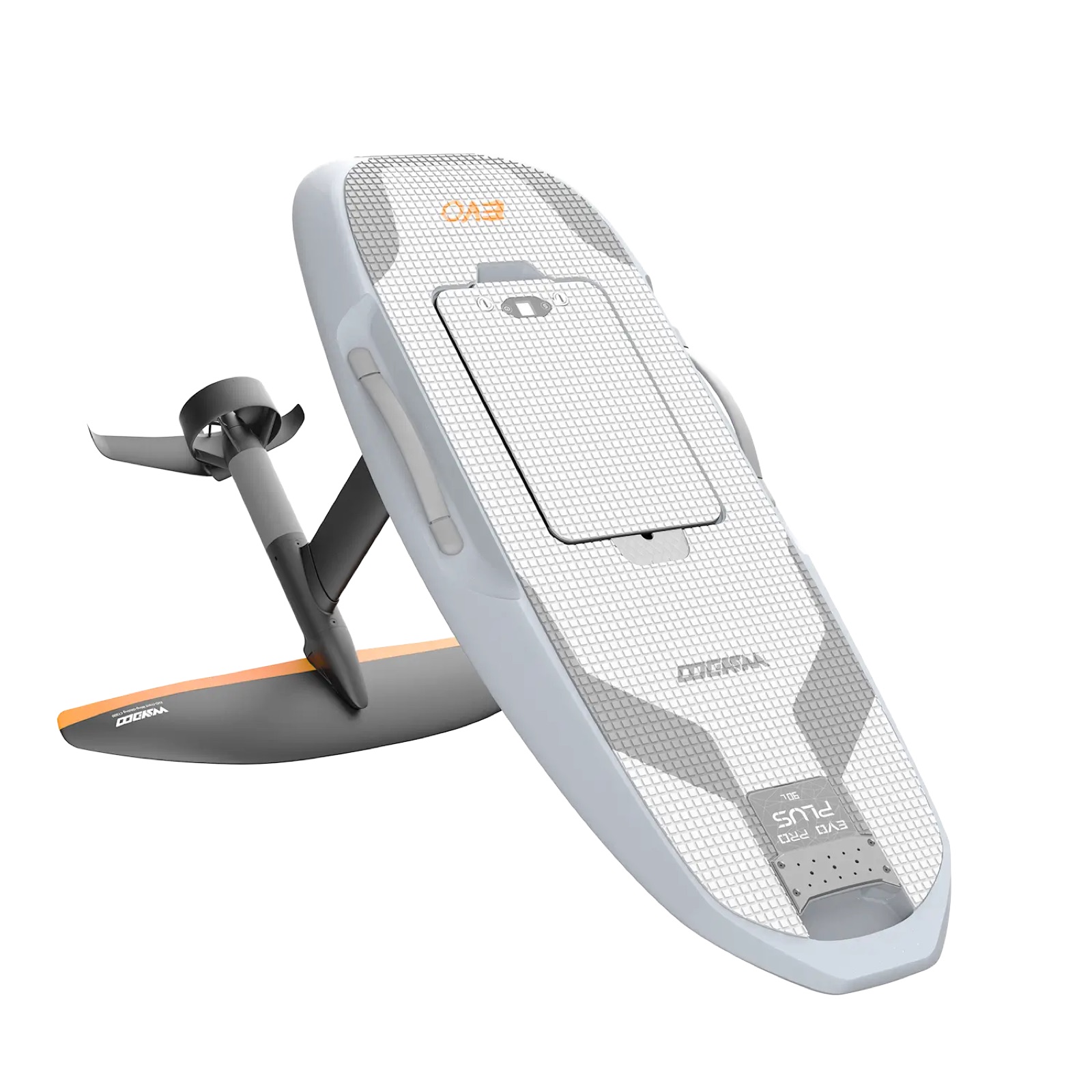
For 2026, Waydoo's lineup has moved entirely to the Flyer EVO family, and the old bestseller Flyer One+ is no longer sold new. All four EVO models follow one recipe (a forgiving hull built to take knocks, swappable battery, flight assist on the bigger boards), each tuned for a different rider. The Lite is the entry ticket and the Pro Plus the most popular all-rounder. The Max Plus is the most stable board to learn on, and the Kevlar-and-carbon Master is the sporty flagship. That top board goes by two names. The EU store at waydoo.tech sells it as the Flyer EVO Master, while the US store at waydoo.com still says Master Plus. When we read the EU store on 12 September 2026, it also let you swap the 75-liter board for a 60-liter Racer at an unchanged list price.
The manufacturer's EU price list puts the family at €5,807 to €9,546, still clearly below premium territory. Waydoo Europe, the brand's official distributor for Europe, has its office in Amsterdam and ships orders from European stock. Warranty cover is not one figure for the whole set; it differs from part to part. Under Waydoo's terms for Europe, the mast, propulsion unit, remote and charger carry two years, the board and the scooter kit one year, and the front and stabilizer wings six months; the battery is covered for 24 months as long as it stays under 300 charge cycles. The store's promise of up to two years therefore holds for some parts only, and the board is not one of them. What eFoils cost in every class is laid out in our guide to eFoil prices.
Flyer EVO Lite Flyer EVO
Waydoo's entry-level eFoil: a 4000 W motor in a forgiving 90-liter board, designed for learning the technique and relaxed cruising.
- Volume
- 90 l
- Battery
- 1800 Wh (option: 2300 Wh)
- Flight time
- up to 100 min
- Top speed
- approx. 36 km/h
- Max. rider weight
- approx. 90 kg (for takeoff)
- Motor
- 4000 W
- Price (approx.)
- from €5,807 (EU price)
Manufacturer figures (as of 2026-09-12). Prices are for guidance only.
Flyer EVO Pro Plus Flyer EVO

Waydoo's most popular model: 6000 W motor, flight assist and GPS, with long flight times thanks to the 2300 Wh battery.
- Volume
- 90 l
- Battery
- 2300 Wh Powerflight (45 Ah)
- Flight time
- approx. 120 min
- Top speed
- approx. 52 km/h
- Max. rider weight
- approx. 130 kg
- Motor
- 6000 W, with flight assist
- Price (approx.)
- from €7,033 (EU price)
Manufacturer figures (as of 2026-08-30). Prices are for guidance only.
Flyer EVO Max Plus Flyer EVO
The largest, most stable Waydoo board: a forgiving 130-liter hull that makes takeoff easy, with a family-friendly character.
- Volume
- 130 l
- Battery
- 1800 Wh or 2300 Wh
- Flight time
- approx. 120 min (2300 Wh)
- Top speed
- approx. 45 km/h
- Max. rider weight
- approx. 130 kg
- Motor
- 6000 W, with flight assist
- Price (approx.)
- from €6,999 (EU price)
Manufacturer figures (as of 2026-09-12). Prices are for guidance only.
Flyer EVO Master Flyer EVO
Waydoo's flagship: Kevlar board, one-piece carbon mast and CNC-machined fuselage, tuned for speed and precision. The EU store calls it the Flyer EVO Master and the US store the Master Plus, and for the same price you can take the 60 l Racer board in place of the 75 l one.
- Volume
- 75 l (alternatively the 60 l Racer)
- Battery
- 2300 Wh (45 Ah)
- Flight time
- approx. 120 min
- Top speed
- approx. 52 km/h
- Max. rider weight
- approx. 100 kg
- Construction
- Kevlar board + carbon mast
- Price (approx.)
- from €9,546 (EU price)
Manufacturer figures (as of 2026-09-12). Prices are for guidance only.
Previous generation (no longer sold new)
Flyer One Plus(formerly $6,400 (US price))
Was Waydoo's entry-level model and a breakthrough success; the EVO series has replaced it, it is no longer sold new, but spare parts are still available.
Your budget has to stretch past the board itself. On any eFoil, a full battery is good for about an hour of hard riding, and recharging takes hours. If you want whole afternoons on the water, sooner or later you'll be shopping for a second battery, the most expensive accessory no matter the brand. Add a helmet, a vest and possibly a wetsuit. Storage and transport need some thought too. A complete eFoil set with board and battery weighs around 30 kg and makes a bulky package, so pick out a spot for it before it arrives.
Which Flyer EVO fits you?
For most buyers the Pro Plus is the natural pick, with a powerful motor, long ride time and flight assist. Beginners and families are better off starting on the Max Plus, the biggest and most stable board. The Lite gets interesting when budget tops the list. The Master is for advanced riders who want the sportiest Waydoo in the range.
Swipe sideways to see all columns
| Flyer EVO Lite | Flyer EVO Pro PlusRecommended | Flyer EVO Max Plus | Flyer EVO Master | |
|---|---|---|---|---|
| Price (approx.) | from €5,807 (EU price) | from €7,033 (EU price) | from €6,999 (EU price) | from €9,546 (EU price) |
| Volume | 90 l | 90 l | 130 l | 75 l (alternatively the 60 l Racer) |
| Battery | 1800 Wh (option: 2300 Wh) | 2300 Wh Powerflight (45 Ah) | 1800 Wh or 2300 Wh | 2300 Wh (45 Ah) |
| Flight time | up to 100 min | approx. 120 min | approx. 120 min (2300 Wh) | approx. 120 min |
| Top speed | approx. 36 km/h | approx. 52 km/h | approx. 45 km/h | approx. 52 km/h |
| Best for | Entry model for learning technique | The most popular model, a balanced choice | The most stable board, for beginners and families | Flagship model for advanced riders |
What to expect at entry level
An entry-level eFoil tends to differ from a premium board in a handful of predictable places. None of them are Waydoo-specific weaknesses, just the natural trade-offs of the class and the reason the board costs less to begin with.
Materials and build. Premium makers use pricier composites, tighter fits, and more finely finished components. At entry level, expect simpler materials and less polished detailing. On a normal day you'll often barely notice. Over the years it can show in weight, stiffness, and wear. A hull that can take knocks, on the other hand, is a real advantage while you're learning.
Service network. The big premium brands, as a rule, have a denser dealer and service network behind them. With an entry-level brand, find out before you buy who handles a warranty claim, how long a spare part takes to source, and who repairs the board in your region. The battery matters most here, as the priciest and most sensitive component on any eFoil; replacing or repairing one is a major bill whatever the brand, so the service behind it is no afterthought.
Ahead of ordering, it is worth putting a few concrete questions to the seller. How long is the warranty on the board and, separately, on the battery? Where does the board go for warranty work, and who pays the shipping? Are a second battery, propellers, and a replacement remote in stock? How long does spare-part shipping to your region usually take? What you hear back says a lot about life with the board after the first season.
Resale value. Experience with watersports gear shows that the well-known premium brands hold their value better on the used market. Count on a cheaper board depreciating faster in percentage terms. Since you paid less up front, you won't necessarily lose more in absolute terms. If you expect to upgrade in a few years, price that in from the start, not on the day you list the board for sale.
What does not differ at all is the learning path, the safety rules, and the flight itself. A helmet and a vest belong on every eFoil. The progression from lying to kneeling to standing is identical, and after a few hours of practice you glide across the water on an entry-level board just as you would on a premium build costing several times as much.
Waydoo vs Fliteboard and Lift: what the extra money buys
Waydoo is the yardstick of the entry-level class. Buyers rarely agonize over which budget board to pick; the real decision is whether to go Waydoo or step up to a premium brand, and the table below sets the two classes side by side.
Swipe sideways to see all columns
| Waydoo Flyer EVO | Premium eFoils (Lift, Fliteboard) | |
|---|---|---|
| Price | About €5,807 to €9,546 on the manufacturer's EU price list | Mostly €10,000 to €15,000 |
| Materials | Forgiving standard build (Kevlar board and carbon mast on the Master), simpler finish | Carbon and high-grade composites, finer build quality |
| Experience | Testers put it at roughly 80% of the premium experience; the flight feel itself is the same | The reference level, finer tuning, larger accessory ecosystem |
| Who it suits | First-time buyers, families, price-conscious riders | Anyone who wants the maximum and has the budget for it |
All active brands and their current models sit together in one table on our eFoil comparison page.
Who Waydoo suits
For a first-time buyer, the biggest risk is dropping five figures on something you don't yet know will stick. Waydoo shrinks that risk. For far less money you find out whether eFoiling becomes your weekly habit or a one-summer fling, and if you move up to premium later, at least you didn't spend the seasons in between on rentals alone.
Families are a natural fit. When several people will ride the board (kids, relatives, the whole crew at the lake house), the tougher, more forgiving entry-level class is a saner choice than a premium build you'd baby. A resilient board takes the crashes of the learning phase and the knocks at the dock in stride, and you hand it over with a lot less worry.
Plenty of buyers arrive here from rentals: they tried a rented eFoil somewhere and can't let it go. If you already know the sport is for you but the premium price tags scare you off, Waydoo fills that gap. You get your own board, with compromises, at a fraction of the price.
Take the lake house, or the home spot where you spend a good part of the summer by the water: an inland lake, a sheltered coastal bay, the reservoir out of town. There an entry-level eFoil pays for itself relatively quickly. Ride often enough in a season and owning beats renting over the medium term. You also launch whenever you like, with no booking required. On waters that restrict combustion engines, the quiet electric drive can also be an option, but the rules differ by country and even from lake to lake, so check your local regulations before you ride.
Some riders should look elsewhere. If you want the best materials, the widest wing selection, and the deepest range of accessories and support, and budget is no object, you're better served in the premium class by Lift or Flite. If the affordable price appeals but you'd prefer a board assembled in the EU (and, for riders in Europe, warranty support closer to home), look at Sofia-based SiFly. The two brands go after the same price-conscious buyer with two different answers.
How and where to buy
You can buy a Waydoo through online dealers or directly from the manufacturer, and in Europe, Waydoo Europe ships from within Europe. Waydoo's warranty is not a global one: it covers the original buyer, and claims go only to a designated Waydoo service center in the region where the board was bought. Dealer networks change, so check the current options shortly before you order. Above all, find out whether the seller ships from within your own customs region. That spares you import paperwork and makes a warranty claim far easier to pursue. Order from another region and duties, import taxes, and freight can add several hundred euros or dollars to the sticker price, so always compare final, delivered prices and never the figure on the product page alone.
Almost nobody thinks about the shipping itself. An eFoil is a large, heavy package with a lithium battery inside, and battery shipments follow their own transport rules, which can affect both delivery time and cost. Ask before ordering how the board will reach you and what shipping costs. The warranty terms belong in writing: what happens if the battery fails, and where the board goes for repair.
Ahead of any final decision, read our guide to eFoil prices, which breaks down the price bands class by class, plus the running costs that come later. With a used Waydoo, the battery makes or breaks the deal. Ask for the charge-cycle count, or at least an honest history of how the board was used, since the battery accounts for a substantial share of its value.
Start by settling on the construction (the standard build or the Master's Kevlar board and carbon mast) and on whether to add a second battery. Next, collect quotes from at least two sellers, each a final price delivered to your door, and compare warranty and service terms, not just the bottom line. Once the board arrives, reread the learning steps before the first session and do your first runs on deep, calm water away from traffic. Those habits give your first day on the board a far better chance of going smoothly.
Whatever you end up buying, try eFoiling in person first. One hour on a rented board tells you whether the sport suits you, and no review can do that for you. The criteria and the full process are gathered in our eFoil buying guide.