A coast of tidal creeks, one harbor and the surf
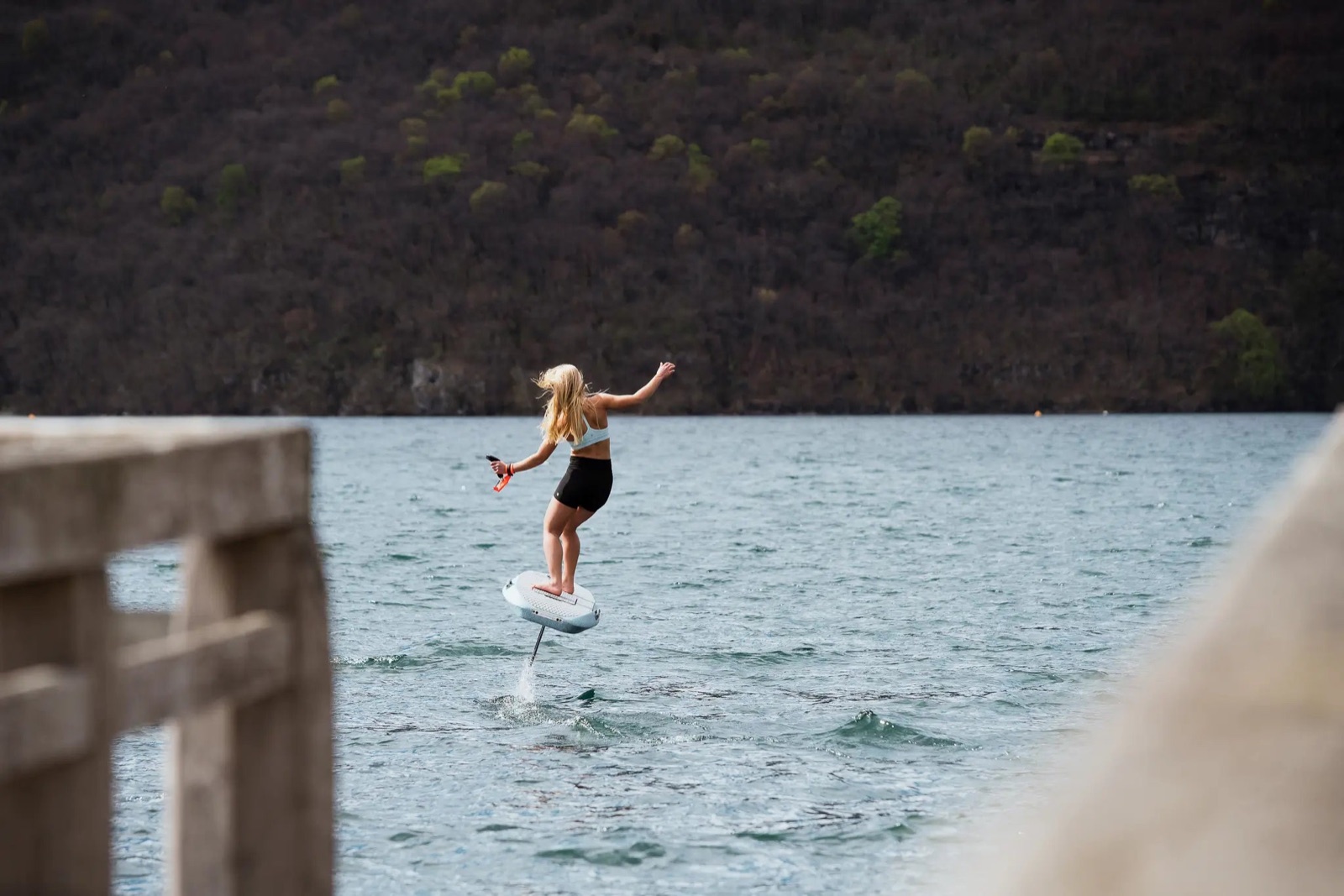
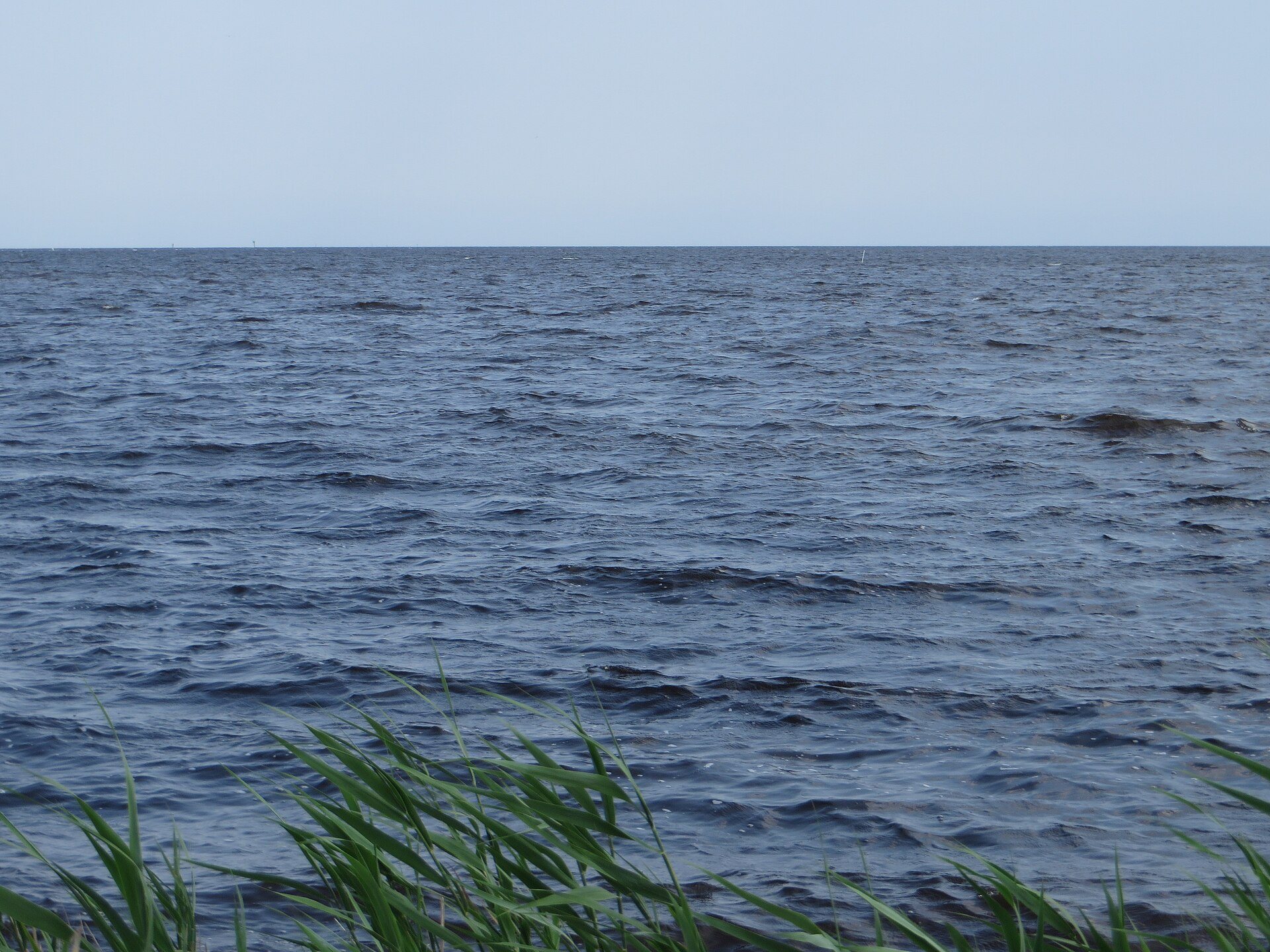
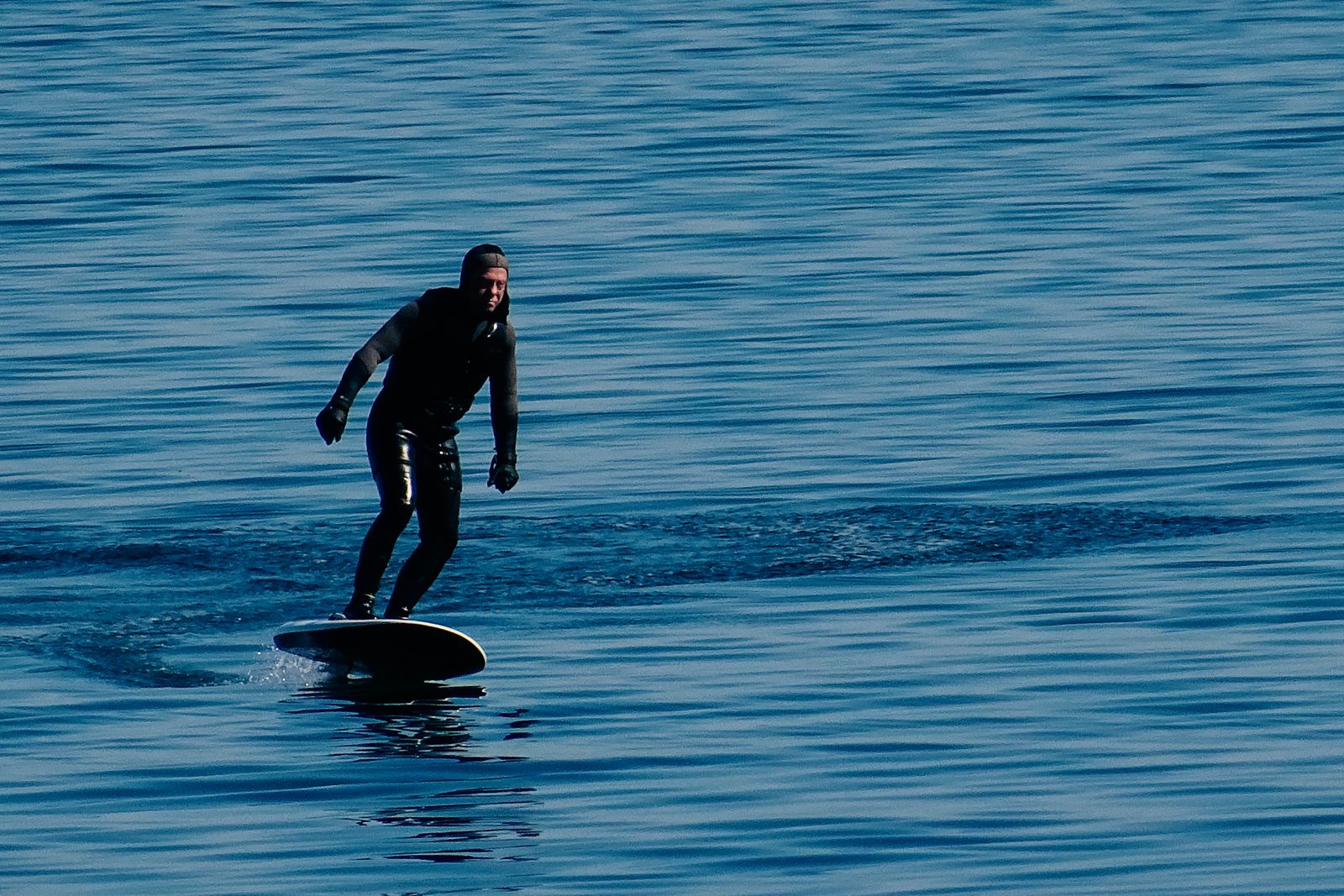
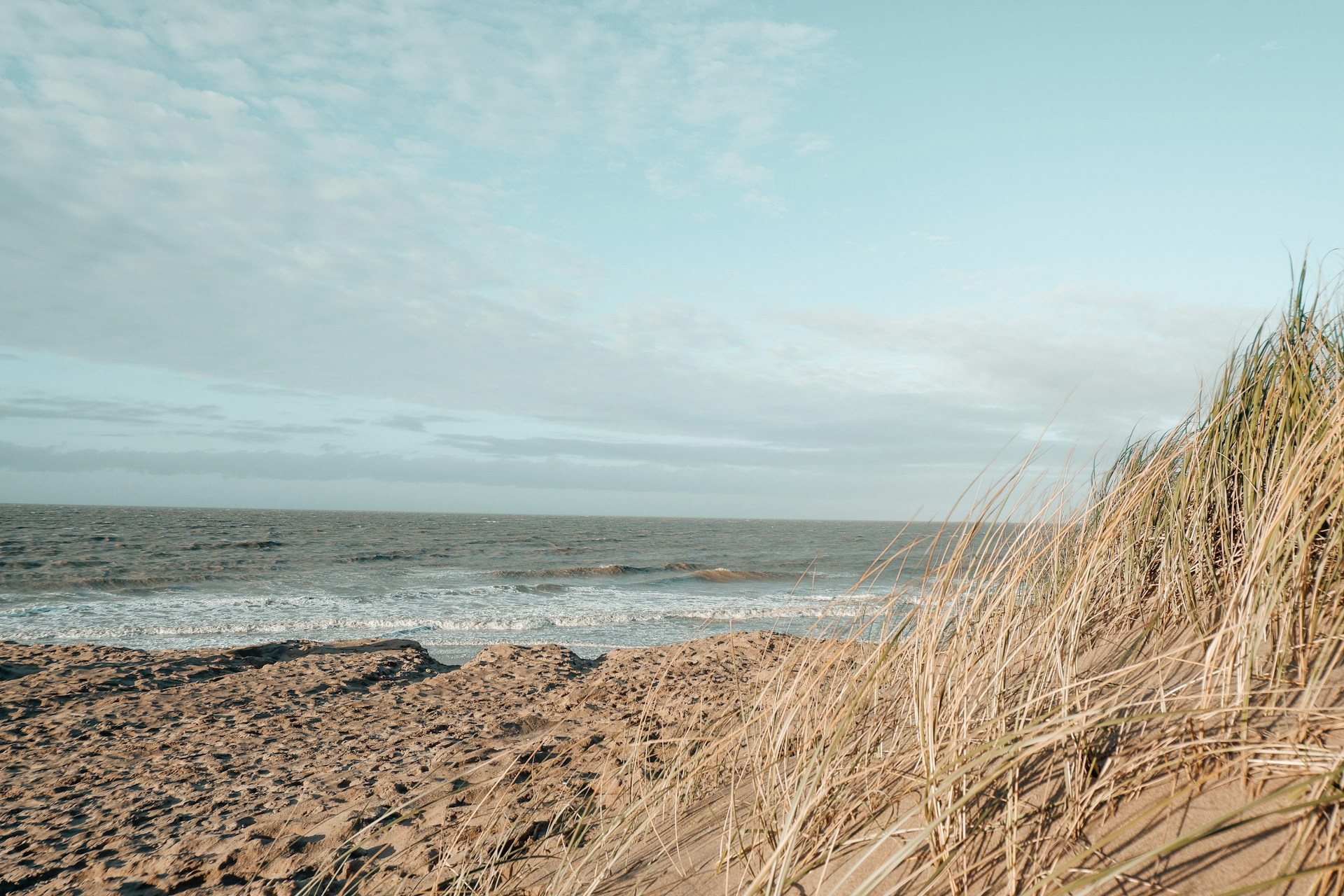
Along the South Carolina coast you choose between a marsh creek, Charleston Harbor and the open Atlantic, and the board behaves differently on each. Behind the barrier islands run tidal creeks and marsh channels, out of the ocean swell but never standing still. Charleston Harbor is the big open water in between. South Carolina eFOIL calls it its flagship water, with the city skyline behind you and the Ravenel Bridge ahead. The open Atlantic beach comes last, with a shore break between the sand and any smooth water beyond it.
The tide is what sets this coast apart from a lake. NOAA gives Charleston a mean tidal range of 5.22 feet and a great diurnal range (higher high water to lower low) of 5.76 feet. At Fort Pulaski, the Georgia station closest to Hilton Head, those figures grow to 6.92 and 7.5 feet. Springmaid Pier in Myrtle Beach reads 5.02 and 5.60. Five to seven feet of water pouring in and out of a marsh drives strong currents through every creek and channel.
In our view the tide, more than the map, decides where and when a session starts. South Carolina eFOIL names its launch point only after you book.
Open beach is the least forgiving choice for a first ride, and state law may narrow it further: if an eFoil counts as a specialty propcraft, idle speed applies within 100 yards of the Atlantic coast line. The Charleston lesson listings speak of sheltered lake or coastal water and calm shallows, which is where beginners belong.
Four operators teaching around Charleston
South Carolina eFOIL describes itself as the state's exclusive authorized Fliteboard dealer and service center, and it sells and services boards as well as teaching on them. Fliteboard's own South Carolina page lists the school, with Jacksonboro, SC as its base, as a lesson host bookable through FareHarbor. There is no fixed public launch on the operator's site. Charleston Harbor is the home water, Lake Hartwell near Clemson serves the upstate, and the coaches also ride Lake Murray, Lake Keowee, Beaufort and the wider Lowcountry, and they travel to good water when the home spots will not do. The lesson listings near Jacksonboro on the Adventure Collective booking site belong to this school as well; they are not separate operators.
Its list prices, read on October 25, 2026, are simple. The Discovery Flight costs $350 for one rider, one on one, for two hours. Wingman puts two riders with one coach for $500, and they trade flight time. Squad / Charter, for three or more, is quoted on request anywhere in the state, with a yacht add-on. Fliteboard also sells a gift voucher for a two hour lesson. The boards themselves are covered on our Fliteboard page.
Glide Charleston is a local foiling school for wing, SUP, surf and tow foil that announced eFoil lessons on July 29, 2026. It offers private lessons, guided tours, rentals and demos on Fliteboard gear, which it gets through a partnership with the Fliteboard dealer. A two hour private lesson lists at $350, two riders together pay $550, and every rider after the second adds $150, with all equipment provided. Its list of water is long: Charleston Harbor, Mount Pleasant and Shem Creek, Isle of Palms, Sullivan's Island, Folly Beach, James Island, Kiawah and Seabrook Island.
Charleston Surf Company comes at eFoiling from surfing. The school teaches surf lessons at Folly Beach and on Kiawah Island, gives eFoil lessons to riders aged 13 and up, and sells Getfoil and Waydoo boards. It prices by the hour: $200 for one person or $275 for 90 minutes, $400 an hour for two people or $525 for 90 minutes, and 10% off for groups of three or four, plus a six session eFoil Pro Package. The site does not say where the eFoil lessons happen, so ask before you book.
Session Sports, on James Island, starts eFoil lessons, tours and rentals at $200 each, in private, small group or large group sessions of one to two hours. Lessons and tours come with an impact vest and a helmet fitted with a two way radio.
Swipe sideways to see all columns
| Operator | Base or water | Session | Price |
|---|---|---|---|
| South Carolina eFOIL | Jacksonboro; Charleston Harbor and on location | Discovery Flight, 2 hours, 1 rider | $350 |
| South Carolina eFOIL | Jacksonboro; Charleston Harbor and on location | Wingman, 2 hours, 2 riders, one coach | $500 |
| Glide Charleston | Harbor, Shem Creek, Folly Beach and more | Private lesson, 2 hours | $350 |
| Glide Charleston | Harbor, Shem Creek, Folly Beach and more | Group of 2, 2 hours | $550, plus $150 per extra rider |
| Charleston Surf Company | Folly Beach (eFoil water not named) | 1 person, 1 hour or 1.5 hours | $200 or $275 |
| Charleston Surf Company | Folly Beach (eFoil water not named) | 2 people, 1 hour or 1.5 hours | $400 or $525 |
| Session Sports | James Island | Lesson, tour or rental, 1 to 2 hours | from $200 |
A land brief, a ride on your knees, then the foil lifts
A first lesson with South Carolina eFOIL takes about two hours. Thirty minutes are an overview on land and about 90 are spent on the water. The dry land brief itself is short, around ten minutes by the school's description. Then you ride on your knees in calm, shallow water with the coach beside you, and only after that do you stand up and let the foil lift the board (our eFoil guide explains the mechanics).
How fast you get up is where the operators disagree. South Carolina eFOIL says most riders are up inside 90 minutes. Glide Charleston claims most first time riders stand within their first 20 to 30 minutes on the water. Both figures come from the schools themselves.
A certified instructor runs the session, and the Fliteboard, helmet, impact vest and other safety gear are included. Water booties are not. Bring a pair, plus swimwear, a towel and sunscreen. You need to be a comfortable swimmer, the life vest stays on from start to finish, and the boards fly best for riders between roughly 90 and 250 lb.
Age limits vary by school. South Carolina eFOIL takes riders from 12 with a guardian present, Charleston Surf Company from 13, and eFoil South Carolina in the upstate from 14.
Bad weather costs you nothing at South Carolina eFOIL: the coach makes the call and you get a free reschedule or a refund. Cancel yourself 24 hours or more ahead and the money comes back in full. Inside 24 hours, and for no shows, the full price is charged.
Charleston rentals are for riders who already fly
Neither Charleston rental we found takes a first timer. Glide Charleston rents to experienced riders only. Its guided tours, also meant for riders with some experience, cross the harbor, head up the Wando River or wind through the Shem Creek marshes.
Session Sports on James Island rents only to riders who own an eFoil or have completed a lesson. Its staff set the board up, break it down afterwards and stay nearby while you ride. For a visitor with a few days in town, that means a lesson early in the trip and a rental or tour later. If the trip leaves you thinking about a board of your own, our eFoil price guide sets out what buying costs against renting.
Hilton Head Island has no eFoil school we could confirm
All that turns up online for an eFoil school on Hilton Head is an undated flyer from eFoil Hilton Head. It describes the business as the official LIFT eFoil affiliate on the island, offering private lessons. The operator's own website is gone and its old domain redirects somewhere else, so we cannot say it still runs. On October 25, 2026 we found no eFoil school or rental with a live page on Hilton Head, in Bluffton, in Beaufort or across the state line in Savannah. The island's rental shops deal in paddleboards, kayaks and jet skis.
From the island we see three ways onto a board. CharlotteEfoil, a North Carolina school, drives up to six hours one way from Charlotte, lists Hilton Head among its destinations and adds a travel fee of $50 per hour to the lesson; its home lakes are on our Charlotte page. South Carolina eFOIL teaches on location across the state and names Beaufort and the Lowcountry among its waters, so ask it about a session closer to the island. The third route is the drive to Charleston and its four operators.
Expect stronger tides at this end of the coast. The mean range at Fort Pulaski is 6.92 feet, against 5.22 at Charleston. More water moving through the marsh should mean harder currents in the creeks; that is our inference, not a measured figure.
Myrtle Beach and the Grand Strand, by travel only
The story repeats on the Grand Strand. A Myrtle Beach eFoil site that still shows up in older search results no longer resolves, and we found no live eFoil school or rental anywhere along the Strand. CharlotteEfoil puts Myrtle Beach and Atlantic Ocean launches inside its travel area, which makes it the one bookable option we could find.
Springmaid Pier records a mean tidal range of 5.02 feet, close to Charleston's. Before you pay a travel fee, ask where the session would launch and what happens to the booking if the ocean is too rough that day.
Hartwell, Keowee, Jocassee and Murray: the reservoir option
Inland the tide stops mattering. South Carolina eFOIL uses Lake Hartwell near Clemson as its upstate flatwater and also rides Lake Murray and Lake Keowee.
A second business with an almost identical name, eFoil South Carolina, sits in Six Mile in the Upstate and is a separate company from South Carolina eFOIL. It is a Lift eFoil dealer and guide service that says it will ride any lake in the state; its booking form lists Jocassee, Keowee, Hartwell, Murray, Greenwood and Marion. A lesson runs about two hours, sometimes up to two and a half, with 45 minutes of class, and the minimum age is 14. Groups get a price on request, and there is no published list price. The dealer gives a Lift battery up to two hours of riding, depending on rider and conditions, and up to two hours for a full charge; our battery guide compares packs across brands.
CharlotteEfoil's travel list covers Lakes Wateree, Murray, Hartwell, Marion and Moultrie. No school is based on Lake Murray itself, so riders around Columbia book one of the services that travel.
What Title 50 of the SC Code says, and leaves unsaid
The definitions pull two ways, and the trouble starts there. What follows is our reading of the Code of Laws on scstatehouse.gov, read on October 25, 2026, which never names eFoils. Section 50-21-10(30) leaves water skis, surfboards, windsurfers and similar devices out of “watercraft”, while 50-21-10(17) counts an electric propulsion system detachable as a unit as an outboard motor. 2023 Act No. 74 added the specialty propcraft at 50-21-10(23): a vessel similar to a personal watercraft (the jet pump kind, under 50-21-10(20)) but powered by an outboard or propeller driven motor.
The US Coast Guard is clearer. Its CG-BSX Policy Letter 01-22 of August 26, 2022 treats an eFoil as a vessel and points to a certificate of number from the state of principal operation, listed as “Personal Watercraft” or “Other”, a life jacket under state and federal rules, and a sound producing device such as a whistle. The letter is guidance, not a binding rule.
Boater education sits in §50-21-95(A), in force since August 18, 2023. It covers anyone operating a vessel of 10 hp or more, a personal watercraft or a specialty propcraft. That person must be born on or before July 1, 2007, or hold a South Carolina boating safety certificate, a Coast Guard license or merchant mariner credential, another state's certificate (for nonresidents) or a boat rental safety certificate from the rental business, or ride with a qualifying person aged 18 or older. Under §50-21-95(B) a breach costs $50 to $300 and is not a criminal offense. Whether an eFoil falls under the rule is unsettled, and we found no SCDNR guidance on eFoils, so we do not claim that South Carolina requires a license to ride one.
Should an eFoil count as a specialty propcraft, §50-21-870(B) sets the following rules:
- a USCG approved life jacket, Type I, II, III or V, on everyone aboard (B)(1);
- no riding between sunset and sunrise (B)(2);
- a self circling device or a working lanyard cutoff attached to the operator (B)(3) and (4);
- outside the named lakes, idle speed within 50 feet of a moored or anchored vessel, dock, pier or person in the water, and within 100 yards of the Atlantic coast line (B)(6)(b);
- on named lakes such as Hartwell, Jocassee, Keowee, Marion, Murray and Wateree, idle speed within 100 feet of a dock or pier and 50 feet of a moored vessel or swimmer (B)(6)(a); (6)(c) leaves out Lake Moultrie;
- no harassing wildlife (B)(7); a breach is a misdemeanor, fined $50 to $300 under (D).
Two more sections apply whatever the board is called. Section 50-21-820 bans water skiing, surfboarding and similar activity between sunset and sunrise. Section 50-23-310 wants every vessel on state waters numbered unless §50-23-320 exempts it; the exemption at (A)(12) covers only unpowered sailboats and paddle boats, and under (A)(2) a vessel numbered in another state may be used here for up to sixty consecutive days.
Owners who bring or buy a board should ask SCDNR how it wants an eFoil numbered and whether §50-21-95 applies. On a lesson you ride the school's gear under its supervision. This section is our reading of the statutes and the Coast Guard letter, not legal advice.
Warm months on the Cooper River and at Fort Pulaski
NOAA's NCEI averages for the Cooper River Entrance at Charleston start the year at 53.1°F in January and 54.0°F in February, reach 59.9°F in March, 67.8°F in April and 75.6°F in May, then 82.2°F in June. July and August peak at 85.4°F and 85.1°F. September holds 81.4°F before the water falls to 74.5°F in October, 64.4°F in November and 56.6°F in December.
Fort Pulaski, by Hilton Head, runs a little cooler: 52.5°F in January, 82.8°F in July and 83.2°F in August, with December level at 56.6°F.
Read as a riding calendar, that puts the water above 80°F from June to September, around 73 to 76°F in May and October, and in the 50s from December to March. We would pack a wetsuit from November to April. Further along the Atlantic coast, our pages on the Outer Banks and on Florida cover the schools to the north and to the south.