The HydroFlyer brand
HydroFlyer is the work of Canadian founder Jerry McArthur, who developed the concept together with hydrofoil maker Unifoil. What they came up with is a production eFoil with handlebars, and the reasoning behind it is straightforward. If you hold on with your hands as well as your feet, you're braced at four points instead of two, so you find your balance much faster, and balance is the hardest part of learning to eFoil. The first boards reached the market in 2021. Since then the brand has built a rental network across the US, and it has a presence from Europe to Dubai.
March 2026 brought the big generational shift. The Gen 2 program sorts the range into three tiers. The lowest is the fiberglass AL, the only one under $10,000; the full-carbon CF sits in the middle, and at the top is the 10 kW flagship FF, which the manufacturer bills as the most powerful eFoil board ever built. Each tier is offered in two board shapes. The long Cruiser with its V-nose is the stable, comfortable learning platform. The Sport, about 33% shorter, is the quick-turning, playful one.
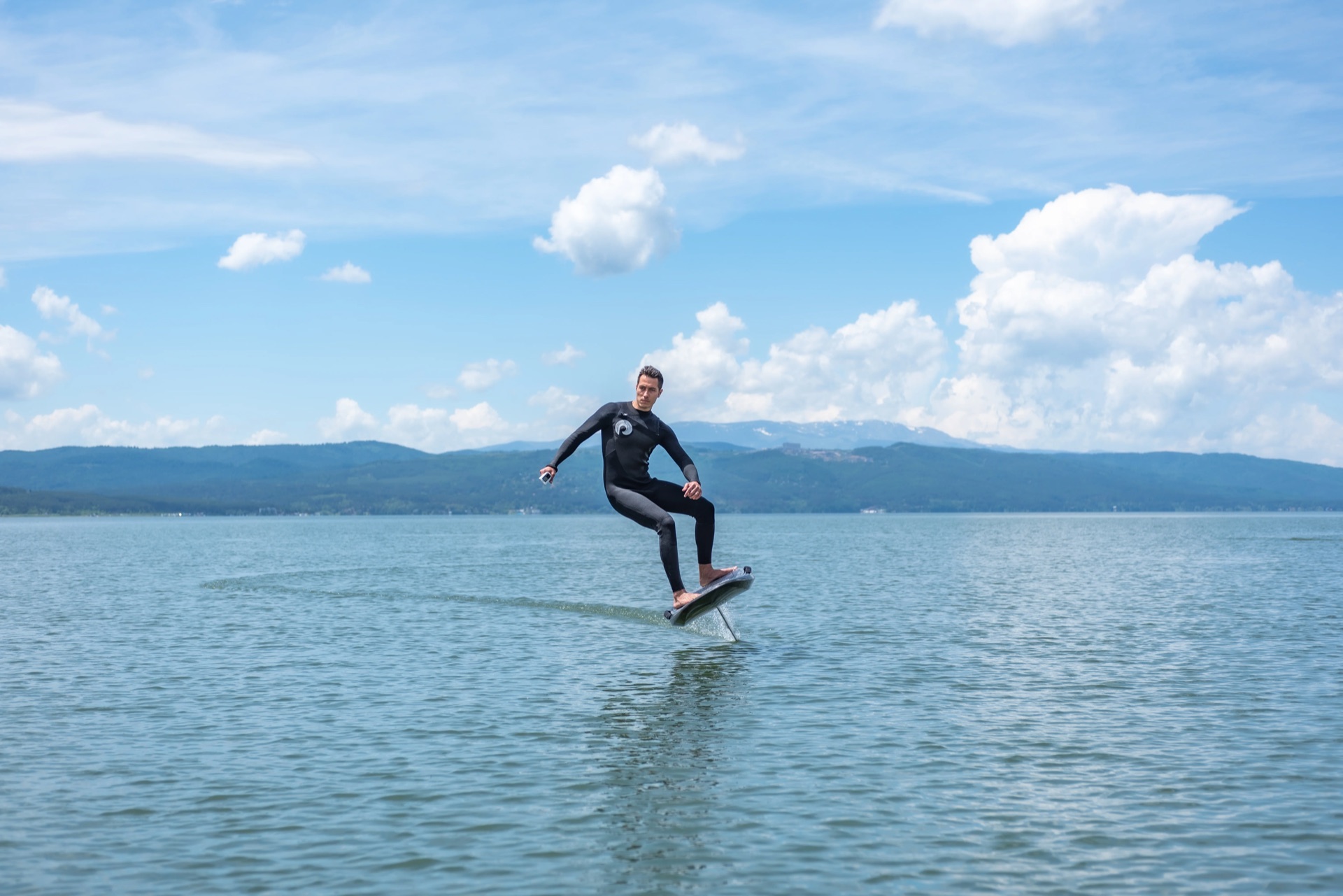
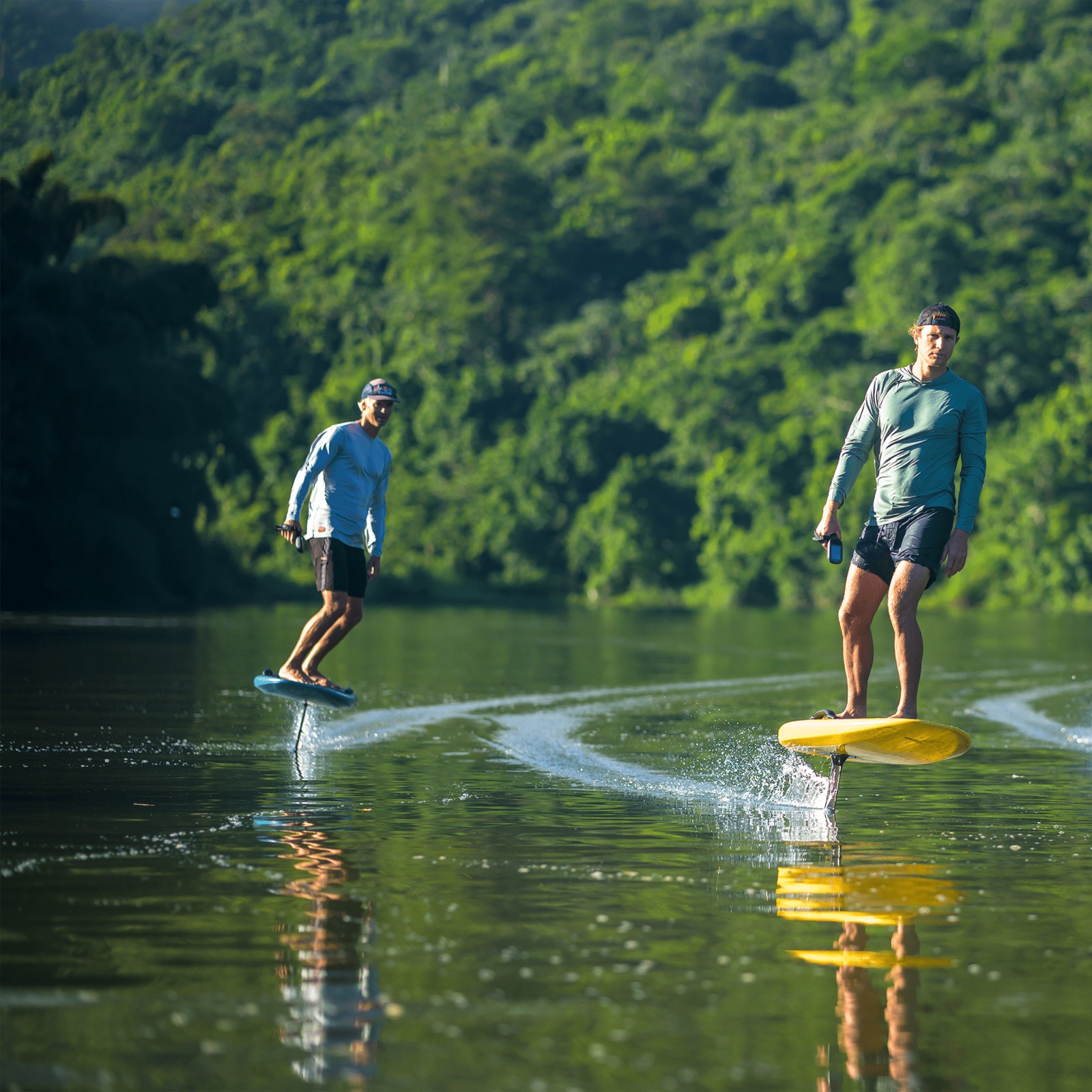
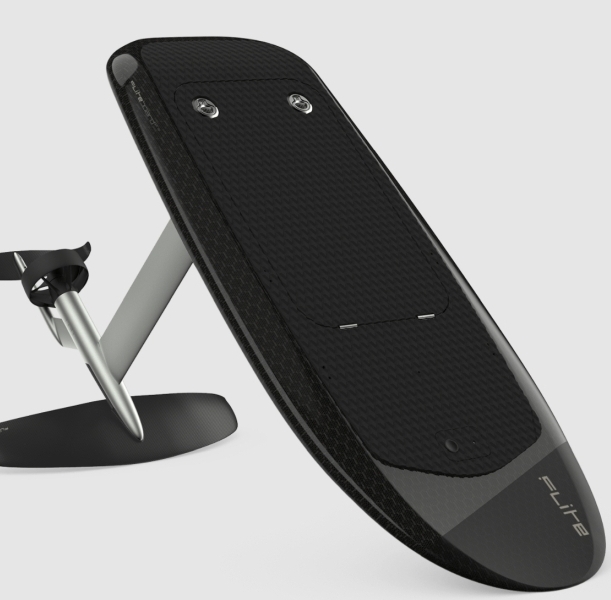
HydroFlyer in action
More official footage, and every model in the range, at thehydroflyer.com ↗
What the handlebars do
The patented, removable handlebar looks at first glance like an odd cross between a jet ski and a surfboard. Out on the water, though, it quickly makes sense. While you learn, the bar carries part of your upper-body weight, so your first attempts to stand don't ride entirely on your ankles. Once you're flying, your arms work with you through the turns. According to the manufacturer, that adds noticeable confidence on choppy water. Speed comes from a wireless throttle on the bar, with settings HydroFlyer says range from mild to wild. Riding without the bar means strapping the throttle to your hand with a hand mount, which the store sells separately.
The bar is also a safety feature. If you fall, you can use it to push the board away from your body, and the motor cuts out the instant you release the throttle or the remote goes under. The brand also describes an optional safety wing with silicone edges, although none of the six Gen 2 product pages lists one in the box.
The most important point, though, is that the handlebar is optional. Take it off and the HydroFlyer rides like a traditional eFoil, so the board grows with your skills.
Models and prices
The 2026 Gen 2 range has three tiers, and each comes with either the long Cruiser board or the shorter Sport board. Prices below are US-dollar list prices from the manufacturer's online store, read on 12 September 2026. The tier (AL, CF or FF) sets construction, keel and budget, plus the motor on the FF. The shape decides how the board rides. The long Cruiser gives you steadiness, the shorter Sport quicker handling, and the FF is built to order in whichever shape you choose. The store rewrites its prices without notice, so these figures hold for the day we read them. None of the six product pages gives a weight for the complete set. The 42 to 49 kg on the maker's Technology page belongs to the older 5,500 W, 45 km/h spec, so we leave that number out.
HydroFlyer AL Gen 2 (2026)
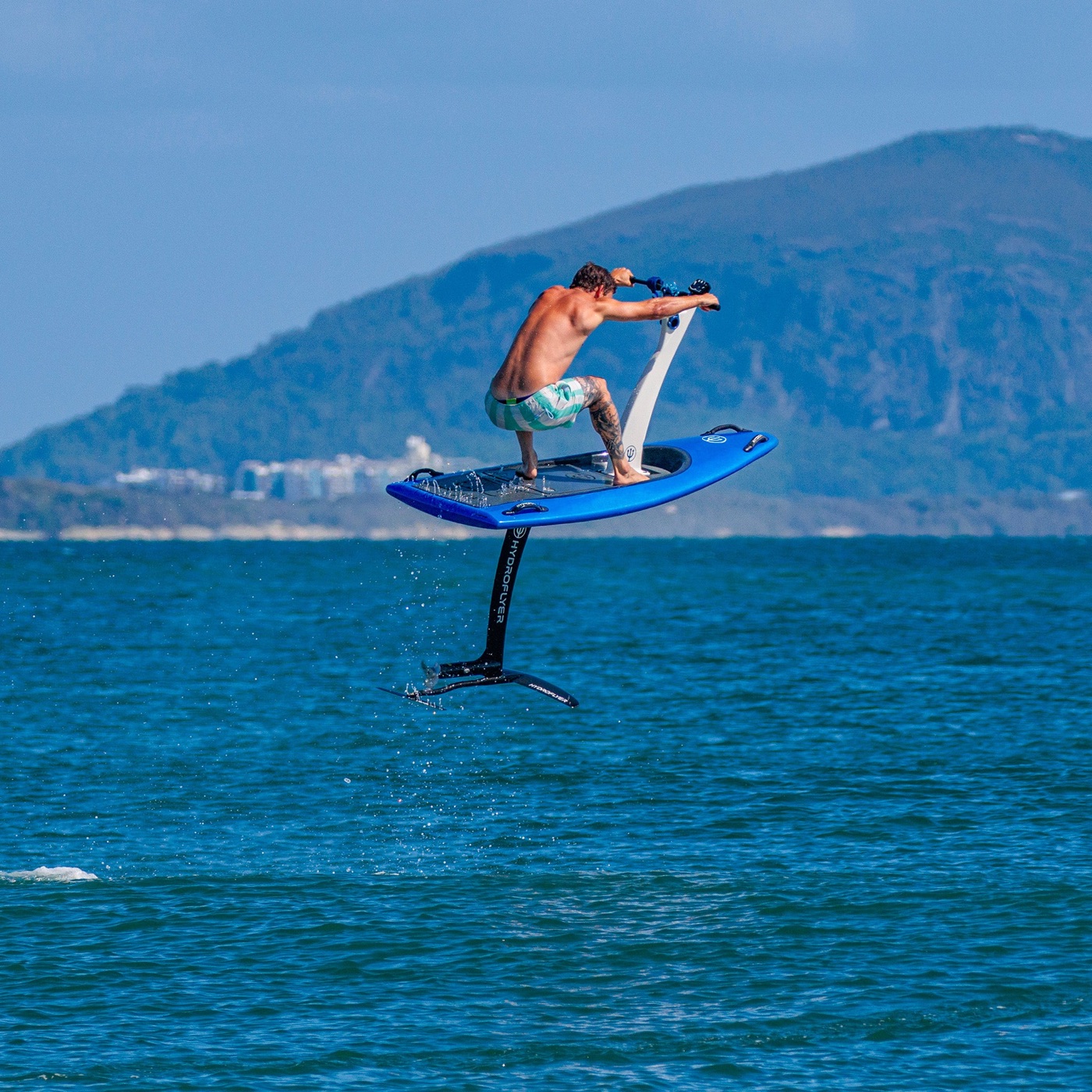
The first HydroFlyer model under the $10,000 mark: fiberglass hull, 60 cm aluminum keel, Gen 1 remote. Available as Cruiser (226 cm) and Sport (152 cm), the two shapes every HydroFlyer tier comes in, and it carries the removable handlebar with four grip points that the brand is known for.
- Board size
- 2 shapes: Cruiser 226×86 cm / Sport 152×83 cm
- Volume
- 160 / 129 l
- Battery
- 2.4 kWh
- Flight time
- approx. 2 h
- Top speed
- up to 40 km/h
- Motor
- 6,000 W
- Construction
- fiberglass, 60 cm aluminum keel, removable handlebar
- Price (approx.)
- $9,995
Manufacturer figures (as of 2026-09-12). Prices are for guidance only.
HydroFlyer CF Gen 2 (2026)
The middle tier: full-carbon hull, 78 cm carbon keel and the version 2 onboard system, available as Cruiser and Sport.
- Board size
- 2 shapes: Cruiser 226×86 cm / Sport 152×83 cm
- Volume
- 160 / 129 l
- Flight time
- approx. 2.5 h
- Top speed
- up to 50 km/h
- Motor
- 6,000 W
- Construction
- full carbon, 78 cm carbon keel, removable handlebar
- Price (approx.)
- $15,995
Manufacturer figures (as of 2026-07-07). Prices are for guidance only.
HydroFlyer FF Gen 2 (2026)
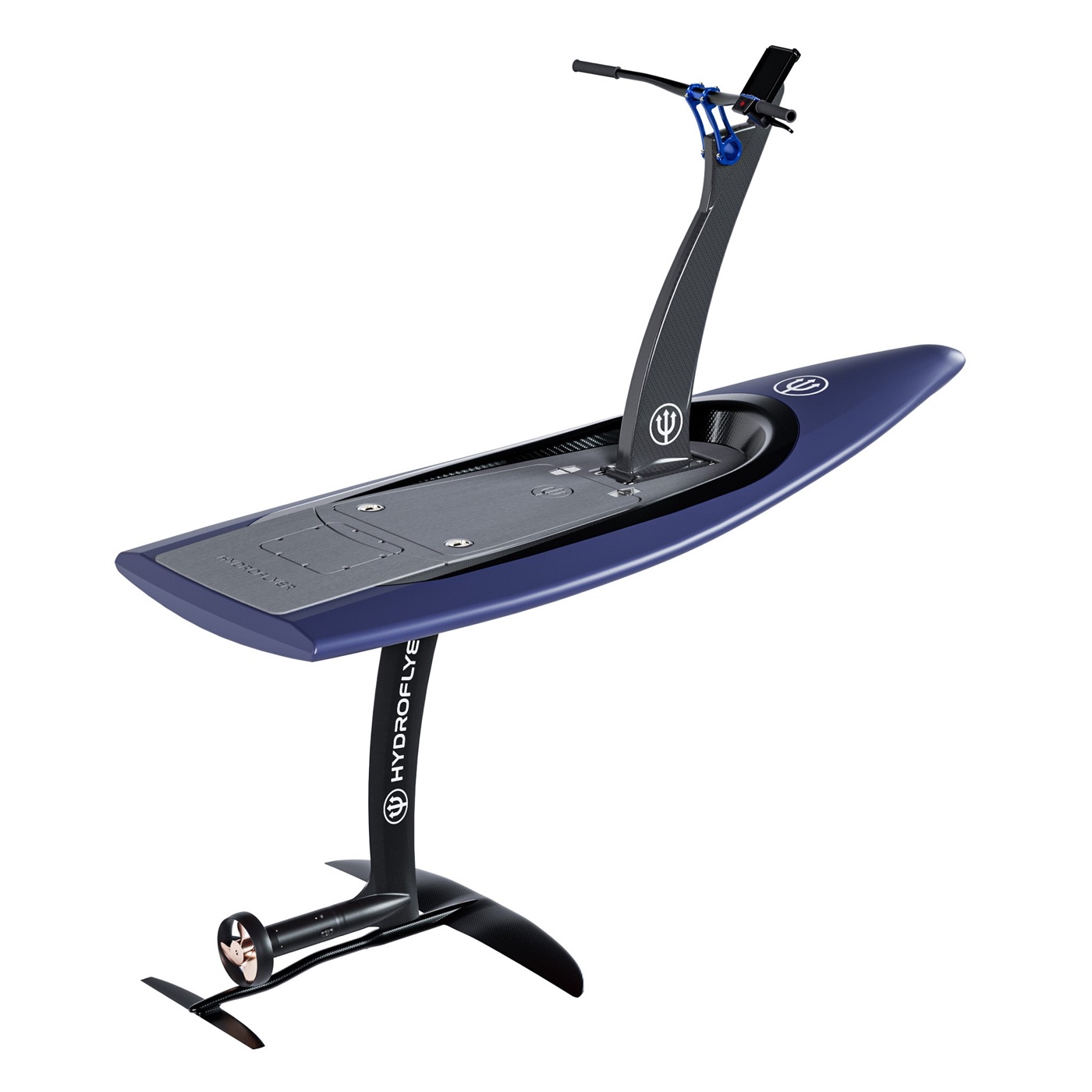
The top of Gen 2 with a new motor, mast, battery and onboard computer: 10,000 W of power and up to 60 km/h. According to the manufacturer, the most powerful eFoil ever built, and each unit is built to order in the buyer's choice of Cruiser or Sport shape instead of being pulled from a shelf.
- Board size
- 2 shapes: Cruiser 226×86 cm / Sport 152×83 cm
- Volume
- 160 / 129 l
- Flight time
- approx. 2.5 h
- Top speed
- up to 60 km/h
- Motor
- 10,000 W
- Construction
- full carbon, 78 cm carbon keel, smart low-profile throttle, removable handlebar
- Price (approx.)
- $18,995
Manufacturer figures (as of 2026-10-05). Prices are for guidance only.
Choosing your HydroFlyer
Swipe sideways to see all columns
| HydroFlyer ALRecommended | HydroFlyer CF | HydroFlyer FF | |
|---|---|---|---|
| Price (approx.) | $9,995 | $15,995 | $18,995 |
| Volume | 160 / 129 l | 160 / 129 l | 160 / 129 l |
| Battery | 2.4 kWh | n/a | n/a |
| Flight time | approx. 2 h | approx. 2.5 h | approx. 2.5 h |
| Top speed | up to 40 km/h | up to 50 km/h | up to 60 km/h |
| Best for | Lowest tier of the line, with fiberglass hull | Full-carbon build, the middle tier | The flagship: 10 kW, 60 km/h |
The logic of the three tiers is easy to follow. The AL gives you the handlebar experience for the least money, and most beginners should start there. With its carbon construction and the longer 78 cm carbon keel, the CF is aimed at more ambitious, sportier riding. At the top, the FF brings 10 kW and 60 km/h, which puts it in competition-eFoil territory. For the board shape, a rule of thumb: Cruiser if you are a beginner or a heavier rider, Sport if you are experienced and like a board that turns quickly.
HydroFlyer and the competition
On price, HydroFlyer does not start at the bottom of the market. At just under $10,000, the AL lands near the dearest models from Waydoo and SiFly, not their entry boards, and that is before shipping and import charges are added to the dollar price. The FF, meanwhile, goes up against the premium flagships from Lift and Flite.
HydroFlyer no longer has the handlebar to itself. Flite sells a bar on its Flitescooter, and Aerofoils ships the Hyperfly with a removable Hyperbar. For both of them it is one model among several; HydroFlyer builds all six of its boards around it.
Outside North America, deciding where to buy needs more thought than choosing the board. The maker's own store prices in US dollars only, and an order placed there from outside the US and Canada arrives with customs duty and import taxes on your bill. The maker also lists two authorized partners in Europe, for demos, sales and support. Sea & Fly (SEAandFLY on its own site), at Port Méditerranée in Six-Fours-les-Plages, calls itself HydroFlyer's official French distributor and sells on quote, with no published price. Mako-H-Bike (Hydroflyer Italia) at Lake Garda calls itself the exclusive distributor for Italy, and its online shop lists one HydroFlyer Cruiser at €11,600 plus Italian VAT, and a €3,000 battery, again plus VAT, goes into the cart automatically (read 24 September 2026). That listing predates the Gen 2 launch, quoting a 5,500 W motor and 45 km/h and naming no AL, CF or FF tier, so ask which board you would be getting. A buyer in the EU who takes a board from either partner has no customs to clear. The VAT depends on whether you collect the board or have it delivered, so ask the seller for a price including VAT for your country.
The HydroFlyer models are part of our eFoil comparison, where you can see how their numbers hold up head-to-head against the other brands.
Who should buy a HydroFlyer?
Above all, it suits anyone drawn to eFoiling who is put off by the balancing act, because the handlebar flattens the learning curve considerably. The manufacturer aims the Cruiser shape squarely at families and riders across generations. HydroFlyer publishes no rider weight limit and recommends the bigger board for heavier riders. That logic also makes the concept attractive to rental operations and waterfront businesses.
The sport rider sits at the other end. For them the FF, with its 60 km/h top speed and customizable throttle curves, is a competition machine whether or not you fit the bar.
Riders chasing the purest possible surf feel will likely be happier with a classic board from our comparison lineup. If surf feel is the goal, a handlebar would only add weight.
HydroFlyer on your home waters
A quiet inland lake or a calm coastal bay suits the HydroFlyer as it suits any eFoil. The board runs silent and exhaust-free, and on flat water the Cruiser shape is a pleasant board to learn on. A flight time of 2 to 2.5 hours sits near the top of the category and comfortably covers an afternoon session. The rules on where you may ride differ by country, and often from one lake or bay to the next, so check your local regulations before you head out.
Work out the true total cost for your route before you buy. Ordered direct from the manufacturer, the dollar price grows by shipping, customs duty and import taxes. From Sea & Fly or Mako-H-Bike, the figure to ask for is the quote including VAT for your country; the seller has imported the board itself, so its price may already carry those costs. Plan for service as well. The manufacturer names its two European partners for demos, sales and support. Under its warranty policy, you contact the company by email, and the board may be shipped in for examination. Neither side says whether a partner will take in a board bought from the manufacturer's store, so ask before you order.
If you would rather try eFoiling before committing to a board in this price range, rental operators and foil schools on many lakes and coastlines run beginner sessions. An hour on the water will teach you more than the specs can. Our guide to eFoil prices breaks down the numbers if you want the full picture of what ownership costs.