Which Caribbean islands have an eFoil, and on what terms
A beach lined with resorts does not mean a board for hire. An island by island check in October 2026 turned up eFoil schools with a base and published prices on Aruba, Bonaire, the Dominican Republic, Puerto Rico, Grand Cayman, Providenciales and Sint Maarten. Antigua has an operator without public prices. The Bahamas, the US Virgin Islands and Curaçao came up empty, and the British Virgin Islands nearly so.
Aruba sells lessons only, Bonaire rides beside a boat, and the rentals in Punta Cana, Simpson Bay, Grand Cayman and on Provo want a lesson, a demo or a stated skill level first. Prices below are operator list prices in US dollars, each with the month we checked it. Sint Maarten's day rental, quoted in euros, is the one exception.
Swipe sideways to see all columns
| Island | Operator and base | What you can book | Entry price |
|---|---|---|---|
| Aruba | Vela Sports Aruba, Fisherman's Huts | Lessons | $195 private, 1.5 hours |
| Bonaire | E-foil Bonaire, by boat from Delfins Beach Resort | Boat sessions | $150 one rider, length not given |
| Bonaire | Wave & Wheels, Kralendijk beach | Duo lesson, battery hire | $85 per person |
| Dominican Republic | Kite Surf Punta Cana, Cabeza de Toro | Lesson; 45 min rental at beginner level | $290 private, 1.5 hours |
| Dominican Republic | Island Adv Riders, Punta Cana | One to one, lake or your beach | $260, 75 min (read September 2026) |
| Dominican Republic | Estilo de Vida, Las Terrenas | Private lessons | $100 per 30 min |
| Puerto Rico | Seakindly Foil School, San Juan Bay | Lesson, then solo after a check ride | $325, 1 hour |
| Cayman Islands | Cayman eFoil, Seven Mile Beach | Demo, then rentals | $475, up to 2 hours |
| Turks and Caicos | Fly TCI, mobile on Providenciales | Intro, lesson, rentals for experienced riders | from $125, 30 min |
| Sint Maarten | eFoil Riders, Simpson Bay | Lesson; rental for experienced riders | $145 lesson, length not published |
| Antigua | Falmouth Ocean Club, Falmouth Harbour | Lessons, scooter tours, rentals | not published |
Aruba has a single eFoil school, at Fisherman's Huts
Vela Sports Aruba teaches eFoil from its wind sports school next to the Ritz-Carlton at Fisherman's Huts, a beach also called Hadicurari, in Noord north of the Palm Beach hotel strip (going by the address). Our October 2026 search turned up no other eFoil school on the island.
A private lesson of 1.5 hours costs $195. Two people sharing one board pay $245, two people on two boards $345 (read October 2026). Vela lists no rental. Its site states no minimum age, weight limit or board brand either, so ask about those when you book.
Aruba's tourist board calls Hadicurari the island's most popular wind and kitesurf spot, with very flat, calm water. VisitAruba adds a warning for the stretch between the Ritz-Carlton and Malmok Beach: “Very shallow water”. The Aruba Hi-Winds event is held off Fisherman's Huts every June or July, so ask how lessons run if your dates fall on it.
Vela also teaches wing foiling, two hours on the water with a boat nearby, at $130 per person for two or $190 private (read October 2026). Our wingfoil guide covers what that sport asks of you.
Aruba's 50 meter rule and the buoyed swim zones
Aruba's water rules date from the late 1980s and never mention a foil. Article 15 of the Landsbesluit openbare wateren en stranden of 23 November 1987 (AB 1987 no. 124) says that within 50 meters of the low water line no vessel may go faster than 10 km/h (about 6 mph), tow a water skier or cause nuisance to others. Article 14 bans sailing outside designated zones, allows separate zones for jet skis, water scooters “and the like” and sailboards, and closes swim zones to every vessel.
The Regeling zwem- en vaarzones (AB 1989 no. 66, amended by AB 1994 no. 12) draws those zones. A west coast swim zone reaches at most 75 meters out behind yellow buoys (article 1(2)), and the west coast jet ski zone is a strip at Eagle Beach (article 5).
Since an eFoil drives itself, we treat it as a motor vessel and possibly as a jet ski “or similar”. Either way the yellow buoys mark water you stay out of, because swim zones are closed to every vessel. Fliteboard says its boards lift at “around 20km/h”, about twice the shore limit. You leave the beach slowly, then, and fly further out, where the school takes you.
The Landsbesluit Parke Marino Aruba of 20 December 2018 (AB 2018 no. 77) sets out five marine park areas, Arikok, Sero Colorado, Mangel Halto, Oranjestad I and Oranjestad II, and as far as we can see none touches Fisherman's Huts. All of this is our interpretation of the gazette texts as of October 2026, not legal advice.
Bonaire from a boat, or on the beach at Kralendijk
Bonaire's marine park begins right at the high water line. E-foil Bonaire takes riders out from Delfins Beach Resort on a pontoon boat “to e-foil in deep waters, away from coral reefs”, and riders stay close to the boat. Its base is Watersport Center Bonaire at Corallium, Kralendijk.
The price is per booking, $150 for one person, $250 for two and up to $600 for six (read October 2026), with no session length stated. Watersport Center Bonaire also lists an “E-Foiling Lesson & Tour” under its own name at $200 for one person and 1 hour, $250 for two and 1.5 hours, $300 for three and 2 hours. These are two price lists from one base, not rival offers.
Wave & Wheels works from the beach at Kralendijk. Its “FLITE duo lesson” costs $85 per person (read October 2026), the lowest eFoil price on this page. It also rents Flitecell batteries with a charger to riders who bring their own board, the only Flitecell rental we found, so a visiting Fliteboard owner can plan on a local pack here.
Mind the wind direction. The trade wind blows from the east all year round, and the eFoil bases on Aruba and Bonaire sit on the west coast, in the lee. That keeps the water flat. It also means a rider who stops drifts out to sea, and on Bonaire the boat sessions keep riders close to the boat.
Lac Bay, the marine park and a wider slow strip
Article 2 of the Waterveiligheidsverordening Bonaire (A.B. 1974, no. 5; A.B. 2010, no. 20) limits any vessel to 10 km/h within 75 meters of the low water line, a wider strip than Aruba's.
The marine park reaches much further. Under the Eilandsbesluit onderwaterpark Bonaire (CVDR696068, in force since 1 January 2023) it runs from the high water line to the 60 meter depth line, Klein Bonaire included (article 1(2)), and anyone teaching or hiring out equipment in it needs a permit (article 14(1)). Ask your school whether it holds one.
Lac Bay, the shallow lagoon on the east side with the largest mangrove forest of the Dutch Caribbean, is off the table. Article 37(1) holds motorboats there to 2 knots outside the buoyed channel from Cai to Sorobon and 4 knots inside it, and article 38 bans jet skis. No eFoil we know of can lift at those speeds, so foiling in Lac Bay is not possible within the rules.
STINAPA's 2022 management plan warns that “Hydrofoils can cause lethal damage to turtles as they are unlikely to hear their approach” and says it is putting strict controls on foils in place. We found no published foil policy by October 2026. Every visitor who enters the sea also pays a $40 nature fee per calendar year under the Eilandsbesluit natuurbeheer Bonaire (A.B. 2010, no. 15), with children under 13 and residents of the six Dutch Caribbean islands exempt (article 3(2)). Treat this as our summary of the official texts as of October 2026, not legal advice.
Punta Cana, Las Terrenas, and a foil assist in Cabarete
The Dominican Republic has more to choose from than any other country on this page, with four operators in three resort areas. In Punta Cana, Kite Surf Punta Cana teaches from Pearl Beach Club at Cabeza de Toro. Its beginner course is a private 1.5 hours for $290 on Duotone gear. A 45 minute rental costs $150 but requires beginner level, so a first timer books the course (read October 2026).
Island Adv Riders teaches one to one “in one of Punta Cana's top lakes” or at your beach, with a 75 minute Discovery session at $260 (read September 2026). Its site would not load when we tried again in October, so confirm it still operates before you plan around it.
In Las Terrenas, Estilo de Vida teaches on Waydoo boards in the bay of Punta Popy or at Cosón, with the instructor following on a second eFoil and a radio helmet in the kit. Private lessons cost $100 for 30 minutes or $150 for an hour (read October 2026).
Cabarete sells something else. Liquid Blue Cabarete lists “E-Foil / Foil Drive” and calls Foil Drive “a compact electric assist system that helps you get on foil faster”, which we read as an electric foil assist and not a classic eFoil school. Its page also says “No wetsuit needed”. We read no Dominican water rule text for this page, so let the school choose the water.
San Juan, Grand Cayman and Provo, each with its own guide
Puerto Rico means Seakindly Foil School on Lift boards, from Pier 6 (Muelle 6) in Old San Juan. The 1 hour Discovery Lesson costs $325 and stops before flight, and the Flight Upgrade makes it $375 (read October 2026). Solo practice follows only a lesson or a check ride. Ley Núm. 430 of 21 December 2000 keeps vessels out of areas reserved for bathers (Art. 7(1)). Its Art. 3(K) defines an “embarcación” as a craft with a motor installed, and that definition most likely takes in an eFoil. US citizens need no passport between the US mainland and Puerto Rico.
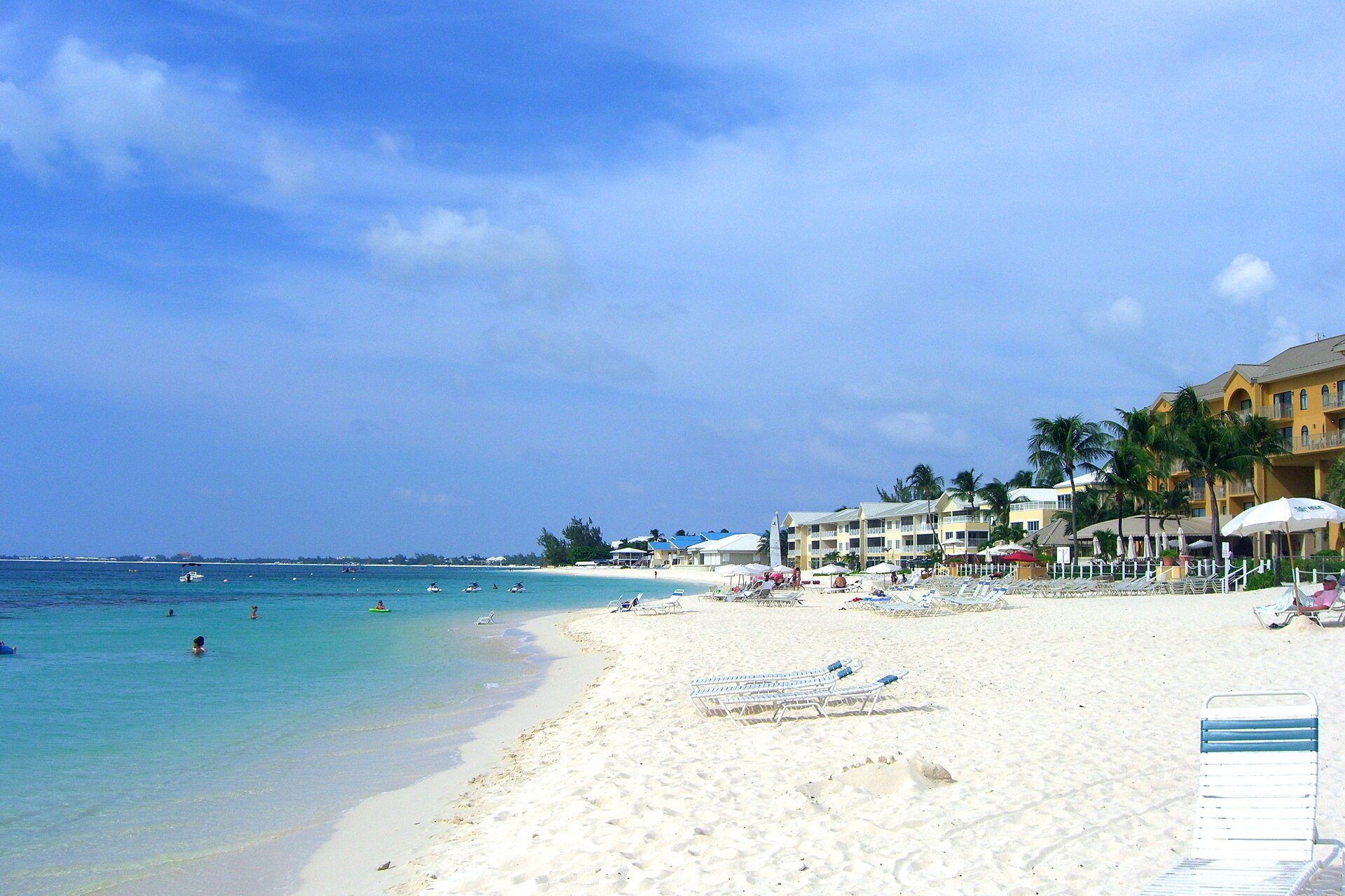
On Grand Cayman, Cayman eFoil brings Lift boards to you, mainly on Seven Mile Beach. Every first time rider starts with an Introductory Demonstration of up to 2 hours at $475 (2025/26 rates, read October 2026), and rentals open only after it. The Port Regulations (2025 Revision) cap vessels at five knots within two hundred yards of shore outside a buoyed watersports area (reg. 30(5)).
Turks and Caicos has two schools on Providenciales. Fly TCI is mobile and rides Lift, with a 30 minute intro from $125, a First Time Lesson from $250 and rentals for experienced riders only (read October 2026). Foil Turks & Caicos rides Fliteboard at Grace Bay. The DECR visitor sheet keeps jet skis “or similar PWC” out of protected areas and recommends 5 mph or less within about 100 meters of any shoreline.
Three of those four schools ride Lift, the brand in our Lift eFoil guide, and all three islands put a lesson or a demo before solo riding.
Sint Maarten, Antigua, and the islands we found empty
eFoil Riders Sint Maarten is “Located at Palapa Marina in the heart of Simpson Bay” on the Dutch side. A Fliteboard lesson costs $145 with no length published, and a 60 minute rental “For experienced riders” costs $110. Longer hire starts “From 299 € per day”, in euros (read October 2026).
On Antigua, Falmouth Ocean Club, a Fliteboard platinum partner, offers eFoil lessons, scooter tours and rentals from Falmouth Harbour. Its site shows no prices.
We found no eFoil operator in the Bahamas in October 2026. Baha Mar in Nassau lists Jetsurf boards and Seabobs, not eFoil. The British Virgin Islands came close to a blank. In 2024 Scrub Island Resort announced eFoil rentals and lessons at Marina Cay, off Beef Island, Tortola, with Up 'n' Under Watersports, but we found no school with published prices, and St Thomas on the US side turned up nothing.
Curaçao teaches wing foiling around Spanish Water but had no eFoil school. If you are set on the motor and flexible on the coast, look west to Cancún or north to Miami.
Storm season, and a trade wind from the east all year
Meteo Curaçao places the Dutch Leeward islands on the southern edge of the hurricane region. The season itself, in the US National Hurricane Center's words, “runs from June 1 to November 30” across the Atlantic basin, the Caribbean Sea included, with its peak on September 10 and most activity from mid August to mid October.
Aruba's met service puts the island in the Southern Caribbean Dry Zone, with a dry season roughly from February to June, rain from September to January and a position “on the southern fringes of the Hurricane belt”. Its 1991 to 2020 normals show the trade blowing from 080 to 090 degrees in every month. June is windiest at 8.8 m/s, November calmest at 5.6 m/s, with October close behind at 6.0 m/s and the year at 7.4 m/s. In our conversion that is about 17 knots in June, 11 in November and 14 across the year. These are met service normals, not the wind at Fisherman's Huts. NOAA monthly means keep the sea around Aruba, Curaçao and Bonaire between 26 and 28 °C all year.
Further north, Cayman eFoil names roughly June to August as the calmest time on Seven Mile Beach, mornings and evenings above all, and the Cayman met service runs the wet season from mid May to October. Turks and Caicos has an east southeast trade, and its best eFoil days are the flat calm ones. Puerto Rico has easterly trades all year and is drier from December to March, and Cabarete sells its “Glassy mornings”.
December to May lies outside hurricane season on every island in this guide. The season weighs less on Aruba and Bonaire than on Punta Cana, Puerto Rico, Grand Cayman or Provo, yet Aruba's calmest months, October and November, still sit in the season's tail.
Lessons, battery packs and island entry fees
No operator on this page that publishes its terms lets a newcomer ride alone first, so a lesson belongs in the budget even on a trip planned around rentals. How those fees compare with owning a board is covered in our eFoil price guide.
Owners hit one wall. Fliteboard says plainly that “electric vehicle batteries are not permitted on passenger aircraft”. Wave & Wheels on Bonaire rents Flitecell packs, Cayman eFoil rents batteries only to EASI verified renters with their own Lift, and on Aruba we found none. The eFoil battery guide explains why the packs stay grounded.
Since 1 July 2024 Aruba charges air arrivals a $20 Sustainability Fee through the online ED Card, children under eight exempt. Bonaire charges a Visitor Entry Tax of USD 75 per visitor per stay under the Toeristenbelastingverordening Bonaire 2022 (A.B. 2022, no. 11, as amended by A.B. 2024, nr. 8, art. 5(1)), and USD 10 for children under 13 and residents of Aruba and Curaçao (art. 5(2)). It comes on top of the nature fee. The US dollar is Bonaire's legal currency, and Z Air, WinAir and Divi Divi Air fly daily between the two islands, so one trip can cover both.
Across the region, the pattern we see is that the law wants slow speed near shore and no vessels in swim areas. Aruba, Bonaire and the Cayman Islands set a slow zone by law, Turks and Caicos recommends one, and none of these texts names an eFoil. For the rest we did not read any rule text. None of this is legal advice, only how we understand the texts as of October 2026, and the school should pick where you fly. How lift off works is in our eFoil hub.