The brand: Aerofoils GmbH and Audi
If you typed the name into a search box, here is where things stand. The Audi e-tron foil is an electric hydrofoil board that Aerofoils GmbH developed and built in Bavaria, and the board family that grew out of it is sold under the Aerofoils name today. Many people still call it the Audi eFoil, and they mean this machine. The Audi badge has left the catalog. The enclosed jet drive has not. Five sets make up the 2026 range, three carbon boards and two inflatables, with the manufacturer's list running from €11,799 for the inflatable Airfly up to €14,999 for the race-oriented Competition. Audi-badged boards surface on the used market only now and then. This page covers where the name comes from, why reviewers count the boards among the safest eFoils, which model suits a beginner, and what to check before you buy one used.
A car brand on a piece of watersports gear makes the Audi e-tron foil one of the odder names in eFoil history. No board on sale today carries it. The name belonged to the edition that came out of the collaboration between Audi and Aerofoils GmbH, a Bavarian company that specializes in developing and building electric hydrofoils. The boards never came off an automaker's assembly line. At Audi, e-tron stands for electric drive, and the board carried that message onto the water: an electric drive, engineered in Germany. Today the catalog is Aerofoils-branded throughout, and the maker itself treats the old name as a chapter of its history.
In case the topic is new to you, an eFoil is an electrically powered hydrofoil surfboard. Above a certain speed it rises out of the water on the lift of its underwater wing, and at that point you are practically flying over the surface. The premium segment today is defined mostly by American Lift and Australian Flite; Aerofoils is the German alternative in that field, and many riders still look for it under the Audi name.
Premium is not an empty label with eFoils. Pricier models usually get you better materials, stronger motors, and longer-lived batteries, and over the years you notice it in reliability. Yet what sets Aerofoils apart from the pack is not mainly the materials but one promise: reviewers count its boards among the safest eFoils on the market. The reason for that reputation comes down to one design choice, the enclosed drive.
Among the premium manufacturers, only Aerofoils develops and builds directly in Germany, which is a purely practical point. Lift ships its boards from the US. Flite designs its boards in Australia and sells them in Europe through its own Dutch company. This maker works out of Bavaria, in the heart of Europe.
On the market map, Lift and Flite are the two big names of classic propeller premium. Swedish Awake came to eFoils from the jetboard world. Waydoo is the name people reach for on value. And there is Sofia-based SiFly, the newcomer with EU assembly (its own wording) and aggressive pricing. Aerofoils holds a position of its own in that lineup: a German premium maker that puts safety first. Being the cheapest or the fastest was never the goal. The aim is to be the eFoil you would hand to your family without a second thought.
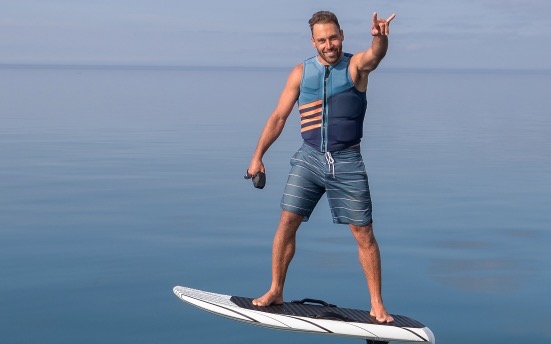
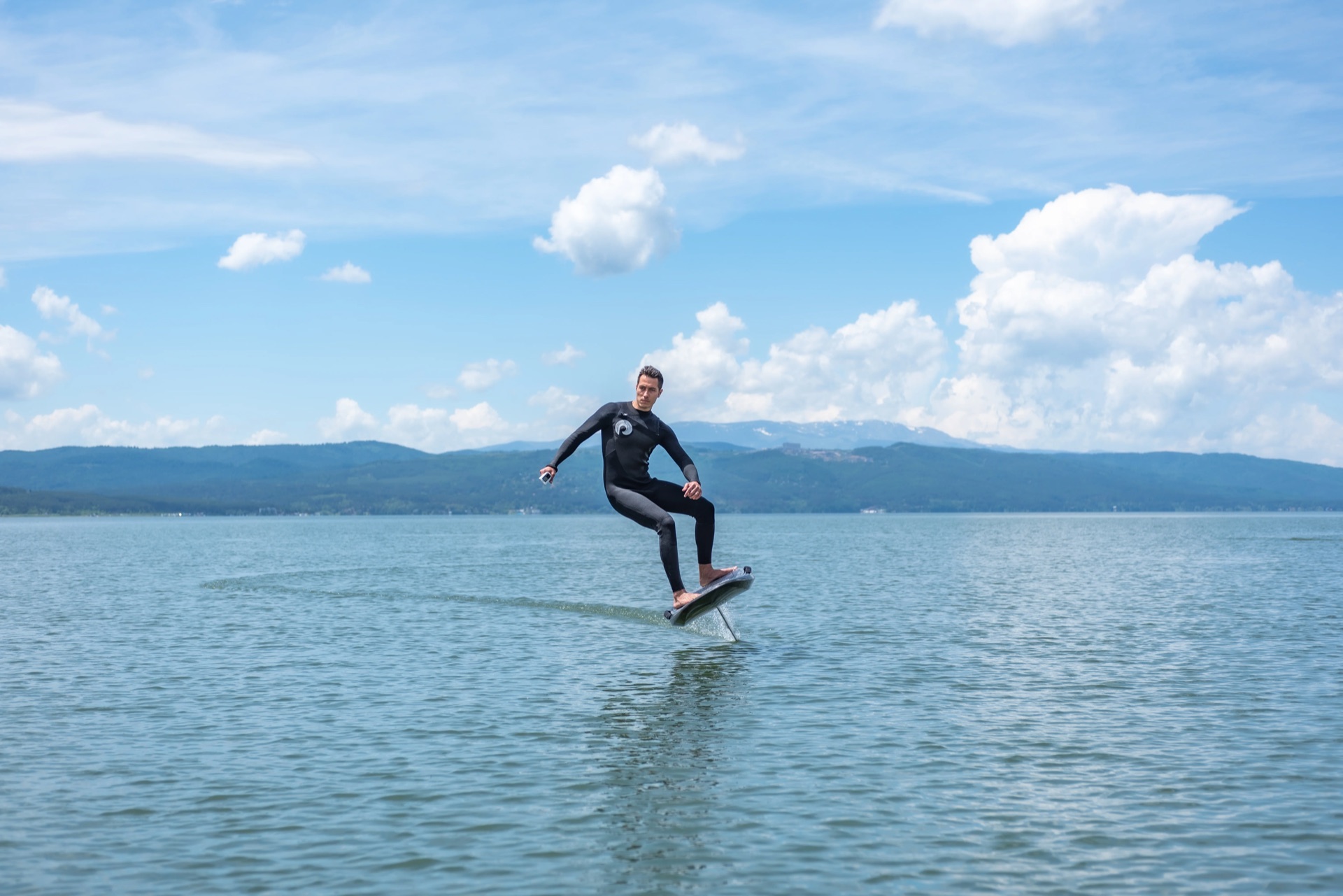
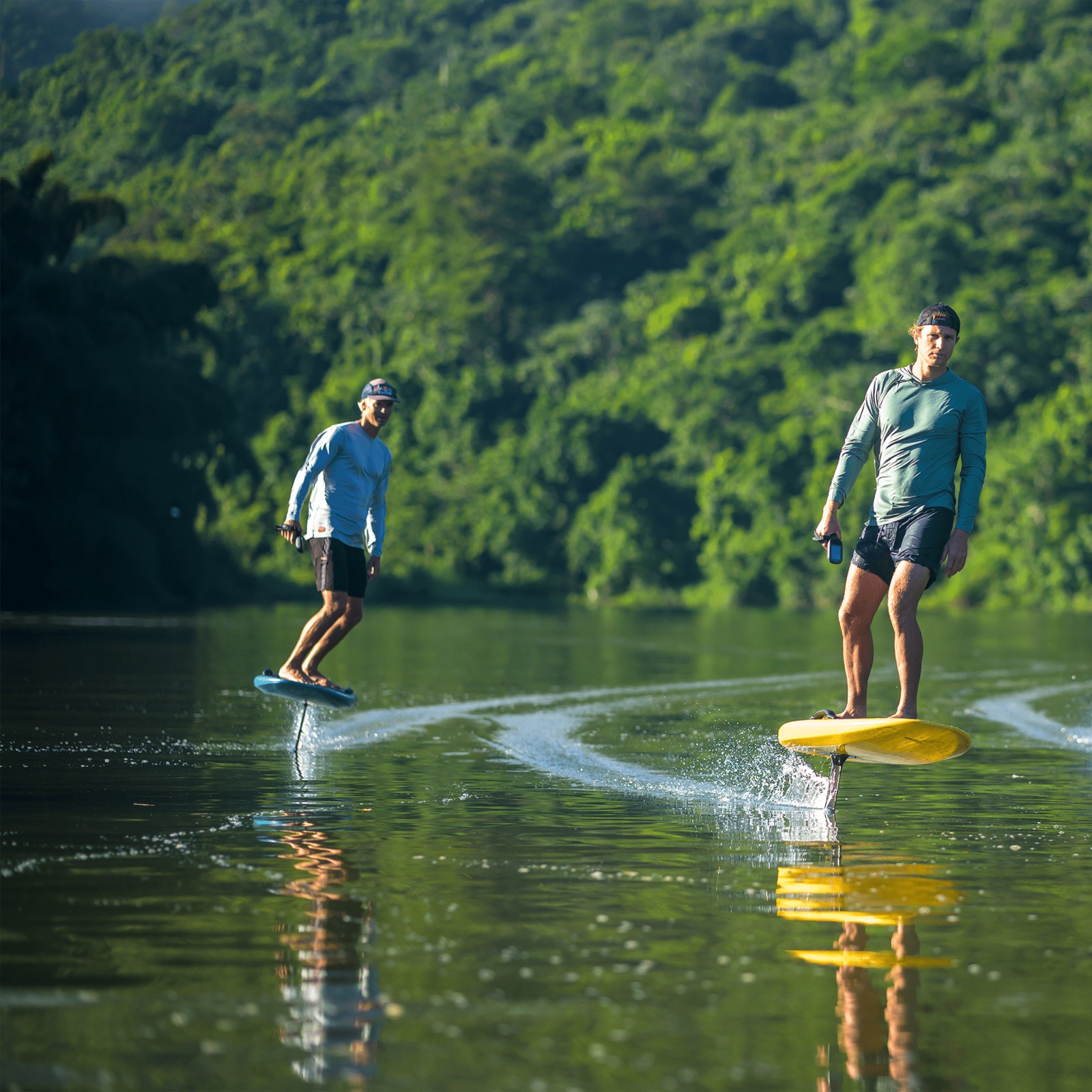
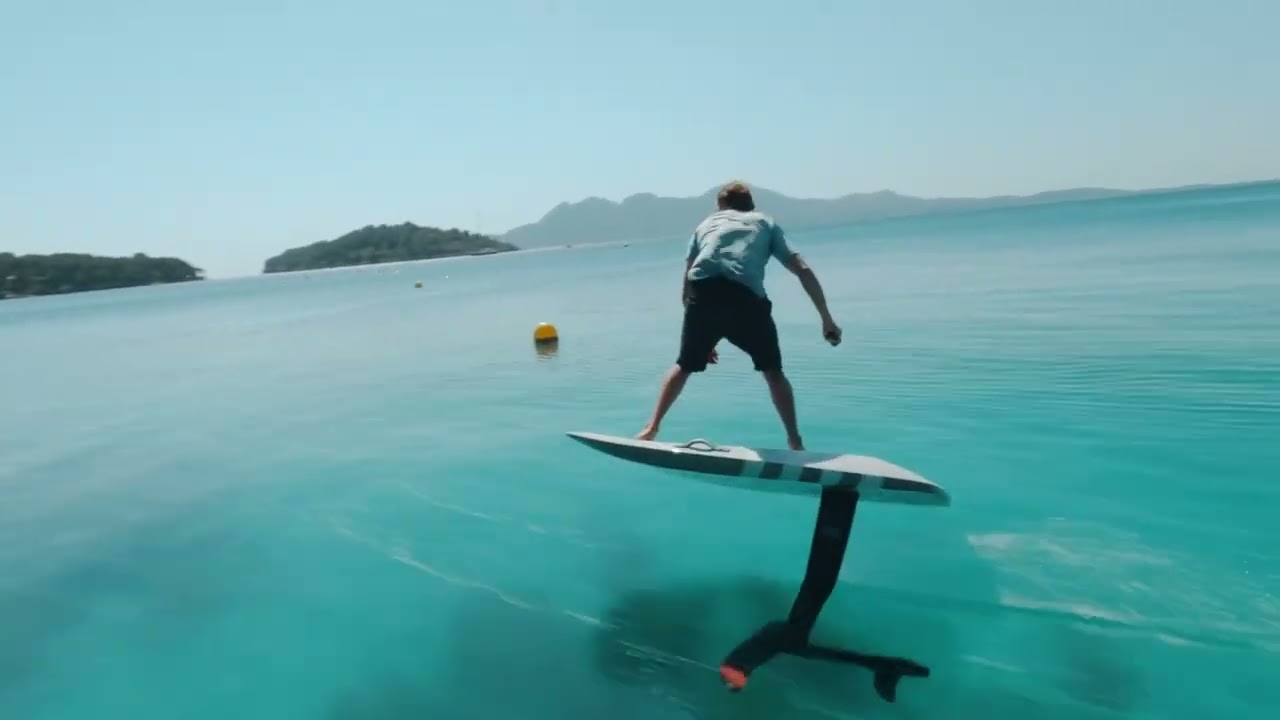
The Audi e-tron foil in action
This is the official Audi e-tron foil footage. The dedicated Audi page has since been taken down, so for today's Aerofoils range and prices, go to the maker's own site at aerofoils.com ↗
Safety: the fully enclosed jet drive
The usual eFoil layout puts an electric motor on the mast, spinning an open propeller underwater. Aerofoils took a different route on the Audi e-tron foil and has kept it on every set since. The boards use a completely enclosed jet drive, in which an impeller (a rotor inside a closed housing) accelerates the water, and not a single rotating part can be reached from the outside. A hand, foot, or fin has no exposed propeller to find.
The international trade press keeps listing these boards as one of the safest eFoils and a top choice for beginners, and this design decision is the reason. None of that makes the machine harmless. What it does is take one of the main sources of injury, the open propeller, and engineer it out of every Aerofoils set.
“What happens if I fall off?” Almost everyone standing next to an eFoil for the first time asks it. On a board with an open propeller, a straight answer includes several precautions. With the enclosed jet drive the answer gets much shorter. You splash into the water just as you would off any other board, and there is no rotating part you could touch. The difference shows on land too. An eFoil has to be lifted out of the water, carried across the beach, and loaded into the car, often with curious kids crowding around. Those everyday moments demand less vigilance with an enclosed drive, and over time that matters more than you might expect at first.
A jet drive is more than a “propeller with a grille.” It draws water in through a closed duct and pushes it out at high speed behind the board, so the thrust comes from the exiting stream of water rather than a freely spinning blade. The rotor does all of its work inside the housing. You cannot come into contact with it, neither while swimming nor while handling the board. Jet skis run on a similar principle, and Aerofoils translated the approach to eFoil scale.
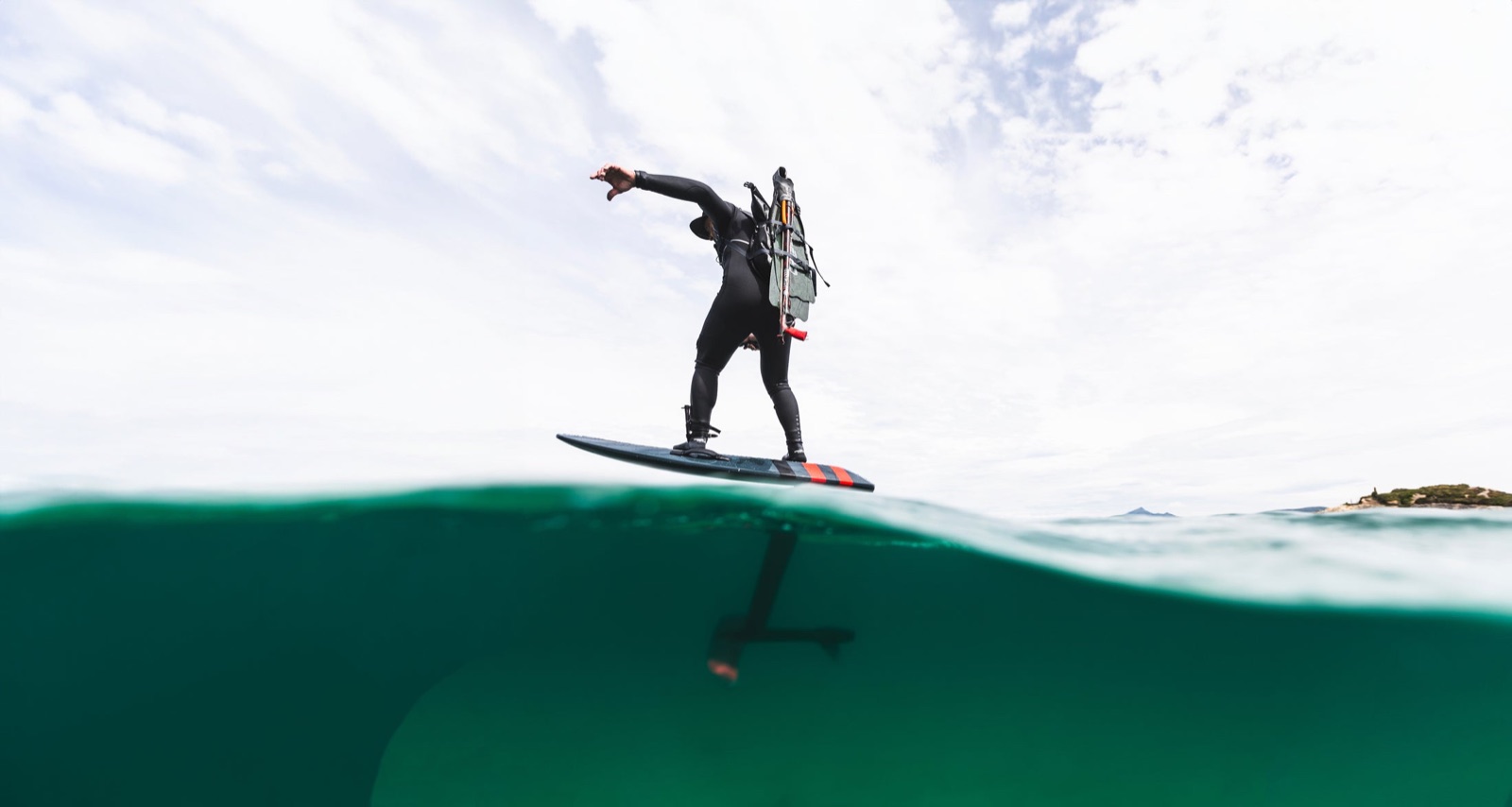
As a beginner you are guaranteed to fall, and fall often. Falling is part of learning, and that is exactly why the drive matters so much. After a fall you swim back to the board and pull yourself up, and in the process your hands and feet inevitably come close to the drive. With open propellers the ground rule is to keep your limbs as far from the motor and wings as possible and never to use the foil as a step. The enclosed jet drive lowers that risk through the design itself. You can be clumsy climbing back on and still never meet a spinning blade.
Once the board is shared beyond one practiced owner, the argument counts twice. In families, kids love swimming around the board. At schools and rental operations, the gear lands in inexperienced hands day after day. Aerofoils names schools, resorts and rental operations among the buyers it builds for, and gives capped power and a protected drive as the reasons.
Falling is still a skill of its own, and the enclosed drive does nothing to change that. When the board gets unsettled, use the last stable moment to bail. Always jump clear to the side or backward, never forward, and put as much distance as you can between yourself and the foil. The wing and mast are rigid parts, and hitting them hurts even when no rotating part is exposed. The enclosed drive removes one of the main sources of risk, not all of them.
The enclosure also comes at a technical cost. Aerofoils concedes that an open propeller is physically more efficient than a jet and turns more electrical power into thrust. The maker counts on the jet to win that back through safety, the absence of torque and smooth power delivery. If you are chasing race-level performance, test ride several brands. Above all, remember that the enclosed drive is no substitute for protective gear. Aerofoils recommends a helmet and a life jacket for every session, and whether the law also requires a vest depends on where you ride. For learning, pick smooth water that is deep enough, and keep a generous distance from swimmers and other craft. Learning with an instructor is still the fastest and safest way into the sport.

Aerofoils models and prices, formerly the Audi e-tron foil
The 2026 Aerofoils lineup has five sets and is laid out more clearly than ever, with three full-carbon boards (Adventure, Performance, Competition) on one side and two inflatable models (Hyperfly, Airfly) on the other. The Hyperfly has taken over the role of the earlier eFoil Scooter. Fit its removable Hyperbar handlebar, which has the remote built in, and it rides as an eFoil with a grab handle. Pair it with the separate handheld remote instead and you have a classic board. All five sets run on an enclosed jet drive, either the Hyperdrive ABS with a 60 cm carbon mast or the Competition eDrive with an 80 cm one, so the safety concept carries through the entire range.
The manufacturer now goes by plain Aerofoils (part of the Rosenxt group since 2025). None of the sets in its store carries the “Audi e-tron foil” name, though a few accessory descriptions still use it, a leftover of the earlier partnership. In a blog post of 30 June 2026 Aerofoils itself presents the Audi e-tron foil as the origin of the family it sells now. We checked the store and the post on 3 October 2026. Munich engineering know-how and the enclosed drive, the core of the product, have not changed.
Adventure Aerofoils 2026
The all-round carbon model from Aerofoils: a 103-liter board with an enclosed jet drive and up to 2 hours of flight time with the larger battery.
- Board size
- 176 × 72 × 13 cm
- Volume
- 103 l
- Weight
- board 11 kg, set 28.6-33.3 kg
- Battery
- 1130 Wh (Light) or 2120 Wh (Endurance)
- Flight time
- up to 1 h (Light) / up to 2 h (Endurance)
- Charge time
- full charge in 1 h 15 min (Light) or 2 h 15 min (Endurance)
- Top speed
- up to 50 km/h
- Max. rider weight
- 120 kg
- Motor
- enclosed jet drive
- Construction
- full carbon
- Price (approx.)
- €14,269
Manufacturer figures (as of 2026-07-05). Prices are for guidance only.
Performance Aerofoils 2026
A sportier, smaller board for advanced riders: 83 liters, up to 55 km/h, with the same enclosed jet drive.
- Board size
- 153 × 67 × 13 cm
- Volume
- 83 l
- Weight
- board 9.2 kg, set 26.8-31.5 kg
- Battery
- 1130 Wh (Light) or 2120 Wh (Endurance)
- Flight time
- up to 1 h / up to 2 h
- Charge time
- full charge in 1 h 15 min (Light) or 2 h 15 min (Endurance)
- Top speed
- up to 55 km/h
- Max. rider weight
- 110 kg
- Motor
- enclosed jet drive
- Construction
- full carbon
- Price (approx.)
- €14,269
Manufacturer figures (as of 2026-07-05). Prices are for guidance only.
Competition Aerofoils 2026
The smallest, most agile Aerofoils board (73 l) for experienced riders who crave speed.
- Board size
- 135 × 63 × 13 cm
- Volume
- 73 l
- Weight
- board 8 kg, set 26.1-29.9 kg (depending on battery)
- Battery
- 1130 Wh (Light) or 2120 Wh (Endurance)
- Flight time
- up to 1 h / up to 2 h
- Top speed
- 55 km/h
- Max. rider weight
- 100 kg
- Motor
- enclosed jet drive
- Construction
- full carbon
- Price (approx.)
- €14,999
Manufacturer figures (as of 2026-07-05). Prices are for guidance only.
Hyperfly Aerofoils 2026
Successor to the earlier eFoil Scooter: an inflatable 230-liter board with a removable Hyperbar handlebar, rideable with or without it.
- Board size
- 215 × 92 × 15 cm (inflated)
- Volume
- 230 l
- Weight
- board 20.8 kg, set 39.7-43.9 kg
- Battery
- 1130 Wh (Light) or 2120 Wh (Endurance)
- Flight time
- up to 1 h / up to 2 h
- Top speed
- up to 50 km/h
- Max. rider weight
- 120 kg
- Motor
- enclosed jet drive
- Construction
- inflatable, with removable Hyperbar handlebar
- Price (approx.)
- €14,499
Manufacturer figures (as of 2026-07-05). Prices are for guidance only.
Airfly Aerofoils 2026
An inflatable travel eFoil: folds down to a 130 × 70 cm pack size yet behaves like a rigid board once inflated.
- Board size
- 173 × 73 × 15 cm (inflated)
- Volume
- 150 l
- Weight
- board 19.3 kg, set 38.2-42.5 kg
- Battery
- 1130 Wh (Light) or 2120 Wh (Endurance)
- Flight time
- up to 1 h / up to 2 h
- Top speed
- up to 55 km/h
- Max. rider weight
- 110 kg
- Motor
- enclosed jet drive
- Construction
- inflatable
- Price (approx.)
- €11,799
Manufacturer figures (as of 2026-07-05). Prices are for guidance only.
Whichever model you land on, check the same specs as on any eFoil. First comes the size and volume of the board. As a beginner, err on the larger side, since a bigger board is more stable and easier to learn on, while a smaller one is meant for quick turns and higher speed. Wing size works the same way, with a larger wing running steadier and burning less energy. Aerofoils tells beginners to take the largest wing their lineup offers, for most of them the Freeride 1350 × 400, and keeps the even bigger Easyride 2000 × 510 mainly for schools and riders over 100 kg (around 220 lbs). A smaller wing is faster but harder to control. For the mast, the shorter one suits beginners, the longer one advanced riders and choppy water. Last comes battery capacity and charging time. One charge is typically good for roughly 1 to 2 hours on the water, and many manufacturers make the battery swappable, so a spare battery doubles your daily ride time.
Aerofoils sits squarely in the premium field. On the 2026 list the sets cost €11,799 to €14,999 with the Light battery and the standard charger. When we read the configurator on 3 October 2026, the Endurance battery added €1,000 and the fast charger €500. The manufacturer and its official dealers can give you exact current prices. How eFoil prices break down in general, and what upkeep will cost you, is on our eFoil prices page.
Which model fits you?
Beginners naturally start with the Hyperfly (with handlebar) or the high-volume, travel-friendly Airfly. On the carbon line, the Adventure is the all-rounder and the entry point the maker recommends. The Performance is the sportier pick, and the Competition is the board for experienced riders hungry for speed.
Swipe sideways to see all columns
| Model | Price (approx.) | Flight time | Best for |
|---|---|---|---|
| Adventure | €14,269 | up to 1 h (Light) / up to 2 h (Endurance) | Carbon all-rounder from your first flight |
| Performance | €14,269 | up to 1 h / up to 2 h | Sporty, for advanced riders |
| Competition | €14,999 | up to 1 h / up to 2 h | Competition-oriented, for experienced riders |
| Hyperfly | €14,499 | up to 1 h / up to 2 h | Inflatable with removable handlebar, also for beginners |
| Airfly | €11,799 | up to 1 h / up to 2 h | Travel-friendly and inflatable |
Aerofoils and the competition
In the premium field, Aerofoils builds its whole case on safety. Lift and Flite sell jet drives as well. Lift offers an LCS Jet kit whose impeller it calls fully enclosed, and Flite a Jet C system you can choose in place of the Prop C on its ICON and PRO boards. At both brands, though, the jet is an option next to a propeller. On every Aerofoils set the fully enclosed jet drive is the only drive and the foundation of the whole system. That alone can settle the decision for families, schools, and more cautious buyers. On price, the German sets share the premium band with Lift and Flite and stay below the dearest configurations of both.
Every current model from the active brands sits side by side in one table in our eFoil comparison.
Who is the Audi e-tron foil, now Aerofoils, for?
Beginners are the first group, and perhaps the one it suits more than anyone. You learn the way you would on any eFoil, prone first, then kneeling, finally standing. The majority of learners ride confidently after 4 to 5 hours of practice, and with prior watersports experience you may be flying within 20 minutes. Where the difference plays out is in your head. When no part of you is busy thinking about a spinning propeller, you fall more relaxed and try things more boldly, and that attitude is what speeds up learning.
Safety-minded buyers and families gain the most after beginners. If several people will use the board (your partner, teenage kids, visiting friends), measure it against the least careful user, not your own routine. A drive that is closed by design means fewer worries in that situation. With kids splashing next to the dock, you still lift the board out of the water with more peace of mind.
Rental operators and instructors see it from the business side. When you run a school or a rental station, an eFoil's risk profile is part of the daily routine. For most guests this is the first time in their lives on a board like this, and the briefing gets minutes, not days. That turns the enclosed jet drive from a comfort feature into a business case, with less risk for guest and gear alike.
At the dock of a vacation house or off the deck of a yacht, safety is measured at the least attentive moment, and that is the moment every Aerofoils set is designed for.
Not every buyer should end up here, though. If your budget is tighter, Waydoo offers the best value in the entry class (on 3 October 2026 most of its sets in the EU store were listed between €5,807 and €7,500). If the classic propeller-premium world with its wide accessory range appeals to you, see our pages on Lift and Flite. For a cheaper alternative assembled in the EU, have a look at SiFly. The full decision checklist is in our eFoil buying guide.
From Bavaria to your home waters
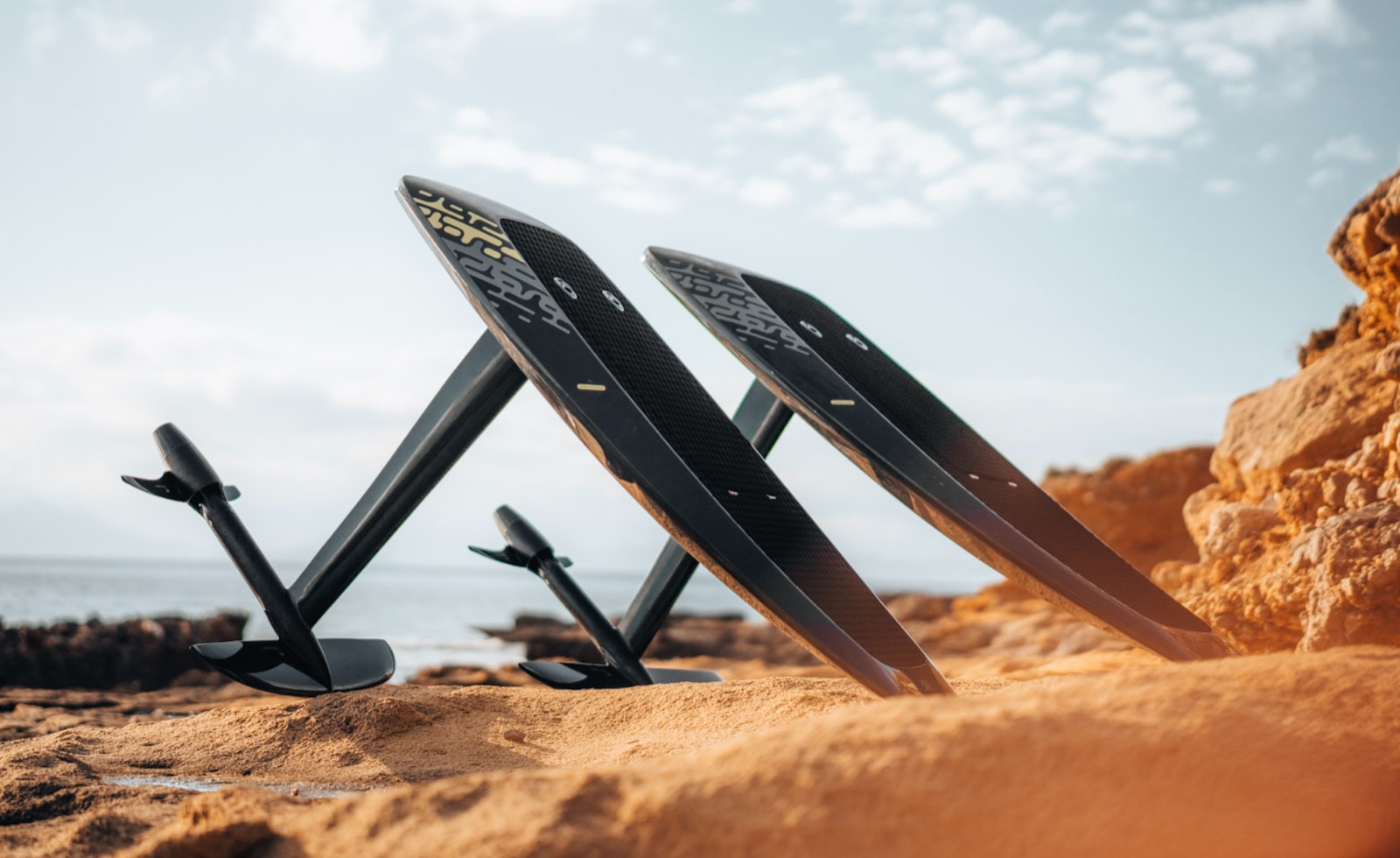
Bavaria is where the boards come from, then and now. Aerofoils is the one premium maker in the scene that develops and builds in Germany, while Lift ships from the US and Flite designs its boards in Australia and sells in Europe through a Dutch Fliteboard company. How much that matters depends on where you ride. For buyers in Europe, a manufacturer on the same continent tends to mean simpler logistics for service, spare parts, and warranty work. Everywhere else, the official dealer network handles those jobs. Delivery, distribution, and service terms change from time to time, so confirm the current ones with the manufacturer or your dealer before you order.
The board itself suits a wide range of waters. Electric, quiet and nearly wakeless, an eFoil has an advantage on lakes and bays that restrict combustion-powered craft. Even so, eFoiling is not legal everywhere. Rules differ by country and even from lake to lake, so check what applies at your spot before you buy and before every session. Near busy shorelines the enclosed drive is particularly reassuring, but the basics stand. Keep a generous distance from swimmers and make sure the water under you is deep enough.
The season matters too. On lakes in temperate latitudes, foiling is at its best from late spring into early fall, and a wetsuit stretches that window into the cooler months. On warm coasts you can ride year-round. For full days at the dock, a spare battery or a planned charging break pays off. Smooth water is easy to find almost anywhere, whether a sheltered bay, an alpine lake, or a flooded quarry outside town. Just confirm beforehand that eFoils are welcome there.
Try eFoiling for yourself before spending a five-figure sum. A rental session or a lesson is the easiest way in, and boards with enclosed drives work especially well for teaching. If you have your eye on an Aerofoils board specifically, the line that used to wear the Audi badge, ask schools and rental operations in your area which brands they run. The fleet changes with the spot and the season.