Where eFoiling happens in Sydney, and where it does not
The Harbour Bridge would make a fine backdrop for an eFoil photo, and it stays a backdrop. The whole of Port Jackson, from the Heads to the upper Parramatta River, is closed to personal watercraft, and New South Wales files an eFoil under that heading. So the city's eFoil scene lives on its edges. Fliteschool Sydney teaches at Bobbin Head, in Ku-ring-gai Chase National Park on the northern fringe of the suburbs. Foil Time works out of Matraville and rides Botany Bay and the waters around it in the south east. Between them lies roughly the whole city.
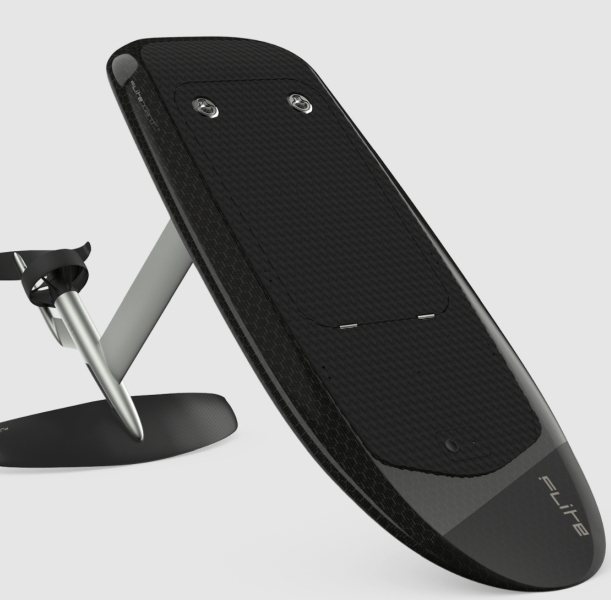
Both schools ride Fliteboards, a Brunswick brand, though Flite's president says plainly that “Flite originated in Australia.” The release of 5 November 2025 that announced Bobbin Head promised sales help, service and repairs and community ride days next to the lessons, which makes the school a base for owners and not only for beginners.
Beyond these two we found no eFoil school or hire business with a working website of its own in Sydney in October 2026. OzFoiling, which turns up in searches, is at Urunga on the mid north coast. The schools along the rest of the NSW coast are covered on our Australia overview, among them Future Rides at Jervis Bay, which rides Lift and not Fliteboard.
Foil Time's title says rental, though in Sydney you hire a board, and Flite's booking pages call the life jacket a PFD.
Why Sydney Harbour stays off limits
Transport for NSW draws the line from the southernmost point of North Head to the northernmost point of South Head. Every bit of water west of it belongs to the Sydney Harbour PWC exclusion zone: all of Port Jackson with its tidal bays, rivers and tributaries, Middle Harbour, the Parramatta River and the Lane Cove River. Personal watercraft are not permitted there at any time unless they hold an exemption.
The Marine Safety Act 1998 puts eFoils in the personal watercraft class, and the 2019 exemption order written for them leaves the exclusion zones untouched. We take that to mean a private rider cannot eFoil inside the Heads, on Middle Harbour, the Parramatta or the Lane Cove River without a specific exemption.
Boats meet further rules inside, such as the Harbour Bridge Transit Zone between Bennelong, Kirribilli, Millers and Blues Points, with 15 knots, no stopping or drifting and no anchoring except in an emergency. An eFoil never gets that far.
Anyone who does hold an exemption should know the event calendar. New Year's Eve, Australia Day, Vivid, the Sydney Sail Grand Prix and the Sydney to Hobart all fill the harbour, and as we read the Marine Notices they bring temporary zones, for example 6 knots within 200 meters of an event exclusion zone.
Lessons on Cowan Creek from Bobbin Head
Cowan Creek is tidal. Its catchment lies almost entirely inside Ku-ring-gai Chase National Park, and it runs into the Hawkesbury River, picking up Coal and Candle Creek at Cottage Point. Bobbin Head sits on the creek at the northern end of North Turramurra, in a park that NPWS calls Australia's second oldest, where sandstone cliffs and mangroves meet the water inside the metropolitan area.
Fliteschool Sydney, run by Flite itself, starts every lesson here. Riders board the school's boat at Bobbin Head and are taken to the lesson spot somewhere in the park, so nobody on shore gets to watch. Going by what the park and the school describe, expect a tidal creek system between bush and sandstone, nothing like the open expanse of Botany Bay.
The boat transfer is part of the package, along with current Fliteboards, a life vest, a helmet and a wetsuit. You bring water, a towel, a hat and sunscreen, swimwear with a rashie, and dry clothes. Every rider must be able to swim. The minimum age is 12, anyone under 16 needs an adult along, and the weight limit is 120 kg. Private lessons for one or two riders combine the lesson with a guided tour from the boat; the group format, called the Flite Experience, takes up to three.
Waiting is easy at Bobbin Head, with picnic areas, the Bobbin Inn Café, the NPWS information centre, the Empire Marina restaurant and plenty of parking. NSW National Parks charges $12 per vehicle per day for entry (read 23 October 2026), and that comes on top of the lesson.
Flite puts the drive from the CBD at about 40 minutes. You come in on Bobbin Head Road from the Pacific Highway (North Turramurra gate) or on Ku-ring-gai Chase Road from the first northbound exit off the M1 (Mount Colah gate); for a navigation app, use 688 Ku-ring-gai Chase Road, Mount Colah NSW 2079. Without a car, take the train to Turramurra and a taxi for the last ten minutes or so.
Malabar to Cronulla, around Botany Bay
Thirteen kilometers south of the CBD, Botany Bay opens to the Pacific between La Perouse and Kurnell. It is an open oceanic embayment fed by the Georges and Cooks Rivers, and both headlands belong to Kamay Botany Bay National Park. At Kurnell, local Aboriginal people met the crew of the Endeavour in 1770. La Perouse is where the French explorer Laperouse was last sighted, in 1788.
Foil Time is based in Matraville, close to the bay, and sells itself as “eFoil Lessons & Rental Sydney”. It is an official Fliteschool partner and rides Fliteboard gear. The school speaks of protected waterways across Eastern Sydney and names Botany Bay, Malabar, Brighton Le Sands, Cronulla and the waters around them, choosing the spot each day by wind and water. Lessons meet at Foil Time HQ in Matraville and are booked online only.
On the map that spreads the choice around the compass. Brighton Le Sands on the bay's western shore, Malabar on the ocean coast north of La Perouse, Cronulla south of the Kurnell peninsula. Where you ride is the school's call on the morning.
No surfing or foiling background is needed. You go from stomach to knees to feet, and the propeller stops the moment you let go of the handheld Bluetooth controller. Foil Time's own claim is that over 90 percent stand up in the first lesson.
Formats are the Flite Experience for up to two, a private one on one, and an Advanced Rider Return for people who already fly, with carving, board control, setups and the option of an ocean ride. Foil Time's site says riders from 12, Flite's listing 13, minors with a parent's consent either way, so confirm when you book. The limit is 120 kg.
Personal watercraft are banned outright at Yarra Bay, Frenchmans Bay, Congwong and Little Congwong beaches, all on the La Perouse side. Inside the bay lie sea grass meadows; no rule we found names eFoils there, but a foil kept off the shallows spares both meadow and mast.
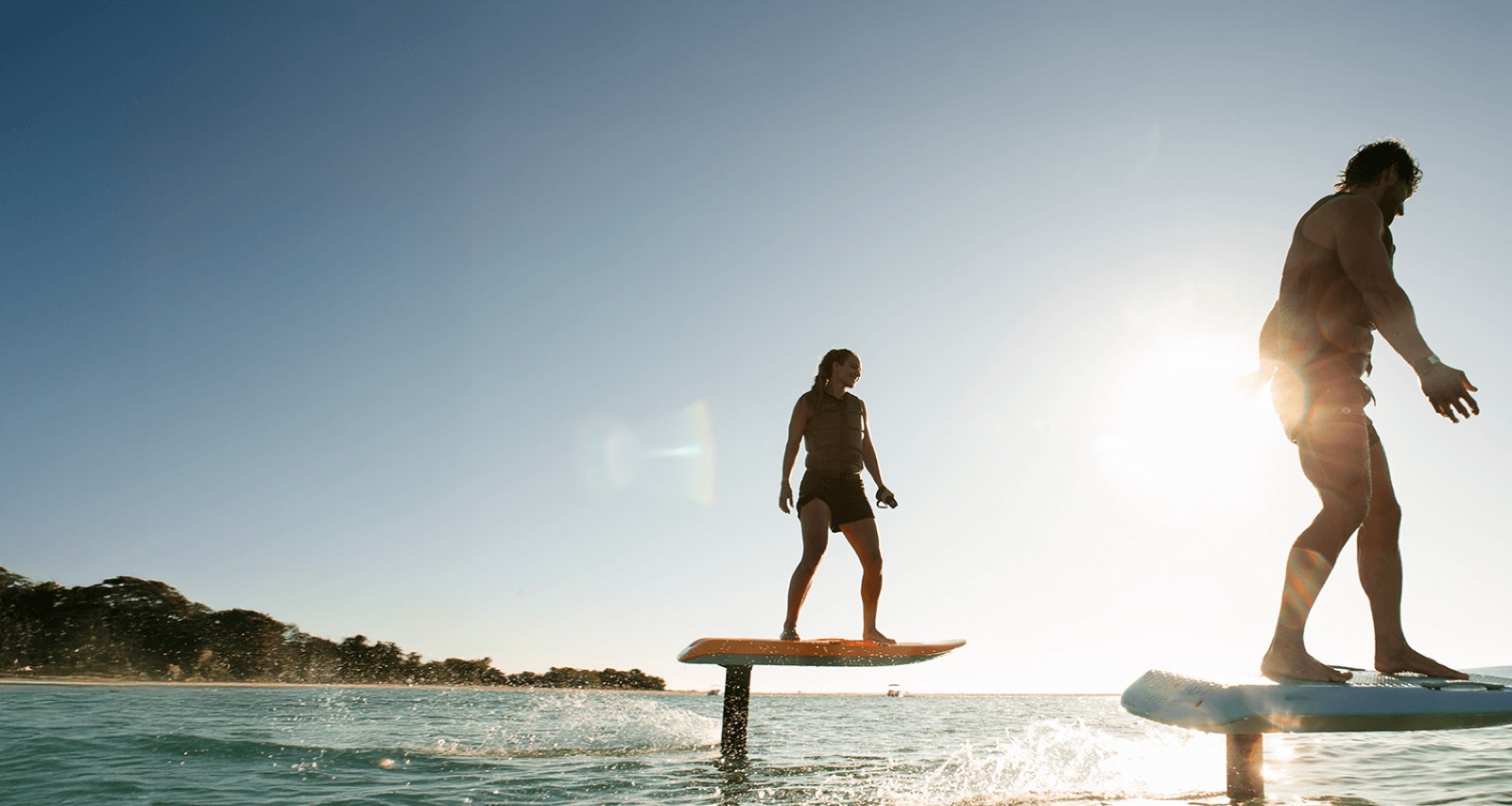
Pittwater and Broken Bay for riders who own a board
About 40 km north of the CBD, between Greater Sydney and the Central Coast, Pittwater is a tide dominated drowned valley estuary that runs from McCarr's Creek out into Broken Bay. On a map it looks made for an eFoil. A local community site warns that it can also see large waves and high winds.
We found no eFoil school with a live website on Pittwater, so this is water for owners, who ride under the general NSW eFoil rules below. Broken Bay is a PWC restriction zone; Pittwater is not named separately, and we cannot say whether the Broken Bay entry reaches into it. The Transport for NSW boating map has the final word.
The 2019 NSW eFoil exemption order, read closely
The key text has a long name: the Marine Safety Regulation 2016 Exemption Order, Motor Powered Hydrofoil Boards, Clause 140(1). A delegate of Roads and Maritime Services (NSW Maritime Division) made it on 1 March 2019, and it appeared in NSW Government Gazette No 27 of 29 March 2019 on pages 911 to 912 (reference n2019-820). It can be revoked at any time.
Under clause 140(1) of the Marine Safety Regulation 2016 it lifts the PWC specific licensing and registration requirements from eFoil owners and operators, who fall under the regime for ordinary powered vessels instead; every Part 5 requirement for powered vessels still applies.
The order defines its subject with some care. A motor powered hydrofoil board is a board style vessel with a hydrofoil, driven by an electric motor on or in the board or the foil, ridden lying prone, kneeling or standing, with a maximum speed capability of 25 knots. As we read it, a jetboard without a foil does not fit that wording, and neither does a board built to go faster.
Schedule 1 attaches five conditions, set out in the table. Break one and the order becomes inoperative for you, which brings back the full PWC rulebook.
Swipe sideways to see all columns
| Threshold | What it triggers | Source |
|---|---|---|
| 10 knots or more | General boat driving licence | Order 2019, Schedule 1 (1) |
| Above 25 knots | Exemption ceases; PWC registration and PWC licence | Order 2019, Schedule 1 (2) |
| Motor of 4.0 kW or greater | Registration as a vessel, not as a PWC | Order 2019, Schedule 1 (3) |
| Any registered board | Number on each side, figures at least 50 mm, contrasting color | Order 2019, Schedule 1 (5) |
| Every ride | PWC lifejacket (clause 120), exclusion zones, no riding sunset to sunrise | Order 2019, Schedule 1 (4); Transport for NSW |
Transport for NSW says “above 4.0 kW” on its eFoil page where the order says 4.0 kW or greater; if your motor sits right on that line, the order is the legal text. The page also wants a lifejacket appropriate for a PWC, as clause 120 of the Marine Safety Regulation 2016 describes it, and strongly encourages high visibility clothing.
An owner has two numbers to find before a first ride. The motor rating of the board decides registration; the speed you will honestly ride decides the licence. The map comes after that.
This section reports the published texts as we read them on 23 October 2026; it is not legal advice. For a ruling on your board or your spot, ask Transport for NSW.
Restriction zones, closed beaches and the 200 meter rule
Outside the harbour, Transport for NSW runs two further layers for personal watercraft. In a PWC restriction zone you may ride, but no “irregular driving” is allowed within 200 meters of the shore. That means going more or less in straight lines near land. Circles and patterns, weaving, and surfing or jumping swell, waves or wash are the examples the agency gives.
Around Sydney the list of restriction zones, each including its tributaries, reads Botany Bay, Broken Bay, Brisbane Water, Cooks River, Dee Why Lagoon, Georges River, Hawkesbury River, Manly Lagoon, Narrabeen Lakes, Port Hacking and Woronora River. A second, shorter list bans personal watercraft altogether: the harbour exclusion zone, the four beaches on the La Perouse side of Botany Bay named above, and Darook Park in Port Hacking. At Bonnie Vale, also in Port Hacking, no vessel of any kind is allowed.
The exemption order keeps all other PWC operating rules in force, so we expect these layers to bind an eFoil as well. For a confident rider that puts carving and wake jumping more than 200 meters from shore in all of those waters. Check a launch on the Transport for NSW boating maps before you drive to it.
Lesson prices, vouchers and board hire
Flite publishes a price for its group format at Bobbin Head: the Flite Experience costs “as low as $225 for 2 hours” per rider for a group booking of three (Australian dollars, listed on 23 October 2026). A two hour gift voucher starts at $275. We found no list price for private lessons.
Foil Time publishes no prices on the pages we read, neither for lessons nor for hire. Hire is the unusual part of its offer. The school rents out complete Fliteboard setups with Flitecell batteries, chargers, wings and safety gear, all booked online. The boards are the Fliteboard AIR, PRO and ULTRA L, the batteries the Flitecell Explore, Sport and Nano, and the wings the Cruiser 1100, Flow 1100 and Flow S 900. Ask about hire terms and where you may take the board.
Our Fliteboard page and the eFoil price guide show what those boards cost to buy.
Swipe sideways to see all columns
| Operator | Format | Riders | Price (AUD) |
|---|---|---|---|
| Fliteschool Sydney | Flite Experience, 2 hours | Up to 3 | As low as $225 per rider (group of three) |
| Fliteschool Sydney | Gift voucher, 2 hour lesson | 1 | From $275 |
| Fliteschool Sydney | Private lesson with guided tour | 1 to 2 | No list price found |
| Foil Time | Flite Experience, private, Advanced Rider Return | Up to 2 | Not published |
| Foil Time | Board hire | Not published |
Warm water in February, short days in June
February is the warm month in the water. Long term averages put the sea off Sydney at about 23.7 °C (75 °F) then, and at about 18.6 °C (65 °F) in September, its coldest point. Summer runs from December to February, so a northern winter holiday lands in the best of the Sydney season. If the same trip takes in Southeast Asia, our page on eFoil in Bali covers the schools there.
Wind shapes the day more than the month. On hot days, mostly in spring and summer, a sea breeze builds over Sydney and strengthens through the day to about 15 to 20 knots by mid to late afternoon, swinging north east by mid afternoon, according to a Weatherzone explainer. So on a warm season day the flattest water usually comes in the morning, before the north easterly fills in. In January, ask for a morning lesson.
Winter has a different limit. eFoils may not ride between sunset and sunrise anywhere in New South Wales, which leaves a short riding day in June and July. At 18 to 19 °C the water calls for the wetsuit both schools include.