FoilRide on the Menai Strait
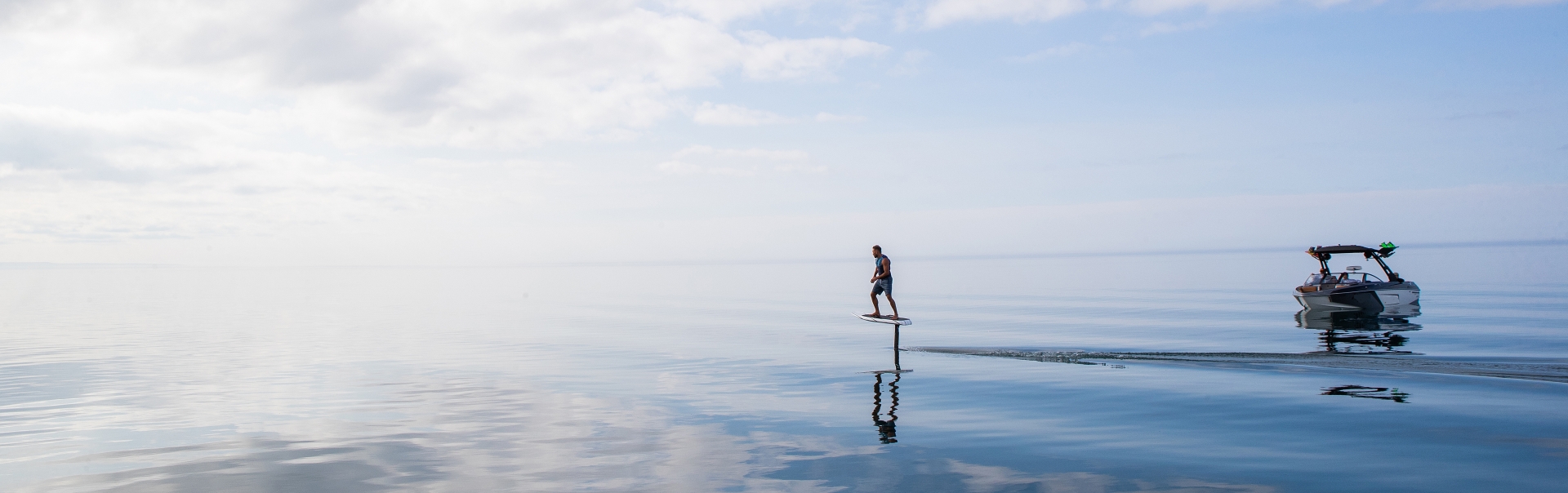
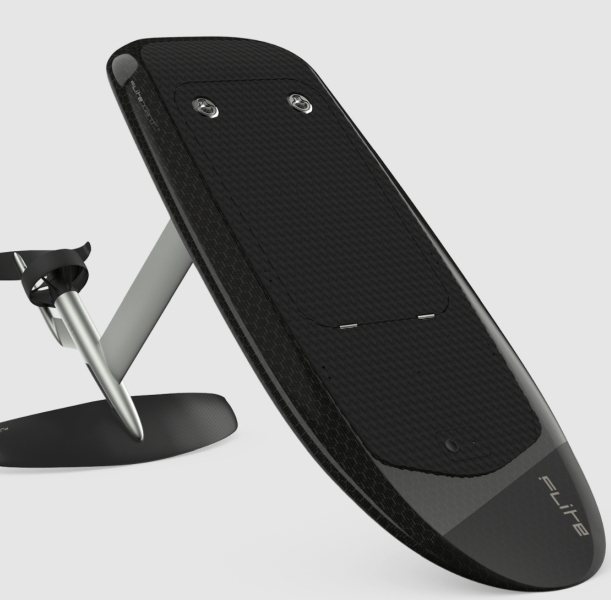
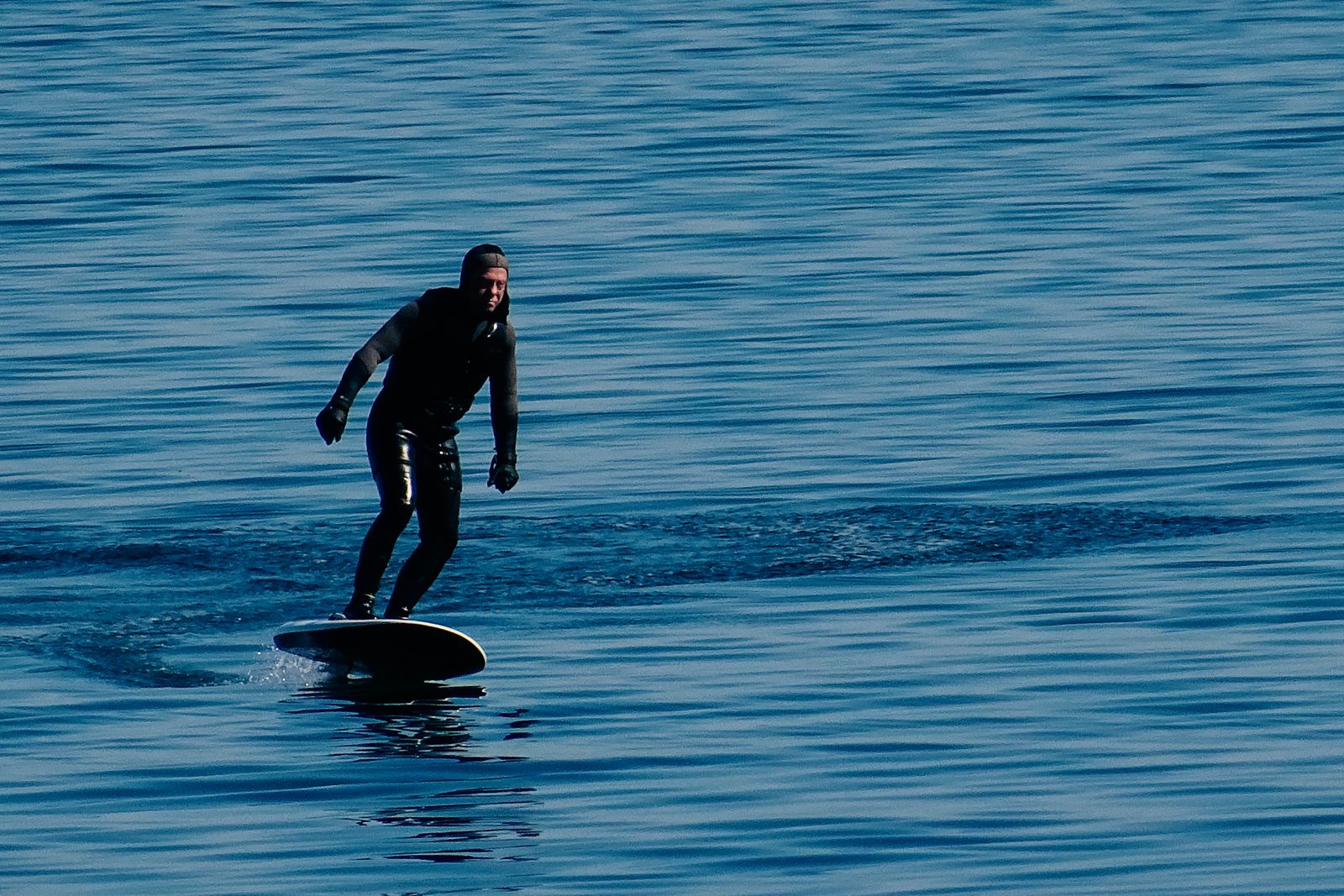
The Welsh school with the longest list of sessions sits on a tidal channel between Anglesey and the mainland. RibRide runs powerboat and personal watercraft courses, and FoilRide, its foiling side, works from Porth Daniel in Menai Bridge and calls itself the UK's original eFoil school. That is the company's claim, and we pass it on as such. It sells Lift and Flite boards and teaches on the Lift 5. Visit Wales lists it as the eFoil school for Ynys Môn, the Welsh name for Anglesey, with lessons in the sheltered water of the Strait.
Two and a half hours on the eFoil Experience cost £225 per person, as listed in October 2026, and one instructor looks after four students, each on a board of their own. Safety and the basics come first, then a boat takes the group a few minutes from the base to the best water. Where that is, FoilRide does not publish.
You need to swim 25 m comfortably in open water and be happy to go under when you come off. General bookings start at 14, with family sessions for younger children who already know the water on request. FoilRide suggests a body weight of about 50 kg and provides the wetsuit, boots, buoyancy aid and helmet.
After a first session comes the Improver at £185. Once you can fly a large figure of eight without touching down, the Foil Club opens to you from £110, which covers anything from a 90 minute session on the Strait to taking a board away for a few days. Its full name is the Slack Tide Foil Club.
Fly to Buy is a private half day at £545, refunded if you buy an in-stock eFoil on the same day. Demo days bring several makers to the water at once: Flite, Lift, Foildive, SiFly and PWR.
Menai Bridge is an hour from Liverpool, two from Manchester and three by train from London, according to FoilRide, which also says it “can always guarantee flat water”. We leave that promise with the school; the Met Office calls Wales one of the windier parts of the UK.
Base
Menai Bridge, Anglesey
Board
Lift 5
Group
4 students, 1 instructor
Minimum age
14 (families on request)
Rhyl and Abersoch, on the mainland side
Pro Kitesurfing, on E Parade in Rhyl, teaches eFoiling through a partnership with FoilRide that carries Lift boards across the north shore of Wales and closer to Chester, Liverpool and Manchester. Its kite students hear about eFoiling as “an awesome light wind option” for the days when the kite stays in the bag.
A First Flight Lesson is three hours for £185 per person, with most of that time on the water. Two students, a board each, one instructor. The Flight Improver is also £185. Rhyl follows Lift's own operating procedures and provides wetsuits, boots, impact vests and a helmet, and afterwards there are changing rooms with hot showers.
The instructors assess every client and may refuse to hand over the kit if your understanding falls short. Small damage on the water is not charged; repairs for damage while the kit is in your care are yours. No launch spot, age limit or weight limit is published, so ask when you book.
Abersoch, in Gwynedd, is FoilRide's seasonal outpost: 2.5 hours from the beach in spring and summer for £235, four places, and no published calendar, so you call to find out when the boards are next in town. Gwynedd's craft exclusion and beach safety zones apply to power craft on that coast.
Mumbles and Swansea Bay
Only one school teaches in South Wales. The Hydrofoil Store, which also trades as Foil Surfing UK and is run by Cor Watersports Ltd, teaches out of Mumbles. Its Efoil Intro Experience costs £199 for a private 90 minutes, one to one, with up to an hour of riding on a single battery. The instructor guides you out into Swansea Bay from a SUP or a safety boat. A second person can share the session for £75 extra and waits on the boat until it is their turn.
You start on your knees and aim to be standing by the end. The entry bar is higher than in the north. Mumbles wants SUP or surfing skills “to a Good standard”, turns away anyone with a past lower limb injury and sets a maximum weight of 105 kg. Riders under 18 need a PWB level 2 certificate. Wetsuit, helmet and buoyancy vest are provided, and the store takes bookings on 01792 446511.
After the intro, the Efoil Explore session costs £149. Hiring a board to ride alone is not possible, because the store will not rent without instruction; in its words, that “voids our insurance”. Lessons meet at Knab Rock car park by Verdis Cafe, SA3 4EN, with pay and display parking.
The Foil Drive demo, 45 minutes for £80, is easy to mistake for an eFoil lesson. It is a foil assist motor for wing foiling and downwinding in light wind. On our reading of the RYA guidance, a board carrying a motor counts as a watercraft, so the rules further down apply to it in full.
Then there is the tide. Swansea Bay sits on the Bristol Channel, which the National Tidal and Sea Level Facility ranks third in the world for tidal range, with a mean spring range of 12.3 m and the biggest springs near the equinoxes. We read that as water at Mumbles that looks very different from one booking to the next.
An old Visit Mid Wales listing still shows 2020 eFoil lessons on Takuma boards under SUP Gower, which shares the store's phone number and Swansea address. The Takuma brand is gone, and that offer with it.
Pembrokeshire, Cardiff Bay and Bala come up empty
We searched in October 2026 and came back empty for Pembrokeshire, Cardiff Bay, Llandudno, Conwy and Rhosneigr, and for any permanent base in Abersoch. Rhosneigr markets itself to wing foilers, not eFoilers. Nor does Flite run a Fliteschool in Wales. Its UK school page points to Kent, and FoilRide, which sells Flite, teaches on Lift.
The Met Office counts about 30 days of gale a year in the south west of Pembrokeshire, against 15 or more on other coasts, which on our reading makes it a hard county for a board that wants calm water. In Milford Haven the port's Harbour Patrol can stop dangerous activity and prosecute, and in February 2025 it reported a jet ski user fined and charged £2,840 in total for breaching three byelaws.
Cardiff Bay looks tempting on a map. Its Harbour Byelaws 2008 treat jet skis, water bikes and “other crafts which are similar” as pleasure craft, byelaw 14 bars exceeding the posted speed limits, and a 5 knot limit applies on the Ely, the Taff and the inner harbour. Whether an eFoil counts as similar, we cannot settle from the text. The harbour authority can.
Inland, Llyn Tegid (Bala Lake) strictly prohibits mechanically powered craft. On the Conwy coast the slipways at Llandudno North Shore and Penmaenmawr take power craft but “not personal watercraft”, and Llanfairfechan takes none; on our reading, whether that covers an eFoil is for the council to say.
One UK law and no Welsh one
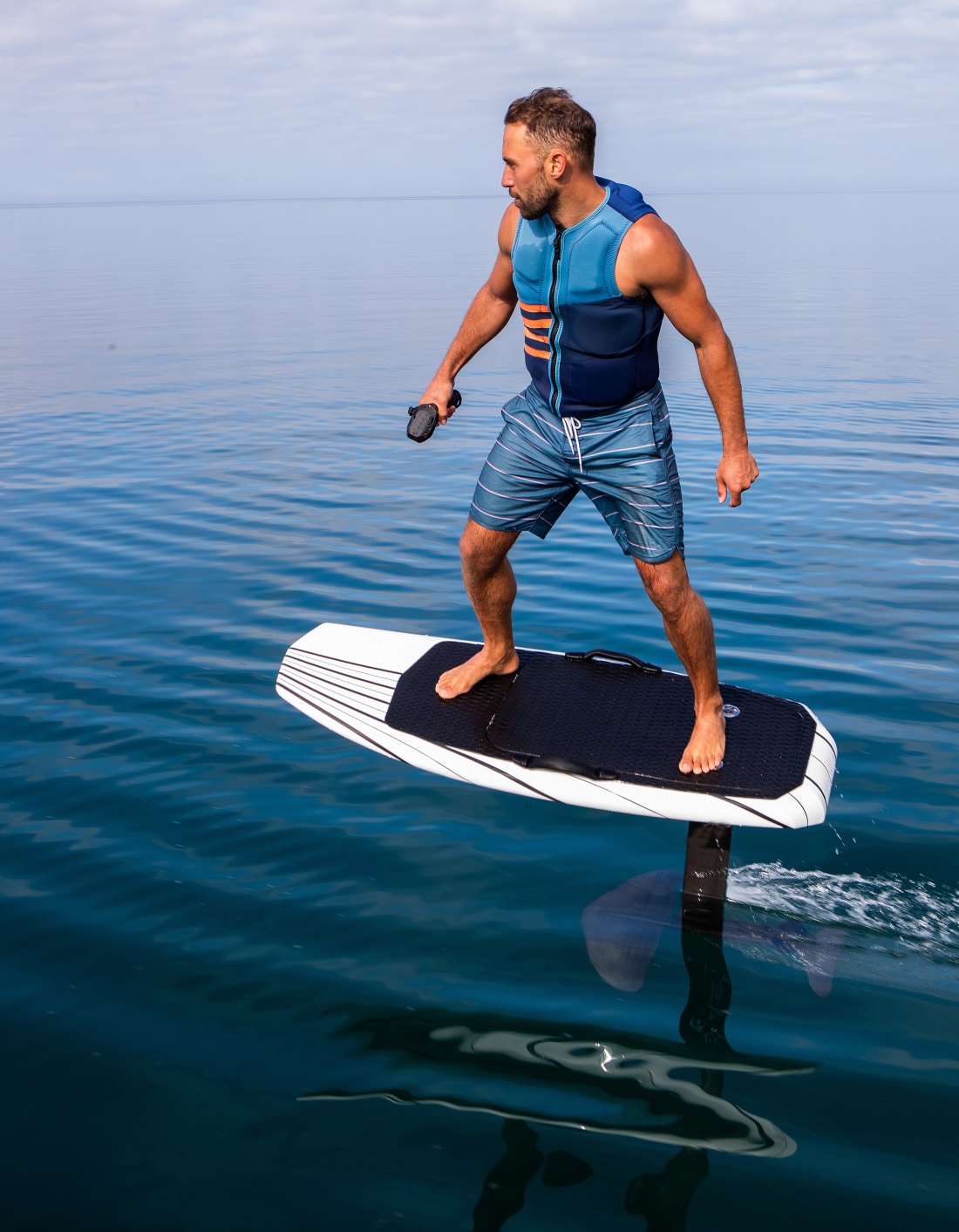
Wales has no eFoil law of its own. The Merchant Shipping (Watercraft) Order 2023 (SI 2023/35) has applied to the whole of the UK since 31 March 2023. Article 3(1) covers any craft capable of moving under its own mechanical power and able to carry a person, and MGN 684 (M), updated on 1 February 2024, says in paragraph 1.4 that this includes “for instance, eFoils”.
Article 6 brings in section 58 of the Merchant Shipping Act 1995, so riding dangerously on purpose, through breach or neglect of duty, or on drink or drugs is an offence. In England and Wales it carries a fine, or on indictment up to two years in prison, a fine or both. Schedule 2, paragraph 1, applies the collision regulations.
A licence never comes into it. Paragraph 9.1 of MGN 599 keeps the STCW rules away from pleasure vessels under 80 GT or 24 m, MGN 684 sets no training duty, and its paragraph 4.1 says registration with the UK Ship Registry “is not mandatory”. Nor did we find an insurance duty for a private eFoil (our reading). For the RYA a motor counts once “fitted or carried”, so we read a wing foil as outside the Order and an eFoil or foil assist board as inside it.
Article 11(1) applies harbour directions under sections 40A to 40D of the Harbours Act 1964 to watercraft, and MGN 684, paragraph 5.3, tells riders to follow local rules inside harbour limits. Since 17 April 2026 the Amendment Order 2026 (SI 2026/348) has also brought watercraft under marine accident investigation.
The MCA also recommends registering on RYA SafeTrx, the Coastguard's free safety identification scheme. Our UK eFoil guide covers the national picture and the other regions. This section is our reading of the texts as of October 2026, not legal advice; for a specific launch, the council or harbour office has the final word.
Councils, harbour trusts and their paperwork
What differs in Wales is local: council launch registration, harbour directions and byelaws. Not one Welsh council or harbour text we read names eFoils, so our reading is that a private rider should ask first and expect registration, £3 million of third-party cover and local speed limits. Lessons run under each school's own arrangements.
- Gwynedd. Every power boat and jet ski launched in the county must be registered with Cyngor Gwynedd, under 10 HP included. For 2026/27, registration with an annual launch permit costs £196.50 and a daily launch £24. The terms ask for £3 million of third-party insurance and a secured kill cord, and operators must be 18, or 15 to 17 with an RYA PWC or Powerboat Level 2 certificate. Wakeless speed within 50 m of others, swimmers or the shoreline, 4 knots within 100 m of the coast.
- Anglesey. Powered watercraft launched on the island need registration (£40 under 10hp, £70 above) and a daily or seasonal launch permit, with no launch fee under 10hp and third-party cover of at least £3 million. The byelaws set an 8 knot limit at all 26 byelaw locations and wakeless speed within 50 m of other craft, moorings, swimmers and anglers.
- Conwy. Power craft and PWCs launching from council slipways register and show £3,000,000 of third-party cover. Speed limits apply in Conwy Harbour, at Llandudno North Shore and in Colwyn Bay, and the PWC age rules match Gwynedd's. Charges for 2026/27: registration £42.15, a daily launch £28.10, a seasonal permit £119.42 under 40 hp and £196.70 over 40 hp or for PWCs, for April to September.
- Caernarfon Harbour Trust. Powered craft registration is £80 a year, and you do not need it if you already registered with Gwynedd, Anglesey or Conwy that year, because each recognises the others' schemes. Day-launched power vessels must hold one of the four to navigate within harbour limits.
On the Menai Strait a 5 knot limit covers the marked zones for all vessels except rescue, harbour, customs, sailing and club safety boats, and you go slower if your wash calls for it. A Harbour Master's General Direction under section 52 of the Harbour, Docks and Piers Clauses Act 1847 (Local Notice to Mariners 12/2021) applies at all times between Y Felinheli and Garreg Ginnog.
Anglesey's fee-paying launch points for powered craft include Beaumaris, Trearddur Bay, Rhosneigr Traeth Crugyll and Menai Bridge itself. Which fee band an eFoil belongs in is a question for the council.
Insurance keeps coming up. Gwynedd, Anglesey and Conwy each want £3 million of third-party insurance for registered powered craft, and down in Mumbles the Hydrofoil Store will not rent without a lesson because that would void its own.
Reading the water before you book
In the Swellies, between the two bridges at Menai Bridge, the Caernarfon Harbour Trust gives the tidal stream as up to 8 knots on springs and 5 on neaps, so vessels pass near slack water. On a spring tide it picks up by almost 1 knot every 10 minutes.
At Valley on Anglesey the wind blows mostly from the south west, with frequent north to north east winds in spring, and October to January is much wetter than February to September.
For water temperature the best long run we found is the Cefas series. At Moelfre on Anglesey the 1971 to 2000 means were 5.9 °C in February, 10.5 °C in May, 15.9 °C in August and 12.6 °C in October. Swansea, measured from 1976 to 2000, had the same 5.9 °C in February and 18.3 °C in August. With UK seas warming by about 0.3 °C per decade (MCCIP), today's water is likely a little warmer, on our reading.
February is normally the coldest month on the coast, with the sea coldest in late February or early March, and the water is at its best from August into early autumn. No school publishes a closed season, Conwy's seasonal permits run from April to September, and FoilRide warns the shoulder seasons can be chilly. For winter, ask. Every school supplies a wetsuit and a helmet plus a buoyancy aid or impact vest.
What the three Welsh schools charge
Each figure is per person and is the operator's own list price as we read it in October 2026.
Swipe sideways to see all columns
| Session | Where | Format | Price |
|---|---|---|---|
| FoilRide eFoil Experience | Menai Strait, Anglesey | 2.5 hours, 4 students, a board each | £225 |
| FoilRide Abersoch Experience | Abersoch beach, spring and summer | 2.5 hours, 4 spaces | £235 |
| Pro Kitesurfing First Flight Lesson | Rhyl | 3 hours, 2 students, a board each | £185 |
| Hydrofoil Store Efoil Intro Experience | Mumbles, Swansea Bay | 90 minutes, private, up to 1 hour riding | £199 |
| Improver sessions | Menai Strait or Rhyl | After a first lesson | £185 |
| Hydrofoil Store Efoil Explore | Mumbles, Swansea Bay | After the intro | £149 |
| FoilRide Fly to Buy | Menai Strait, Anglesey | Private half day, refunded on a same day in-stock purchase | £545 |
Per hour, Rhyl comes out cheapest, at about £62 across three hours of shared tuition. Mumbles costs the most per minute, but the lesson is one to one. FoilRide has the longest ladder after the first day.
If a lesson turns into a purchase, our eFoil price guide and buying guide cover the wider market, and the used eFoil page covers boards changing hands for less. For riding further afield in Britain, see Cornwall and Scotland. A board of your own on the Strait is a different matter. The four authorities above register day-launched power craft, none of them names eFoils, and on our reading the call to make before launching goes to one of them.