The brand
Marian is a boatyard in St. Wolfgang, a small town on the Wolfgangsee in the Austrian lake district. Where most builders start with a gasoline hull and add an electric version later, this yard works the other way around and draws every boat as an electric boat from the first sketch. All but one are day boats. The odd one out is the Capriole 700, which Marian calls the only cabin boat in its portfolio, with a cabin that converts into a sleeping area. The catalog offers no combustion option anywhere.
Where the yard sits had a great deal to do with that choice. Final assembly happens on the Wolfgangsee (the M 800-R site places Marian’s production roots in Romania), in the middle of a lake region where many alpine lakes restrict combustion engines or ban them outright. So the yard builds for the lakes on its own doorstep, where quiet, emission-free running is a requirement. The models all begin with one picture in mind. An elegant boat you take from one shore to the other for a swim, for lunch, for the last hour of light.
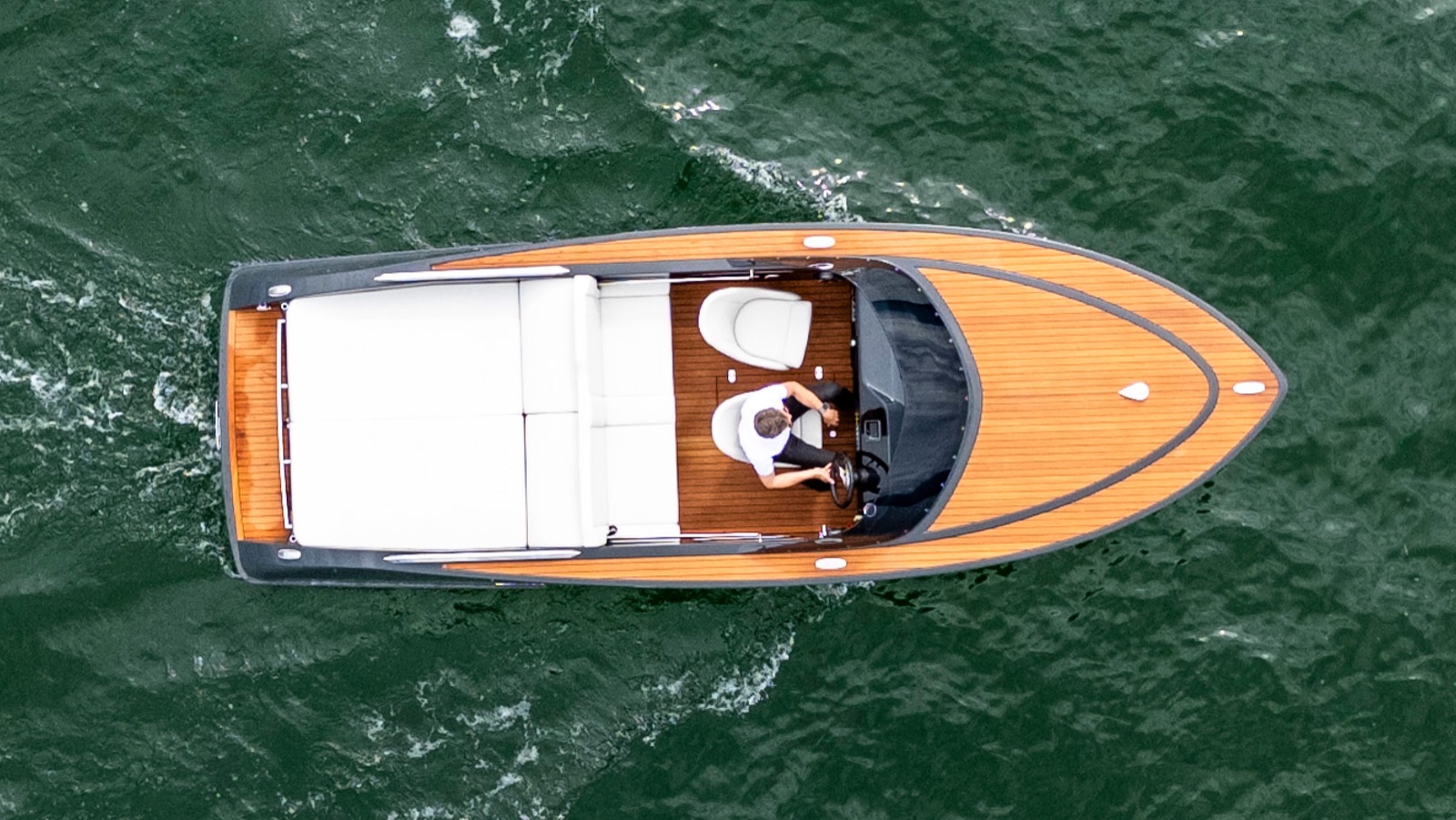
The yard’s whole philosophy rests on the day boat, a boat with no berths for the night, built for hours, not days, with open deck space, seating for a group, a swim platform, short crossings, and a return in the evening to the mooring it left in the morning. That pattern of use is what makes electric propulsion sensible here. A day boat rarely needs a cruiser’s range, and it spends its life in the places where engine noise is least welcome.
Marian calls itself a family business, and the menu on marianboats.at lists nine models, from the 5.80 m Eclipse 580 up to the M 800 and its variants. The M 800 is made by hand, the model page says, with colors, accessories, materials and equipment that can be customized for each buyer. The owner gets a real say in the details, and a boat that is not on every mooring in the harbor. The model pages name no build slots or lead times. Have the delivery date written into the quote before you sign anything.
In recent years the brand has also moved further into outright luxury, and the limited series built with ABT Sportsline shows it most clearly. ABT is known for customized Audi, VW and Lamborghini cars. In November 2025 Marian said the partnership was in its third consecutive year. Frauscher, another Austrian yard, has taken a similar route with its Porsche partnership.
Marian on the water
The yard’s own photos and the full lineup are on marianboats.at ↗
Why pure electric
Building nothing but electric boats is, first of all, an engineering decision. Nothing in this range is a gasoline design with a battery pushed into it afterwards. Draw a boat for battery power from the beginning and weight distribution, deck layout and hull shape all follow from that choice. The drivetrain stops being a compromise and becomes the starting point.
For a day boat meant for lake use, this matters twice over. Nobody is asking how far it can push across open sea; what counts on a lake is the quality of a calm day on the water.
The first thing anyone notices is the quiet. No engine drones under the deck, no exhaust drifts across the cockpit. What reaches the ear is the wake and the shoreline, conversation carries at normal volume, and nobody swimming off the stern is breathing fumes. Power also comes in evenly, with little vibration and no lag, so maneuvering is more predictable. Docking in particular gets easier, because thrust arrives the instant you ask for it and not after a gearshift and a rev climb.
A good deal of routine servicing disappears. No oil changes, no fuel filters, no end-of-season ritual built around an engine, and far fewer moving parts to wear out. In their place comes another sort of attention, aimed at battery care, cell health over the years and the electronics that manage the pack. This is different work rather than more of it, and most of it happens on a schedule you can plan around.
An electric boat is still not free to run; what changes is how it runs. Charging access, shore power at your berth and the weight of the boat shape daily life with it at least as much as the peak output figure does. Work out early how and where you intend to use it. Those two answers decide the battery package you order and the shore power you need in place at your berth before the boat arrives.
The models
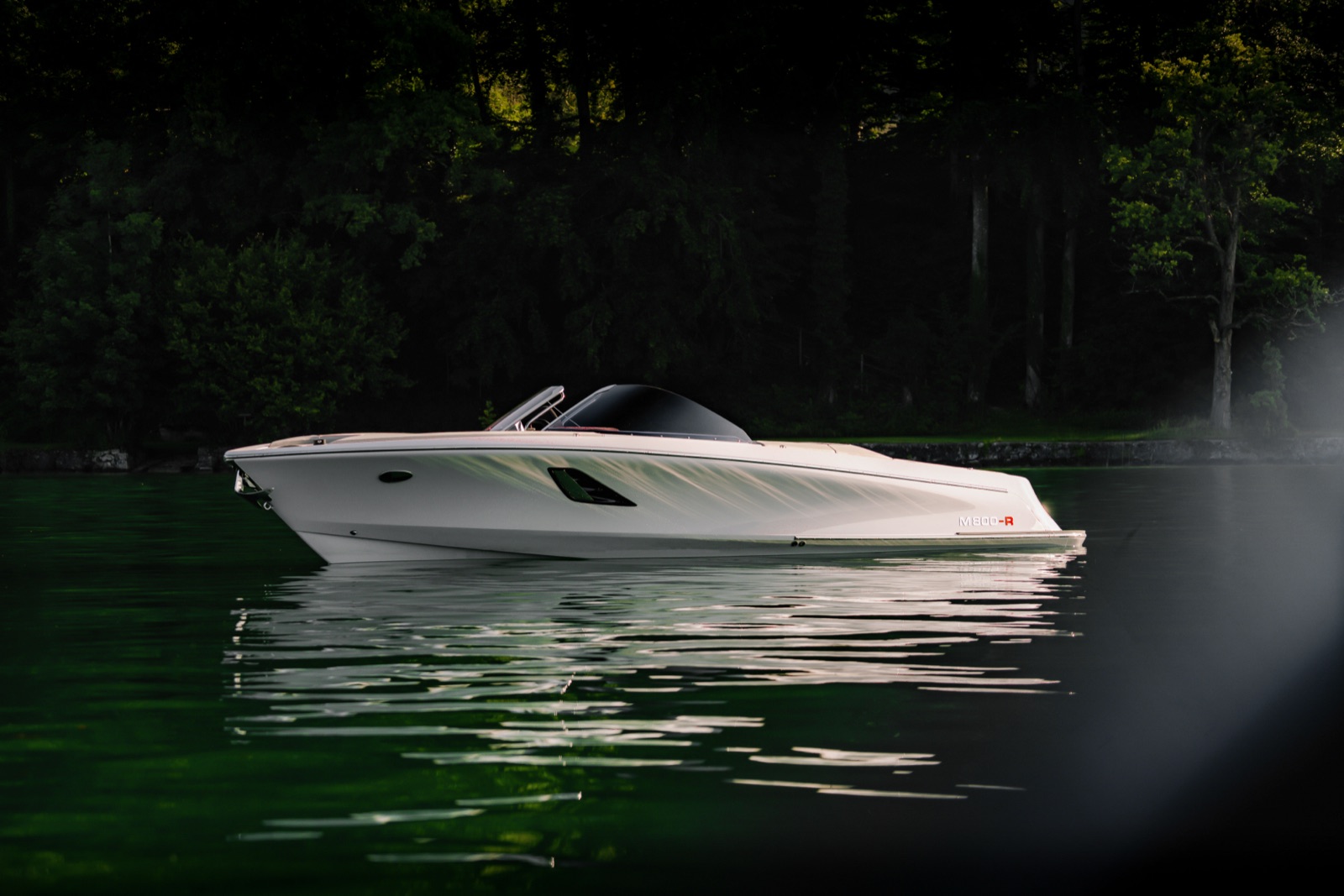
At the center of the range is the flagship M 800, a pure-electric day boat with clean Austrian design. Both language versions of the model page carry a price. The English page on marianboats.at prints “from” and the German one “ab”, followed by €226,000 excluding VAT, read on 5 October 2026. Standard equipment, according to the 2026 equipment list linked from the page, is an 80 kW motor with a 63 kWh battery and a charger of up to 22 kW. That list prints no prices. Ask whether the starting price covers the package.
Configuration matters a great deal here, and the yard’s own figures do not quite agree with each other. The box at the top of both language versions of the M 800 page promises 73 km/h, 220 kW and 126 kWh, and both spec tables list motors of 80, 120, 160 and 220 kW. On the battery they part ways. The German table stops at 126 kWh, while the English one reads up to 220 kWh, a figure found nowhere else on either page. The range calculator on that same model page still offers lithium packages with motors of 60 to 150 kW and up to 125 kWh, and the 2026 equipment list tops out at a 200 kW motor. The yard explains none of these gaps, so the website alone will not tell you which figure applies to the boat you would order.
What you finally pay is driven mostly by the drivetrain and battery you choose, the deck equipment and the level of finish. A starting price is only where the conversation begins. Have the yard or an official dealer quote the build you want, with motor and battery capacity written out in numbers.
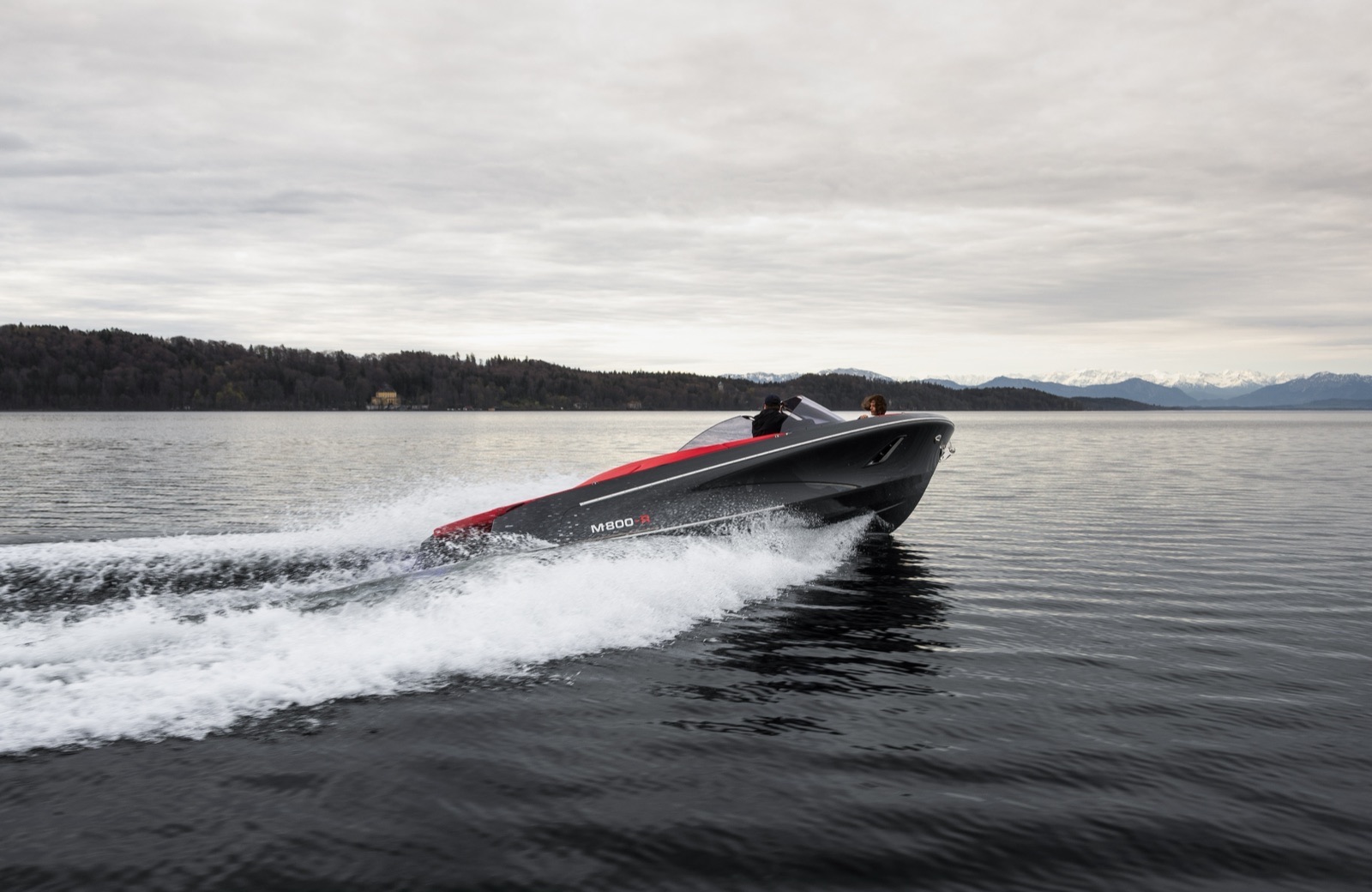
Above it sits the ABT x Marian M 800-R, a limited series of 20 units built with ABT Sportsline. The spec pages on en.abt-marian.com, checked on 5 October 2026, give it 450 kW of peak output in ABT Mode (around 600 hp), 320 kW continuous and a 148 kWh battery. ABT publishes no price for this electric sport boat from the very top of the segment, built with collectors in mind.
Keeping the run small sends a message of its own, and the M 800-R is not simply the quicker boat but a collector’s item, where rarity and exclusivity weigh as heavily as output, and ABT gives the run as 20 units worldwide, a number fixed in advance as with any capped series.
Keep the peak output in perspective, because a headline number is not a description of daily use. Hours afloat are mostly spent using a fraction of it, and how a boat behaves at cruising speed matters far more than what it does flat out. For most buyers the M 800 remains the realistic choice of the two. The brand itself starts far lower, with the Eclipse 580 listed from €41,000 excluding VAT (read on 5 October 2026).
Swipe sideways to see all columns
| M 800 | ABT x Marian M 800-R | |
|---|---|---|
| Positioning | Pure-electric premium day boat, the brand's flagship | Limited luxury series with ABT, strictly capped numbers |
| Motor power | 220 kW in the headline box; 80, 120, 160 or 220 kW in both spec tables; lithium packages of 60 to 150 kW in the range calculator | 450 kW peak in ABT Mode (around 600 hp), 320 kW continuous |
| Battery | 126 kWh in the headline box; up to 126 kWh in the German spec table, up to 220 kWh in the English one; 63 kWh as standard in the equipment list | 148 kWh |
| Price bracket | from €226,000 excl. VAT on both the English and the German model page | not published |
Charging and range
With an electric boat, range is the question everyone asks first, and no single number answers it. Speed, load, wind and waves set how far you get, and so, of course, does the battery package you specified. Fortunately, a real day out rarely looks like a range test. A typical one means short legs, a lot of time at anchor, a swim, lunch and then moving on again.
Electric propulsion is at its best in that unhurried rhythm with plenty of stops. Cruising at an easy pace uses far less of the battery than holding full throttle for long stretches. Afloat the gap is wider than on the road, because drag climbs steeply once a hull is pushed hard.
Charging also works differently than it does with a car. Topping up usually happens at the berth, once the day is done or between two outings, and seldom somewhere along the way, even though the M 800 equipment list offers a CCS port for charging at up to 120 kW. Owners who keep the boat plugged in where it lives largely stop thinking about charging, provided the berth can feed the charger of up to 22 kW that the list names as standard.
A pure-electric boat charges ashore, on the harbor’s infrastructure, and buyers overlook that more often than they should. So check the electrical supply at your home berth while you are still choosing a boat. A dock pedestal sized for a kettle and a fridge will not do the job, and upgrading the supply at a marina is not something that happens quickly. Ask for concrete range and charging figures for the configuration that interests you, along with the charge time on the supply you will be using, not on an ideal one.
What to check before you buy
Anyone drawn to a Marian, or to a premium electric day boat in general, should settle a handful of questions early. None of them point to a weakness of the boat, but together they are the decisions that determine what owning the boat is like after the first few weeks.
- How you will use it: short trips and swimming days on sheltered water, or longer and faster runs as well? That choice points you to a motor and battery package. Both M 800 spec tables list motors of 80, 120, 160 and 220 kW, and the 2026 equipment list names 80 kW with 63 kWh as standard.
- Berth and charging: is there reliable shore power where the boat will live, and can you charge comfortably at the end of a day out?
- Service and parts: Marian is a family business that builds each M 800 by hand. So ask how support, warranty work and parts supply are handled in your region before you buy, and who the nearest authorized service point is. With a low-volume builder, distance from the factory matters more than it does with a volume brand.
- Storage and the off-season: plan for craning the boat out at the end of the season, for winter storage, and for the conditions the battery needs during the months the boat sits idle.
- A trial run: get on board before you decide. On the water, size, comfort and maneuverability come across completely differently than they do in a brochure.
- Local regulations: licensing, registration, insurance minimums, speed limits and how close you may run to swimmers all differ by country and often by individual lake or stretch of coast, and they change. Check the current rules for your water before you commit to a boat.
Beyond the purchase price of an electric day boat, weigh the total cost across the years you plan to keep it. The drivetrain is simpler, there are fewer parts to wear and there is no fuel bill, and that shows up mainly in the running costs. Over a longer horizon, battery condition and onboard electronics are what count. With a premium brand, careful maintenance, a complete service history and a well-judged specification also do a great deal for residual value.
A Marian is really about how you spend your summers, and getting across the water is the smaller part of it. The best decision comes from being honest with yourself about how many days you will be out there, and in what style.
The paperwork comes last. Ask for the exact technical data in an official quote, and check the current registration and licensing requirements for the water you plan to use. Similarly sized electric day boats built for lake work also come from Alfastreet in Slovenia, now trading as Alfastreet Yachts at alfastreet-yachts.com; its old domain, alfastreet-marine.com, was forwarding to a GoDaddy domain sales page on 5 October 2026.
Where a Marian fits
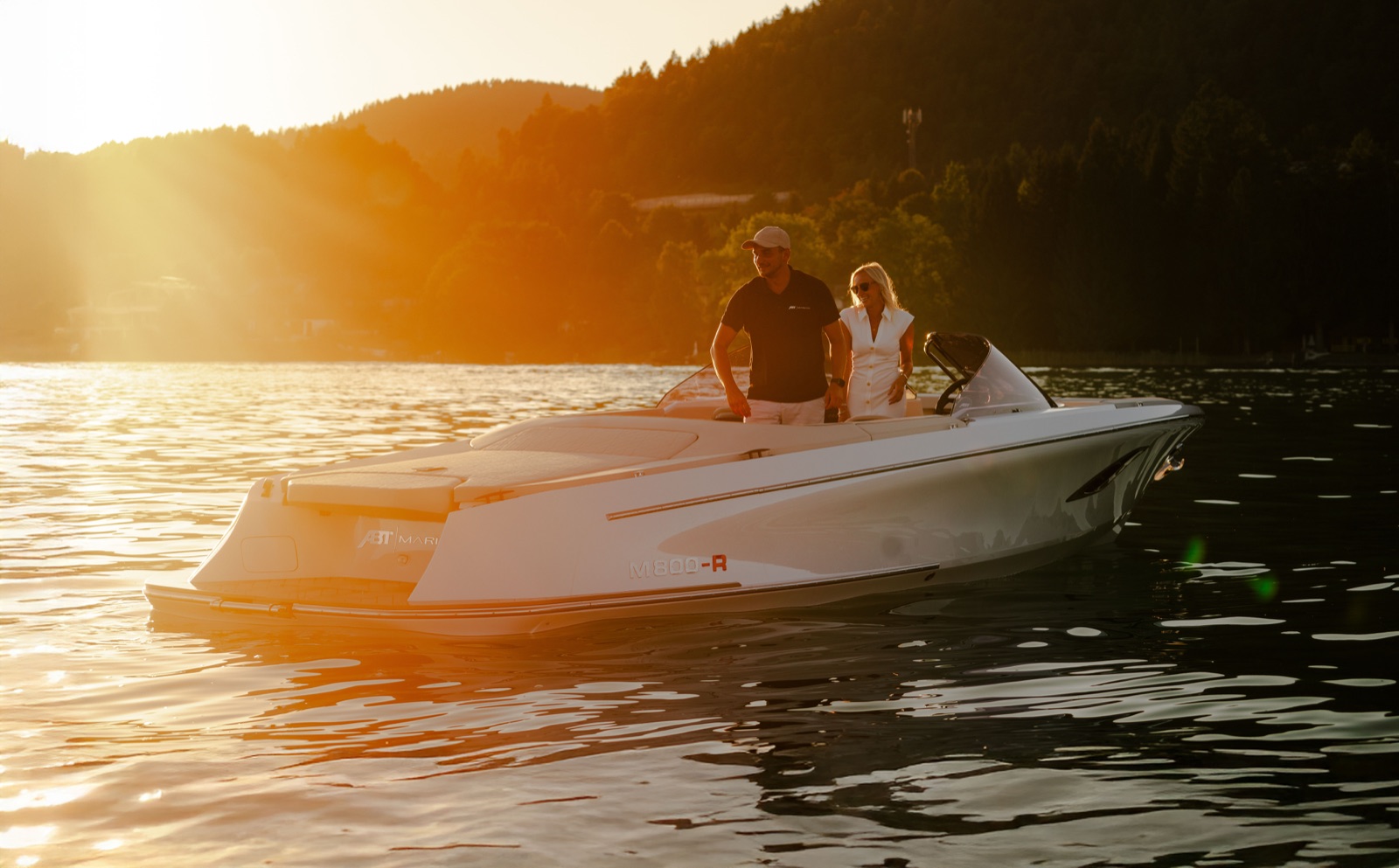
Lakes are this brand’s natural home, which is hardly a surprise given where it comes from. The boats are the classic day boat size for a day on the water, and the yard conceived them for places where combustion engines are heavily restricted, and a great many inland lakes and reservoirs around the world fit that description. On such water, quiet electric propulsion is no longer a niche preference but the ticket in. Our electric boat guide covers the wider market, the brands and the questions a buyer should raise. Much of what works on an alpine lake carries over to a reservoir or a wide river. As for salt water, Marian’s M 800 page says nothing about it, while the ABT site lists saltwater resistance among the additional highlights of the M 800-R, so ask the yard what a coastal berth requires.
To experience a boat like this in person, ask dealers who specialize in premium electric boats. Many of them carry several European brands side by side, and Marian’s own site has a form on the M 800 page for booking a test drive. For something more futuristic still, look at hydrofoil boats, which lift the hull clear of the water altogether.
An ordinary summer day might go like this: slide quietly into a bay in the morning, drop the anchor, jump in, run across for lunch and come back into the sunset with no engine noise and no exhaust. An electric day boat is designed around that day, and modest distances at an easy pace suit its character. Local authorities set the rules, though, and the rules do change, so check registration and the current requirements for your own water before you cast off.