What is a hydrofoil?
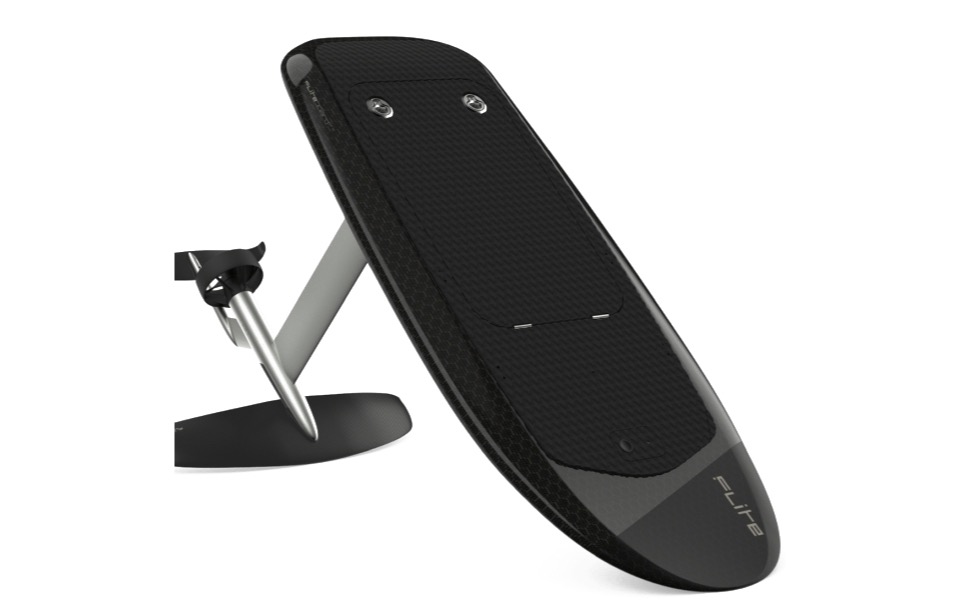
Put a wing under the water, fix it to the bottom of the board with a mast, and you have a hydrofoil, or simply a foil. It works on the principle of an airplane wing. As soon as the medium flows around the wing profile, you get lift. Only the medium itself is different. Here it is water, not air, and because water is many times denser, a little speed is all it takes for serious lift.
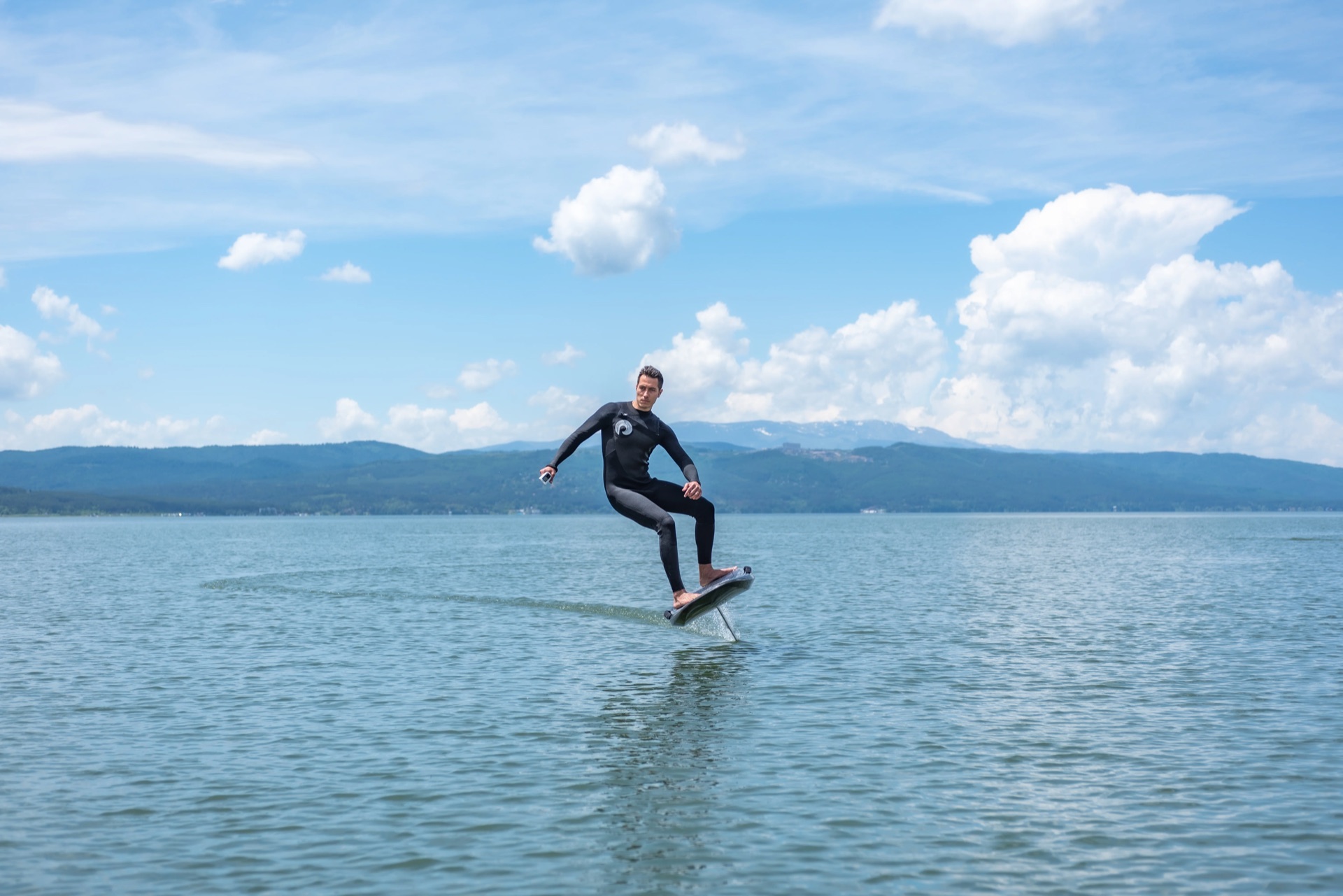
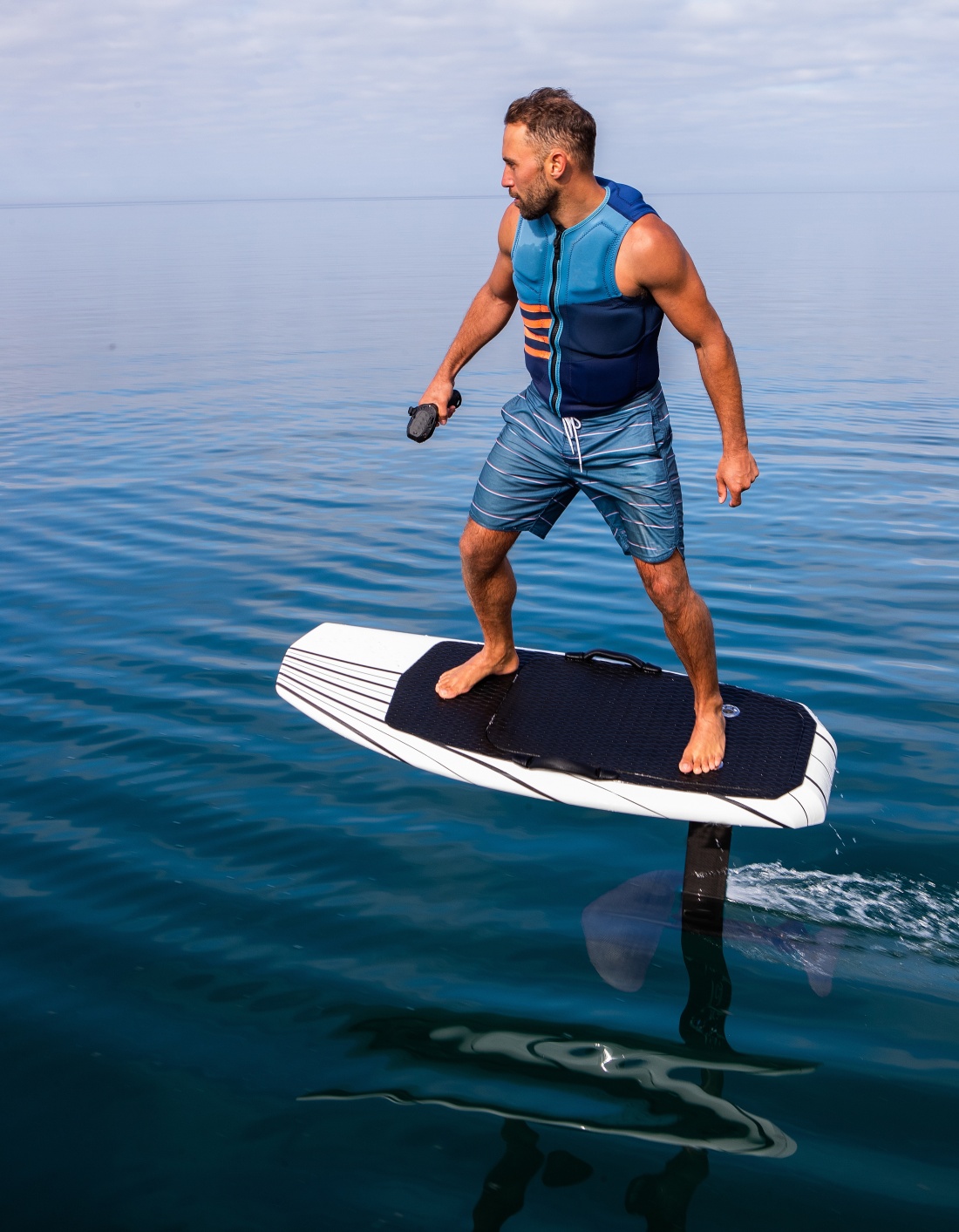
As the foil board accelerates, lift builds. At some point there is finally enough of it and the hull rises out of the water, leaving only the slim mast and the wing below the surface. The wetted area shrinks to a fraction and drag collapses dramatically. That instant when the board “takes off” gives foiling its flying sensation, and it feels unlike anything else you can do on the water.
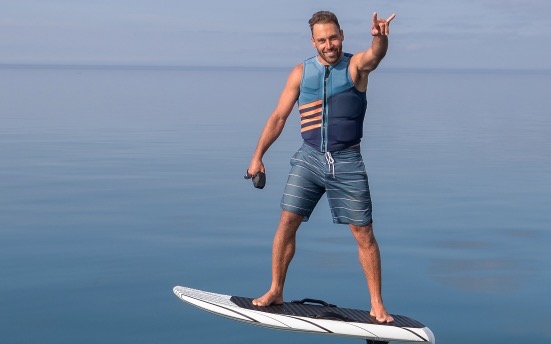
A quiet summer afternoon at the lake. There is a light ripple on the water, sailboats drift in a lazy breeze, and suddenly someone glides past, seemingly hovering above the surface. The board never touches the water, you hear almost nothing, and the wake stays nearly invisible. Most people watching for the first time assume there must be a trick to it. There is none. From the shore it looks like magic because the part that makes it work, the wing below the surface, is the one part you cannot see from there.
The terms trip a lot of people up at first. Strictly speaking, hydrofoil refers only to the wing under the water. In everyday use the complete unit of wing, fuselage, and mast is called a foil, and foiling is the umbrella term for every sport built on that wing. Below we look at the technology itself, how it works, the disciplines you will meet it in, and what to expect when you want to try it.
How a hydrofoil works
Four main parts make up a hydrofoil. The front wing delivers the lion's share of the lift. The bigger its area, the earlier it takes off and the more calmly it carries you. Behind it sits the stabilizer, the rear wing, which keeps the system in balance much like the tail of an airplane. A fuselage joins the two, and the mast, usually between half a meter and a full meter long, couples the whole assembly to the board.
You control ride height with your body, not with buttons. Move your weight back and the board climbs; lean forward and it settles back toward the surface. It sounds more complicated on paper than it feels. After a few hours on the water it turns into a reflex, much like balancing on a bike, and at some point you stop thinking about it and just do it.
Every foil also has an operating window, and you can clearly feel it. Go too slow and the lift runs out, so the board settles back onto the water. Let it climb too high and the front wing breaks the surface, the lift cuts out abruptly, and the board plops back down. The typical beginner “porpoising,” that up-and-down of the first flights, is nothing more than the search for this window. After a few practice runs it smooths out on its own.
Wing geometry follows from that principle. A larger front wing lifts off at low speed and carries you in a relaxed, predictable way, so almost everyone learns on the bigger wing. The smaller one is faster and more agile, but it reacts to every tiny movement. Mast length is a matter of the same tradeoff. A shorter one is easier to learn on, because you don't have as far to fall and the setup is less tippy. A longer one gives you more room in choppy water, so the wing stays below the surface throughout. If you have to pick a front wing, this is how the two sizes compare:
Swipe sideways to see all columns
| Criterion | Larger front wing | Smaller front wing |
|---|---|---|
| When does it lift off? | even at low speed | demands more speed |
| Ride feel | calm, predictable | reacts to every small movement |
| Agility | more leisurely, wide arcs | quick, playful direction changes |
| Best for | learning and relaxed cruising | advanced riders with an appetite for speed |
The silky feel has a simple cause. The wing works in calm water below the surface while you glide above the waves, not on them, and ripples and small chop slide harmlessly past the mast. The board no longer bangs against the water or rattles under your feet, and the ride turns smooth and quiet.
Your first flight and how learning goes
Whichever foil discipline you start with, the first sessions follow much the same script. We describe it with the eFoil, since it is the most comfortable way in and needs neither wind nor waves, but the order of the steps holds everywhere. You get used to the board, then to the speed, and only at the very end to flying.
You spend the first runs lying down, learning how the board responds to throttle and how to keep enough weight forward that the nose stays down, parallel to the water, as you accelerate. Kneeling comes next, and then, carefully, standing up, still gliding on the water without flying. Once all of that feels stable, the real moment arrives. You shift your weight gently back, and the board lifts off.
The first flights typically last only a few seconds. The board rises, you get startled, you lean forward on instinct, and the board touches down again. Nothing has gone wrong. It is a natural part of the process, and it is how your body learns where the wing's operating window sits. Bit by bit you stretch the time in the air, until one day you catch yourself flying long, even arcs. These are the most common beginner mistakes to steer clear of:
- You stand up too early. The prone and kneeling runs feel boring, but they build the stability you will need on your feet.
- You pick shallow or rocky water. The mast reaches deep below the surface, and if the wing hits the bottom, you and the gear can both take damage.
- You practice close to other people. As a beginner you fall unpredictably and the foil is sharp, so keep plenty of distance from swimmers and other water users.
- You bail out forward when you fall. Always throw yourself sideways or backward, as far from the foil as possible, never toward the nose of the board.
- You stand stiff with locked knees. Bent knees are your shock absorbers, and without them every little wobble builds on itself.
- You stare at the nose of the board. Keep your eyes on the horizon, the way you would on a bike, where you never watch the front wheel. The moment you look up, your balance improves.
Turns are the second half of learning, and they begin once you can reliably fly a straight line. Start with wide, shallow arcs. Look in the direction you want to go, let your shoulders and hips follow your gaze, and press gently with your foot on the inside of the arc. Because the foil responds to every small weight shift, less is more in a turn, so skip the abrupt moves and work your way up step by step. For many riders the first fully flown turn is a bigger moment than the first takeoff.
Never skimp on a helmet and an impact vest. As a beginner you are guaranteed to fall. If you can, also treat yourself to a lesson, because with a good instructor you learn not only more safely but noticeably faster.
The foil sports
By now almost every watersport has grown its own foil variant. Underneath, they all ride one kind of wing. What sets them apart is the thing that powers the board.
The eFoil is the most comfortable entry point. An electric motor drives the foil, so you need neither waves nor wind, and you fly at the push of a button, even across a mirror-flat lake.
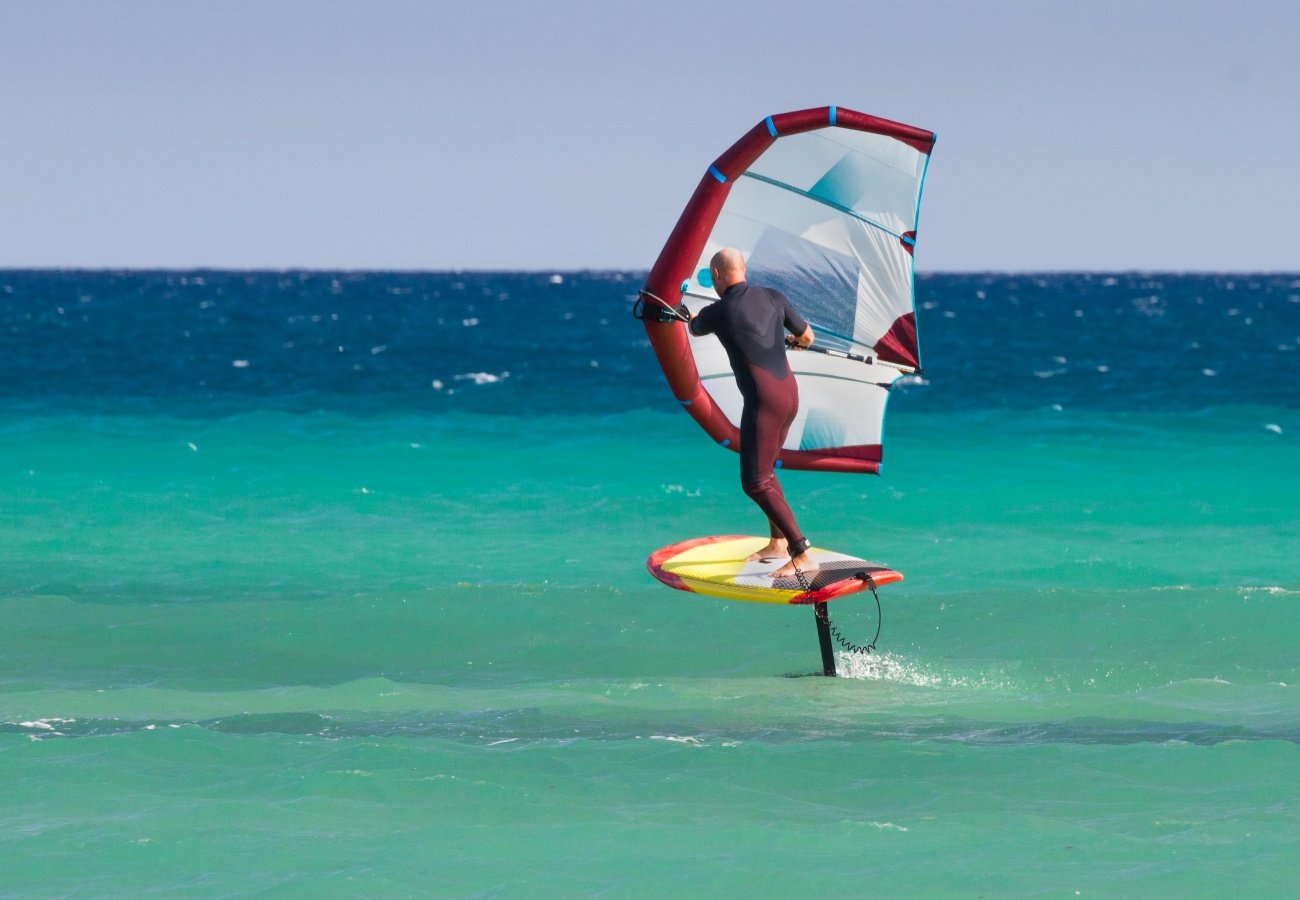
Wingfoil ranks among the fastest-growing watersports of recent years. You hold an inflatable wing in your hands to catch the wind, and in a moderate breeze the foil lifts you above the surface.
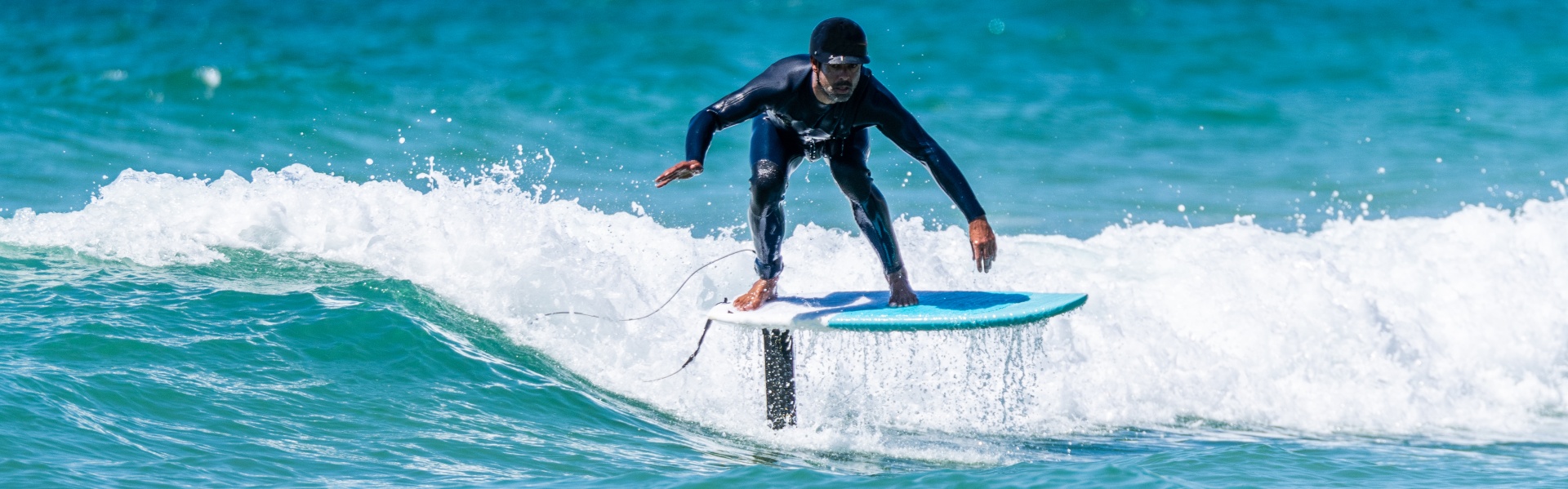
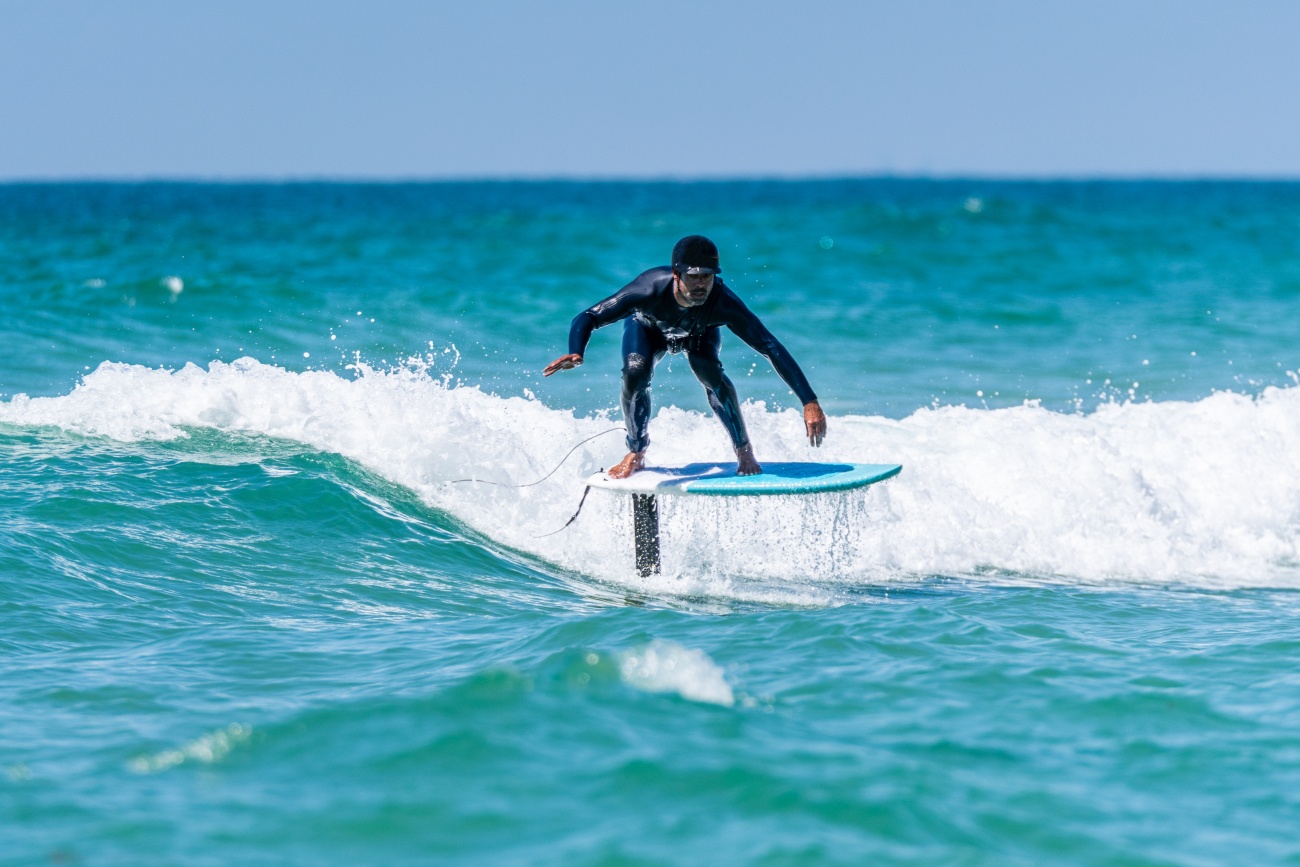
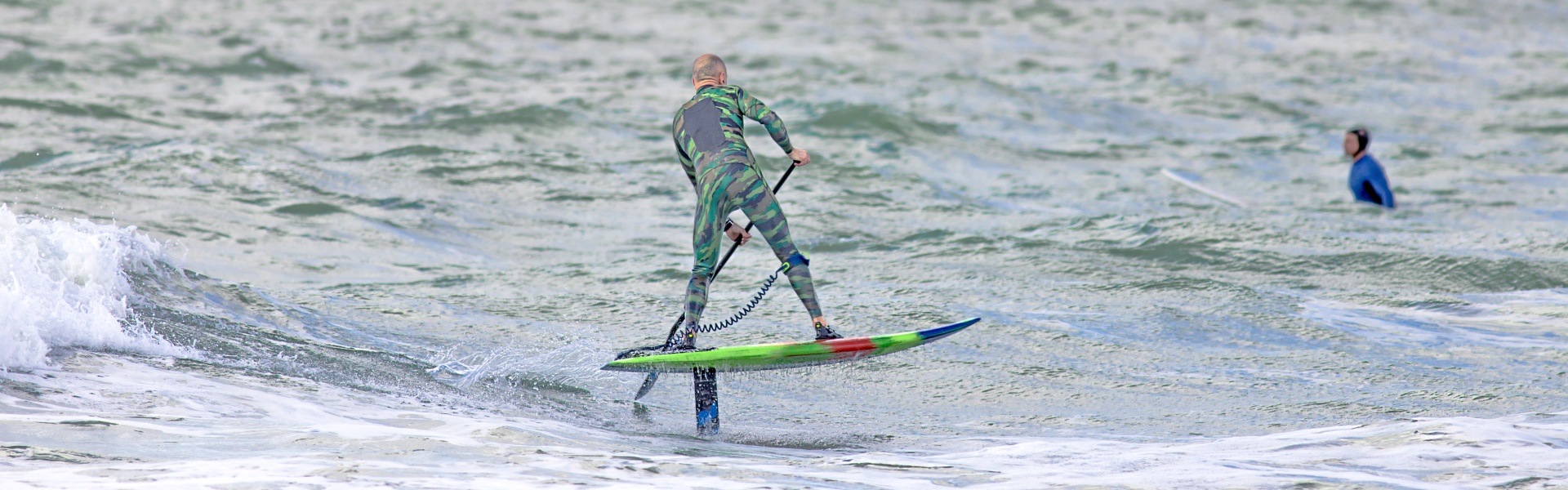
Surf foiling is the foil branch of wave riding. With a foil, tiny, unbroken waves that a classic surfboard could never catch become rideable too.
SUP foiling brings the foil to stand-up paddling. You accelerate with the paddle, and then the wing takes over the work. Downwind foiling on open water, gliding with the wind across the swell, grew out of it.
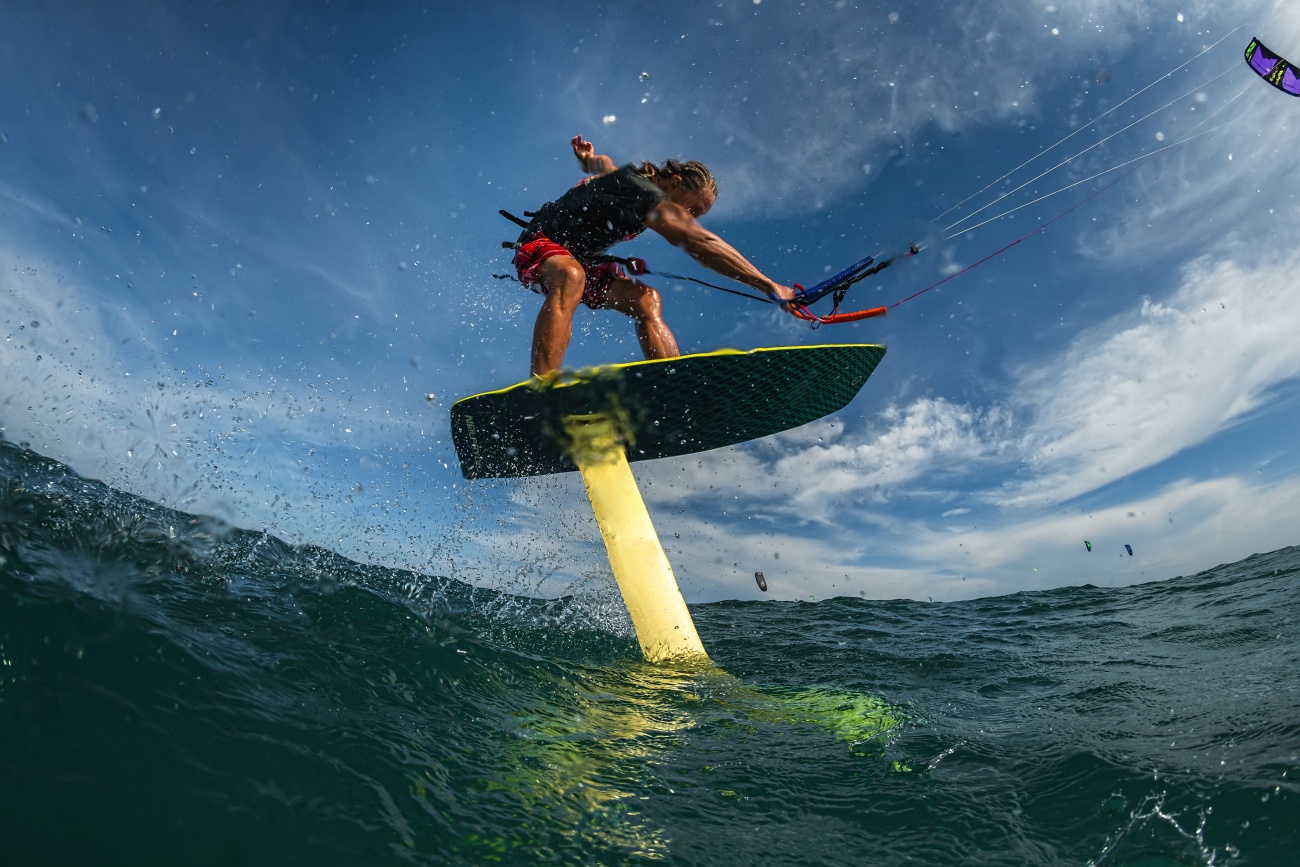
Kitefoiling is kitesurfing on a foil. It gets you going in lighter wind, and its racing class is now an Olympic event.
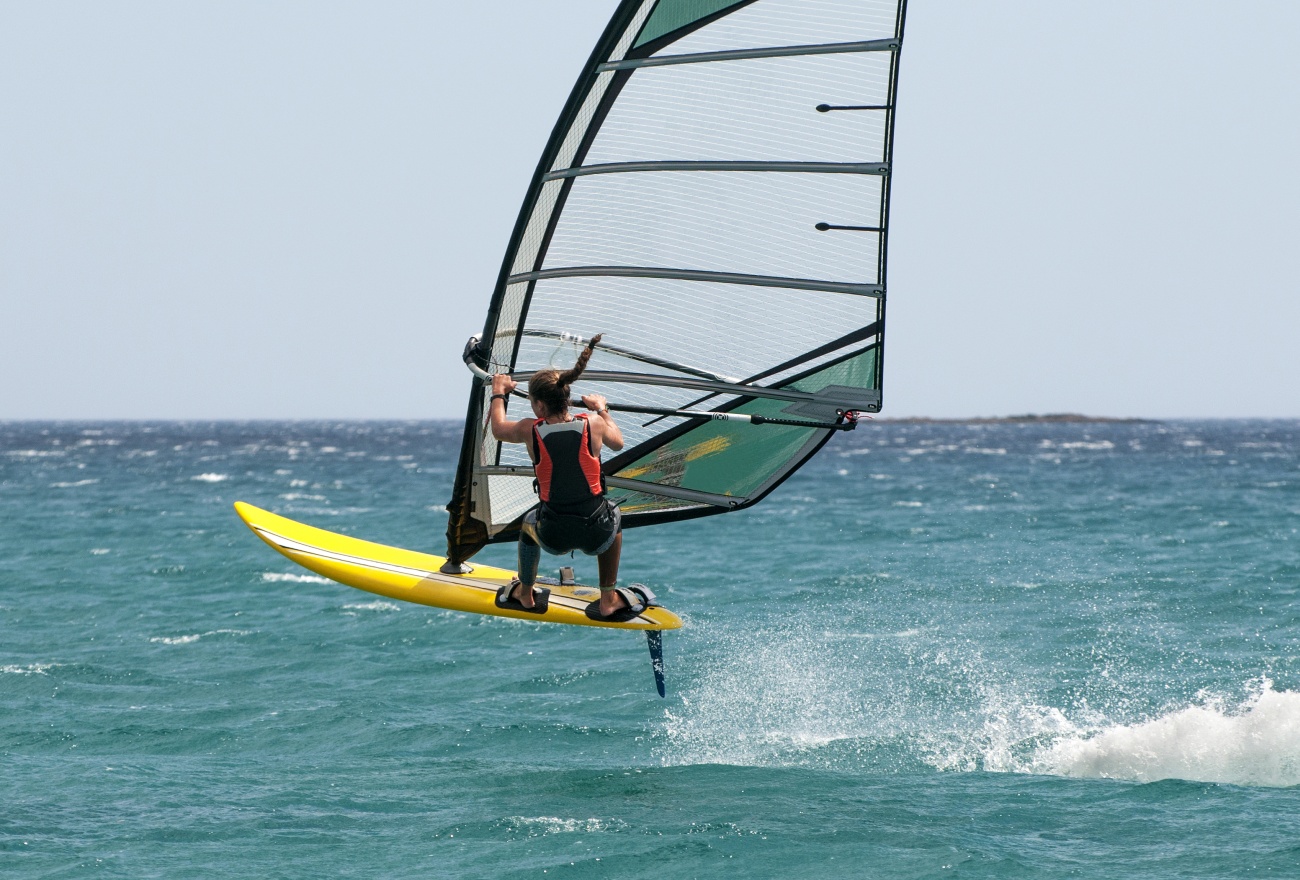
Windfoiling rethinks classic windsurfing. The sail stays, but the foil gets the board gliding in a breath of wind that would leave a conventional windsurfer bobbing in place.
Here are the six disciplines at a glance. Since the wing underneath does not change, what separates them is the power source and the experience each one asks of you:
Swipe sideways to see all columns
| Sport | Power source | What do you need? | Ideal for |
|---|---|---|---|
| eFoil | electric motor | a charged battery; mirror-flat water is enough | complete beginners, quick early wins |
| Wingfoil | handheld inflatable wing | moderate wind | athletic beginners and intermediates |
| Surf foil | the energy of the wave | waves and solid surfing skills | experienced wave riders |
| SUP foil | paddle and swell | good balance; SUP experience helps | SUP riders and downwind adventurers |
| Kitefoil | kite | wind and kite basics | experienced kiters |
| Windfoil | windsurf sail | windsurfing basics; light wind is enough | windsurfers |
Which foil suits you?
Your sports background is the best place to start. If you already ride some kind of board, stay in your lane. For a surfer, surf foiling is the natural next step; for a windsurfer it is windfoiling, for a kiter kitefoiling, and for a SUP rider SUP foiling, because that is where your existing reflexes pay off most. Starting from zero, you have two paths that stand out. One is the eFoil, where most people are flying steadily after a few hours. The other is wingfoil, which asks for more patience but eventually rewards you with rides on wind power alone, no motor involved.
Next, take a look at your home waters. On an inland lake the wind is often light and real waves are rare, which is where the eFoil and the windfoil feel most at home, with wingfoil joining them on days with a moderate breeze. Turning light wind into real gliding is precisely the foil's strength. Surf foiling and downwind SUP foiling live on swell, so they play to their strengths on coastal trips or large, open water. For anyone starting from zero on flat water, that leaves the eFoil and wingfoil as the two usual ways in.
Last, ask yourself what you expect from the sport. If calm, meditative gliding appeals to you, and you want family or friends to be able to give it a try at any time, the comfort of the eFoil is unbeatable. A sport you can grow in for years (more wind, higher jumps, longer runs) points to the wind-powered disciplines, which offer more of a challenge. There is no wrong choice here. All the disciplines build on the same underwater wing, and a large share of your skills carries over if you switch later.
Foiling is not for everyone, and it is fair to say so openly. A foil's draft makes it the wrong choice if you only ever want to stay in shallow water right off the beach. If you cannot accept any learning curve, every discipline except the eFoil will disappoint you, and even the eFoil takes several hours of practice. Anyone who considers protective gear unnecessary should work on that attitude first. The sharp wing demands respect, and that respect is what keeps the sport safe.
Where can you go foiling?
Scenery does not make a good foil spot. Four practical criteria do. You need enough depth along your entire planned route, not only at the entry point, because the wing works deep below the surface. The bottom has to be clean, since rocks, pilings, and thick weed are the wing's natural enemies. Traffic on the water should be light: the fewer swimmers, anglers, and boats around, the more freely you can practice. Finally, you want a comfortable way in and out, a shore where you can carry the board and foil into deep water without banging anything up.
Water like that exists in more places than you might think: large lakes with open stretches, calm coastal bays, wide and quiet river sections. These types differ in character. Sheltered flat water is kind to your first attempts, and open coastlines add wind and waves and ask for a bit more experience. Wherever you ride, treat shallow shore zones with caution and stick to the deeper areas. The rules for foils also differ by country and even from lake to lake, so check your local regulations before the first session.
On a body of water you don't know, ask locals before you head out. Nobody knows the bottom, the weed fields, and the busy corridors better. For your first attempts, renting at an established spot is the simplest route in any case, and the local knowledge comes included with the gear.
Safety and etiquette on the water
How safely you foil is largely decided on land. Run through this short list before you start:
- Check the water depth. In most cases the mast reaches between half a meter and a full meter below the surface. Add a generous margin for falls, along your entire route.
- Check the weather. The foil glides even in light wind, but when the wind freshens or a storm builds, you need to head for shore in good time like everyone else.
- Choose an empty patch of water. Avoid marked swimming areas and keep well clear of swimmers, anglers, and other riders.
- Dress for the conditions. Helmet and impact vest, always; in colder water, add a wetsuit.
- Don't head out alone on unfamiliar water. At the very least, make sure someone knows where you are and when to expect you back.
Out on the water, one simple rule of etiquette covers it. The foil is fast and nearly silent, so others will not hear you coming, and giving way is always your job. Pass slowly and in a wide arc around swimmers, rowers, and fallen riders holding onto their gear. None of these routines argues against the sport. Foiling asks for more care than an ordinary board, as we said at the start, and these habits, ideally learned under instruction, are what keep the risk manageable and the fun intact.
Why so many people love the sport
In only a few years the foil has turned the watersports scene upside down, and the reasons are easy to name. Speed from little power comes first. With drag at a minimum, the foil pulls noticeably more speed out of a given wind, wave, or motor output than a conventional board. A weak breeze or a small wave is now enough to get you gliding in conditions that held too little energy before.
The ride is also smooth. The hydrofoil board flies above ripples and small chop, so even a choppy lake rides as if the surface were flat. It is quiet, too: no slapping, no spray, only the soft rush of the wing under water. Once you have felt that smoothness and that silence together, it is hard to go back to classic boards.
Another reason gets talked about less. Foiling is training and recovery in one. The constant balancing works your core and leg muscles without you quite noticing, and flying demands so much presence that everyday thoughts fall silent. Plenty of riders come back to the water not for the speed but for that half hour in which only the water, the wing, and the next arc exist.
The full picture includes the flip side. A foil is sharp and hard, so it calls for protective gear and plenty of distance from others. Its draft makes it pickier about spots than an ordinary board, and the material is more delicate, which means watching the edges and the profile. All of the disciplines have a learning curve, even if its steepness varies a lot from one to the next. Accept those few conditions and you get a way of riding the water that few other sports can match. It is the reason so many riders end up making the switch.
How to care for your foil
A hydrofoil is a precision instrument, and its performance depends on the wing's profile and edges staying intact. A chipped edge or a loose connection is more than a cosmetic issue. It disturbs the flow, and you feel it in the stability right away. Care itself is not complicated. What it demands is consistency:
- Rinse the foil with fresh water after every session. After salt water this is mandatory, because salt attacks the screws and connections first.
- Check the screws regularly, but don't overtighten them; the threads and the material won't thank you.
- Transport the wings in covers. The edges are the most vulnerable spots, and a knock in the trunk chips them just as surely as a rock in the water.
- Never lay the board foil-down on hard or rocky ground. On shore it always rests with the foil up.
- Have minor damage repaired early, before water works its way deeper into the material.
After any impact, take a closer look. If the wing has hit the bottom, a rock, or the dock, run a finger along its edges before the next session and look at the connections between mast and board and between wing and fuselage. A small nick is easy to fix. A cracked connection gives way out on the water under load, which is a far worse moment to find out. When the foil flies rougher or louder than usual, a nick and a loose joint can both be the cause, so check the wing edges and every screw and connection. Find the cause first, then get back on the water.
In most climates even the finest season comes to an end. That is when you take the foil apart, clean the connections, and store everything dry and out of direct sun. In spring, before your first session, you run that checklist in reverse (screws, edges, connections), and your foil flies as if you had packed it away yesterday.
Foils on boats
The wing under the water did not start out under boards. The technology comes from shipping, where it became famous as the hydrofoil boat. Among the legendary examples are the passenger hydrofoils that ran the Danube between Vienna and Budapest for decades. Today that principle lifts the America’s Cup racing yachts above the water, along with the new generation of electric foiling ferries.
So the underwater wing was born on ships, boards turned it into an experience anyone can have, and right now it is finding a new purpose in electric shipping, where low drag means range and quiet as well as fun. One principle now carries racing yachts, passenger ferries, and boards alike. You can fly on one yourself or watch the show from shore.