What drives the price of an eFoil?
A handful of tangible factors set the price of an eFoil. The batteryis one of the biggest. A large, waterproof pack accounts for a hefty share of the board's price all by itself, although at several brands the drive unit or the board on its own costs as much as the pack or more. More capacity buys more time on the water and leaves a bigger dent in your wallet.
The board's construction comes next. Carbon is lighter and stiffer than fiberglass or plastic, and it costs more. Then there is motor power and drive type, the prestige and service network behind the brand, and the accessories that ship in the box, meaning wings, charger and bag. Two boards that look alike from the outside can sit far apart on price once all of that is counted.
When you're getting ready to buy, rank these factors before you look at a single offer. As a rule of thumb, they read like this:
- The battery decides how long you can ride in one stretch. Because it's one of the priciest parts in the set, it also decides much of the final price.
- A carbon board pays off mainly for sporty, experienced riders. For learning, the tougher, cheaper build is often the more sensible choice.
- A stronger motor is faster and carries heavier riders. As a beginner you'll rarely use its peak output.
- Good service pays off over years. A workshop you can reach and a dependable supply of spare parts can be worth more in the long run than a few percent off the price.
- Pay close attention to what's in the box. If the charger, the bag, or a second wing are separate line items, the total climbs quickly.
Never compare just the bottom line of two offers. Compare what's inside them, because a package that looks pricier at first glance can turn out to be the better buy once the accessories are counted in.

Price tiers: entry-level, premium, used
Prices shift with model and configuration, so think in ranges and don't hunt for exact price tags. Broadly, the market sorts itself into three tiers. Between entry-level and premium sits a middle band, home to Waydoo's Flyer EVO Master, Fliteboard's inflatable AIR and SiFly's carbon Stellar sets.
Read a manufacturer's price list with care. Most brands advertise the base configuration, which means one particular board, one wing and one battery. The final price of that model can climb considerably with a bigger battery, the carbon version or several wings. So when you compare prices, always price out the configuration you would realistically ride, not the cheapest base set on the price list.
Swipe sideways to see all columns
| Tier | Typical price range | What you get |
|---|---|---|
| Entry-level eFoil | roughly €5,000 to €7,500 | Dependable base equipment and simpler materials; plenty to discover the sport with |
| Premium eFoil | about €10,000 to €15,000 | Often carbon construction, a more refined ride, mature service network |
| Used eFoil | well below list price, depending on condition | Cheaper way in than buying new; battery condition is the key question |
For someone just getting to know the sport, entry-level is almost always enough. These boards fly just as well, feel stable, and deliver plenty of fun for the first season or two. The premium class makes sense once you know you're staying long term and care about weight and a refined ride feel. Range alone is no reason to pay more. SiFly rates the Rider, the least expensive set it sells, at up to 120 minutes per charge, while Lift quotes up to 90 for the LIFT5. Nor does a board that several people will share have to be premium. SiFly sells the Rider +, one step up from the Rider, as the go-to option for schools, yacht charters and watersports centers. The used market can be an affordable way into either tier, provided you take the time for a thorough inspection.
These brackets are broad market averages, not exact figures. The way individual manufacturers spread across them follows a clear pattern, since each brand prices its boards to match its own strategy.
Brands and where they sit on price
At the premium end you find the American company Lift Foils, which launched the first commercial eFoil, the LIFT1, in 2018, and the Australian maker Fliteboard. Part of the Brunswick group since 2023 (Mercury Marine sits in that group as well), it builds the widest model range, from the inflatable entry-level AIR to a race board. Sweden's Awake plays in this league too. It runs its VINGA Carve eFoil and its RÄVIK jetboards on the Flex Battery, which Awake calls the only power unit on the market able to run all of a rider's boards. The Aerofoils boards come from Germany and were first sold as the Audi e-tron foil. Their enclosed jet drive works without an exposed propeller, which the maker credits with a significantly higher level of safety. Aerofoils aims several of its boards at newcomers and describes the inflatable Hyperfly as built for beginners, heavier riders and eFoil schools.
On a tighter budget, look in two directions. Bulgaria's SiFly says its eFoils are assembled in Europe. It invoices EU orders from Bulgaria, adds the VAT of the buyer's country at checkout, and gives two years of warranty in the EU, with cycle and motor-hour limits on the battery and the drive. On SiFly's own price list, read on 3 October 2026, its cheapest set, the Rider, starts at €4,999 before VAT and shipping, with the Dual Ride 1000 wing set and no board bag; other wing and bag options take it to €5,899. Buyer's guides from 2026 single the brand out for value. China's Waydoo is the other direction. Several of those guides praise the value of its boards, and one names the Flyer EVO Pro Plus its best-value pick.
Those two also make the cheapest new eFoils we know of. Waydoo's least expensive board, the Flyer EVO Lite, lists at €5,807 in its EU store with VAT already included (read on 3 October 2026). Set that against SiFly's €4,999 for the Rider with care, because the Rider price leaves VAT out: add even Luxembourg's 17%, the lowest standard rate in the EU, and the Rider costs slightly more than the EVO Lite. Our eFoil price brackets show where every other model falls.
Swipe sideways to see all columns
| Brand | Price position | Known for |
|---|---|---|
| Lift Foils (USA) | Premium | Inventor of the eFoil, with a mature model family |
| Fliteboard (AUS) | Premium | The widest lineup, from the inflatable AIR to the race models |
| Awake (SWE) | Premium | eFoil and electric jetboard on a shared battery platform |
| Aerofoils, formerly Audi e-tron foil (GER) | Premium | Enclosed jet drive with no exposed propeller, boards pitched at beginners and schools |
| SiFly (BGR) | Value focus, EU assembly | EU warranty and shipping, aggressive pricing |
| Waydoo (CHN) | Entry-level / value | Value picks in 2026 buyer's guides |
To compare the field model by model, open our eFoil comparison table. It gathers every current model in one place, with prices, flight times, and a take on who each board suits.
Premium brand or budget brand, the price ranges still hold. Entry-level sits roughly at €5,000 to €7,500, premium typically at €10,000 to €15,000. When you set a manufacturer's number against a local offer, check first whether it includes VAT. SiFly and Awake quote theirs before VAT, Waydoo and Aerofoils with tax included. On top of that come shipping, any import charges and, for a price in a currency that isn't yours, exchange-rate swings.
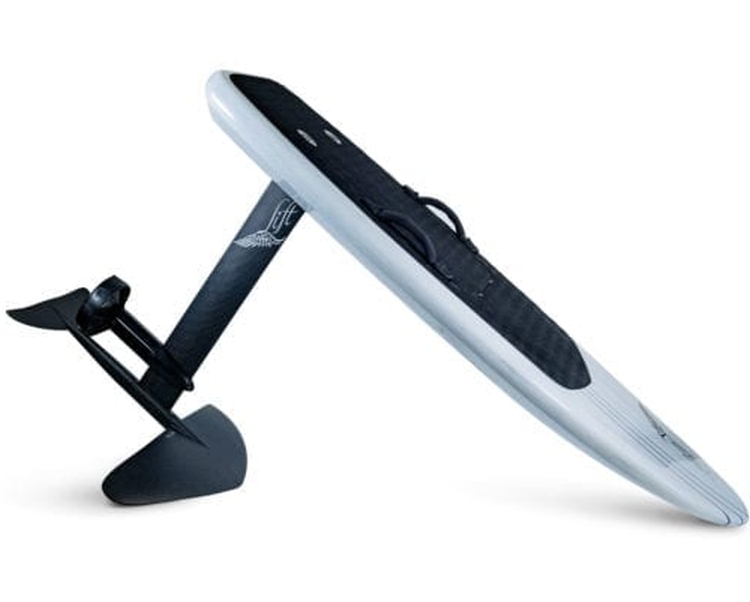
One more category belongs in the picture. Foil-assist systems are compact electric drives that help a foilboard take off, and they have grown into a segment of their own beside complete eFoils. Most of them fit gear you already ride, as a pod or a motorized mast. Australia's Foil Drive calls itself the creator of the original foil assist, and the big names have since joined in: the German-Austrian group Boards & More under the Duotone Foil Assist name, and Fliteboard with FLITELab, whose AMPJet sits inside a dedicated board. Lift's LIFTX comes at the idea from the other side, as a complete lightweight eFoil that Lift sells as powered foiling. For a buyer set on a full eFoil, these systems are a side note. Still, when you compare prices it helps to know that this in-between category exists and where its prices sit.
Running costs
Once you own it, an eFoil is surprisingly cheap to run. Charging costs practically nothing. The electricity for a full battery is negligible next to the purchase price, and there is no fuel to buy.
Servicing is mostly wear parts and a regular once-over of the propeller, seals and screws. If you ride mainly in fresh water, on inland lakes for example, there is even less to maintain than in the ocean, because saltwater corrosion drops out of the picture.
The battery is where you do need to pay attention, because it needs proper winter storage. At the end of the season, store it partially charged in a frost-free, dry place; the exact recommendation is always in the manufacturer's manual. Storing it right over the winter goes a long way toward keeping one of the costliest parts of your eFoil in good shape for years.
A handful of simple routines, identical for every brand, do the most to extend the gear's life. They cost nothing but a little attention:
- Rinse the board, mast, and wings with fresh water after riding and let everything dry before you pack it away.
- Check screws and seals regularly. A loosened connection can grow into a far more expensive problem out on the water.
- Glance over the drive before every launch. Seaweed, fishing line, or damage is easiest to spot on land.
- Don't leave the battery sitting in the blazing sun on shore, and stick to the manufacturer's instructions when charging.
Spread over a year, the jobs follow a seasonal rhythm. Spring opens with a thorough check of screws and seals, and the battery comes out of winter storage. During the season there is little more than rinsing and charging. Fall brings winterizing, and that is where most mistakes happen, even though the battery is at stake. Kept to those three beats, the yearly upkeep of an eFoil costs more attention than money. It also pays to read the warranty terms for a required service visit before buying. SiFly, for one, makes a hydrofoil service every 100 motor hours or 12 months, whichever comes first, a condition of its warranty, so ask what that visit costs.
Extras worth budgeting for
The board price alone isn't the whole bill. The most common extra is a second battery. It can nearly double your time on the water, and it is also the most expensive accessory there is. Many riders buy additional wings as well, and the size of a wing decides what it is for. A bigger front wing makes learning more stable, while a smaller one is built for sporty, agile riding.
A typical summer afternoon shows why the second battery is the most popular extra. You arrive at the water and launch on a full charge, and just as you settle into the flow, the battery indicator is already calling you back in. With a second battery waiting in the shade, you swap packs, get back on the water, and the afternoon picks up right where it left off. Ride with family or friends and you feel it even more, because with several riders the charging breaks of a single battery stack up into long waits.
Plan, too, for the safety gear (life vest, helmet, possibly a wetsuit) and a quality travel bag that protects board and wings on the road. Measured against the board price these are small items. They add up all the same, so work them into the budget before you buy.
A budget plan for your first season
The items above only add up to a plan once you draw up a simple budget before you buy. No spreadsheet needed. Four steps are enough:
- Pick your price tier. Decide whether you're shopping entry-level, premium, or used. That is the backbone of the plan; every other line item follows from it.
- Price out the real configuration. Tally up the battery, wings, charger and bag of the set you would buy, not the base version on the price list.
- Add the safety gear. A life vest, a helmet and possibly a wetsuit aren't extras. You need them before your first ride.
- Build in a reserve. For orders from abroad it covers shipping, import charges and exchange-rate swings; otherwise it absorbs the small things that always come up along the way.
In this plan, when you buy matters more than what you buy. Not every item has to sit in the garage from day one, and the list splits into two groups:
- Needed right away: the safety gear, a bigger learner-friendly wing, the charger, and the travel bag. Without them, even the first session is a non-starter.
- Can wait: the second battery (first find out how long you like to ride) and the smaller, sportier wing, which comes into its own once you've progressed.
In the first season you want a set you can learn well on, not the perfect one. Whatever you save now on the extras that can wait goes into the second season, when you have experience behind you and know what your own foiling needs.

Buying a used eFoil: step by step
The used market is the cheapest way into the sport, but it is also where the most can go wrong. A set routine saves you a lot of disappointment:
- Start with the battery. Ask for the number of charge cycles, the battery's age, and how it was stored. A new pack is a four-figure purchase, so a tired battery turns even a good offer into a bad deal.
- Inspect the board in person. Photos never show everything. Search the hull for repair marks, check the mast and wing mounting points, and see what condition the connectors are in.
- Test ride it on the water. If the seller won't allow a test ride, that alone is a warning sign. The water is the only place to tell whether the motor pulls evenly and the remote works reliably.
- Check the brand's background. Manufacturers come and go in a young industry. The French company Takuma, for instance, went into liquidation in July 2024 and took its own warranty and spare-parts support with it. Service and parts for a defunct maker's board are always a question mark. We've summed up the details on the Takuma eFoil page.
- Insist on the complete package. Charger, wings, bag, paperwork: buying missing accessories later often costs more than the lower purchase price saved you.
Go about it this way and a used purchase becomes what it should be, serious savings at a manageable risk.
Common budgeting mistakes and how to avoid them
With a purchase of this size, most mistakes are about planning, not technology. A few patterns come up again and again, and you're best off knowing them in advance:
- You compare only the advertised price. Two models can look far apart on base price. In the full, real configuration the gap shrinks or even flips, so always set equally equipped sets side by side.
- You buy everything at once. A second battery and a sport wing can be added later. On your first purchase, the money is better spent on a learner-friendly base set than on extras that end up in a drawer.
- You stare at the used board's price tag instead of the battery. The steepest discount is worth nothing if the battery is worn out, because a replacement pack costs thousands. Charge cycles and storage history say more than the price.
- You don't check the brand's background. A strikingly low price sometimes hides a shaky service situation, and in an industry this young, brands do disappear. So make sure, before buying, that a working service network and parts supply stand behind the brand.
- You skip trying it out. A rented session costs little next to a purchase and tells you which board and wing setup works for you. Without that test, you can quickly spend thousands on the wrong configuration.
- You forget about storage. Winter storage costs space and attention, not money. Without a frost-free, dry spot you put the battery at risk, and with it one of the costliest parts of the set.
Walk through these six points before buying and the final bill won't surprise you later: what you pay covers what you need.
Who gets the most out of owning an eFoil
Not everyone needs a board of their own. Owning one pays off when:
- you live or spend your vacations by the water and get out several times a week in season;
- you've already tried eFoiling and know it's your sport, not just a one-off experience;
- your budget covers accessories and safety gear on top of the purchase price;
- you have a place to keep the board and a frost-free spot to store the battery over the winter.
Renting stays the better choice if:
- you'd only get on the water a few times a year, in which case hourly rental works out far cheaper;
- you've never stood on an eFoil, because the first time is safer with an instructor, and you learn along the way which board size and which wing suit you;
- the experience is meant as a gift, since a rented session gives the recipient a first flight above the water with no purchase hanging over it.
Here is a simple test. If you spend weeks after your first try thinking about when you can get back on the water, a board of your own will very likely pay off. If you're happy just to have checked the experience off your list, renting is plenty.
Rent or buy?
With this kind of money at stake, take the simplest advice there is and try it first. A rental session gives you your first flight with an instructor and all the gear for far less than a board costs, and it shows you what size of board and wing fits you. Foil schools and rental stations in most riding regions offer sessions like that, usually by the hour. If your first flight is going to happen on vacation, our guides to Lake Garda, the Croatian coast and Mallorca list what the schools there charge.
Once you've made the call and want a board of your own, the eFoil buying guide walks you through the criteria, the brands, and the step-by-step process. To browse the current field of boards, open the eFoil comparison table, which lists every current model with prices.
Many riders do best with both. In the first season, renting and lessons lay the foundation, and you test several board sizes and wings as you go. By the second season you know what to spend your budget on, so the purchase stops being a gamble and becomes an informed decision.