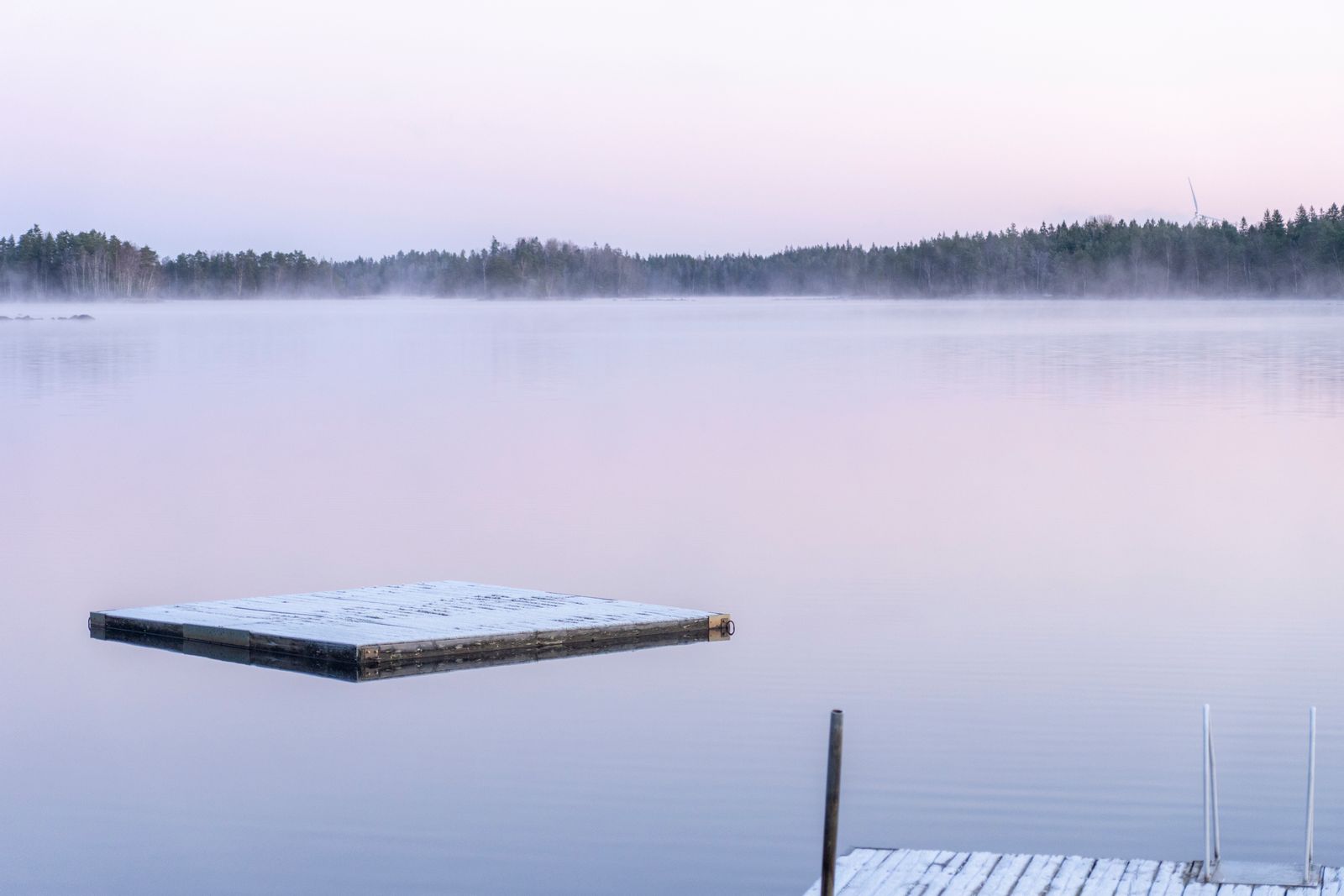
Okanagan Lake, from Vernon in the north to Penticton in the south
Roughly 120 km of water, 3 to 5 km across, with Vernon at the top end, Penticton at the bottom and Kelowna halfway down. The lake covers 351 square kilometers, its mean depth is 76 m and the deepest point sits at 230 m, so this is a narrow lake and a very deep one.
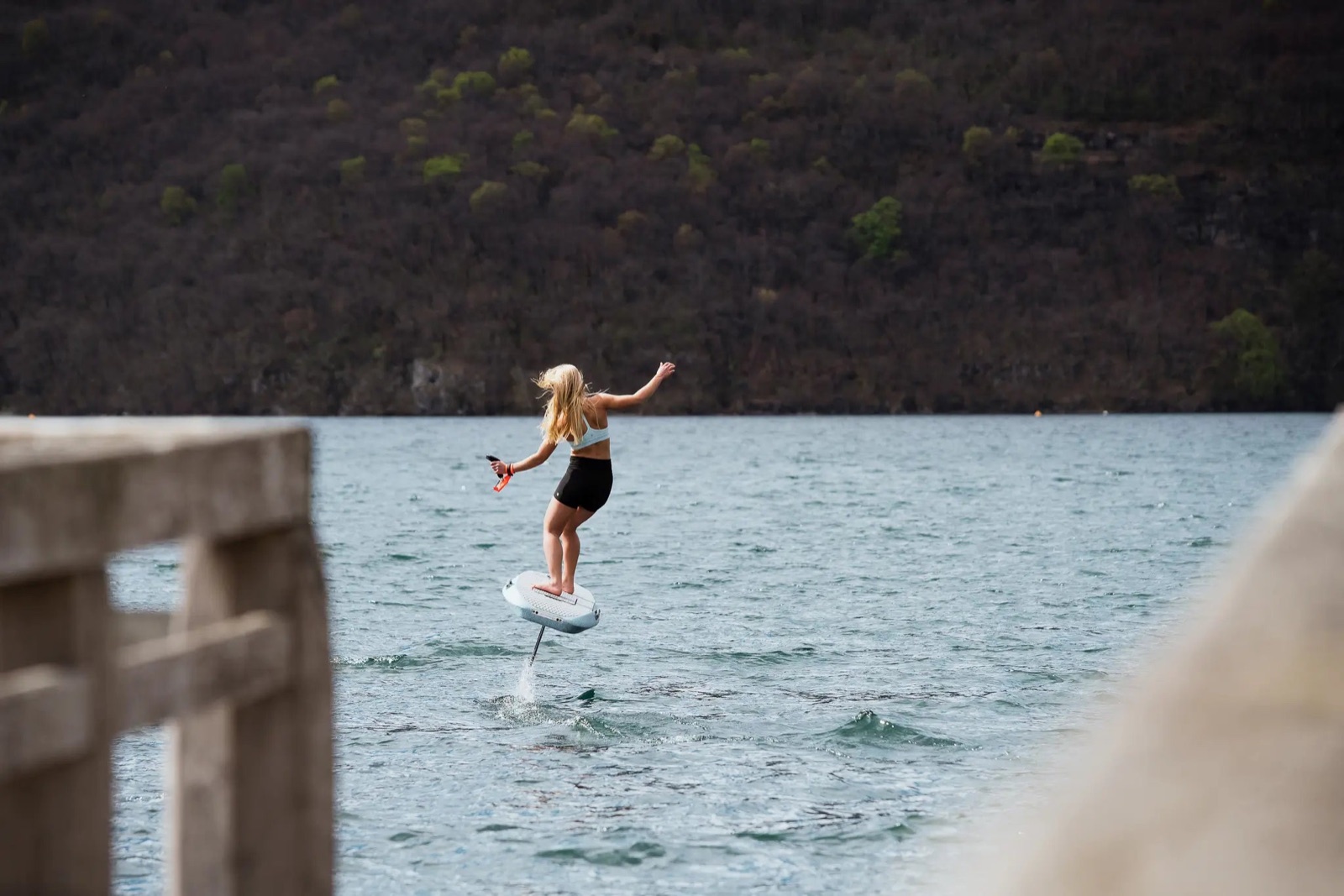
For all that water, eFoil supply is small. We looked for schools and rental businesses in all three towns and could confirm supply in one of them. Kelowna has a lesson operator on the lake and a board maker with an office in town. Penticton and Vernon turned up nothing we could verify, so if you are staying at either end of the valley, plan on the drive to Kelowna for a session.
Supply in the rest of British Columbia is just as thin. Vancouver has one school we could confirm, Whistler none, and on Vancouver Island we could not find anyone currently running eFoil lessons. If you are new to the sport and want the basics before the trip, our eFoil guide covers how the board, mast, wing and remote work together.
Wind and water temperature are not what limits eFoiling in Canada. A federal regulation names propeller-driven surfboards outright, and it covers Okanagan Lake as it covers every other Canadian lake.
Kelowna e-Foil Adventures at Sarsons Beach
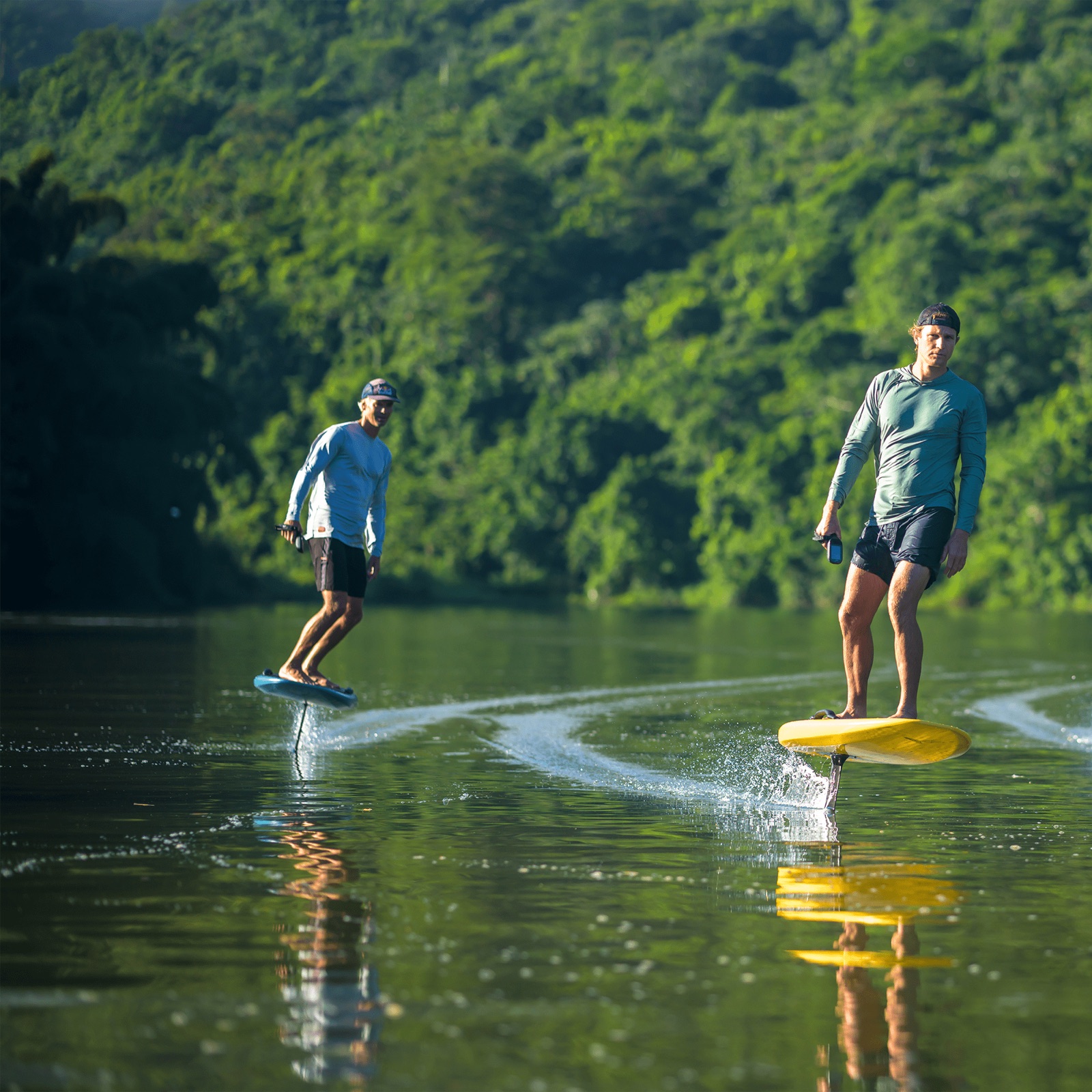
The Kelowna school calls itself “Canada's LIFT e-Foil headquarters” and promises lessons “three feet above Okanagan Lake”. Besides teaching, it sells Lift boards and spare parts. Board, safety gear and the briefing are part of the booking.
Setting up the board and ground school come before any water time. After that you get up to 2 hours on the lake, with the instructor riding a second board next to yours. Two learners can share a booking and switch halfway through. Riders who can already fly the board can book a guided outing instead of a lesson. The listing describes the total time in two different ways, so ask about the length of the whole appointment when you book.
According to the school, “most first-timers are up and flying by the end of their first lesson”. We pass that on as the school's own claim. Minimum age appears as 12 in one place and 14 in another, and the price shows up only once you are inside the booking flow.
The meeting point is Sarsons Beach, which is also a buoyed swim area where Transport Canada's schedules close the water to every vessel. As we read the schedule, the riding itself has to happen outside the buoys.
The second Kelowna address belongs to Halo Efoils, a manufacturer with its office in the city. Halo sells a “fly before you buy” demo ride: 2 hours on one of its boards for 350 Canadian dollars (list price, read on October 23, 2026). Where on the lake the ride takes place is not stated, so ask. For a buyer weighing a Halo against a Lift or another brand, our buying guide lists what to check before you order.
Swipe sideways to see all columns
| Operator | Where | Session | Price |
|---|---|---|---|
| Kelowna e-Foil Adventures | Sarsons Beach, Kelowna | Ground school, then up to 2 hours on the water, up to two learners | Shown in the booking flow |
| Halo Efoils | Kelowna (spot not stated) | Fly before you buy demo ride, 2 hours | $350 CAD |
| X-Foil Vancouver | Vanier Park, Rocky Point, Alouette Lake | Private lesson, 2 hours | $269 CAD |
Section 1006 and the propeller surfboard question
Canada's Small Vessel Regulations, SOR/2010-91, carry a short section in Part 10 that matters more to eFoil riders than anything else on this page. Section 1006 reads: “No person shall (a) tow themselves using a vessel that is operated by remote control; or (b) operate a propeller-driven surfboard-type vessel.” The consolidation we read on Justice Laws is current to September 30, 2026 and was last amended on December 31, 2025. Paragraph (b) is in force.
Our reading, and it is only ours: a classic eFoil, a surfboard shaped hull with a propeller under it, is a propeller-driven surfboard-type vessel. A guard around the propeller does not change that, because a shrouded propeller is still a propeller. The section offers no exception for lessons, rentals or guarded designs, and Okanagan Lake is no different from any other Canadian water. Whether a board driven by a water jet is caught, the text does not say.
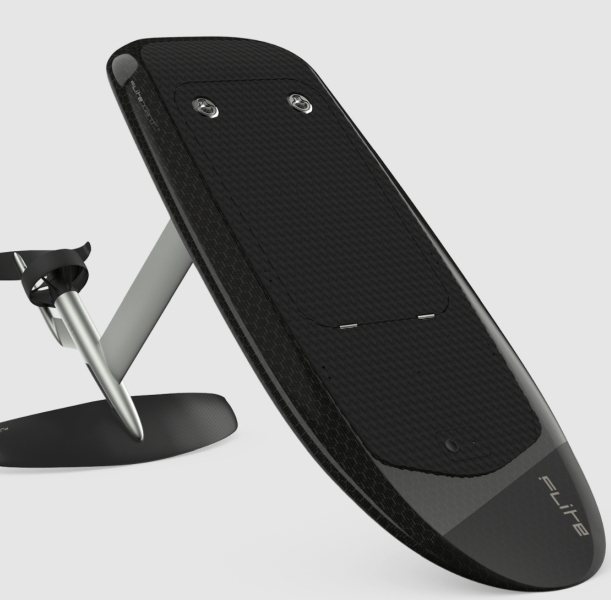
X-Foil Vancouver teaches on Fliteboard eFoils. The Kelowna shop sells Lift's LIFT5 and LIFT5 “F” models and offers a shroud as a spare part. We found no statement from the Kelowna school on section 1006. That proves nothing either way; there is just nothing to quote. Whichever school you book, the question of how they handle the rule belongs in your first message to them.
Two more sections of SOR/2010-91 matter here. Section 1(1) defines a personal watercraft as a vessel under 4 m using “an internal combustion engine powering a water-jet pump”. A battery eFoil has no combustion engine, so in our reading it is not a personal watercraft. Section 1007 applies to every vessel: no one may operate one “in a careless manner, without due care and attention or without reasonable consideration for other persons”.
This section quotes the regulation and gives our own reading. It is not legal advice; for a binding answer, ask Transport Canada.
Pleasure Craft Operator Card or a rental checklist
The Competency of Operators of Pleasure Craft Regulations, SOR/99-53, apply under section 2(1) to pleasure craft “fitted with a motor” and used for recreation in Canadian waters, the Northwest Territories and Nunavut excepted. We read the consolidation current to September 30, 2026; the last amendment dates from October 6, 2020. Transport Canada's own page on the card is plainer still: proof of competency is needed “with all motor types (including electric trolling motors)”. An eFoil runs on an electric motor, so in our reading it is a motorized pleasure craft and the rule reaches it.
Sections 3(1) and 4(1) say how you prove competency, and you have to carry that proof on board. The usual document is the Pleasure Craft Operator Card. Transport Canada does not accept a paper or electronic copy of it, so the card itself goes with you. The test behind it has 36 questions (section 7(4)(a)) and the pass mark is at least 75 per cent (section 4(1)(a)).
For renters the route is lighter. A signed “rental boat safety checklist” counts as proof, valid “only during the rental period”. Under section 8 the checklist covers how the craft is operated, the main boating safety rules and the geographic features and hazards of the area.
Lessons may fall under a different clause. Section 3(2)(a) exempts anyone operating “under the supervision of an instructor as part of an accredited course”. Whether an eFoil lesson counts as an accredited course is not settled anywhere we could find, so this is a question the school answers at check in, not you.
Section 4(2) lets a non resident use a document that meets the rules of their own state or country. Transport Canada also says no proof is needed for a visitor operating a boat brought into Canada for under 45 consecutive days. We take that to mean a short visit with your own board needs no Canadian card, though section 1006 still applies to the board.
When nobody supervises, age sets a power limit. Under 12, a young operator alone may run up to 10 hp (7.5 kW). From 12 to 15 the ceiling is 40 hp (30 kW). Check the motor rating of any board a teenager rides without an adult next to them.
Thirty meters, swim buoys and slow zones on the Okanagan
The shore rule for British Columbia sits in the federal Vessel Operation Restriction Regulations, SOR/2008-120, last amended on August 13, 2025. Section 2(7)(b) bars any electric or power-driven vessel from going faster than 10 km/h (about 6 mph) within 30 m (roughly 100 feet) of the shore on the province's rivers and lakes. Section 2(8) lists the exceptions: towing on a course away from and perpendicular to the shore, rivers under 100 m wide, canals, buoyed channels and the waters in Schedule 5.
For an eFoil on Okanagan Lake we read that as a 10 km/h strip along every shore.
Local restrictions sit in Schedules 1 to 8 of a Transport Canada document, TP 15587, which section 2 of the regulations points to. We read the second edition of April 2026. Schedule 1 closes buoyed swim areas to all vessels, “as indicated by buoys and signs”, and the Okanagan has many of them:
- Kelowna: Boyce Gyro Park, Sarsons Beach, Lakeshore Road Beach, Rotary Beach
- Westbank: Pritchard, Powers Creek and Westside Aquatic community park beaches
- Bear Creek: Traders Cove Regional Park Beach
- Penticton: Okanagan Lake Beach, Three Mile Beach, Farmers' Market Beach; on Skaha Lake, Sudbury, Airport and Main beaches
- Okanagan Landing: Paddlewheel Park, Kin Beach
- Coldstream, on Kalamalka Lake: Kal, Kirkland, Pumphouse, Kalavista and Tamarack Park beaches
Schedule 5 adds speed limits at the places you would launch. In Kelowna the Lakeshore and Water Street boat launches are 10 km/h zones, while City Park Beach and the vessel passage sections of the Okanagan Lake bridge are 8 km/h. Penticton has 8 km/h at Okanagan Lake Marina and in the Skaha Marina harbour. Near Vernon a speed limit covers a 75 m strip along part of the Kalamalka Lake shore.
One closure catches people who like the idea of riding from lake to lake. Schedule 2 shuts the Okanagan River between Skaha Lake and Okanagan Lake at Penticton to electric and power-driven vessels.
On the water, the buoys and signs mark where each closure starts. Municipal bylaws and park rules are a separate layer we have not reviewed here, so read what is posted at the launch.
Bringing your own eFoil to Kelowna
Read together, the federal texts above give anyone launching a private board the list below. We put it together ourselves; it is our reading, not official guidance.
- Check how your board is driven against section 1006(b). A propeller, guarded or open, is the problem case.
- Carry the Pleasure Craft Operator Card itself. Photos and printouts do not count.
- Stay at 10 km/h or under within 30 m of any shore on a BC lake.
- Keep out of every buoyed swim area, Sarsons Beach included.
- Watch the posted speed zones at the Lakeshore and Water Street launches and under the bridge.
If you are still choosing a board, our pages on eFoil batteries and eFoil prices cover range, charging and what the boards cost.
Vancouver has a school; Whistler and the island, none we found
Every X-Foil Vancouver lesson runs on a Fliteboard eFoil, at one of three spots. The main hub is Vanier Park, at the Vanier Boat Launch next to BC Waterbikes. The other two are Rocky Point in Port Moody, which is tidal, and Alouette Lake in Golden Ears Park. The school itself names Alouette Lake and Rocky Point as the calmest choices for complete beginners.
Its Individual eFoil Lesson is a 2 hour private session at $269 CAD (list price, X-Foil Vancouver, read on October 23, 2026), with instruction, the board, a safety briefing, coaching on the water, a helmet and a PFD in the price. The school also provides wetsuits and booties, and land training comes before the first ride.
The limits are tighter than in Kelowna. Riders must be at least 16 and weigh between 45 and 120 kg (about 100 to 265 lbs), and anyone under 19 needs a parent or guardian along. Lessons go ahead in light rain and are called off in thunderstorms or high winds; a weather cancellation gets you a full refund or a free new date.
If a session from Vanier Park heads into False Creek, mind the line from Kitsilano Point. East of it, TP 15587 sets 10 km/h in Schedule 5, and that stretch is also listed in Schedule 8, where events are prohibited. Fliteboard owners comparing notes with the school will find model details on our Fliteboard page.
Whistler is harder. We could not confirm any eFoil school there, and the lakes around the village come with their own federal limits. Alpha, Nita and Lost Lakes, near Alta Lake, are closed to power-driven vessels and to electric vessels above 7.5 kW (Schedule 3); Alta Lake has a 12 km/h limit, and parts of Green Lake 10 km/h (Schedule 5). Whether a given eFoil stays under 7.5 kW depends on the board, so in our reading the motor rating decides which of those lakes you can ride.
On Vancouver Island, Victoria included, we could not confirm a school currently operating.
Okanagan summers: hot afternoons, light wind, the odd storm
Kelowna's airport station gives the clearest picture we have. Over the 1981 to 2010 normals, the mean daily maximum climbs from 20.2 °C (68 °F) in May to 24.2 °C (76 °F) in June, peaks at 27.9 °C (82 °F) in July, holds at 27.6 °C in August and drops back to 21.7 °C (71 °F) in September. July nights average a minimum of 11.1 °C (52 °F). These are air temperatures measured at the airport. We found no water temperature series for the lake to quote.
Summer is dry. July brings 37.2 mm of rain on average and August 32.1 mm, against 386.9 mm for the whole year. On about 11 July days and 10 in August the thermometer passes 30 °C.
Hourly wind above 30 km/h shows up on about 1.6 days in July and 1.1 in August. Thunderstorms come more often, on 4.3 days in July and 3.3 in August. We read that as mostly light wind through the summer, with storms as the thing to watch.
On those figures we would put the warm season at roughly June to September. Schools set their own opening and closing dates, and those move from year to year, so we do not print them. For a comparison with a lake and coast season further south, see our California eFoil guide.