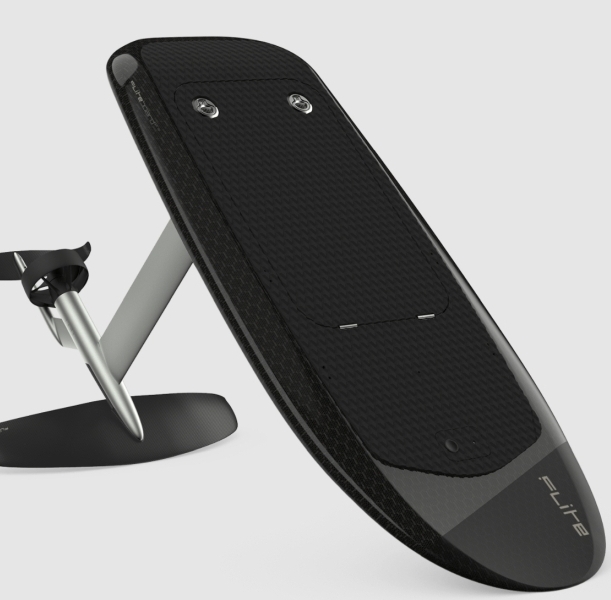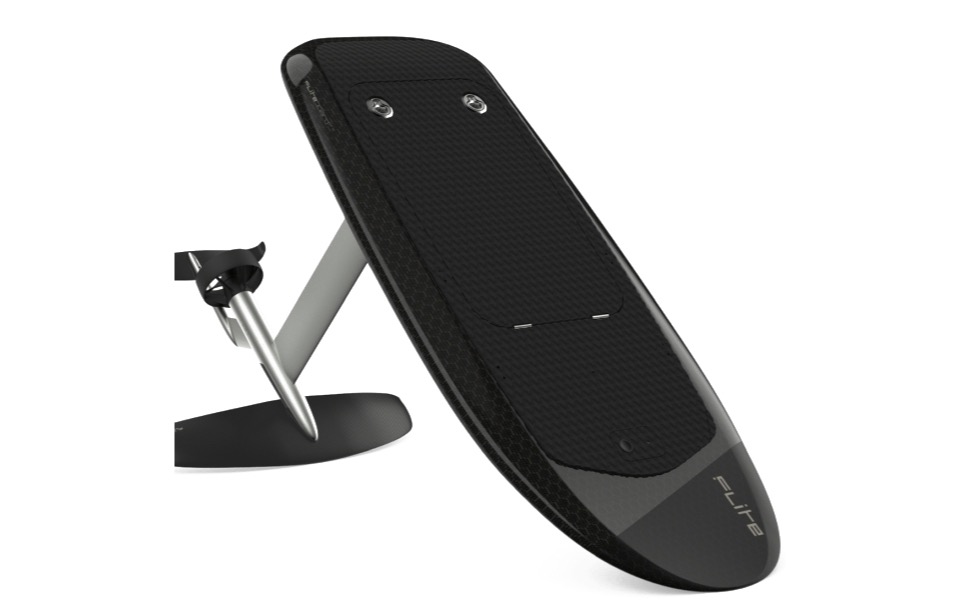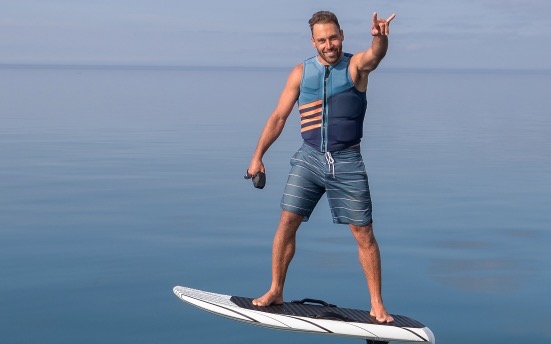
The SiFly brand
SiFlyis an eFoil maker from Bulgaria, seated in Sofia. The store's terms of service name SiFly Ltd. at Tintyava Street in Sofia. The Bulgarian commercial register lists the company as registered in May 2021 and active (we read both on 14 September 2026), and going by an interview the founder gave in December 2022, the boards reached the market that same year. By eFoil standards that is a young brand. Within a few years, though, it has built a network the company itself puts at more than 130 selling points and 15 service centers worldwide. The idea sounds simple, yet hardly anyone had pulled it off before: an eFoil assembled in Europe that costs noticeably less than the premium brands.
To see why that matters, look at how the market has split. It has run between two poles for years. One side belongs to the premium manufacturers, led by Lift from the USA and Fliteboard from Australia; the other belongs to the budget challengers from China, headed by Waydoo. Until now, a board put together in Europe almost always meant a premium purchase. SiFly aims at the space in between, with EU assembly (the maker's phrasing) at prices close to entry level.
Price is the point the reviews return to most often. Freshly Charged, which tested the 2025 lineup in Florida, wrote in April 2025 that SiFly has a board for beginners, heavier riders and experienced eFoilers alike, “at a fraction of the price of competitors like Fliteboard.” Boat & Sail Magazine, in a Stellar review last updated in April 2025, concluded after three days of testing that SiFly “has proved that you can still produce quality products without the premium price tag.” The dealers selling SiFly go further. FuturWave, a SiFly dealer in Belgium, writes that “where other brands like Flite charge higher prices, SiFly offers similar, and often smarter, technology at a fairer price.” These are impressions and sales copy, not measurements. Still, if you won't (or can't) pay a premium price and are rightly wary of cheap boards of unknown origin, SiFly belongs on your shortlist.
Buyers in Europe get one more advantage out of that address. The company is registered inside the EU and its store sells into the Union, so an order placed there never has to cross a customs border on its way to you. An EU manufacturer is also easier to reach than a head office on another continent when it comes to shipping, spare parts and everything else that follows the purchase. One price list covers the whole EU, in euros and excluding VAT. Switch the store's country between Italy, Germany and Bulgaria and the figure stays put; we read the store in all three countries on 12 September 2026.
SiFly is a young company. With a young manufacturer, part of your homework before buying has nothing to do with the board itself: it is about the support behind it. Before ordering, ask how warranty handling works, how quickly you can get spare parts or a second battery, and where software updates stand. Those are fair questions for any brand. With a company only a few years old, the answers tell you the most, and a good manufacturer replies with confidence and with concrete detail.
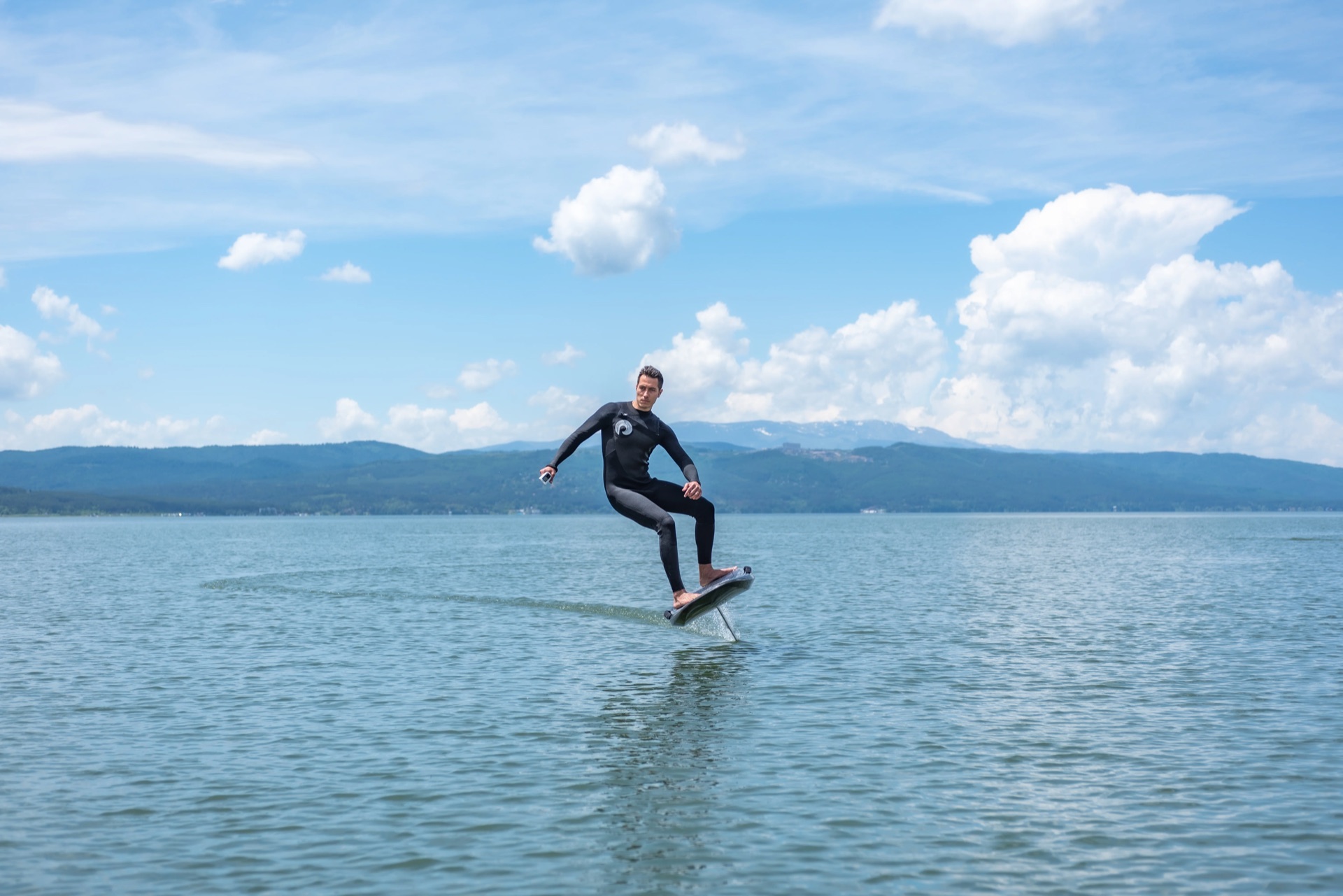
SiFly in action
The maker's own footage, plus every current model, at sifly.global ↗
Why EU manufacturing matters
Where a board is built can look like a side issue. Once you are out on the water, what counts is how it flies. Yet the biggest headaches of buying an eFoil sit somewhere else entirely, in logistics and after-sales care. This is an expensive piece of sports equipment, weighing 32 to 36 kg as a complete set (SiFly's figures for six of its seven sets) and carrying a lithium battery. How does it even get to you, and what happens when it eventually needs service?
Customs is the first thing you avoid. Order from outside the EU, from the USA, Australia or China, and duty, import VAT and the clearance process itself can pile onto the purchase price, plus a handling fee if a broker takes care of it. On a purchase this size that means real extra cost and sometimes weeks of paperwork. Buy inside the EU and that whole layer disappears. You pay what the invoice says, and the package arrives like any domestic order. Anyone who has ever been caught out by a customs bill knows how much friction that removes.
One catch: customs follow where the box ships from, not where the board was built. Waydoo Europe, for one, sells its Chinese-built boards from stock inside the Union, so ask any seller where the order ships from.
Warranty and service come next. If you buy in the EU, European consumer protection covers the purchase, so a dispute plays out under rules close to home and not against a seller on another continent under foreign law. Should the board ever need warranty work, SiFly's warranty terms send it to the nearest authorized service center. Within the service regions they name, Continental Europe among them, SiFly covers reasonable shipping both ways. There is no overseas transport to organize, and the strict dangerous-goods rules for shipping lithium batteries are easier to meet with ground freight. If the remote or the motor gives up after two years, a package that stays inside the EU is a very different exercise from an export shipment to another continent.
Distance matters in a plainer way. Spare parts, a second battery or a replacement board have a far shorter trip from inside the EU than from overseas. European customers also get support in roughly their own time zone, which already eases the back-and-forth. No single item on this list is spectacular, but together they add up to SiFly's strongest practical argument: a predictable ownership experience for the life of the board.
Ideally you ride an eFoil for many years, and over that stretch being able to reach the manufacturer counts at least as much as top speed.
Models and prices
SiFly splits its lineup into three clearly separated families. The Lite line brings inflatable boards for beginners and families. The Rider family, built in EPP foam, is the cheapest way in, and the trio of Stellar R / S / X forms the full-carbon premium line. All three were already in the range in 2025. A SiFly press release from July of that year presents the Lite, Lite +, Rider and Rider + next to the Stellar X, S and R, and Freshly Charged's review of the 2025 lineup lists the Rider Plus, Stellar S and Stellar X next to the E. The earlier ECO and E models are gone from the lineup. Prices run roughly between €4,999 and €7,999 excl. VAT, so even the carbon flagships stay below what the Western premium brands charge. On origin, the maker's own pages do not quite agree with each other. The site says its sets are certified in Germany and assembled in Europe. All of the set pages, the carbon Stellars included, add “Proudly made in Bulgaria,” while the About page says the carbon boards come out of its partnership with the Cobra factory in Thailand.
The sets all run on the swappable PowerCell battery (44.8 Ah / 58.8 V) with up to 120 minutes of ride time, and every box holds a complete kit: board, battery, V3 hydrofoil unit, wing set, remote, fast charger and a wireless charger for the remote. Bags are where the sets differ. The Stellar R and Stellar X include a board bag and a hydrofoil case, while the Lite, Lite + and Stellar S come with a hydrofoil case only. With the Rider and Rider + the board bag is an option you choose when you order (read on 3 October 2026). How these figures compare with the rest of the market is laid out in our eFoil price guide.
Lite 2026
The inflatable entry into the SiFly world with a soft deck, developed for beginners and families.
- Board size
- 5′4″ (161 × 66 cm)
- Volume
- 110 l
- Weight
- complete set 33 kg
- Battery
- PowerCell LR, 44.8 Ah / 58.8 V (swappable)
- Flight time
- up to 120 min
- Charge time
- 0-100% in approx. 3 h
- Top speed
- up to 40 km/h
- Construction
- inflatable, soft top
- Price (approx.)
- €6,999 excl. VAT (EU price)
Manufacturer figures (as of 2026-08-29). Prices are for guidance only.
Lite + 2026
A modular inflatable board: soft shell for safe falls, rigid core for a hardboard feel.
- Board size
- 6′8″ (200 × 75 cm)
- Volume
- 170 l
- Battery
- PowerCell LR, 44.8 Ah / 58.8 V (swappable)
- Flight time
- up to 120 min
- Charge time
- 0-100% in approx. 3 h
- Top speed
- up to 40 km/h
- Max. rider weight
- 60-140 kg
- Construction
- inflatable PVC + rigid core
- Price (approx.)
- €6,999 excl. VAT (EU price)
Manufacturer figures (as of 2026-08-29). Prices are for guidance only.
Rider 2026
The lowest price in the lineup: an EPP board with an aluminum frame and a compact shape for more aggressive carving.
- Board size
- 5′4″ (161 × 66 cm)
- Volume
- 110 l
- Battery
- PowerCell LR, 44.8 Ah / 58.8 V (swappable)
- Flight time
- up to 120 min
- Charge time
- 0-100% in approx. 3 h
- Max. rider weight
- 30-130 kg
- Construction
- EPP foam + aluminum frame
- Price (approx.)
- €4,999-5,899 (depending on wing option) excl. VAT
Manufacturer figures (as of 2026-08-29). Prices are for guidance only.
Rider + 2026
A larger cruiser with a shock-absorbing soft-top deck, a popular workhorse for watersports schools and yacht charters.
- Board size
- 5′6″ (171 × 72 cm)
- Volume
- 130 l
- Battery
- PowerCell LR, 44.8 Ah / 58.8 V (swappable)
- Flight time
- up to 120 min
- Charge time
- 0-100% in approx. 3 h
- Max. rider weight
- 40-140 kg
- Construction
- EPP foam + aluminum frame, soft top
- Price (approx.)
- €5,199-6,099 (depending on wing option) excl. VAT
Manufacturer figures (as of 2026-08-29). Prices are for guidance only.
Stellar R 2026
A full-carbon sandwich board with a light EPS core, positioned as the 'easiest-to-ride carbon eFoil in the world'.
- Board size
- 5′6″ (171 × 72 cm)
- Volume
- 120 l
- Battery
- PowerCell LR, 44.8 Ah / 58.8 V (swappable)
- Flight time
- up to 120 min
- Charge time
- 0-100% in approx. 3 h
- Max. rider weight
- 40-140 kg
- Construction
- carbon sandwich, EPS core
- Price (approx.)
- €7,799 excl. VAT (EU price)
Manufacturer figures (as of 2026-08-29). Prices are for guidance only.
Stellar S 2026
A smaller, stiffer carbon board with reduced swing weight, tuned for wave riding and tight turns.
- Board size
- 5′4″ (161 × 66 cm)
- Volume
- 98 l
- Battery
- PowerCell LR, 44.8 Ah / 58.8 V (swappable)
- Flight time
- up to 120 min
- Charge time
- 0-100% in approx. 3 h
- Max. rider weight
- 30-130 kg
- Construction
- carbon sandwich, EPS core
- Price (approx.)
- €7,799 excl. VAT (EU price)
Manufacturer figures (as of 2026-08-29). Prices are for guidance only.
Stellar X 2026
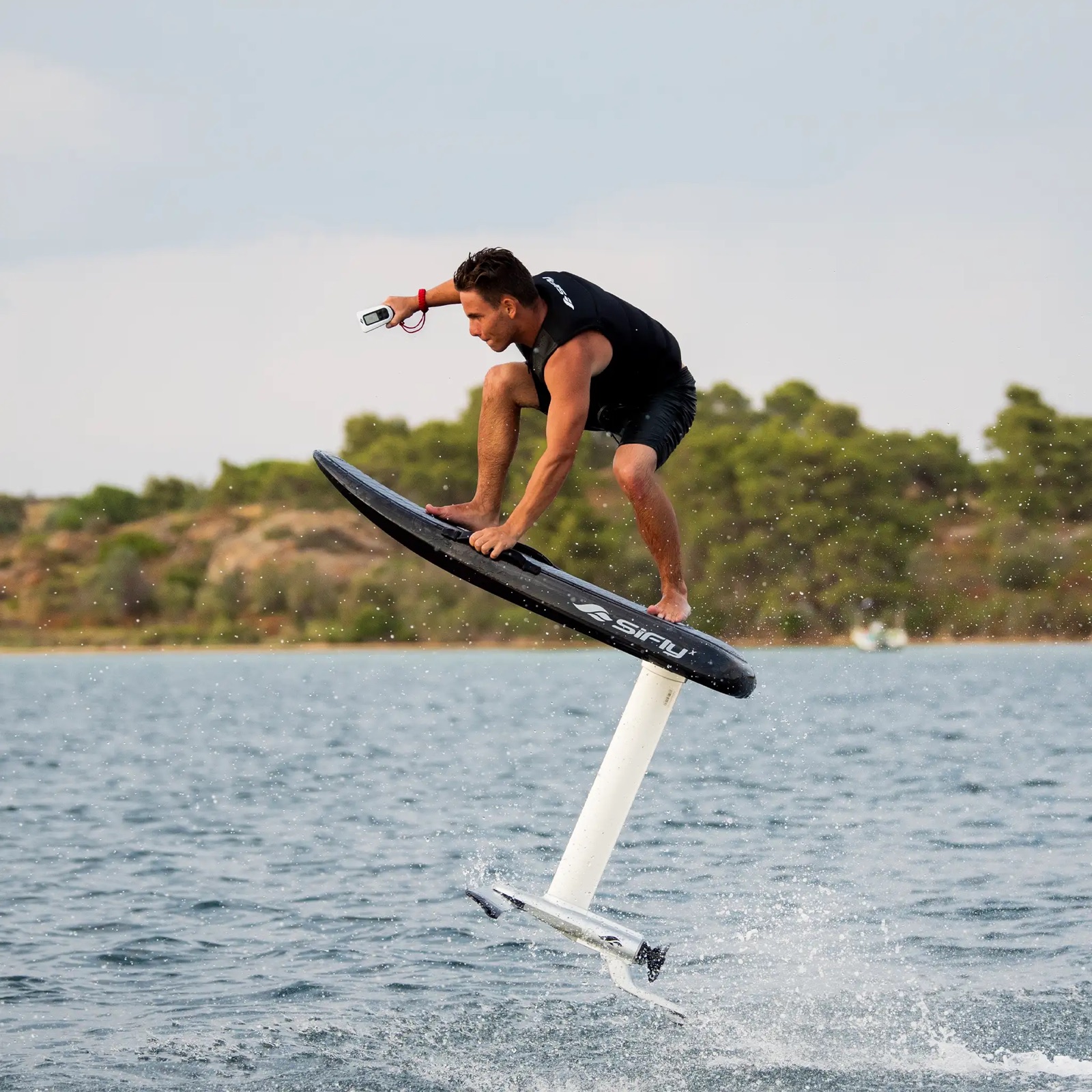
SiFly's ultralight flagship carbon board: 75 liters, an agile hull for uncompromising carving.
- Board size
- 4′6″ (142 × 64 cm)
- Volume
- 75 l
- Battery
- PowerCell LR, 44.8 Ah / 58.8 V (swappable)
- Flight time
- up to 120 min
- Charge time
- 0-100% in approx. 3 h
- Top speed
- up to 40 km/h
- Max. rider weight
- 40-100 kg
- Construction
- carbon sandwich, EPS core
- Price (approx.)
- €7,999 excl. VAT (EU price)
Manufacturer figures (as of 2026-08-29). Prices are for guidance only.
Previous generation (no longer sold new)
ECO and E (earlier models)
The earlier ECO (entry point under €5,000) and E models have disappeared from the lineup; the Lite and Stellar families have taken their place.
Whichever set you order, always work out the final price for the complete package. Battery capacity, wing size and accessories (a second battery, bag, charger) move the total considerably, and two offers that look identical on paper can put very different gear in the box. A spare battery, for example, can double your time on the water. The ride time needs a careful read. SiFly's “up to 120 minutes” is an estimate for a 75 kg rider on a 100 liter board with the Cruiser 1900 wing and an open propeller at 15 km/h. More weight, a smaller wing or more throttle will shorten a charge, and SiFly does not say by how much. As for that second PowerCell LR, it is a hefty line item on the final bill: €2,399 excl. VAT on the maker's list (read on 3 October 2026).
SiFly follows the same sizing logic as every other brand when you choose between models. As a beginner you learn faster on a bigger, more stable board with a bigger wing. Smaller boards and wings are quicker and more eager to turn, but they demand experience. If you weigh over 80 kg, plan on a larger wing from the start. A bigger wing also flies on less power, so the battery lasts longer. Before ordering, look past the price to each model's board and wing sizes on the manufacturer's site. Our eFoil buying guide covers every criterion in depth: board size, wing size, mast length and battery.
Which SiFly fits you?
Narrowing it down to one family takes little thought. Beginners and families will naturally look at are the inflatable Lite / Lite + and the big, soft-decked Rider +. The Rider answers the tightest budget. Want a carbon board for sportier riding? Your choice is between Stellar R (more stable), S (more agile) and X (the smallest and most agile, for experienced riders).
Swipe sideways to see all columns
| Model | Price (approx.) | Flight time | Best for |
|---|---|---|---|
| Lite | €6,999 excl. VAT (EU price) | up to 120 min | For beginners and families, inflatable |
| Lite + | €6,999 excl. VAT (EU price) | up to 120 min | Inflatable with a rigid core, safe learning |
| Rider | €4,999-5,899 (depending on wing option) excl. VAT | up to 120 min | The most affordable SiFly, sporty shape |
| Rider + | €5,199-6,099 (depending on wing option) excl. VAT | up to 120 min | Favorite of schools and charters, comfortable cruiser |
| Stellar R | €7,799 excl. VAT (EU price) | up to 120 min | Premium carbon for the family |
| Stellar S | €7,799 excl. VAT (EU price) | up to 120 min | Carving machine for advanced riders |
| Stellar X | €7,999 excl. VAT (EU price) | up to 120 min | Ultralight carbon board for experienced riders |
SiFly and the competition
SiFly sits in the gap between the entry level and the premium segment. Once VAT is added, its base price lands above China's Waydoo (the Flyer EVO Lite lists at €5,807 with tax included, SiFly's cheapest Rider at €4,999 before VAT) but below the Western premium brands (Lift, Flite, Aerofoils). What you get in return is EU assembly, with warranty handling inside the EU behind it. The carbon Stellar family is SiFly's premium line. Against carbon sets with a battery of similar size, it comes in roughly €4,000 to €5,000 cheaper before VAT. In Flite's European store, for instance, a carbon ICON with the Explore battery and fast charger works out at €12,380 before VAT (€14,732.20 with German VAT), against €7,799 for a Stellar R, both read on 3 October 2026. With Flite's smallest battery, the Nano, and the slow charger, the gap shrinks to about €2,500.
Every current model from the active brands sits side by side, with prices, ride times and the riders each one suits, in the single table of our eFoil comparison.
Who SiFly is for
The typical SiFly buyer is a price-conscious European who will not give up the safety net of a real warranty. Maybe you have scrolled through the premium price lists and found €10,000 to €15,000 too much, yet you would not hand a sum like that over for a cheap board of unknown origin. In that case SiFly is aiming squarely at you.
Within the budget class, the comparison that tells you the most is with China's Waydoo, which gives you more board for the money than anyone else in the category and remains very strong on purchase price alone. SiFly counters with something a manufacturer in China cannot offer, for reasons of plain geography: assembly inside the EU. Waydoo runs its European office in Amsterdam and ships European orders from stock it holds in Europe. The boards themselves, however, are designed and built at its base in Shenzhen. If you are torn between the two, the real question is how much geographic proximity is worth to you: the lowest sticker price, or knowing that a warranty case never turns into a project spanning continents. Ask the seller, before you buy, where Waydoo has its warranty repairs done.
The premium brands sit at the other end of the scale. Flite and Lift offer a more mature system around their boards and a wider model range, at higher prices. So how much should you spend on your first board of your own? One rule of thumb helps. As a beginner, your experience depends far more on practice than on top-shelf gear, and an affordable board with clean warranty coverage plus a few hours with an instructor is frequently a better investment than the most expensive model with no lessons at all.
The pricing can get especially interesting for one more group: rental operators, surf schools and vacation-home owners. Buy several boards instead of one, because you rent them out or half the family rides, and the per-board savings multiply. EU-based spare-parts supply turns into a business argument as well. Every week a rental board spends in the shop is lost revenue for the operation.
SiFly is not for everyone. If you already have serious eFoil experience and are choosing a brand for one specific premium feature, or you never buy anything you have not tested, a young brand can be a real drawback wherever none of its partners is within reach. SiFly's store locator is the place to start, since it lists dealers, schools and service points in more than twenty EU countries, the UK and the USA. With none near you, it pays to wait until you can stand on one yourself, or to look at brands that are easier to try where you live. Sometimes a vacation settles the question. Along the Croatian coast, Sea Adventures on Korčula and E-Foil Dubrovnik both teach on SiFly boards. So does Mallorca Kiteboarding on the Bay of Pollença, on the north coast of Mallorca.
SiFly on your home waters
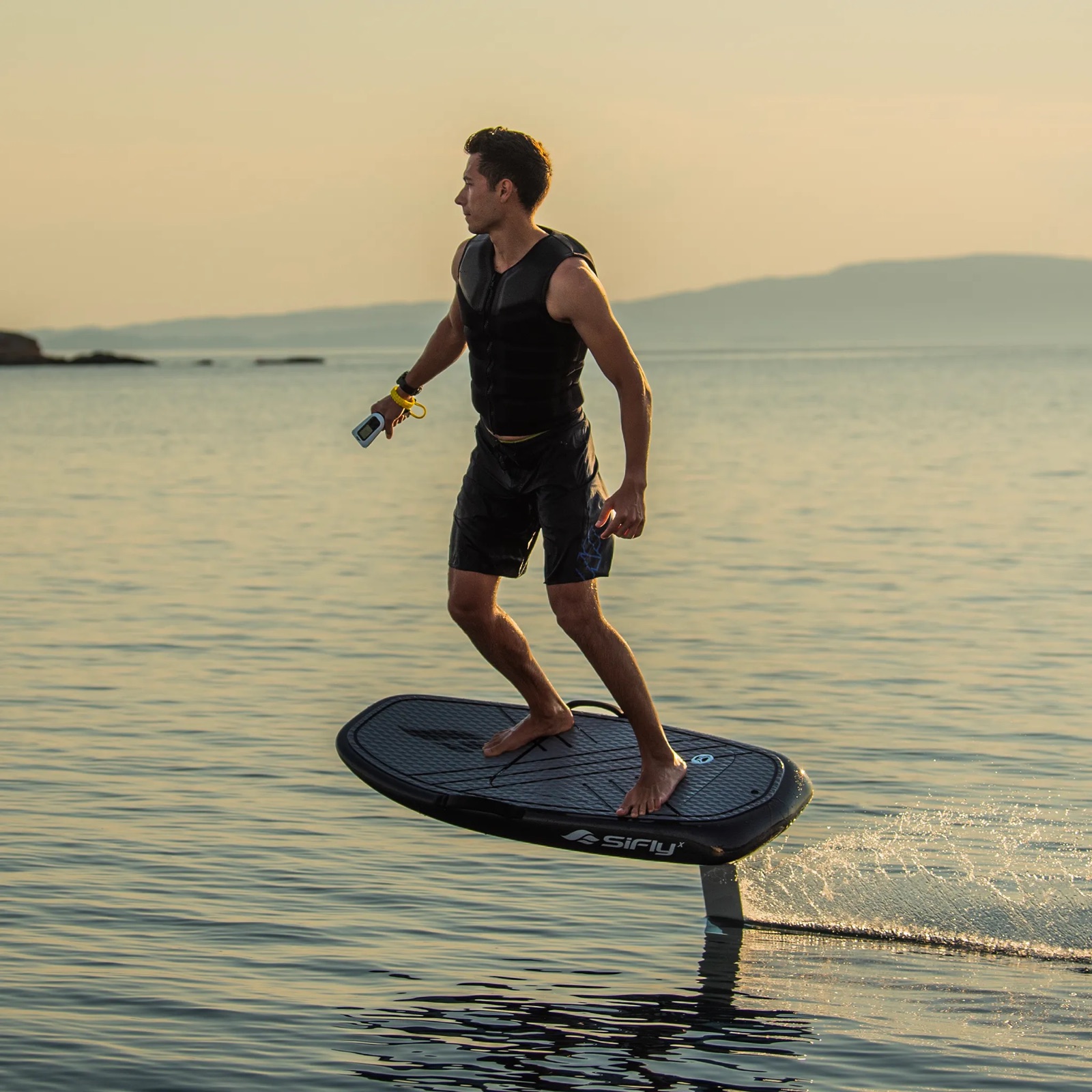
An eFoil is at its best on quiet water. The electric drive is nearly silent and throws barely any wake, and it is an option on many lakes and coastal stretches where combustion-powered watercraft face restrictions. Rules differ by country, and often from one lake or bay to the next, and they change over time, so check the local regulations before every season. The rules do not single out brands, so a SiFly falls under the same ones as any other eFoil on the lake or bay you have in mind.
SiFly sells through dealers as well as direct. The maker's store locator shows whether a partner is within reach; ordering straight from the manufacturer is the other route, and inside the Union it is an easy one, because the seller is registered in the EU and the box arrives without customs or import paperwork. “No dealer nearby” therefore hurts a European buyer far less than it would with an overseas brand. Ordering from outside the EU? SiFly's shipping policy splits that in two. Orders to the USA are invoiced and shipped by Sifly USA Inc. with import duties already in the price, while orders to the UK, Switzerland, Norway, Canada and other non-EU countries leave the EU free of VAT, and the import duties, taxes and fees on arrival are yours. Wherever you order from, pin down the shipping terms for your country and the exact warranty procedure before you pay.
Riding a SiFly follows the rules of any eFoil. Pick a spot where no swimmers or other water users are within 100 meters and the water is deep enough that the delicate foil never touches bottom. On lakes that mostly means the calmer stretches farther out, away from swimming beaches; on the coast, a quiet bay outside the marked swim zones. Helmet and vest are non-negotiable, for beginners and experienced riders alike. The learning curve is a friendly one, and the feel for the board comes to most people after about 4 to 5 hours of practice, and with a watersports background you may be flying within 20 minutes. Our step-by-step walkthrough is in the eFoil guide.
If you have never stood on an eFoil, flip the order: ride first, buy second. Book a rental board and an instructor at a school near you. After a few hours you will know whether flying over water is something you want to keep doing, and from there you can judge with far more confidence whether a SiFly at its price level is the right board for you.