What drives the price?
Prices for electric surfboards cover an enormous range, and there are clear reasons for the gaps between them. Among the biggest single items is battery capacity. The more ride time and range a board offers, the more its pack costs, and the pack alone accounts for a large share of the total.
Construction comes next. Carbon boards are lighter and stiffer, and they cost clearly more than composite or inflatable versions. Motor power adds to the bill as well (a stronger motor means more speed and enough thrust for heavier riders), and so does the brand itself, because the leading manufacturers deliver a more polished product and better service and charge for both. Warranty length does not follow price. Lift covers its eFoils for one year, while Fliteboard, Aerofoils and SiFly each give two years. The accessories are easy to forget when you budget, yet they add up too. Wings in several sizes, a travel bag or a fast charger push the final number up further.
Two boards that look alike at first glance can be far apart on price. The difference is rarely in the graphics. It sits in the battery pack, in the hull material and in the service behind the brand. So the first step, ahead of any comparison of figures, is to settle how much ride time you need, how much you weigh and what kind of water you will be riding on. Once you can answer those, you stop shopping for the most expensive board and start shopping for the right one, and you no longer pay for performance you would never call on.
Spec sheets rarely tell you what the quoted price includes. Some brands list a board with a single battery, one wing and a standard charger, while others quote a package that already has a second wing, a bag and a faster charger in the box. Two headline prices can describe two quite different sets of gear, and the only fair comparison is between complete packages.
Comparing complete packages also shows you where saving is smart and where it is not. The hull is a good place to save: a composite or inflatable board costs substantially less than carbon, and as a beginner you will barely feel the difference. Accessories are another place to save if you buy them one at a time rather than all at once, after experience has shown you what you use. Battery quality and the brand's service are bad places to save. Whatever you save there, you pay back later in shorter ride times or in a failure nobody can repair.
Prices by category
The table below gives you a feel for the price levels to expect in each category in 2026. The spans are deliberately wide, because the number you end up paying depends on the model, on how the package is specced and, where a manufacturer quotes in dollars, on the exchange rate of the day.
Swipe sideways to see all columns
| Category | Typical price level | Who it suits |
|---|---|---|
| Entry-level eFoil | roughly €5,000 to €7,500 | Recreational riders shopping for their first eFoil |
| Premium eFoil | mostly €10,000 to €15,000 | When brand, service and long ride time matter to you |
| Jetboard | €9,990 to €15,990 excl. VAT (Awake); JetSurf ELECTRIC 2 €12,490 excl. VAT | Anyone after speed without the flight |
| Electric SUP | about €1,000 to just under €4,000 | Relaxed touring, families, first-timers |
| SUP retrofit motor | €499 (JAYKAY e-Fin 2.0, list price) to €1,990 (SipaDrive 2.1 with GPS, with Slovenian VAT) | If you already own a SUP and want thrust |
Read down the table and the pattern is plain. The cheapest way into electric watersports is the electric SUP, while flying above the water on an eFoil starts at around €5,000 and runs into five figures.
The bands are wide in their own right. An entry-level eFoil with an inflatable or composite hull and a smaller battery lands at the bottom of its range; give that class a carbon board and a bigger pack and it lands at the top. In the premium class it is the ride time, the accessory package and the service backing, more than the board, that push the total upward. So price the complete package every time. Of two offers, the cheaper one becomes the more expensive the moment you have to buy the bag, the charger or the second wing separately.
Jetboards and eFoils overlap in price, so price rarely decides between them. What separates them is the ride. A jetboard planes across the surface under motor power; an eFoil lifts you above it. Pick the category whose ride appeals to you more, rather than the one that happens to look cheaper on paper. If eFoils are the only category you care about, our dedicated eFoil price guide goes deeper into that single band.
Meanwhile the lines between the categories are blurring. Several makers now sell foil assist systems, meaning retrofit drives for classic foil boards, such as category founder Foil Drive or the Duotone Foil Assist. Lift comes at that ground from the other side, and its LIFTX is a complete hybrid eFoil, not a kit. Retrofit systems make most sense for people who already ride a foil discipline and want electric drive for the gear they own, not a complete eFoil. We compare the systems and their prices in a separate foil assist guide.
Brands and price tiers
Those price bands map onto two tiers of manufacturer, which overlap at the edges. In the premium segment the tone is set by American brand Lift Foils, the pioneer of the discipline and, by its own account, the maker of the world's first commercial eFoil. The current line-up runs from the LIFT5 models to the LIFTX, the board that takes the brand into foil assist territory. Australian Fliteboard offers the broadest range, from the inflatable AIR entry model up to race-oriented builds, and has belonged to the Brunswick group (which also owns Mercury Marine) since 2023. Corporate backing that stable is rare in such a young industry.
No other brand on this page does what Swedish brand Awake does, building jetboards (RÄVIK) and eFoils (VINGA) on a shared battery platform. If you want both experiences at some point, one pack fits both boards. The German company Aerofoils, whose boards were first sold as the Audi e-tron foil and now carry only the Aerofoils name, works with a fully enclosed jet drive and no exposed propeller. Beginners are frequently steered toward these boards for that reason, and it is part of why they turn up in rental and school fleets.
Two names come up most in the more affordable segment. Waydoo is the value pick in most 2026 coverage, where reviewers keep arriving at a similar verdict: a complete eFoil for roughly half of what the premium brands charge. Sofia-based SiFly (the address in its shop’s legal terms matches the company register entry we looked up on 14 September 2026) says its eFoils are assembled in the EU. The company ships within the EU and gives an EU warranty, at prices below what the premium names charge. On the maker's own price list the entry model starts under €5,000, and the top models sit at around €7,800 to €8,000 (excl. VAT). In its review of the 2025 line-up, Freshly Charged called SiFly a convincing alternative for riders held back by the usual eFoil prices.
Swipe sideways to see all columns
| Brand | Origin | Profile | Who it suits |
|---|---|---|---|
| Lift Foils | USA | Premium pioneer, with a foil assist crossover | Anyone who wants the most refined product |
| Fliteboard | Australia | Broadest model range, stable corporate backing | When you want to find the exact model that fits you |
| Awake | Sweden | Jetboard and eFoil on a shared battery platform | When both experiences appeal to you |
| Aerofoils (formerly Audi e-tron foil) | Germany | Enclosed jet drive, no exposed propeller | Beginners and safety-minded riders |
| Waydoo | China | A common value pick | Price-conscious first-time buyers |
| SiFly | Bulgaria | EU assembly, EU warranty, lower price | Buyers in Europe who want shipping within the EU and an EU warranty |
In euro terms, Waydoo and SiFly start at the bottom of the entry-level span of €5,000 to €7,500, and their top models land above it, Waydoo's close to €10,000. Lift, Fliteboard, Awake and Aerofoils place most of their boards in the premium range of €10,000 to €15,000. Some Fliteboard sets, the inflatable AIR among them, start a little below that range, and flagships such as Lift's carbon LIFT5 and Fliteboard's Marc Newson series sit above it. The exact price swings with the package, the exchange rate and whether a maker quotes with or without VAT, so check the current price list once you have a specific model in mind. In choosing a brand, price ends up mattering less than knowing who you can turn to when something breaks.
Running costs once the board is yours
Next to the purchase price, running an electric board costs close to nothing. A full charge takes a couple of kilowatt-hours of electricity, which is small change wherever you plug in. Fuel, oil, a marina berth? An electric board needs none of them, so those bills simply never arrive.
What you do pay for is the annual inspection or service (seals, propeller, connectors), for off-season storage (store the battery part-charged, somewhere that never drops below freezing) and for gear (vest, helmet, possibly a travel bag). The largest optional item is a second battery. A spare pack doubles your time on the water, and it can cost a sizeable share of what you paid for the board.
Looking after an electric board takes habits more than money, and a simple routine also saves you a good chunk of the service bill:
- After every session, rinse the board and the motor, wipe everything dry, and take a quick look at the propeller and the plug connections.
- When charging, stick to the manufacturer's instructions and never leave the pack sitting completely flat for weeks.
- At the end of the season, have the seals checked and store the battery part-charged (neither full nor empty) somewhere that stays above freezing.
- In storage, keep the board out of blazing sun and temperature extremes. The battery repays that with a longer working life.
For the first season, add safety gear and possibly a bag to the purchase price and leave charging out of the sums, since it is small enough to ignore. Hold off on the second battery until the water has shown you whether ride time is too tight for the way you ride. You can always upgrade later.
New or used?
On the used market, electric surfboards change hands well below list price. That can look like a good deal, but it comes with real risks. What matters most, every time, is the condition of the battery. Ask for the number of charge cycles: the pack is one of the most expensive components on the board, and its capacity fades with use in a way that is easy to miss. See the board in person, ideally with a test ride on the water, and find out whether a transferable warranty is still in place.
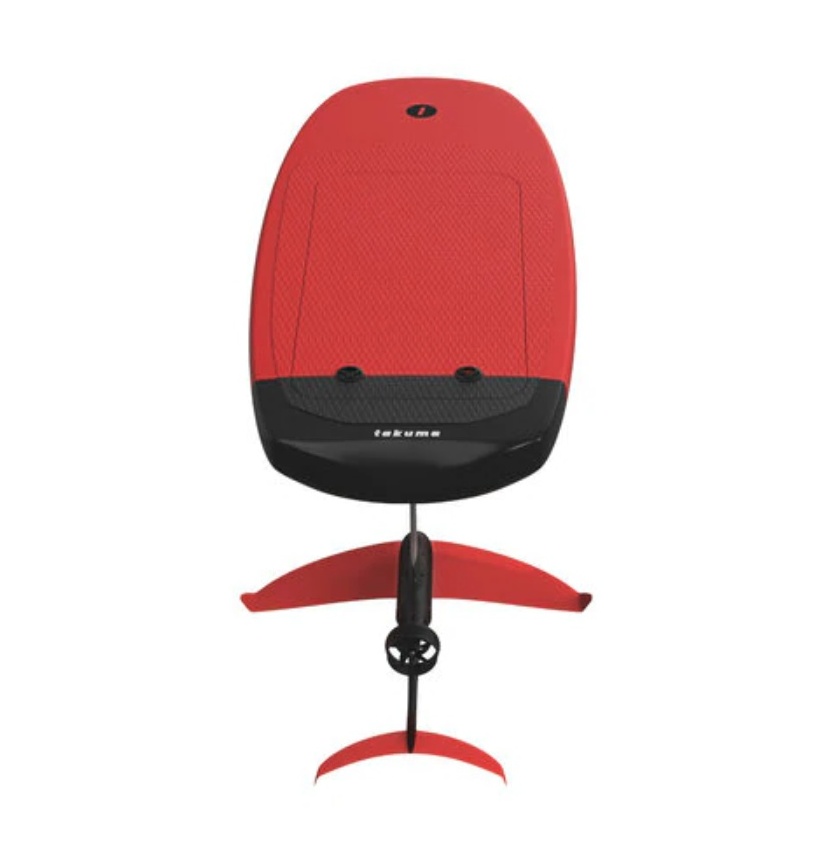
Brands that have vanished call for extra care. For boards from Takuma, in liquidation since July 2024, spare parts come from the used market, independent workshops, leftover stock sold as is and Takuma Canada (eFoilSurf), which says it still supplies parts and support. The parts supply is nonetheless uncertain now, and in the worst case a single failure can put the board out of action for good. A used board from an active manufacturer is usually the safer buy, even when it costs a bit more.
Before any money changes hands, put these five questions to the seller:
- How many charge cycles has the battery been through, and when was it built?
- Has the board been serviced, and is there paperwork to show for it?
- Can the warranty be transferred to a new owner?
- Are spare parts and wings still available for this model?
- Can you take it out on the water first? If the seller blocks that, treat it as a warning sign.
A rule of thumb: once a used premium board approaches the price of a new entry-level model, the fresh battery and the full warranty argue for the new one. A used board can look stronger on paper and still have been ridden tired, and then it quickly turns into the worse purchase. Buying used pays when the price advantage is real and the board comes from an active brand with a documented history.
The right order before you buy
The order in which you ask the questions does more for you than studying price lists. Plenty of buyers work backwards, falling for a model first and then going looking for arguments to justify it. The sequence below keeps you out of that trap.
- 1. Try it before you pay for it. A rental session or a lesson tells you whether the sport suits you, and it shows you which board size and which wing feel right under your feet.
- 2. Pick the category. Do you want to fly above the water (eFoil), plane across the surface (jetboard) or tour in comfort (electric SUP)? That choice alone sets the rough range of your budget.
- 3. Know your own requirements. Until you can name your body weight, the ride time you want and the water you ride most often, you cannot sensibly pick a model.
- 4. Narrow down the brand. Find out who offers service within your reach and a reliable supply of spare parts. A bargain price from a manufacturer on shaky ground can get expensive the first time something breaks.
- 5. Price the whole package. Add up board, charger, bag, wings, vest and helmet for each offer, and compare those totals with each other.
- 6. Decide between new and used last of all. By this point you know what you are looking for, and you can negotiate on the used market with confidence.
The most common mistakes happen when that order gets turned around. Someone buys the top model with the biggest battery straight away, when a more modest board would have been plenty. Someone else looks only at the price tag on the board and lets the accessories blow the budget apart. A third buyer picks a manufacturer with no substance behind it to save a few hundred, then stands there with nobody to call when the first fault appears.
Who should buy one, and who shouldn't?
A typical summer afternoon. Half an hour and you are at the water, the board has been waiting charged in the garage, and while other people are still pumping up an air mattress you are already gliding across the surface. If that is realistic for you, because you live near the water or spend your summers there and get out dozens of times a season, your own board gets “cheaper” with every session, as the purchase price spreads across countless launches.
Buying also makes sense if you are thinking several seasons ahead and see the sport as a fixed part of your life, not a passing enthusiasm. Families can do particularly well with an electric SUP: the price is manageable, the whole family uses it, from the kids to the grandparents, and the cost of one piece of gear spreads across a lot of people and a lot of days out.
Some people gain nothing from buying, and it is fair to say so. If you only make it onto the water a handful of times a year, renting will almost certainly serve you better, with no mountain of gear, no storage problem and no maintenance. If even the bottom of the entry-level class would stretch your budget, don't push to the limit. An electric SUP or a retrofit motor delivers the electric experience for a fraction of the money, and you can still move up later. Maybe all that has caught you so far is the sight of a board flying past, and you have never stood on one. In that case, rent before you do anything else.
Is it worth it? Renting as an alternative
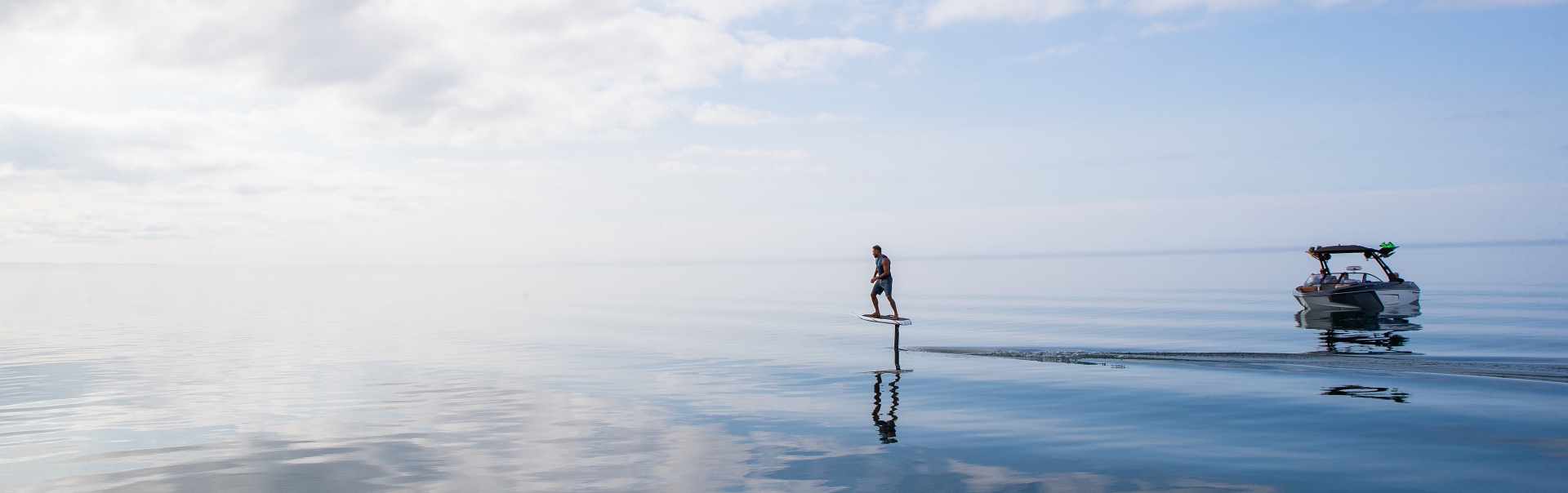
The best decision you can make, ahead of spending several thousand euros on a board, is to try the sport first. An hour of rental time or a lesson costs a fraction of the purchase price. Either one tells you whether the experience lands for you, and which board size and which wing you feel comfortable on, and that knowledge helps enormously when you come to buy.
If you can, don't rent only once. The first session is just for getting the feel of it. On the second and third outing, pay deliberate attention to how much ride time you burn through and which board feels stable under you, because those are the answers you will need most when you get to battery size and model choice.
Once you have tried it and you know you want one, our eFoil buying guide walks you step by step through choosing a model, wings and battery, so that you get as many hours on the water as possible for what you spend.