Two schools at opposite ends of the country
Down south, Fliteschool Queenstown teaches from Kelvin Beach on Lake Wakatipu. Up north, Atomic EV runs lessons at seven spots spread over the Auckland city beaches, the Waitematā Harbour and two islands in the gulf. Both teach on Fliteboard, and the Auckland outfit adds a second make.
Outside those two cities our searches turned up no school selling eFoil lessons. Someone may well teach elsewhere; we simply did not find them.
Lake Wakatipu is cold fresh water under a council bylaw rewritten in 2025. Auckland is tidal salt water under another council, whose rules were under review in 2026. Over both sits Maritime Rules Part 91, and none of these texts names eFoils. Every price and rule here was read on 23 October 2026.
Fliteschool Queenstown at Kelvin Beach
Kelvin Heights is the peninsula across the water from central Queenstown, and Kelvin Beach on its shore is where Fliteschool Queenstown launches. The school describes itself as small, family owned and family operated. It is also an authorised Fliteboard sales and service centre, and it says it was the first Flite authorised school in New Zealand.
Getting there takes about 20 minutes by car from the centre of town. The other way is a water taxi of roughly ten minutes and a short walk. Queenstown's tourism site describes Kelvin Heights beach as popular with boats, water skiers and wakeboarders, with a large boat ramp on Bay View Road, and as sheltered enough for paddle boarders. There are no shops or cafés on that side of the lake. The council spells it Whakatipu, the school Wakatipu; both are in use.
The sessions and the kit
Two sessions can be booked online. The Flite Experience is one hour for one rider. The Flite Elite is a private one to one session of an hour and a half. Both are for riders aged 15 and over and up to 100 kg, and a GoPro video can be added to either. The school's general terms are wider (a minimum age of 12 with a parent's consent for anyone under 18, and a weight range of 40 to 120 kg depending on the setup), but the sessions on sale keep to 15 and 100 kg.
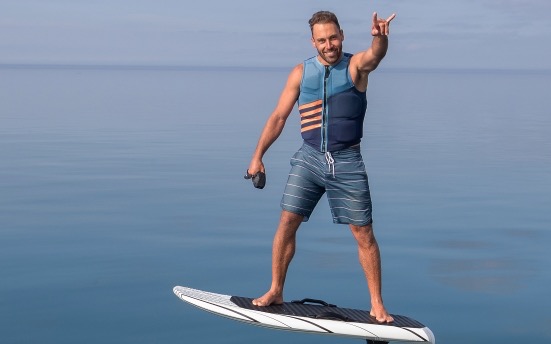
The board is a Fliteboard White on a 75 cm eFoil mast with the Cruiser wing, powered by a Flitecell Explore battery rated for about 1.5 hours of riding. You wear a 4/3 mm wetsuit, 3 mm booties, a life jacket and a helmet, plus a waterproof Bluetooth headset, and the instructor rides with you throughout. All you bring is a towel and sunblock.
- A 15 minute safety briefing comes before every session.
- You must be able to swim 50 m unaided, and you sign a waiver.
- Phones and cameras stay ashore; the instructor films on a GoPro if you ask.
- Boards can be speed limited for beginners, and the instructor holds First Aid Level 2.
- Alcohol and drugs are banned.
The school gives a typical riding speed of around 15 to 20 km/h. By its own figures learners spend only about 15 percent of a session in the water, and 95 percent of clients foil in their first session. We cannot check either figure.
Under New Zealand maritime rules, the school says, the rider is the master of the vessel (its wording). The Transport Accident Investigation Commission noted in its 2024 watchlist that the country sets no alcohol limit for recreational boat drivers, so the school's zero is stricter than the law.
What the 2025 lakes bylaw asks of an eFoil
The Queenstown Lakes District Council Navigation Safety Bylaw 2025 was made and came into force on 20 March 2025, under the Maritime Transport Act 1994. It replaced the 2018 bylaw (clause 60.1) and covers the lakes of the district, Whakatipu, Wānaka and Hāwea among them. It has no eFoil clause. In clause 6.1 a “vessel” includes a hydrofoil and excludes a surfboard, and a power-driven vessel is any vessel propelled by machinery. On these lakes, then, we read an eFoil as a power-driven vessel.
The rule you will meet first is speed. Clause 9.1 sets a maximum of 5 knots (about 9 km/h) within 50 m of other vessels, floating structures or people in the water, within 200 m of the shore or of any structure, and within 200 m of a vessel flying Flag A, the dive flag. On the lake, speed means speed through the water. The council's Boating Guide for Lake Whakatipu, dated November 2025, puts the 5 knots as “a fast walking speed”. Set that against the school's 15 to 20 km/h, roughly 8 to 11 knots, and on our reading the faster part of any ride belongs more than 200 m out and well clear of swimmers and boats.
Clauses 8.1 to 8.3 keep anyone under 15 from being in charge of a power-driven vessel capable of more than 10 knots unless someone over 15 supervises within reach of the controls. We take that as the background to the 15 and over rule on the Queenstown sessions.
Lifejackets must be carried (clause 20.1), and on recreational vessels of 6 m or less each person wears one while the vessel is making way (clause 21.2). Clause 24.1(a) lets wetsuit wearers off, but only on surfboards, paddleboards, windsurfers and similar craft without power. We read that as meaning an eFoil rider on the Queenstown lakes wears a lifejacket, wetsuit or not. Clause 19.1 adds that every power-driven vessel carries a waterproof means of communication, with an exception in clause 19.2 for training accompanied by a compliant support vessel.
ID numbers and the ski lanes
Clause 18 is the one owners need. Vessels on the district's lakes show a unique name or number above the waterline on each side, not a brand or model, at least 90 mm high and readable from 50 m, unless the vessel carries a Maritime New Zealand type ID. Non-powered and paddle craft up to 6 m are exempt, as are visitors marked under the bylaw of their home water. As we read it, a privately owned eFoil ridden on Lake Whakatipu needs that ID.
The bylaw also marks water ski access lanes on Lake Whakatipu at Kelvin Grove, Frankton Beach, Loop Road and Sunshine Bay, plus an access lane at the Narrows beside the Kelvin Heights peninsula. In those lanes ski craft may leave or approach the shore above 5 knots (clause 9.3(a)), and the lanes are reserved for that use. A learner on an eFoil, in our reading, keeps out of them.
Seven spots around Auckland with Atomic EV
Atomic EV runs what it calls the Fliteschools of greater Auckland: Orakei, Saint Heliers, Birkenhead, Takapuna, Long Bay, Waiheke and Kawau. You do not pick the spot in advance. Weather, tide and which trainer is free decide it, and after you buy a lesson or a gift card in the web shop a trainer calls to agree the board, the spot, the date and the time. Longer packages can be arranged.
The Orakei spot lies about 4.3 km from downtown Auckland and some 20 km from the airport, according to the city's tourism site, which also says there is free parking within walking distance of each spot.
A lesson lasts 90 minutes including the safety briefing, and you usually get at least 60 minutes on the water. Helmet and impact vest stay on the whole time. Atomic EV says every one of its spots has Maritime New Zealand approval for its safety measures, that its eFoils are certified for training and that all trainers are first aid certified. We have not seen the approvals themselves.
Three Fliteboards and two Audi e-tron foils
At most spots you choose the board at no extra charge. The Fliteboard 100 litre carbon is the standard beginner board; the Flite PRO at 67 litres suits experienced or lighter riders; the Flitescooter, 237 litres, is there for complete novices.
The second option is the Aerofoils Academy, which teaches on the Audi e-tron foil by Aerofoils, developed and made in Germany. Beginners start on the Adventure, 103 litres, and experienced or lighter riders take the Performance at 83 litres. The academy uses the same seven spots, and Flite and Aerofoils boards can be mixed within one lesson, so a single booking can put you on two makes. Atomic EV calls itself the first in Asia-Pacific to offer these lessons.
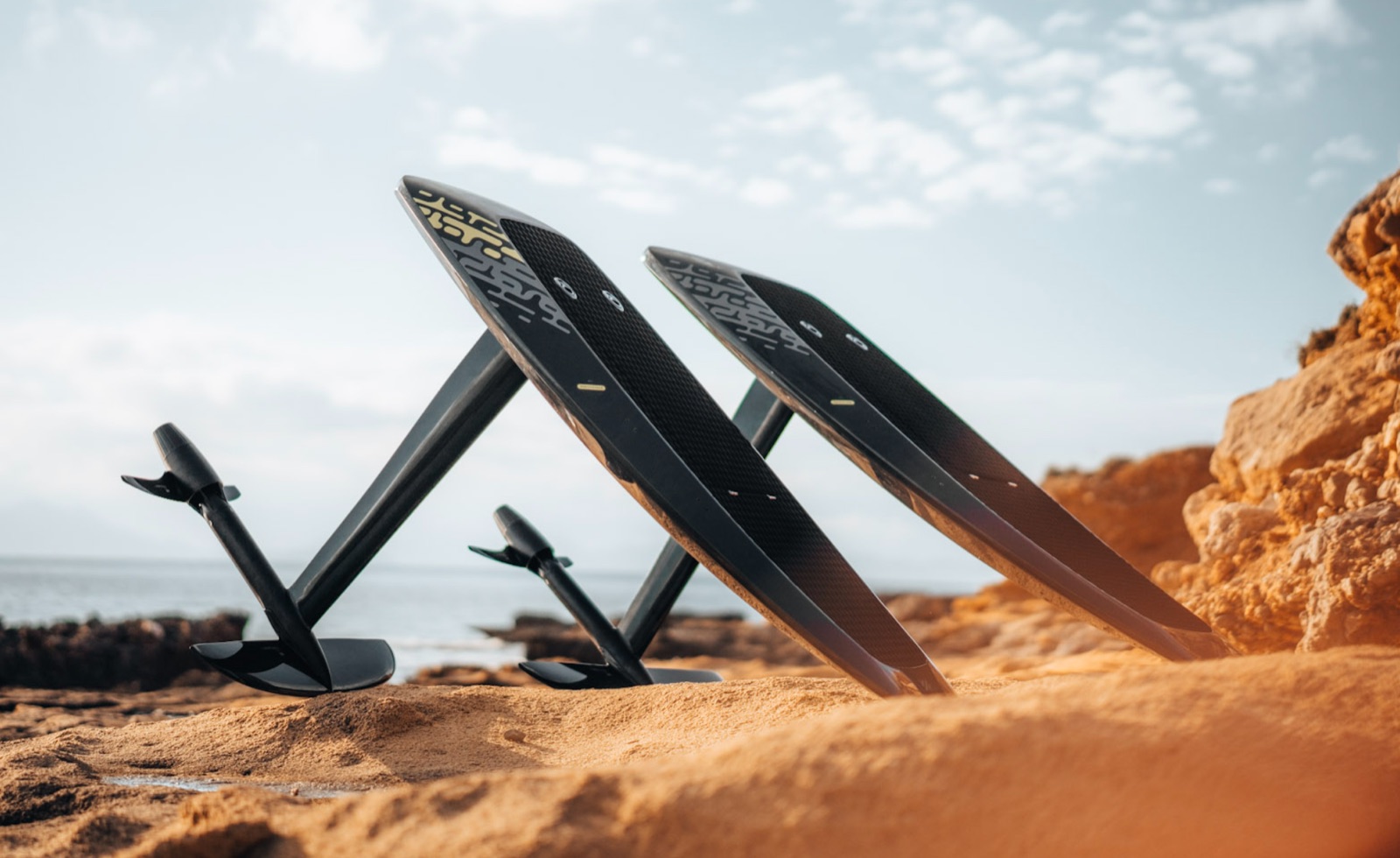
Bring a wetsuit if you own one, and warm clothes for afterwards. Atomic EV lends wetsuits in most sizes for free if you tell it in advance, and it warns that even in summer you can get cold once you are wet, and that the weather turns quickly.
Auckland put foil boards out for consultation in 2026
On Auckland water two documents apply on top of the national rules: the Navigation Bylaw 2021 and the harbourmaster's Control of 24 June 2021. Between them they cover lifejackets and where the various boating activities are allowed.
Coastguard New Zealand summarises the current clause 20 as requiring lifejackets on vessels of 6 m and under unless the person in charge lets someone go without, and Auckland Council points out that the national rules only require lifejackets to be carried, not always worn. In a lesson you wear Atomic EV's helmet and impact vest regardless.
That may change. From 4 May to 7 June 2026 Auckland Council consulted on two things that matter here: making lifejackets compulsory to wear on small boats while they are moving, and rules for motorised hydrofoil boards and foil boards. None of the rules in force that we read names eFoils; this consultation is where they turn up on a council's agenda. By 23 October 2026 we had found no decision, so treat both points as under review and check the council's bylaw pages before you ride your own board in the harbour.
The national rules under every bylaw
Maritime New Zealand's Navigation Safety Rules, Part 91 of the Maritime Rules, apply everywhere in New Zealand waters (rule 91.3), in the consolidation of 1 November 2016 that we read, and councils add their own regional navigation bylaws on top. Part 91 defines a vessel as every boat or craft used in navigation, with or without propulsion. Our reading is that an eFoil is a vessel and its rider the person in charge of it, and nothing in the Maritime New Zealand texts we read names eFoils.
For a rider, three of them matter. Rule 91.6(1) is the 5 knot limit with the distances already met in Queenstown, in force nationwide unless a bylaw provides otherwise. Rule 91.5 is the age rule for craft capable of more than 10 knots (about 18.5 km/h), with written exemptions possible. Rule 91.4 has recreational craft carry a personal flotation device for each person, worn in danger (tides, poor visibility, rough seas, bad weather); its exception covers surfboards and similar craft without power, and windsurfers in wetsuits.
We read that exception as not reaching an eFoil, so a rider anywhere in the country carries a flotation device, and the Queenstown bylaw has it worn.
Readings marked as ours are our interpretation of the texts named, as they stood on 23 October 2026. This page is not legal advice; for your own board, ask the harbourmaster of the water you plan to ride.
Glacier water in Queenstown, a seasonal sea in Auckland
Lake Whakatipu is fed by glaciers and stays at about 8 to 10 °C all year. Shallow Frankton Beach runs slightly warmer, but no month makes the lake warm. Hence the kit in Queenstown, a 4/3 mm wetsuit and booties for every rider in every month, and the school's right to call off a session for cold air.
The school publishes no season dates. Its booking calendar shows which days run, and that is the place to look for the month you have in mind.
Auckland's sea has a proper annual curve. Average sea temperatures by month, January to December, run 20.2, 21.2, 20.9, 19.6, 18.0, 16.4, 15.1, 14.6, 15.0, 15.6, 16.9 and 18.4 °C. February is the warmest month and August the coldest, and even August water is several degrees warmer than the lake at Queenstown ever gets. Atomic EV calls Auckland winters comparatively mild.
A northern summer holiday lands in the New Zealand winter, with Auckland water around 15 °C. In Queenstown the water hardly changes, so air temperature and wind decide the day.
What a lesson costs, how to book and what happens if it blows
All prices below are list prices including GST, in New Zealand dollars, read on 23 October 2026.
Swipe sideways to see all columns
| Operator | Where | Format | Price |
|---|---|---|---|
| Atomic EV | Auckland, seven spots | 90 minutes, one to one | NZ$279 |
| Atomic EV | Auckland, seven spots | 90 minutes, two riders with one instructor | NZ$239 per person |
| Fliteschool Queenstown (Bookme) | Kelvin Beach, Lake Wakatipu | About 90 minutes in all, two riders, all gear | NZ$498 for two |
The Queenstown figure is for two riders together. Split down the middle it comes to NZ$249 each, ten dollars above the Auckland rate for a pair. Queenstown books through FareHarbor and Bookme; Atomic EV sells lessons and gift cards in its web shop.
The Queenstown cancellation terms run like this. If the school calls a session off for wind, cold, chop, poor visibility or thunderstorms, you get a free reschedule or a voucher valid for 365 days, and no cash refund. Cancel yourself more than 48 hours ahead and you keep a credit. Later than that you get nothing back, unless the school manages to fill the spot. On a short holiday, book early in the trip so that a windy day still leaves time for a second try.
Fliteschool Queenstown sells and services Fliteboards; Atomic EV sells Flite and Audi e-tron foil eFoils and services them at Kumeū. For a board of your own, the eFoil price guide breaks down where the money goes, and used eFoils bring the entry point down.
If you are crossing the Tasman as well, our eFoil Australia page covers the schools there state by state, and our page on eFoil in Bali is there for a warmer trip. For the board itself and how riding one works, start with the eFoil guide.