Who makes Jetsurf
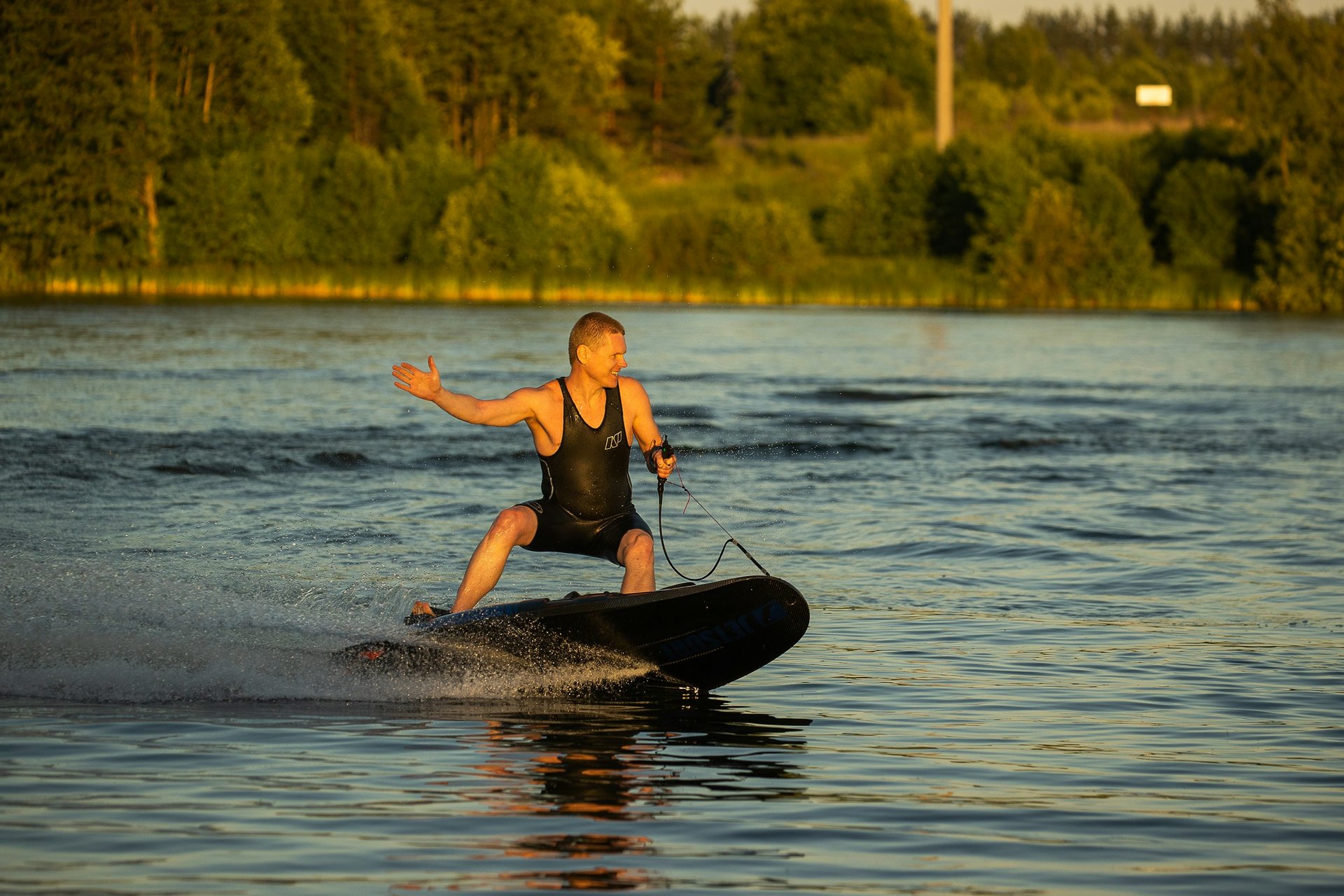
Jetsurf boards come from MSR Engines s. r. o. in Střelice u Brna, a small town near Brno in the Czech Republic. Its whole range rests on one idea. Take a surfboard, build a jet pump and a small engine into it, and give the rider a control handle to hold.
That handle does a lot of work. You start the board with it, you squeeze the throttle on it, and you lean against it for balance while you find your stance. There is no foil and no wing under the board. A Jetsurf planes across the surface like a small speedboat hull, so it feels closer to waterskiing or wakeboarding than to the flight of an eFoil.
Every current model shares a footprint of 1,800 by 600 by 150 mm, a little under six feet long, and every one pushes water through a carbon jet pump. What changes from model to model is the drive (a two-stroke petrol engine or a battery and electric motor), the bindings, the exhaust, the weight and whether the board has handlebars. Jetsurf sells from its own online shop and through dealers. For riding on Czech water, where the jetsurf is a home product, see our eFoil Czech Republic guide.
The lineup at a glance
The maker's shop lists eight models. Six run on petrol, two on a battery, and three of the eight come as a ski with handlebars. The table lists them by the maker's own figures, with prices before VAT.
Swipe sideways to see all columns
| Model | Drive | Weight | Top speed | Max load | Price excl. VAT |
|---|---|---|---|---|---|
| Adventure 2 DFI | Petrol, NG 100 DFI | 20.5 kg | 55 km/h | 120 kg | €9,990 |
| Race DFI SL | Petrol, NG 100 DFI | 19.5 kg | 58 km/h | 120 kg | €10,990 |
| Cruiser DFI | Petrol, NG 100 DFI | 20.5 kg | 55 km/h | 120 kg | €12,490 |
| Titanium DFI SL | Petrol, Titanium 100 DFI | 18.5 kg | 64 km/h | 120 kg | €12,990 |
| Race DFI SKI | Petrol, Titanium 100 DFI | 24.9 kg | 58 km/h | 120 kg | €12,790 |
| Titanium DFI SKI | Petrol, Titanium 100 DFI | 24.9 kg | 62 km/h | 120 kg | €13,990 |
| Electric 2 | Battery, 3 kWh | 32.9 kg | Up to 55 km/h | 100 kg | €12,490 |
| Electric 2 Ski | Battery, 3 kWh | 38.3 kg | Up to 55 km/h | 100 kg | €13,990 |
Two things stand out. The petrol boards are light, all of them close to 20 kg, and the lightest is also the fastest. The electric boards carry about 13 kg more, nearly all of it battery, and allow a lower rider weight.
Electric 2 and Electric 2 Ski
The Electric 2 is the battery version of the board. The hull is carbon. A 3 kWh lithium ion pack of 59 Ah and under 60 V sits in the deck, weighs 18 kg and lifts out, so packs can be swapped between rides. Jetsurf quotes 25 to 55 minutes on one charge and about three hours to fill it again.
The motor drives the jet pump directly through a racing pump and impeller. Motor, controller and battery are cooled by a patented system of air and water. The owner's manual lists three power modes of 6, 9 and 11 kW, and the board drops back to the middle one whenever the battery comes out. On top of that comes a booster that adds 15% for six seconds, several times in one ride.
Jetsurf gives the top speed as up to 55 km/h (34.2 mph) in the specifications and up to 50 km/h in the battery description, so plan on something between the two. Weight is 32.9 kg for the board and 38.3 kg for the ski version, and both take riders up to 100 kg.
Charging and safety
The charger watches the temperature, humidity and pressure of the pack while it charges. If anything looks wrong it switches off and beeps. On the water, a magnet on your wrist sits on the handle, and the moment it comes away the board stops. Quick fit fins and a handle length adjuster round off the list.
The Electric 2 Ski puts handlebars on this board. Their length adjusts to the rider, a foam pad covers them, and the ski turns back into a surfboard in a few minutes. You still ride it standing. The German dealer E-SURFER sells it as a stand-up jet ski, and our electric jet ski guide sets it against the sit-down craft.
The petrol boards
The petrol boards run on a two-stroke DFI engine: the 100 cc NG 100 DFI in the Adventure 2 DFI, the Race DFI SL and the Cruiser DFI, and the Titanium 100 DFI in the titanium and ski models. A brushless starter turns it over and a processor handles the ignition. A small lithium ion starter battery of 9 Ah (99 Wh) is good for about 150 starts or three hours of riding, and it recharges in about 45 minutes, from a car socket if need be. Jetsurf puts fuel use at less than a gallon an hour.
Fuel is unleaded 95 mixed with fully synthetic two-stroke oil. Jetsurf says its silencer brings the noise down to 59 dB and makes the boards compliant with the EU directive on recreational craft.
Adventure 2 DFI
The entry model costs €9,990 before VAT. A squared base makes it steadier, and it has double bindings, an intake screen and an alternator. A flush connection takes an ECA or GARDENA garden hose for rinsing after a ride. The tank holds 2.8 liters, the board weighs 20.5 kg, carries riders up to 120 kg and reaches 55 km/h (35 mph). It is also ready for the inflatable Tube, sold separately.
Cruiser DFI
This one is built for distance. A 3.78 liter extra tank comes on top of the standard 2.8 liters, and Jetsurf calls it the quietest of its petrol boards. It weighs 20.5 kg, tops out at 55 km/h and costs €12,490 before VAT. The maker pitches it as a board to share, between goofy and regular riders and between adults and kids.
Race DFI SL
At 19.5 kg this is the board Jetsurf calls the lightest in the world. It has pro bindings, a catalytic converter and a raw carbon finish. Top speed is 58 km/h (36 mph) and the price €10,990 before VAT.
Titanium DFI SL
The top of the board range. The Titanium 100 DFI engine breathes through a titanium exhaust, the board weighs 18.5 kg and it reaches 64 km/h (39.7 mph), the highest figure in the lineup. Ratchet bindings hold your feet, the maximum load is 120 kg, and the price is €12,990 before VAT.
Ski versions with handlebars
A Jetsurf ski is a board with a handlebar mast in place of the hand-held throttle. You stand, you steer with both hands, and the bar gives you more to hold on to. Three models come this way.
The Race DFI SKI uses the Titanium 100 DFI engine with an aluminum exhaust, weighs 24.9 kg, reaches 58 km/h and costs €12,790 before VAT. Jetsurf bills it as the lightest jet ski in the world. It fits in the trunk of most cars, one person can carry it, and like the electric ski it converts back into a surfboard.
The Titanium DFI SKI swaps the aluminum exhaust for titanium and gains a little speed, 62 km/h (39 mph) at 24.9 kg, for €13,990 before VAT. The Electric 2 Ski, covered above, is the battery version at €13,990 and 38.3 kg.
A ski in this sense is still a light stand-up craft and not a personal watercraft you sit on. If what you have in mind is a seat and a passenger, look at the sit-down models on our electric jet ski prices page.
Jetsurf prices with and without VAT
Jetsurf prices every board in euros and leaves out VAT, import tax and shipping. A private buyer in Europe pays the VAT of the country of delivery on top.
E-SURFER, a dealer in Berlin, shows the difference. Its prices include 19% German VAT. The Race DFI SL costs €13,078 there, the Titanium DFI SL €15,458, the Race DFI SKI €15,220, the Titanium DFI SKI €16,648, the Electric 2 €14,869 and the Electric 2 Ski €16,648. Delivery to another EU country is charged at that country's VAT rate, and an electric board ships as dangerous goods because of its battery.
In the United States, Jetsurf USA lists the Electric 2 SKI at $16,490.
Swipe sideways to see all columns
| Model | Maker, excl. VAT | E-SURFER, incl. 19% VAT |
|---|---|---|
| Adventure 2 DFI | €9,990 | Not listed |
| Race DFI SL | €10,990 | €13,078 |
| Cruiser DFI | €12,490 | Not listed |
| Titanium DFI SL | €12,990 | €15,458 |
| Race DFI SKI | €12,790 | €15,220 |
| Titanium DFI SKI | €13,990 | €16,648 |
| Electric 2 | €12,490 | €14,869 |
| Electric 2 Ski | €13,990 | €16,648 |
How these prices compare with the rest of the category, eFoils included, is on our electric surfboard prices page.
Jetsurf, eFoil or jet ski
All three get you moving on flat water without wind or waves, and all three end up filed under motorized watersports. They ride very differently.
A Jetsurf stays on the surface. You feel every chop, you lean into turns, and the board answers fast because there is so little of it. The maker lists top speeds from 55 to 64 km/h across the range.
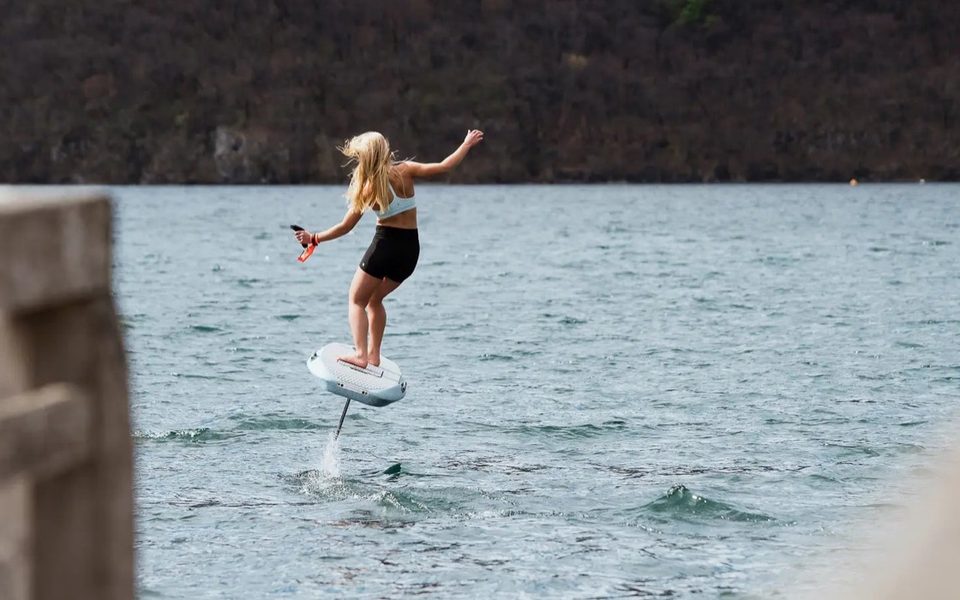
An eFoil lifts the board clear of the water on a hydrofoil. Once you are up, the ride is smooth and quiet, and the foil under the board needs deeper water. A jet ski in the usual sense is a sit-down machine for one to three people, many times heavier than a 20 kg board, and it needs a trailer and a ramp.
If you are torn between a jetboard and a foil, our electric surfboard guide compares them side by side. Among jetboards, Jetsurf is the one to look at when you want a petrol engine, the racing classes or a board of around 20 kg.
Learning and test rides
Jetsurf claims that most people with no board experience at all stand up and ride within 30 minutes. The handle helps, since it gives you a point of balance while you find your stance.
For the first sessions and for children, Jetsurf sells the Tube, an inflatable accessory that fits all models and gives the board extra stability. A ski version with handlebars is another way to make the start easier.
Before you buy, ride one. Jetsurf runs a try before you buy program through dealers, academies and ambassadors, which you find in the store locator on its site, and it sets a rider weight limit of 120 kg. In Germany, E-SURFER offers jetboard test rides with an instructor at its Berlin site only, and it also rents out the Electric 2 and the Electric 2 Ski.
Gear matters more on a jetboard than on a foil. A jetboard can keep going without its rider, so the magnetic kill switch on a leash or wrist strap is not optional. E-SURFER also tells every rider to wear a helmet and a vest.
MotoSurf racing
In racing, Jetsurf has the field to itself. The company is the exclusive manufacturer for UIM MotoSurf events in the Stock, Stock R, Juniors, Women and Masters classes, so a rider in those classes lines up on a Jetsurf.
The Race DFI SL, with its pro bindings and its 19.5 kg, is the board the maker lists the racing classes under. The Titanium models add a titanium exhaust and the highest top speeds in the range.
Batteries, care and warranty
The warranty starts when you register the board on Jetsurf's site, which also holds the claim forms for customers and dealers. The Electric manual gives one year on materials where the law does not guarantee longer, and asks you to report a defect to your dealer within 30 days.
Three habits void that warranty on the electric board. Moving or storing it with the battery connected is one. Using a damaged battery is another, and charging the pack straight after a ride, while it is still warm, is the third.
For a break of more than a week, take the battery out, keep it somewhere between 10 and 30 °C and leave it at no more than 50% charge. More on looking after lithium packs is in our eFoil battery guide.
The petrol boards ask less of you here. Their starter battery recharges in about 45 minutes, and fuel and two-stroke oil are what you buy as you ride.
Where you may ride
No single rule covers a motorized surfboard. Countries, regions and even single lakes decide for themselves, and a jetboard often falls under the rules for personal watercraft.
Germany is a clear example. Official guidance from the federal waterways administration treats a jetboard as a personal watercraft whatever its power, while an eFoil is not. On federal inland waterways such craft may only ride in areas released by a sign marked E.22, apart from the shortest way there from the nearest launch point and straight passage on a touring trip. A licence is needed above 7.5 kW for an electric drive and above 11.03 kW for a combustion engine, and for the electric limit the continuous output counts. The Electric manual gives modes up to 11 kW and 7.8 kW in its table, but no continuous rating, and Jetsurf does not publish the output of its petrol engines, so check with the dealer before you plan a trip.
Elsewhere, ask the lake or harbor authority before the first ride. A board of 20 kg fits in a car trunk and goes anywhere, and the rules of each water go with it.