Electric boat prices, builder by builder
€29,800 is the lowest public price we found for a new electric boat from a European yard. It belongs to the Leines 540, a 5.40 m lake launch from Leines Boote in Germany, and German VAT is already in the figure (about €25,042 without it). At the far end, RAND Boats in Denmark asks from €569,900 for its Escape 44. We read every builder price on this page on the builder’s own site on October 30, 2026, unless another date stands next to it.
Leines prints six boats on its home page, all with VAT, up to the 870 at €84,900, which takes ten people. The 540 seats five and is built for hire fleets and commercial use. Leines says you can order it ready to register and drive at that price.
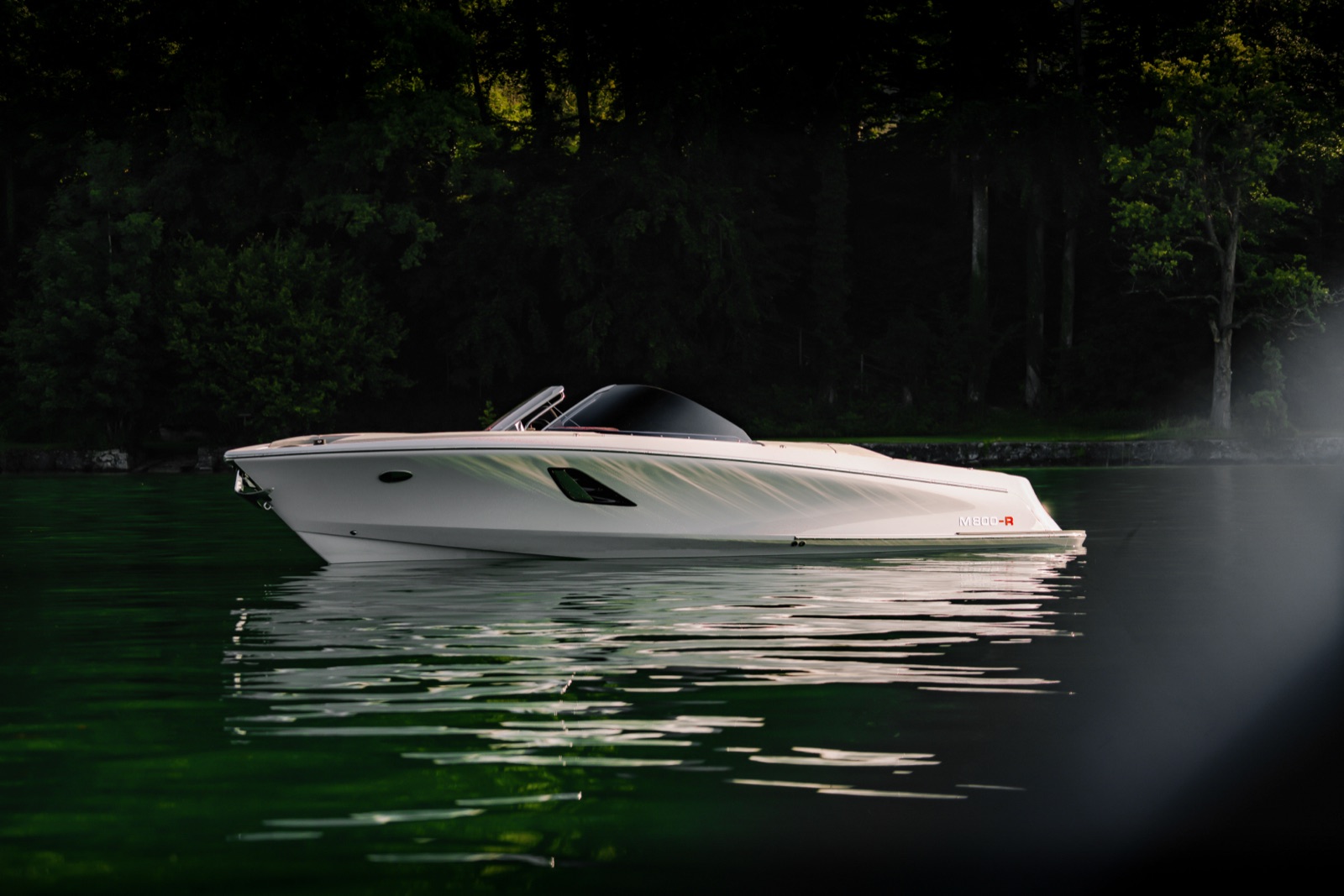
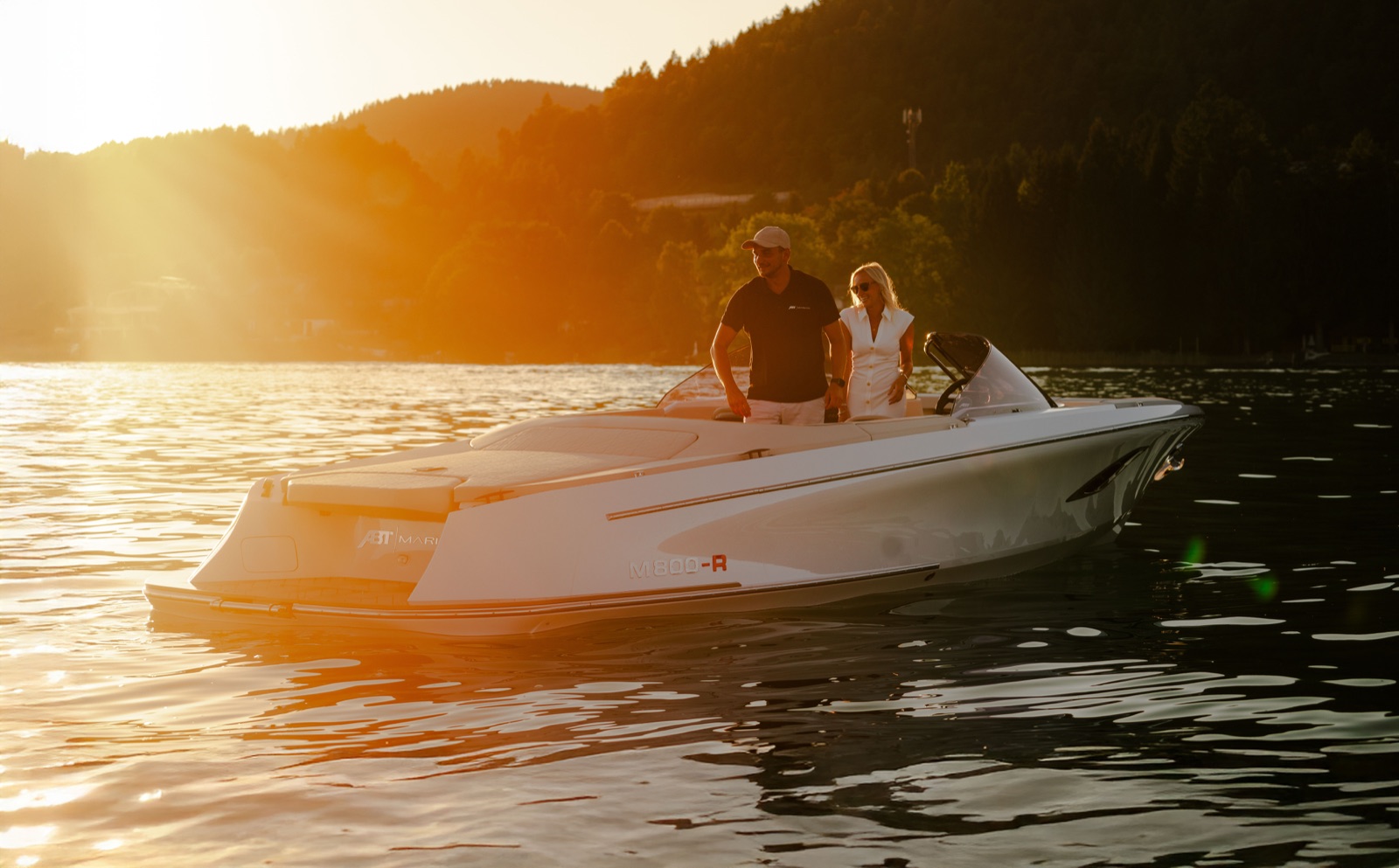
Marian in Austria starts the Eclipse 580 at €41,000 excl. VAT, the M 800 at €226,000 and the M 800 Spyder at €238,000. The M 800-R has no published price. The yard and its boats are on our Marian page.
RAND gave its whole range new names for model year 2027. Twelve “From” prices now run from the Serene 20 (formerly Breeze 20) at €49,900 through the GT 28 (formerly Leisure 28) at €179,900 to the Escape 44 (formerly Lagune 44). The models list is silent on VAT, while the GT 28 configurator states net prices. A single list that spans more than elevenfold shows how little “electric boat price” means without a length and a battery.
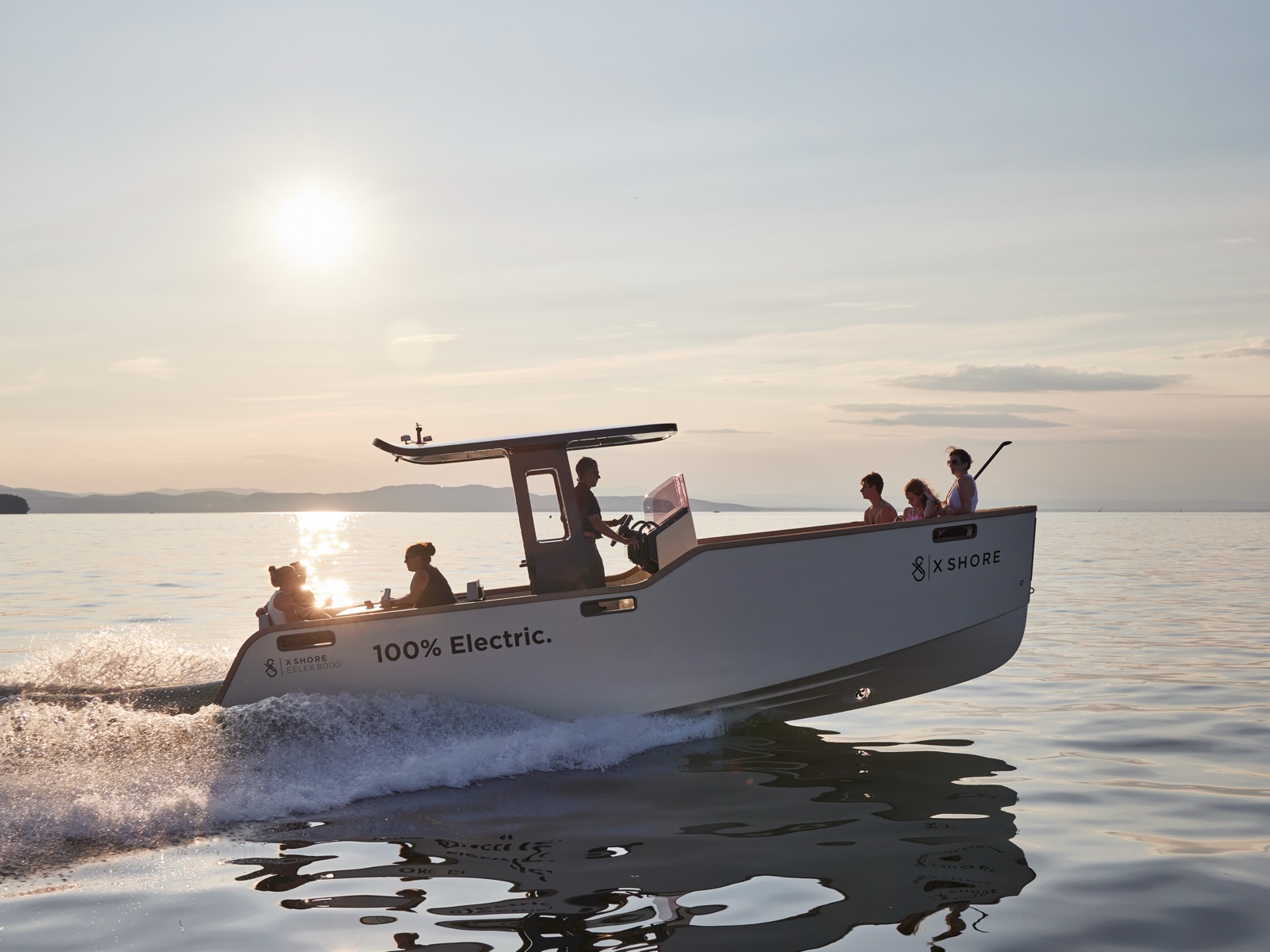
X Shore in Sweden listed the X Shore 1 from €129,000 and the Eelex 8000 and PRO from €249,000 on its European site when we read it in September 2026. Its sales terms say list prices normally exclude VAT and, unless agreed otherwise, apply ex works Nyköping.
Frauscher, Candela, Greenline and Alfastreet print no current price. Frauscher’s only official figures are two Porsche launch releases, Candela’s come from press releases dated 2021 to 2023, Greenline sells by quote, and Alfastreet showed nothing on its site or in its configurator on October 5, 2026. We do not guess a figure for any of them. Who builds what, and how the boats differ, is in our electric boat guide.
Swipe sideways to see all columns
| Builder | Country | What the builder publishes | VAT |
|---|---|---|---|
| Leines | Germany | 540 from €29,800 to the 870 at €84,900 | Included |
| Marian | Austria | Eclipse 580 from €41,000 to the M 800 Spyder at €238,000 | Excluded |
| RAND | Denmark | Serene 20 from €49,900 to the Escape 44 from €569,900 | Configurator net |
| X Shore | Sweden | X Shore 1 from €129,000, Eelex 8000 from €249,000 (September 2026) | Normally excluded |
| Frauscher | Austria | Porsche launch releases only | Net in releases |
| Candela | Sweden | Launch releases only | Varies |
| Greenline | Slovenia | Price by quote | Not published |
| Alfastreet | Slovenia | Nothing shown (October 5, 2026) | Not published |
What a list price includes, and what it leaves out
Six questions separate two prices that only look alike.
- Base model? On the RAND GT 28, “from” means the petrol boat at €179,900; the electric versions cost €269,900 to €309,900.
- VAT in or out? Leines and Torqeedo include it; Marian, X Shore and the RAND configurator leave it out.
- Ex works or delivered? X Shore quotes ex works Nyköping, RAND excludes delivery and registration, Leines sells the 540 ready to register.
- Which battery? RAND offers the GT 28 with 78 or 117 kWh. Candela’s 2021 launch price was for 44 kWh; the C-8 page now lists 69 kWh.
- Live list or launch release? Frauscher and Candela figures belong to one boat at one moment.
- Charger included? Torqeedo sells charger and throttle separately. RAND includes shore power with its electric drive and charges €9,900 for a 22 kW fast charger.
VAT is the biggest of these gaps. In Germany the Umsatzsteuergesetz (UStG, in the version published on February 21, 2005), § 12(1), sets it at “19 Prozent der Bemessungsgrundlage”, 19% of the taxable amount. Italy has charged 22% since October 1, 2013, according to the research service of the Camera dei deputati. The UK rate is 20%, and GOV.UK’s VAT Notice 744C limits the zero rate for ships to vessels of at least 15 gross tons not designed for recreation or pleasure, adding that motor cruisers, powerboats and yachts never qualify. As we read it, a leisure dayboat bought in Britain pays the full 20%.
No builder on this page prints a pound price, so a British buyer starts from the net euro list, adds 20% and pays delivery from the yard. Which country’s VAT applies when yard and buyer sit in different countries, and what EU to UK import adds, we did not research. This is a reading of public texts, not tax or legal advice.
One hull, petrol or electric: the RAND GT 28 pair
Setting an electric boat against a petrol boat of another make mixes up hull, finish and brand. The clean test is a yard that sells both drives in one hull and prints both prices, and of the builders on this page only RAND does. Frauscher builds both too but publishes no prices.
The GT 28 costs €179,900 with a Mercury F 300 outboard or a Mercruiser 350 HP inboard, and €269,900 with the 170 kW E-Drive and 78 kWh, about 50% more. The 245 kW version sits €130,000 above the petrol boat. These are RAND’s recommended retail prices for model year 2027, excluding VAT, delivery and registration.
Swipe sideways to see all columns
| VAT applied | Petrol | Electric 170 kW, 78 kWh | Gap |
|---|---|---|---|
| None (configurator, net) | €179,900 | €269,900 | €90,000 |
| Germany, 19% | €214,081 | €321,181 | €107,100 |
| United Kingdom, 20% | €215,880 | €323,880 | €108,000 |
| Italy, 22% | €219,478 | €329,278 | €109,800 |
VAT is a percentage, so it lands harder on the dearer boat and the gap grows from €90,000 net to more than €107,000 in each of the three countries. The premium pays for the whole drivetrain (motor, inverter, battery, shore charging), with options, delivery and registration still to come on every line.
Shore power against the fuel dock
Energy is where the electric premium starts to come back, and the hull shape decides how much of it. Eurostat puts household electricity in the first half of 2026 (2,500 to 4,999 kWh a year, all taxes included) at €0.2832 per kWh for the EU27, with Germany at €0.3618, Austria €0.3260, Italy €0.3142 and the Netherlands €0.2440. Ofgem’s cap for October to December 2026 sets an average British unit rate of 26.32p plus a standing charge of 54.83p a day.
Petrol, per the European Commission’s Weekly Oil Bulletin for the week of October 26, 2026, averaged €1.95 a liter of Euro-super 95 across the EU27 with taxes, with Austria at €1.77 and the Netherlands at €2.31. British pumps that week charged 174.07p for unleaded, VAT included, according to GOV.UK.
The only published head to head figures come from Candela. On a 150 nautical mile round trip from Stockholm to Mariehamn in 2024 the C-8 used 213 kWh “at a cost of about 40-50€”, while a petrol chase boat of similar size refueled for €750, and the CEO spoke of 95% lower operating costs. On a Europe to Africa crossing in 2025 it used 40 kWh, about €8, against 50 liters of petrol, about €90, in the photo boat. These are the builder’s figures for single trips, without the chase boat’s model or the fuel price.
A hydrofoil needs less energy than a planing hull by design, so a planing electric dayboat should not be expected to match those ratios. RAND, Marian, Leines and Frauscher publish no consumption per mile at cruise, so for their boats the sum cannot be done.
For the C-8 it can, as an illustration with standing charges left out and the prices of the dates above. A full 69 kWh charge costs €19.54 at the Eurostat EU27 household price for the first half of 2026, £18.16 at the British cap for October to December 2026 and £26.22 at Weymouth Harbour’s 2026/27 marina rate of 38p a unit before VAT. The 50 liters the photo boat burned would cost €97.70 at the EU27 petrol average for the week of October 26, 2026. On the Baltic trip the C-8 drew some 1.4 kWh per nautical mile on our sums, or €0.40 a mile at the EU27 household price.
What the berth costs, power included
Harbors charge by length, and in the tariffs we checked the drive changes the berth fee in only one place. What does change is how the electricity you load is billed.
Weymouth Harbour in Dorset charges £450.00 per meter of length overall for a year on a marina berth in its 2026/27 tariff, or £293.00 per meter for April 1 to September 30, plus VAT. An 8.2 m boat, the length of a Leines 820, would pay £3,690 a year before VAT by our arithmetic. Berth holders buy electricity by smartcard at 38p per unit plus an £82.00 yearly standing charge, both plus VAT and subject to change. Before any VAT, that unit already costs 44% more than the household cap.
Monte di Procida, near Naples, prices berths for 2026/2027 by class and residence (an annual class I pontoon berth is €2,300 for residents, €3,800 for others), with no electric distinction on the pontoons. The exception is the Darsena dei pescatori, where a rowing gozzo with an auxiliary motor pays €550 and one with an electric motor €360, the one cheaper electric berth we found. Water and power are inside the 2026 pontoon fee; from 2027 they will be metered, with a base amount kept in the fee.
Before you sign, ask the harbor whether charging is in the fee, metered or sold by the day, and what socket the berth has.

Insurance and license fees for an electric boat
In every insurance rule we found, an electric boat counts as a powered boat like any other. The Canal & River Trust asks for third party cover of at least £2,000,000 before it issues a boat license; cover for the boat itself is optional. The Avon Navigation Trust requires all craft, powered or not, to be insured and recommends at least £3m including salvage.
Italy puts it in law. Decreto legislativo 7 settembre 2005, n. 209, article 123, paragraph 1, bars pleasure craft from navigating without third party liability insurance, “con esclusione delle unità non dotate di motore”, so only boats without a motor are exempt, and paragraph 3 extends the duty to removable motors “di qualsiasi potenza”, of any power. The way we read it, the article separates motor from no motor, never electric from thermal.
None of these rules discounts or surcharges electric drive, and we found no published premium table for electric boats in the UK or Italy. The premium is the insurer’s call.
License fees are where electric can pay less. The Canal & River Trust’s Gold Licence fees for 2026 carry a 25% discount for boats “solely powered by a permanently fitted inboard electric motor”; an electric outboard is not named, and only the Trust can say whether it qualifies. The Avon Navigation Trust gives electric or steam powered craft 40% off its private license for 2026.
Motor power, and in Germany the kind of motor, can also decide whether you need a boating license. Leines says its boats up to 7.5 kW need none. The German Sportbootführerscheinverordnung (SpFV) of May 3, 2017, § 5(1) no. 1, requires no license on federal inland and sea waterways for an electric motor of at most 7.5 kW in S1 continuous rating, or a combustion engine of at most 11.03 kW. Our reading is that this covers federal waterways only; Leines says Bavaria allows 11 kW on its lakes, which we have not checked. None of this is legal advice, and the authority for your water has the final word.
Servicing and winter storage
Oil, fuel filters, impeller and the whole fuel system drop out. Torqeedo’s Deep Blue FAQ says an electric drive needs far less maintenance than a fossil fuel one, with only the water filters needing regular checks, and recommends a yearly check of the high voltage system by Torqeedo or a certified partner.
The hull keeps its own list: antifouling, anodes, propeller, steering. Torqeedo’s spare parts for the Cruise 12.0 give a sense of scale, with an aluminum anode set at €109.00, zinc at €115.00 and propellers from €239.00 to €259.00, VAT included. Candela claims the C-8’s foils, lifted above the surface in planing mode, stay clear of fouling and corrosion. We found no published yearly servicing cost for any electric boat, so this page lists items and gives no percentage.
Winter is a berth or storage bill set by length. Weymouth charges £180.00 per meter for a marina berth afloat from October 1 to March 31, or £36.50 per meter per month, with winter electricity at £6.85 a month standing charge plus 38p a unit, all plus VAT. For the battery, Torqeedo advises ventilation, a check of the balancing state, and disconnecting mains, the 12 V battery and the pole terminals.
Resale value, and the data nobody has
We looked for a survey, an index or a dataset of used electric boat prices in Europe and found none; the market is young and thin. A percentage for what an electric boat loses in five years is somebody’s estimate.
Where the value sits is clearer. On a used boat the battery decides most of it: age, cycle count, the state of health the battery management system reports, and the warranty left. Warranties vary widely. Torqeedo gives two years on the Deep Blue system and up to nine on the battery bank in private use, without naming a remaining capacity. Greenline warrants each cell for 2,000 full charge cycles. Candela’s C-8 page gives no battery warranty or life figure.
Since nobody publishes what a replacement pack for a complete boat costs, a used boat near the end of its battery warranty carries a risk with no price tag on it. Ask for the battery readout and the warranty papers before you talk money. Old list prices can mislead. Candela launched the C-8 at €330,000 excl. VAT in August 2021 with a 44 kWh battery and quoted from $390,000 in November 2022. RAND’s model year 2027 list gives every boat a new name, so an older listing may use a name RAND no longer prints.
Cheaper ways into an electric boat
Owners of a small open boat need to buy only the motor. The Torqeedo Travel S Essential Package costs €2,748.00 with VAT in Torqeedo’s European store, shipping extra and sold through dealers in some countries. It draws 1,100 W, which Torqeedo equates to 3 hp, from a built in 1,080 Wh battery. Torqeedo’s page also names 1,425 Wh and 1,512 Wh versions, so check with the dealer which pack the package holds.
The Cruise 12.0 set priced further up, about €21,157 with VAT, gives roughly the push of a 25 hp outboard on boats up to 10 tonnes by Torqeedo’s rating. ePropulsion shows no prices on its global site and sends buyers to a dealer.
After that come the small builders. The Leines 540 from €29,800 with VAT and the Marian Eclipse 580 from €41,000 before VAT are the two lowest boat prices we found. A used boat is the third route, and there the battery readout and the warranty papers count for more than the hull. The boats behind the prices are on our RAND, Candela, Frauscher and Greenline pages, and the foiling end of the market in our hydrofoil boat guide.