What makes a jet ski electric
Take a personal watercraft, lift out the petrol engine and the fuel tank, and put a battery pack and an electric motor in their place. The idea fits in one sentence. Turning it into a craft you can order, have delivered and service has defeated a long line of companies, and Sea-Doo's maker has not managed it either.
E-SURFER, a German dealer that sells several electric craft, sums up the market in a line: the large jet ski brands have not brought an electric series model to market in volume, and what can be bought comes from smaller makers. Two of those smaller makers matter most for a sit-down machine. Roxen Innovations in Sweden builds the ROXEN, and Taiga Motors in Canada builds the Orca range. Most of the rest is a different kind of craft sold under that label, a prototype or a toy.
British law does not care what drives the hull. The Merchant Shipping (Watercraft) Order 2023 covers any craft that can move under its own mechanical power, is used on or in water and can carry one or more people. The government's guidance note on the Order, MGN 684, leaves no room for doubt: “It does not matter what kind of power is used, so electrically-powered vessels of any size (including, for instance, eFoils) are ‘watercraft’ and come within the Order's reach.”
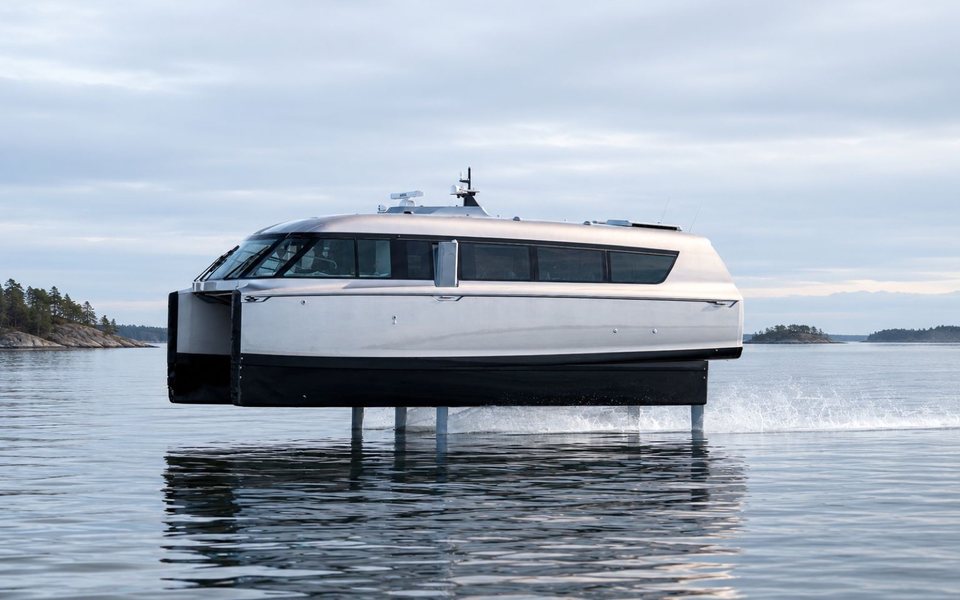
Three shapes of craft turn up when you search for the term. A sit-down machine with a seat and handlebars is what most people picture. A stand-up board, such as the Jetsurf ELECTRIC, gets listed alongside it. Then there are seated hydrofoil craft like the Awake NAVI, which E-SURFER does not count as a jet ski at all, since it lifts its hull out of the water on a foil where a jet ski planes across the surface. By our reading of the Order's definition, all three are watercraft in British law.
Roxen, the lightweight from Sweden
The ROXEN is light enough to carry on a car roof. Roxen describes it as a lightweight electric watercraft with inflatable tubes, ready for a roof rack, and the weights explain why: the ABS hull comes in at 79 kg and the battery at 33 kg. A petrol Sea-Doo Spark, the cheapest model in Sea-Doo's UK range, weighs 194 or 196 kg dry depending on engine. Roxen Innovations has its office and production in Linköping and Stockholm, and the battery is made in Sweden.
The craft measures 2.6 by 1.26 by 1.29 metres, and 0.80 metres high in its transport position. Its motor is rated at 22 kW (30 hp); Roxen does not say whether that is peak or continuous output. The swappable pack holds 5.25 kWh, is water cooled and sealed to IP67, and comes out in under a minute, so a second battery turns one session into two. Top speed is 30 knots (55 km/h, about 34 mph) and Roxen gives a cruising speed of around 15 knots. One charge lasts up to 75 minutes or 27 km, depending on conditions and how you ride.
Charging needs no special kit. The charger comes with every craft, plugs into a standard 230 V socket and fills the battery in about 2.5 to 3 hours. Under the front hood there are 55 litres of storage.
The ROXEN app connects over 4G/LTE and shows live speed, battery level and GPS position. It also handles diagnostics, speed modes, geofences that slow the craft or cut the power at a boundary, and over the air updates. Roxen adds fleet management on top and calls the craft “well suited to commercial rental”.
Some figures are not published. Roxen has not given how many people the craft may carry, its maximum load or its rated continuous power. E-SURFER rode a ROXEN on the Spree in Berlin in July 2026 and noted that all the footage shows a single rider. If you want to take a passenger, get that answer in writing before you reserve. The ROXEN starts at €17,900 before VAT and shipping; the electric jet ski price guide works out what that means in pounds.
Taiga Orca P2, WX3 and Carbon
Taiga sits at the other end of the scale. Its three Orca models are full size machines with 120 kW motors against the ROXEN's 22 kW, and the two seater alone weighs 357 kg, where a ROXEN hull weighs 79 kg and its battery 33 kg.
The three models
The Orca P2 carries two riders and weighs 357 kg. The WX3 is a crossover for three, 371 kg, with a tow hook built in for towed water sports. The Orca Carbon is a limited run of 300 craft with a carbon fibre hull and deck and up to 160 hp. Taiga quotes up to two hours of stop and go play time and 1 hour 20 minutes of cruising at 30 km/h for the P2 and WX3, and up to two hours for the Carbon, all from its own testing.
Charging an Orca
Taiga does not publish its battery capacity in kilowatt hours, which makes running costs hard to compare. For the Carbon it gives about 3.5 hours on a Level 2 charger and about 40 minutes on a Level 3 fast charger. Its newer models take DC fast charging in under 30 minutes, use a CCS2 plug in Europe and can feed power back to the grid as standard. Taiga also says the battery cooling raises continuous output by up to 65% in hot weather.
One detail matters for a British or Irish garage. The Level 1 cable Taiga includes is made for 120 V North American outlets, and the Level 2 charger is an extra. Ask the dealer what a European delivery comes with before you plan where the craft will charge.
A company that restarted
Taiga went into creditor protection in Canada in July 2024. The group that also controls the electric boat brands Vita, Evoy and Aqua superPower bought it, and production and customer deliveries restarted in May 2025 at the Montreal plant, which Taiga says can build up to 8,000 craft a year. The P2 and the new WX3 were shown at the Monaco Yacht Club in September 2025 as the European launch. On 21 May 2026 Taiga said it had begun the first deliveries of mass produced electric watercraft to Europe, without naming countries.
Taiga prices in US and Canadian dollars only, from $20,999 for the P2, $23,999 for the WX3 and $25,999 for the Carbon, with no euro or pound figure. More detail is on the Taiga Orca P2 page.
Stand-up boards, a seated foil and smaller names
E-SURFER lists four craft under its electric jet ski heading: the ROXEN, the JETSURF Electric 2 Ski, the Awake NAVI and the HyperFly eFoil Scooter by Aerofoils at €14,499. Only the first is a sit-down jet ski in the usual sense.
Jetsurf ELECTRIC
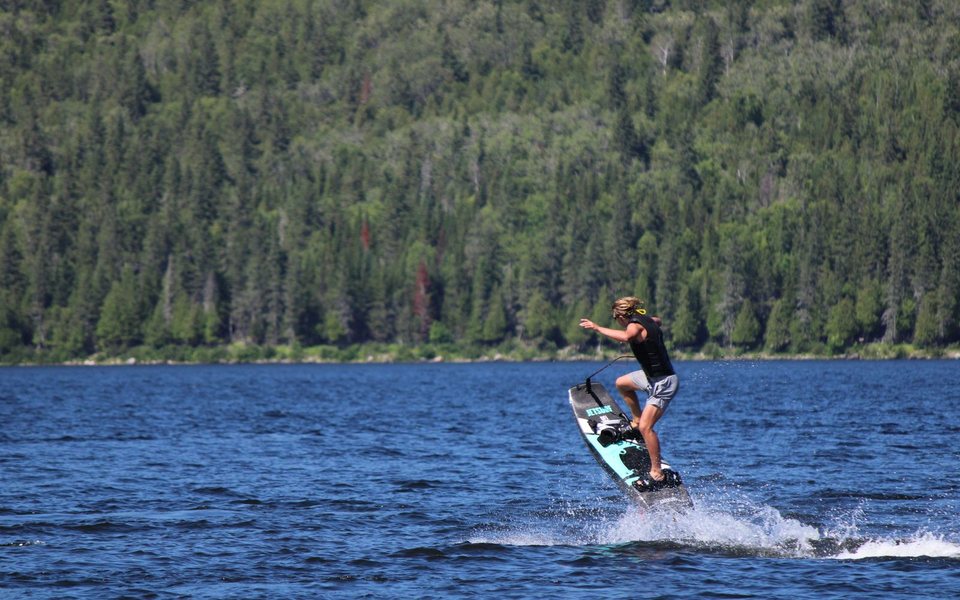
Jetsurf is a Czech maker of motorised surfboards, and its electric board is a stand-up craft for one rider with a maximum load of 100 kg. The manual gives a carbon composite hull of 1,800 by 600 by 150 mm, a weight of 33.9 kg without bindings, a 2.9 kWh lithium ion battery of 17.8 kg and an axial jet pump. You choose between three power modes of 6, 9 and 11 kW. A charge lasts 25 to 45 minutes and the top speed is 55 km/h, the same as the ROXEN. Boards of this kind are covered on our electric surfboard page.
Awake NAVI
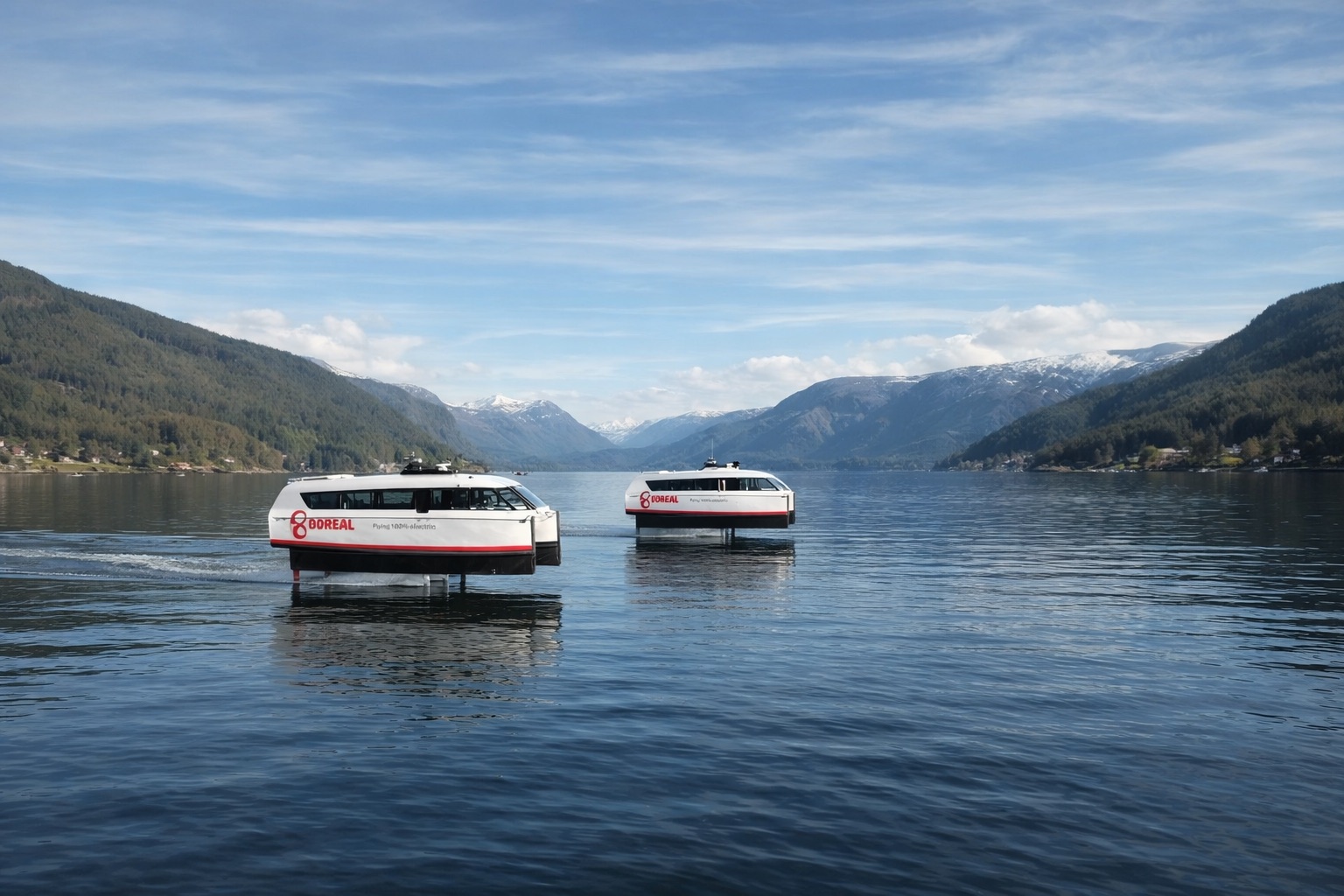
Awake, better known for its eFoils and jetboards, describes the NAVI as “a fully electric hydrofoil watercraft” for up to two people that “rises above the surface” at up to 30 km/h. You sit on it like a jet ski, but it flies on a foil. The full system costs €39,990 and is sold through a €10,000 pre-order down payment. Awake does not say whether that includes VAT; E-SURFER's €47,590 is the same figure plus 19% German VAT, so by our reading it is net. Seated foil craft of this sort have more in common with an electric foiling boat than with a Sea-Doo.
Narke, Viva and the rest
Narke in Hungary built the GT95 Electrojet, and the two accounts of what became of it differ. E-SURFER says it rode a GT95 prototype in 2021, a three seater with a carbon hull, 95 PS and 24 kWh, that the craft hardly reached the market and that no delivery is known to it. Narke says on its homepage that every GT95 has been sold.
Viva Electric Jets in Finland builds wider hulled electric craft, the Cruizer for hire companies plus a GT and a PRO. Boote magazine reports about two hours of travel and a fast charge from 10 to 80% in under 30 minutes, without a euro price; reports differ on its power and battery size. TEWAMOTO showed a design concept, the HydraX, at the Miami boat show in February 2026, without specifications or a price.
The Highfield EJET330 shares the name but not the type. It is a 3.36 metre RIB tender with a ZeroJet waterjet drive, a small electric boat for getting ashore from a yacht.
Speed, range and charging compared
Put the makers' figures next to each other and two families appear. The ROXEN and the Jetsurf are light and modest in power, with batteries you can lift out by hand. The Orcas are heavy machines with 120 kW motors against the ROXEN's 22 kW, and the newer ones charge through a CCS2 fast charging plug in Europe.
Swipe sideways to see all columns
| Craft | Riders | Power | Weight | Time on the water | Charging |
|---|---|---|---|---|---|
| ROXEN (Sweden) | Not stated by Roxen | 22 kW (30 hp) | 79 kg hull plus 33 kg battery | Up to 75 min or 27 km | Included charger, 230 V socket, about 2.5 to 3 h; pack swaps in under a minute |
| Taiga Orca P2 (Canada) | 2 | 120 kW | 357 kg | Up to 2 h play, 1 h 20 min at 30 km/h | DC fast charging on the newer models, under 30 min |
| Taiga Orca WX3 (Canada) | 3 | 120 kW | 371 kg | Up to 2 h play, 1 h 20 min at 30 km/h | DC fast charging on the newer models, under 30 min |
| Taiga Orca Carbon (Canada) | Not stated | Up to 160 hp | Not stated | Up to 2 h | Level 2 about 3.5 h, Level 3 about 40 min |
| Jetsurf ELECTRIC (Czech Republic) | 1, up to 100 kg | 6, 9 or 11 kW | 33.9 kg without bindings | 25 to 45 min | Not stated |
Range on any of these is measured in minutes, not miles. Roxen's 27 km is the only distance figure among them, and Roxen ties it to conditions and riding style. A day out means a second battery, a charger at the slipway or a long lunch next to a socket.
Speed depends on the type. The ROXEN and the Jetsurf both top out at 55 km/h, and the foiling NAVI at up to 30 km/h. Taiga quotes its cruising time at 30 km/h, which gives a fair idea of the pace behind its 1 hour 20 minutes.
Battery care decides how long the pack keeps its range, and both Roxen and Jetsurf publish storage rules for longer breaks. They are set out, with the checks to make before you buy, on the electric jet ski for sale page; storage of board packs is covered in the eFoil battery guide.
Jet ski, jetboard, eFoil or inflatable toy
Search for an electric jet ski and you get four quite different things. Knowing which is which saves a wasted deposit.
A sit-down jet ski has a seat, handlebars and a hull that planes on the surface. You can take a passenger on some of them and tow a rider behind the WX3. A jetboard is a powered surfboard you ride standing up, holding a handle or a throttle cord, with the jet under your feet; the Jetsurf belongs here.

An eFoil is a board on a hydrofoil wing that lifts you clear of the water and runs almost silently. The NAVI takes that idea and adds a seat for two. Jetboards and eFoils are compared on the electric surfboard page, and prices for boards are on the electric surfboard price page.
The fourth group turns up in shops and classified ads under the jet ski name. Inflatable electric “jet skis” are toys: a PVC hull, a small electric drive and a top speed of a few km/h, about 3.2 km/h for the children's versions. Nothing about them carries over to a craft with 22 to 120 kW that reaches 55 km/h and more, so the two groups are best kept apart when you compare prices.
Announced, then never delivered
The list of electric watercraft announced and never delivered is long. It explains why so few names appear above, and why a reservation on an unbuilt product calls for care.
BRP, the company behind Sea-Doo, showed an electric Sea-Doo prototype among its electric concept vehicles at a 2020 dealer meeting. On 25 March 2021 it announced that it would offer electric models in each of its product lines by the end of 2026. In September 2026 Sea-Doo confirmed it would not deliver an electric PWC that year, and its product strategy manager said electric “is not the solution for the water” for now, adding that “the question is when, not if”. E-SURFER reports that the Sea-Doo Rise electric hydrofoil board, presented in 2022 and announced for 2024, was not delivered, with no specifications or price published.
Smaller ventures fared no better. Nikola unveiled the WAV electric watercraft in 2019 and paused work on it in 2021. Free Form Factory announced the Gratis X1 electric stand-up craft in 2017, J-Force in Germany announced the eJet in 2015, a Vienna start-up called Stromkind was developing an electric jet ski in 2016, and Green Samba was announced in Ohio in 2010. None of them is known to have been sold in Europe. The WaveFlyer, an electric hydrofoil craft from the University of Western Australia's REV project and Electro.Aero, was shown without a price.
Foiling craft have a similar record. E-SURFER reports that the Slovenian Flyway stand-up hydrofoil, which its maker says sold out in two days in 2021, was never delivered, and that the Searider from Monaco, shown at boot Düsseldorf in 2024, was in development in October 2026. By E-SURFER's account, Neocean, the French maker of the Overboat hydrofoil jet ski, ceased operations in March 2024 and its assets were sold.
Electric jet ski prices in brief
Nobody publishes a pound list price. Roxen asks from €17,900excluding VAT and shipping. By our calculation, at the exchange rate Roxen's own store used on 7 November 2026, that is about £15,240, or about £18,290 with 20% UK VAT, still before shipping and import costs, so treat both as indicative. The Taiga Orcas start at $20,999, $23,999 and $25,999, and the Awake NAVI costs €39,990. Even the ROXEN costs more than twice the £7,999 Sea-Doo asks for a petrol Spark in the UK (Sea-Doo does not say whether VAT is included). Running costs narrow the gap only slowly: a charge costs pounds where a tank costs tens of pounds, but an extra ROXEN battery costs €5,900 before VAT.
The electric jet ski price page lists every model in one table, says what each price includes, works out the running costs and adds the side costs. For running costs on a bigger scale, see what an electric boat costs.
Licence and launching in the UK and Ireland
By our reading, and in line with the RYA, there is no national licence or certificate of competence for riding a private jet ski in UK waters, electric or petrol. The Watercraft Order still applies, and with it the section 58 offence of riding that causes or is likely to cause serious damage or injury. The real gatekeepers are harbours, lakes and councils: Poole wants a PWC permit, Datatag registration and insurance, Crouch and Langstone make an RYA certificate a launch condition, and as we read the law an electric craft needs all of it just as a petrol one does, unless a local rule says otherwise.
Ireland draws the line differently. Its Maritime Safety Act 2005 defines a personal watercraft by its combustion engine, so by our reading an electric jet ski falls outside that definition but, at 17 knots and above, inside the rules for fast power craft, which a 30 knot ROXEN plainly is.
The electric jet ski licence page goes through the harbour permits, ages, registration and riding abroad in detail. For boards, the eFoil rules and the pages on riding in the UK and Ireland cover the local picture.
Buying one from Britain or Ireland
Neither Roxen nor Taiga names a dealer in the UK or Ireland. Roxen sells direct from roxen.eu and through authorised dealers; its webshop takes a €500 reservation that is refundable until you sign a purchase agreement, and the craft ships Ex Works, so delivery is usually yours to arrange. Taiga has the buyer choose a partnered dealer. On the tax side, our reading of the UK Trade Tariff is that an imported electric personal watercraft pays no customs duty but 20% VAT on its value plus carriage.
A second hand electric jet ski is hard to find in Britain, and no off the shelf kit exists to convert a petrol craft. The electric jet ski for sale page covers where to order, the import, and what to check on a used craft. Many of the battery checks overlap with buying a used eFoil.