
Where to eFoil in the US, from Biscayne Bay to Lake Powell
American eFoil schools gather where the water is flat and the season is long. Miami has two on Biscayne Bay. More teach in the Florida Keys and along the Gulf coast from Destin to Sarasota, and Hawaii has schools on Oahu, Maui and Kauai. Inland, the sport lives on lakes: Tahoe on the California and Nevada line, Lake Austin and Lake Travis in Texas, three lakes in Utah, Lake Michigan at Chicago and two smaller lakes in Michigan.
When you go matters as much as where. The water in Hawaii and Puerto Rico is warm whatever the month. Miami's best months run from November to May, while Cape Cod, New York and the Great Lakes ride from about June to September. Austin falls in between, with spring and autumn as its good months, and the sound side of the Outer Banks teaches from roughly March to November.
Nearly every first ride here is a lesson on the school's board. Most first lessons for one rider list between about $250 and $400, for anything from one hour to two. At some schools the battery decides when the session ends.
The nearest lesson can be closer than the map suggests, because several schools travel. Lake Life Efoils comes to lake houses and private docks in northern Michigan, Efoil Tahoe meets riders at their own spot around the lake, and CharlotteEfoil says it drives up to six hours one way, for a travel fee of $50 an hour.
Water temperature and the riding months, region by region
Only Hawaii and Puerto Rico stay warm through the winter. Everywhere else the water sets the season, and from Lake Tahoe and Seattle to Chicago, New York and Cape Cod it runs about four months, June to September.
Swipe sideways to see all columns
| Region | Riding months | Water |
|---|---|---|
| Hawaii | all year | about 77 °F (25 °C) in February to 82 °F (28 °C) in September at Honolulu |
| Puerto Rico | all year | about 79 °F (26 °C) in February and March to 85 °F (29 °C) in September |
| Miami | November to May | 72 °F (22 °C) in January to 87 °F (31 °C) in August |
| Tampa Bay | most of the year, coolest December to February | 65 °F (18 °C) in January to 89 °F (31 °C) in August at St. Petersburg |
| San Diego | all year, 3/2 wetsuit October to June | low 60s °F in winter to mid 70s °F in spring and summer |
| Austin | March to June, September to November | - |
| Charlotte | May to October | 70 °F (21 °C) in May to 84 °F (29 °C) in August on the Catawba |
| South Carolina coast | May to October | above 80 °F (27 °C) from June to September at Charleston |
| Outer Banks | roughly March to November | wetsuit March to May and September to November |
| Lake Tahoe | about June to September | 65 °F (18 °C) July surface average |
| Utah | about June to September | Lake Powell can pass 80 °F (27 °C) in summer |
| Cape Cod | about June to September | about 71 °F (22 °C) in July, 73 °F (23 °C) in August |
| New York | about June to September | 66 °F (19 °C) in June to 75 °F (24 °C) in August |
| Chicago and Michigan | about June to September | 56 °F (13 °C) in June to 71 °F (22 °C) in August, lake wide |
| Seattle | about June to September | lakes, rivers and Puget Sound can be very cold |
In the south, storms are the complication. The Atlantic hurricane season runs from June 1 to November 30 and covers Miami, the Gulf coast, the Carolinas and Puerto Rico; the Central Pacific season starts in June and its threat to Hawaii usually fades by early October.
Wind shapes the day more than the month does. Maui's lessons on Maalaea Bay run in the morning only, because the bay turns windy and choppy towards midday. In San Diego, Sendit calls its 7 am slot the best all round thanks to less wind and traffic, and Lake Tahoe is usually smoother early too.
First lesson prices in US dollars
Most schools price one rider on one board with an instructor alongside. CharlotteEfoil, a mobile school, lists the lowest price, $150 for about 90 minutes. Chicago ($400) and the Outer Banks (from $400) come in highest, though $400 buys one hour in Chicago and two on the Outer Banks.
Swipe sideways to see all columns
| Region | School | Length | Price |
|---|---|---|---|
| Miami | E-FoilUSA, FloFoil | 2 h | $385 to $389 |
| Florida Keys | Grassy Flats Resort & Beach Club | 90 min | $350 |
| Destin | XL Kites | - | $350 |
| Sarasota | Opua Adventures | up to 90 min | from $250 |
| Tampa Bay | Elite Watersports | - | - |
| Oahu | Hawaii eFoil Experience | 90 min | from $289 |
| Maui | Aloha eFoils | 2 h | $300 |
| Kauai | Kauai Foil Experience | 90 min | $350 |
| Puerto Rico | Seakindly Foil School | 1 h | $325 |
| California coast | Sendit, Aqua Foils, OC Foil, Just Foil LA | - | - |
| Lake Tahoe | Efoil Tahoe | 1.5 h | $275 |
| Utah | SiFly school on three lakes | per session | $225 to $300 |
| Outer Banks | Kitty Hawk Kites | 2 h | from $400 plus a 6% online fee |
| Cape Cod | eFoil Cape Cod | 90 min | from $250 |
| Chicago | CHI eFoil | 1 h | $400 |
| Michigan | MACkite, Lake Life Efoils | about 2 h | $250 to $299 |
| Austin | Electric Surf Co | 60 min riding | $299 |
| Charlotte | CharlotteEfoil | about 90 min | $150 |
Bring friends and the price per head drops. Efoil Tahoe charges $275 for a solo rider, $225 each for two, $195 each for three and $185 each from four up. Kauai Foil Experience asks $525 for two riders, and MACkite in Grand Haven adds $200 for each extra person. In Miami, E-FoilUSA sells a two hour group outing for up to six riders on three boards, boat and captain included, at $999.
A board of your own is a different budget, and the eFoil price guide has what one costs to buy.
Federal, state and local rules for an eFoil
The federal answer to the basic question came in 2022. The Coast Guard's policy letter CG-BSX 01-22 of August 26, 2022 says that “Mechanically Propelled Personal Hydrofoils (MPPH) and Motorized Surfboards (MSB) have been determined to be vessels and are therefore subject to all laws and regulations pertaining to recreational vessels propelled by machinery.” Paragraph 3.a adds that an MPPH is “also known as an eFoil”.
The letter then hands the paperwork to the states. Under paragraph 4.e, owners and operators follow their state's numbering rules, carry the Certificate of Number when underway, carry or wear a life jacket as state and federal rules require, and carry a whistle or another sound device.
Registration is where the states line up most closely. Florida, California, North Carolina, Texas, Michigan, Illinois, Utah and Washington all register motorized craft, and Hawaii does so from 5 hp. Boater education is far less uniform: some states set it by birth year and horsepower, California asks it of every motorized operator with a list of exemptions, and Massachusetts is phasing its new card in until 2028.
Swipe sideways to see all columns
| State | Registration | Boater education | Text |
|---|---|---|---|
| Florida | required; exceptions include a non motor vessel under 16 ft; Class A-1 (under 12 ft, where an eFoil falls in our reading) $5.50 per 12 months plus service fees | born on or after January 1, 1988, for a motor of 10 hp or more | Fla. Stat. s. 328.48(2), s. 328.72, s. 327.395(1) |
| California | title and registration for motorized eFoils | California Boater Card for every motorized operator since January 1, 2025, with exemptions | DMV VIN 2023-12; Harbors and Navigation Code s. 678.11(b) |
| Hawaii | from 5 hp | 10 hp or more | DLNR DOBOR |
| North Carolina | all motorized vessels | born on or after January 1, 1988, for 10 hp or more | G.S. 75A-16.2 |
| Texas | all motorized vessels, any length | born on or after September 1, 1993, for a PWC or a motorboat over 15 hp; an eFoil's place not stated | TPWD |
| Washington | every vessel, rented ones included, with number and decal | 15 hp or more; an eFoil's place not stated | RCW 88.02.550(1), RCW 79A.60.640 |
| Michigan | all watercraft with a motor, electric included | - | DNR handbook 2026, p. 21 |
| Illinois | Certificate of Number, decals and title; non powered vessels exempt | - | 625 ILCS 45/3 |
| Utah | motorboats, plus the AIS program: $20 a year for residents, $25 for nonresidents | - | Utah Code 73-18-7 |
| Massachusetts | - | boater safety certificate from April 1, 2026; born on or before January 1, 1989: by April 1, 2028 | M.G.L. c. 90B s. 9E(a) |
California's exemptions include a person operating a rental vessel, a resident of another state riding for less than 60 days and a resident of another country riding for less than 90 days who meets the rules at home. Whoever is exempt carries proof. Massachusetts exempts nonresidents who hold a certificate from another US state or an approved jurisdiction.
Local rules are the ones a rider meets on the water. Biscayne Bay has year round manatee slow speed zones. In Mission Bay, only Fiesta Bay goes without a daytime speed limit, and Newport Harbor is a 5 mph no wake zone. Hawaii has slow, no wake zones at Waikiki and within 500 ft of the shore in Hanalei Bay. Lake Tahoe requires every hand launched electric craft, eFoils included by name, to be inspected at least once a calendar year and to carry the free sticker. Austin bans motorized surfboards on Lake Austin over Memorial Day, the Fourth of July and Labor Day, and in our reading an eFoil falls under that ban.
On a lesson you ride the school's board under the school's instruction, so most of this lands on owners. This summary is not legal advice; the eFoil rules guide compares how other countries handle the same board.
Florida: Biscayne Bay, the Keys and the Gulf coast
E-FoilUSA launches from Coconut Grove and FloFoil from Hobie Beach on the Rickenbacker Causeway, about 3.5 miles apart across Biscayne Bay in a straight line. Both are close to the year round manatee slow speed zones along the Coconut Grove shore and around Virginia Key. The Miami eFoil page sets the two launches side by side.
Grassy Key lies just east of Marathon in the middle of the Keys, and Grassy Flats teaches on the protected flat in front of the resort. On the Panhandle, XL Kites works out of Destin and Fort Walton Beach. Opua Adventures in Sarasota is a Fliteschool. All three are on eFoil in Florida, together with the state registration rules.
Around Tampa Bay one school teaches at St. Petersburg, Clearwater, Dunedin, Tarpon Springs and Sarasota. Clearwater Beach averages 61.5 °F (16.4 °C) in January, so winter there is wetsuit riding; eFoil in Tampa Bay has the water month by month.
Hawaii and Puerto Rico, warm water in every month
Each island with a school teaches from one spot: the protected lagoon off Sand Island Access Road in Honolulu, Sugar Beach on Maalaea Bay in Kihei, and Hanalei Bay on Kauai's north shore. North shores take the winter swell, so we read Hanalei as a summer spot. The state boating division calls an eFoil a motorized vessel, not a thrill craft; eFoil in Hawaii goes island by island, whale distance rule included.

Puerto Rico is the warm water option on the Atlantic side, with lessons in San Juan Bay. Under Ley 430-2000 any craft with a motor installed is an embarcación (Art. 3(K)), and is kept out of areas reserved for bathers (Art. 7(1)). eFoil in Puerto Rico has the school and the hurricane months.
California, Lake Tahoe, Utah and Seattle
The California coast schools sit between San Diego and Los Angeles: Sendit and Aqua Foils in San Diego, OC Foil in Newport Beach and Just Foil LA from Santa Monica to Long Beach. San Diego's Mission Bay Park alone runs to more than 4,235 acres and 27 miles of shoreline, and Sendit's advice is a 3/2 wetsuit from October to June. eFoil in California has the schools and the Boater Card exemptions.
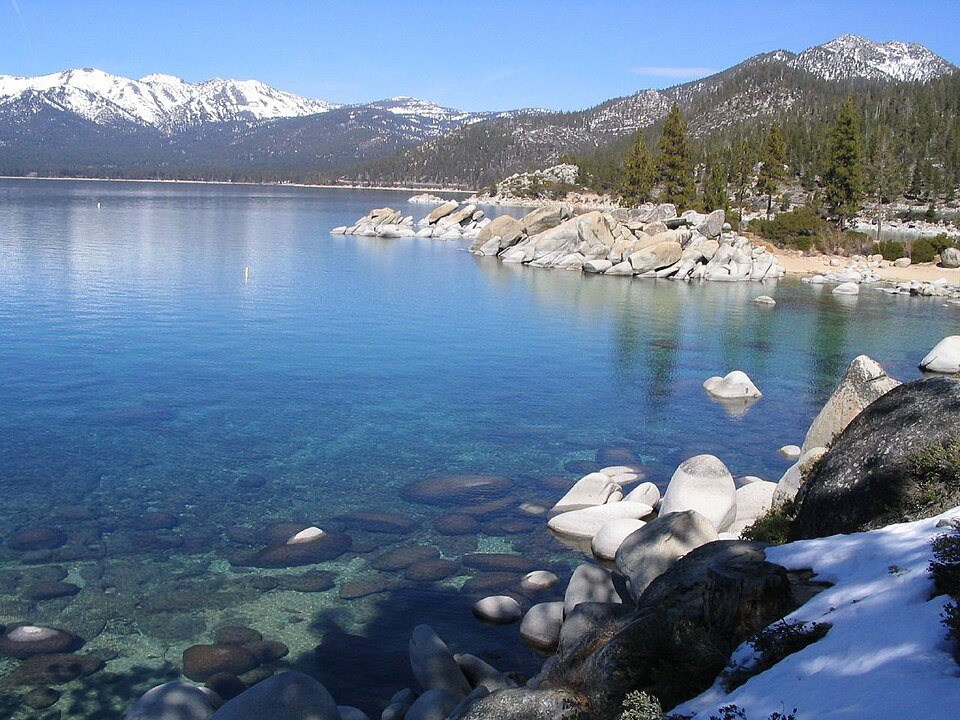
Lake Tahoe straddles California and Nevada, and Nevada State Parks call it "the largest alpine lake in North America", its natural rim at 6,223 ft. The school is based in Incline Village; Truckee's own lake is Donner Lake, a different lake altogether. More on eFoil at Lake Tahoe.
Utah riding is spread over Deer Creek, Jordanelle and Lake Powell. Sessions are priced for up to four riders and Deer Creek has hourly rentals from $175; spring at Powell brings long spells of wind. eFoil in Utah sorts the three lakes.
Washington wants every vessel on state waters registered, rented ones included (RCW 88.02.550(1)), with a life jacket on board for each person (RCW 79A.60.160(1)). King County warns that its lakes, rivers and Puget Sound can be very cold; eFoil in Seattle covers the water around the city.
Cape Cod, New York and the Carolinas
Cape Cod lessons run from Barnstable and Provincetown, and riders new to eFoils book a lesson before they rent. The Massachusetts rule for jet skis, surf jets and wetbikes sets a minimum age of 16, headway speed within 150 ft of a swimmer, the shore or a moored vessel, and no riding between sunset and sunrise (M.G.L. c. 90B s. 9A). That it reaches an eFoil is our reading, because s. 1 defines a surf jet as a surfboard propelled by machinery. More on eFoil on Cape Cod.
New York sorts these craft into specialty prop-craft and personal watercraft by propeller or water jet. A specialty prop-craft stays off the water from sunset to sunrise (Navigation Law s. 73-a(1)(e)) and keeps 500 ft from a designated bathing area, with exceptions (s. 73-a(1)(f)), and every rider wears a Coast Guard approved life jacket (s. 73-a(1)(a)). See eFoil in New York for the summer water.
On the Outer Banks the schools are on the Pamlico Sound side of Hatteras Island, at Rodanthe and Waves, on flat sound water rather than ocean. Kitty Hawk Kites takes riders from 90 to 265 lb, recommends a wetsuit in spring and autumn and asks for early booking from June to September; eFoil on the Outer Banks has both schools. Inland, eFoil in Charlotte follows the Catawba River through its season. South Carolina defines both an outboard motor and a specialty propcraft (SC Code s. 50-21-10(17) and (23)), but where an eFoil falls is not settled; eFoil in South Carolina gives our reading.
Chicago, Michigan and the Austin lakes
Chicago's school launches near Montrose Beach on Lake Michigan, and eFoil in Chicago tracks the lake by month. Across the lake, MACkite teaches on Pottawattomie Park Lake at Grand Haven, takes riders of 16 or older with a driver's license and rents no boards. Lake Life Efoils teaches on Lake Leelanau. Michigan keeps personal watercraft off the water from sunset to 8 a.m., which we read as reaching eFoils too; eFoil in Michigan takes both schools in turn.
Austin rides two lakes of different character. The city has jurisdiction over recreation on Lake Austin, which usually stays within a small level band, while Lake Travis is an LCRA reservoir designed to fluctuate. July and August are hot, so early sessions suit those months best. eFoil in Austin covers both lakes and the holiday weekends.


