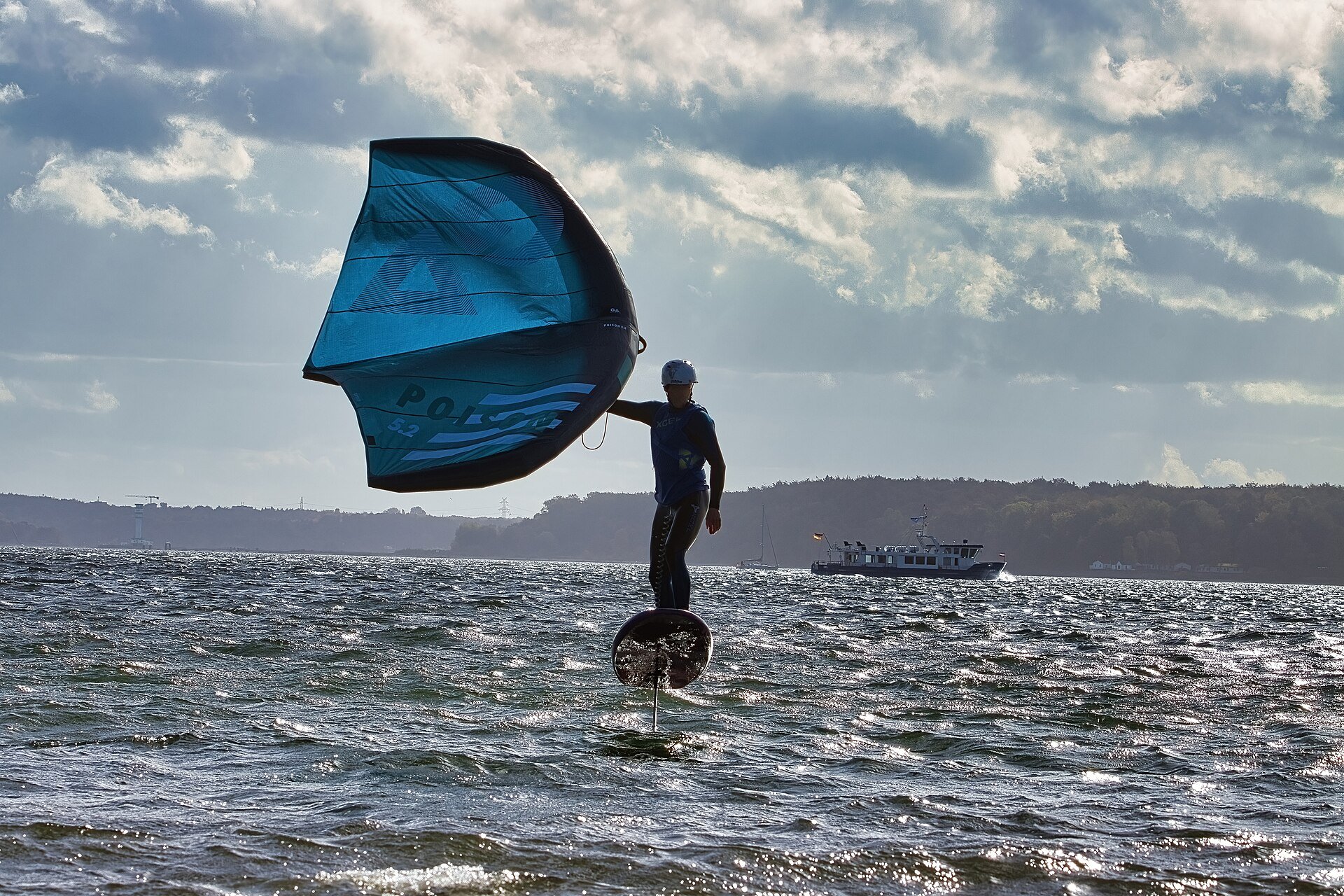
Two shallow coasts on the southern Baltic
Fehmarn lies off the Holstein coast, tied to the mainland by the Fehmarnsund bridge, with 78 km of shoreline and 18 surf spots on the tourism office's list. The Hel Peninsula is a strip of sand about 35 km long, only about 175 m wide at its narrowest, with the Bay of Puck on its south side.
Wing riders come to both for flat water they can stand in and a breeze strong enough to fly. Surf Magazin says there is no wind direction that cannot be ridden somewhere on Fehmarn, and the inner Bay of Puck has a mean depth of 3.13 m.
If the wing is new to you, course structure is on our wing foil lessons page, and the sport itself on the wingfoil guide.
Fehmarn and the Hel Peninsula side by side
Swipe sideways to see all columns
| Fehmarn (Germany) | Hel Peninsula (Poland) | |
|---|---|---|
| Wind | Every direction rideable somewhere; west and east most frequent | FunSurf: 6 to 15 knots for the first stage, 14 to 22 for the foil |
| Learning water | Burger Binnensee, Lemkenhafen, Gold, Puttgarden | Inner Bay of Puck, shallows under 2 m over sand |
| Foiling depth | Close to shore at Südstrand and Puttgarden | 150 to 300 m along the beach from the Chałupy pier |
| Wing schools | Wingfoil Surfschule Fehmarn, Kitemonkey, WingDing, Kite Passion | FunSurf in Chałupy, Surferownia in Jastarnia |
| School season | April to October | May to October or mid September |
| Sea in August | 19.5 °C | 19.6 °C |
| From Hamburg | About 145 km, about 1.5 h by car | - |
| From Berlin | About 350 km, 3.5 to 4 h by car | Over 500 km, over 5 h by car |
| From Gdańsk | - | About 80 km to Jastarnia, about 1.5 h by car |
Fehmarn has more schools and a spot for whatever direction the forecast brings. The Polish side has one huge shallow bay floored with sand, and a railway that runs the length of the peninsula.
Wingfoil Fehmarn, spot by wind direction
Yellow signs, the Gelbe Planke, point the way to the spots at Gold, Gollendorf, Lemkenhafen and Grüner Brink. The tourism map marks the nature reserves and closed zones around the island where no water sport is allowed. From May to November, expect seagrass at almost every spot.
East wind: Burger Binnensee, Südstrand, Grüner Brink, Puttgarden
The Burger Binnensee near Wulfen is cut off from the open Baltic. Most of it is standing depth, it suits every level, and it works best from northeast to southeast. Südstrand takes a free, steady east wind; a small sandbank lies about 50 m out, then the bottom drops away fast, which suits a foil. On the north coast, Grüner Brink has a flat sandy bay where drifting off is almost impossible, a small mole upwind for the start, and plenty of kites. Puttgarden is quieter. The ferry harbor mole blocks the swell, the water gets deep sooner, and it rides best in northeast and east-northeast wind, though gusty near the harbor.
West wind: Lemkenhafen, Gold, Strukkamp
“What Wulfen is in east wind, Lemkenhafen is in west wind,” writes Surf Magazin. The bay is a huge standing area, knee to hip deep, and its islets and spits block the waves even in a storm, in anything from west-northwest to south-southwest. Gold takes everything from south over west to north-northwest and is nowhere deeper than 1.5 m, with toilets and a café at the spot. Strukkamp, just to the south, rides much like it.
Both directions, and the spots for experts
Orth in the southwest works in east and west wind, its harbor moles splitting the spot in two. In an east wind the east bay is onshore, with a standing strip about 150 m wide and deeper water further out for the foil. Altenteil in the northwest is the island's wave spot in a strong west-northwest to northwest wind, with stones at the entry and a shorebreak when it blows hard. Miramar at the Fehmarnsund has a busy fairway, a strong current and a nozzle effect in west and east wind. Kitemonkey still teaches there, with radios and zone limits.
Wing schools on Fehmarn
Wingfoil Surfschule Fehmarn is built around the wing. Its main spot is the meadow on the east side of the Burger Binnensee at Burgstaaken, by the U-boat museum, and visitors park at the Fischereihafen. Each day the school picks the spot by wind direction, water level and the student's level, and some spots are reached only by boat. Lessons run on dedicated wing foil boards of 140 to 220 liters, never converted SUPs, with very short teaching masts, for students from age 8. When conditions do not fit you get a new date or a full refund. Rental is for its own students after two completed courses. Campervans may stand at the Burgstaaken spot during the day, but sleeping there is forbidden.
Kitemonkey, a VDS licensed school at Campingplatz Miramar by the Fehmarnsund bridge, teaches from April to October. In south or southwest wind the Sund is offshore, so it drives students to Gold, Grüner Brink or Altenteil, and the fairway buoys of the Sund are a no-go zone. Once you are up on the foil, coaching continues by radio. With too little wind, its Foil Guarantee moves you onto a Duotone eFoil with the same board and setup, as long as you swim safely, are at least 11 years old and weigh at least 40 kg.
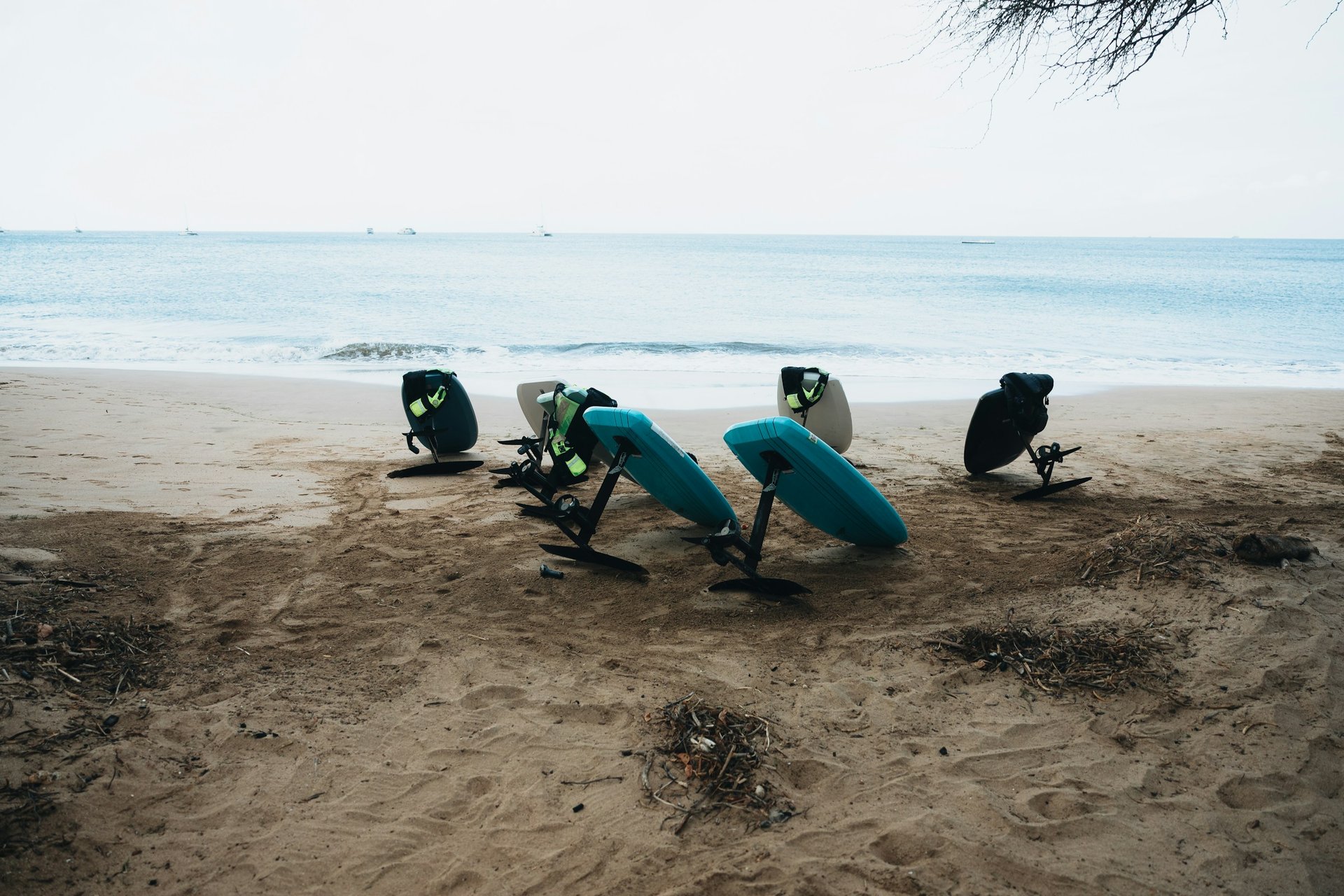
WingDing-Fehmarn is a small school at Camping Strukkamphuk. It gives micro courses and private lessons from 15 April to 14 October on the Orther Reede, a sheltered bay with standing depth that faces the west wind, and its multi-day courses can end with the VDS Grundschein, the license that lets you rent gear. Kite Passion Fehmarn, a VDWS licensed school, teaches in the knee-deep standing water at Puttgarden with two students per coach.
Puck Bay wing foil water on the Hel Peninsula
The Bay of Puck covers 364 km², and its inner part, the Zalew Pucki, takes up 103 km² between Rewa and Kuźnica. South of the peninsula, shallows under 2 m reach far into the bay over sand that is mostly free of stones. Watch for the artificial shore reinforcement at Rewa, Chałupy and Kuźnica. Rybitwia Mielizna, a narrow shoal about 10 km long, runs from the Cypel Rewski toward the peninsula and divides the inner bay from the outer one, so the waves inside stay much smaller.
Chałupy has the shallow, calm bay water that windsurfers and kiters use. Kuźnica lies near the narrowest stretch of the peninsula, toward Jastarnia. At its port the water is deep from about 60 m off the shore, and the Water Sports Center there runs eFoil and kite sessions but no wing lessons. For launching, the gohel.pl guide rates the slipways of Jastarnia and Kuźnica the best in the bay, with new concrete and good depth.
Schools and rental in Chałupy and Jastarnia
FunSurf runs its wing school and rental from two bases in Chałupy, by the pier at ul. Kaperska 4 and on Camping Polaris. The course comes in two stages. WINGSURF, on a board without a foil, usually takes about 4 hours, and WINGFOIL about 6 more, so around 10 hours to free flight; experienced windsurfers can finish the first stage in 2. Few students fly in their first lesson. The school wants 6 to 15 knots for the first stage and 14 to 22 for the foil, and under 7 knots its groups switch to an electric Foil Drive or pump foiling.
From the pier, foiling depth starts 150 to 300 m along the beach, a walk of 2 to 5 minutes leading the board, and motorboats and a jet ski carry gear out to deeper water. Beginners start on 45 to 55 cm masts, and the school takes its wing riders away from the clusters of kites and windsurfers. No inflatable boards are taught or rented. FunSurf takes children from about 10, sets no upper age limit, and runs the Chałupy base from May to the first half of September; the Polaris base opens on the Corpus Christi weekend.
Surferownia, a kitesurf school on the Surf Wioska campsite in Jastarnia, also teaches the wing on the shallow bay, often away from the shore. Students start with dry runs on land, move to large displacement SUP boards, practice the foil towed behind a motorboat, and finally start with the wing on a SUP foil board. The school says wing riding can start at 7 to 8 knots. Gear, wetsuit, helmet and vest are included, motorboat time costs extra, and wing sets are for rent from the May long weekend to October.
Course and rental prices on both coasts
Fehmarn schools sell sessions and multi-day courses in euros; on the Hel Peninsula you book hours in złoty, and the price per person falls the more of you share an instructor.
Swipe sideways to see all columns
| School | What you book | List price |
|---|---|---|
| Wingfoil Surfschule Fehmarn | Beginner course, 4 h, up to 3 students | €349 per person |
| Wingfoil Surfschule Fehmarn | Beginner Premium, 8 h over 3 days | €649 per person |
| Kitemonkey | Taster, 2 h, 1 to 3 people | €198 per course |
| Kitemonkey | Beginner course, 2 days, 6 teacher hours | €297 per person for two, €594 solo |
| WingDing-Fehmarn | Grundschein course, 3 days of 3 h | €420, or €470 with the VDS Grundschein |
| WingDing-Fehmarn | Beginner to Winger, 4 days | €590, or €620 with the Grundschein |
| Kite Passion Fehmarn | Beginner or improver, 3 h | from €149 per person |
| FunSurf, Chałupy | Stage I, 4 h | PLN 940 alone, PLN 560 each for four |
| FunSurf, Chałupy | Stage II, 6 h | PLN 1,490 alone, PLN 890 each for four |
| FunSurf, Chałupy | Wing, board and foil rental | PLN 150 an hour, PLN 510 a day |
| Surferownia, Jastarnia | Wing course, 4 h | PLN 1,000 alone, PLN 800 each for two |
| Surferownia, Jastarnia | Wing set rental | PLN 120 an hour, PLN 600 a day |
Kitemonkey and Kite Passion include the material and rebook for free up to 48 hours before the start. FunSurf's full rental set costs PLN 1,530 for a week, and the board and foil alone PLN 1,080. The wing foil gear guide sorts boards, wings and foils by what a first setup costs.
Wind strength, season and Baltic water temperature
Kitemonkey puts the wing range on Fehmarn at 12 to 25 knots, roughly 4 to 6 Beaufort, with 14 to 20 knots best for beginners. By its account May, June and September are usually the steadiest months, helped by afternoon thermals, while July and August run weaker. Surf Magazin warns that the spring east wind blows well above the forecast, and a 12-knot forecast can turn into 20 knots and more. On the Polish side, the shallow inner bay warms quickly in summer and is the first part to freeze in winter.
Swipe sideways to see all columns
| Month | Fehmarn (Marienleuchte) | Hel Peninsula |
|---|---|---|
| April | 7.5 °C | - |
| May | 11.7 °C | 9.9 °C |
| June | 16.9 °C | 15.5 °C |
| July | 19.1 °C | 18.6 °C |
| August | 19.5 °C | 19.6 °C |
| September | 17.6 °C | 17.3 °C |
| October | 14.6 °C | 13.2 °C |
Even in summer the Baltic rarely climbs above 20 °C. Kitemonkey advises a 5/4 mm wetsuit from April to October. Surf Magazin finds a 4/3 usually enough from June to September, recommends a thick suit and a hood in spring and autumn, and notes that a southwest to west wind can feel cool even in high summer.
Which coast for which level
Both coasts give a beginner plenty of standing depth; the difference shows once a foil needs water under the mast. How we would sort it, level by level:
- First hours with a wing: either coast, the Binnensee, Lemkenhafen or Gold on Fehmarn, the inner Bay of Puck in Poland.
- First flights: Fehmarn gets you foiling closer to the beach, at Südstrand and Puttgarden. On the Polish side the schools walk learners 150 to 300 m along the beach or take them out by boat, and the 185 m strip where planing is banned pushes foil flight further out.
- Windsurfers and kiters changing sports: FunSurf's first stage can shrink to 2 hours, and Kitemonkey prices by the private teacher hour.
- Riding on your own: on Fehmarn the wind direction picks the spot, and there are more schools to choose between. Rental there can be tied to a license or to a school's own students, while in Chałupy and Jastarnia a set is rented by the hour or the day.
German rules around Fehmarn: fairways, bathers, reserves
The Maritime Waterways Regulation (Seeschifffahrtsstraßen-Ordnung, SeeSchStrO) of 22 October 1998, last amended on 18 September 2024 (BGBl. 2024 I Nr. 286), sets the basic rules. § 31(1) forbids riding a kite or sailboard in the fairway except on announced or signed areas, § 31(2) makes you give way to all vessels, and § 31(3) bans riding at night or in reduced visibility. § 26(5) keeps sailboard and kite riders at least 50 m from a visible or marked bathing area and from swimmers. Outside the fairway, sailboards are allowed within that § 26(5) limit. The ordinance never names the wing foil. Our reading is that a hand-held wing comes closest to a sailboard, so §§ 26(5) and 31 are the safe rules to follow.
The closed zones of the Krummsteert-Sulsdorfer Wiek/Fehmarn and Grüner Brink reserves are off limits under § 1(9) and (10) of the OstseeSHNSGBefV of 27 September 2016 (BGBl. I S. 2180). § 2(3) exempts only muscle-powered craft, which to our mind leaves wings out, and § 3 makes a breach an offense under § 50 of the Federal Waterways Act (WaStrG). West of Fehmarn, a new reserve has been strictly protected since March 2026.
Fehmarn's beach bylaw (Strandsatzung), in force since 1 January 2026, covers Burgtiefe (Südstrand), Meeschendorf, Grüner Brink and Bojendorf. Its § 6(1) names wingboards among the craft that may not be operated or landed outside the marked boat lanes, with fines up to €1,000 (§ 10(2)).
Polish rules in the Bay of Puck
Order No. 5 of the Director of the Maritime Office in Gdynia, dated 3 April 2014 (Dz. Urz. Woj. Pom. 2014 poz. 1416), covers the inner bay from Rewa to Kuźnica. Under § 2(4), navigation is banned from 1 July to 31 October, the bird migration period, in two fixed zones and on part of Rybitwia Mielizna.
For craft without an engine, planing is banned within one cable (185.2 m) of the shore. Nobody may plane parallel to the shore within 50 m, craft keep 50 m from ships, fairways, swimmers and fishing gear, and at bathing areas they leave and land through marked lanes at least 25 m wide (§ 2(5) and (6), § 3). We read a wing board as a craft without an engine and foil flight as planing. Swimmers' zones are marked by yellow buoys no more than 50 m from the shore (Dz.U. 2022 poz. 1979), and the bathing season falls between 1 June and 30 September (Water Law, Dz.U. 2025 poz. 960, art. 37).
Breaking a maritime office order can cost up to twenty times the average monthly wage (Act on Maritime Areas, art. 56 pkt 9 and art. 57, Dz.U. 2024 poz. 1125). A surfboard, a sailboard or a similar craft needs no registration (Dz.U. 2024 poz. 1536, art. 3(2)(3)), and we count a wing board as one of those. Dz.U. 2026 poz. 529, art. 62(3), as we understand it, means a craft with neither a hull over 7.5 m nor an engine needs no license either. The bay lies in the Nadmorski Park Krajobrazowy and in Natura 2000 areas.
The Polish rules for motorized boards are on the eFoil Poland page.
None of the above on the German or Polish rules is legal advice.
Getting there from Hamburg, Berlin and Gdańsk
From Hamburg, Fehmarn is about 145 km up the A1 and the B207/E47 over the Fehmarnsund bridge, roughly an hour and a half by car; from Berlin it is about 350 km, 3.5 to 4 hours. Trains to the island are suspended for some years while the line is upgraded, and express bus X85 runs hourly from Lübeck Hbf to Burg and Puttgarden on one ticket with the train, so from Hamburg plan on 2.5 to 3 hours in all.
Gdańsk to Jastarnia is about 80 km, around 1.5 hours by car. The train via Gdynia takes about 2.5 hours; at Reda it turns onto line 213, which runs about 63 km down the peninsula to Hel alongside the road. FunSurf advises guests staying in Władysławowo, Kuźnica, Jastarnia or Hel to come by train and skip the summer traffic, and Chałupy station is about 150 m from its base 1. From Berlin the drive is over 500 km and takes over 5 hours. In the warm months, passenger boats called water trams also link Gdynia, Gdańsk and Sopot with Hel.
For a ride closer to home, the eFoil schools in Hamburg and Berlin are an option, and eFoil in Germany covers the wider rules.
Rügen, briefly: Dranske, Thiessow and the biosphere reserve
Rügen Piraten in Dranske teaches wingfoiling at €70 an hour, or €45 for an hour of wingsurfing without the foil. The school describes its spot as a standing area of about 150 by 500 m over sand with no stones, rideable in anything from northeast to west and flat in a west wind. ProBoarding Rügen, on the Greifswalder Bodden between Thiessow and Klein Zicker, teaches in standing water, ideally in south to west wind, from late April to mid October, with course days of 3 hours from €240 per person and at most two students per trainer. Only the days on the water are charged. By ProBoarding's figures the wing works from 7 to 8 knots, but holding it and foiling takes 13 to 14.
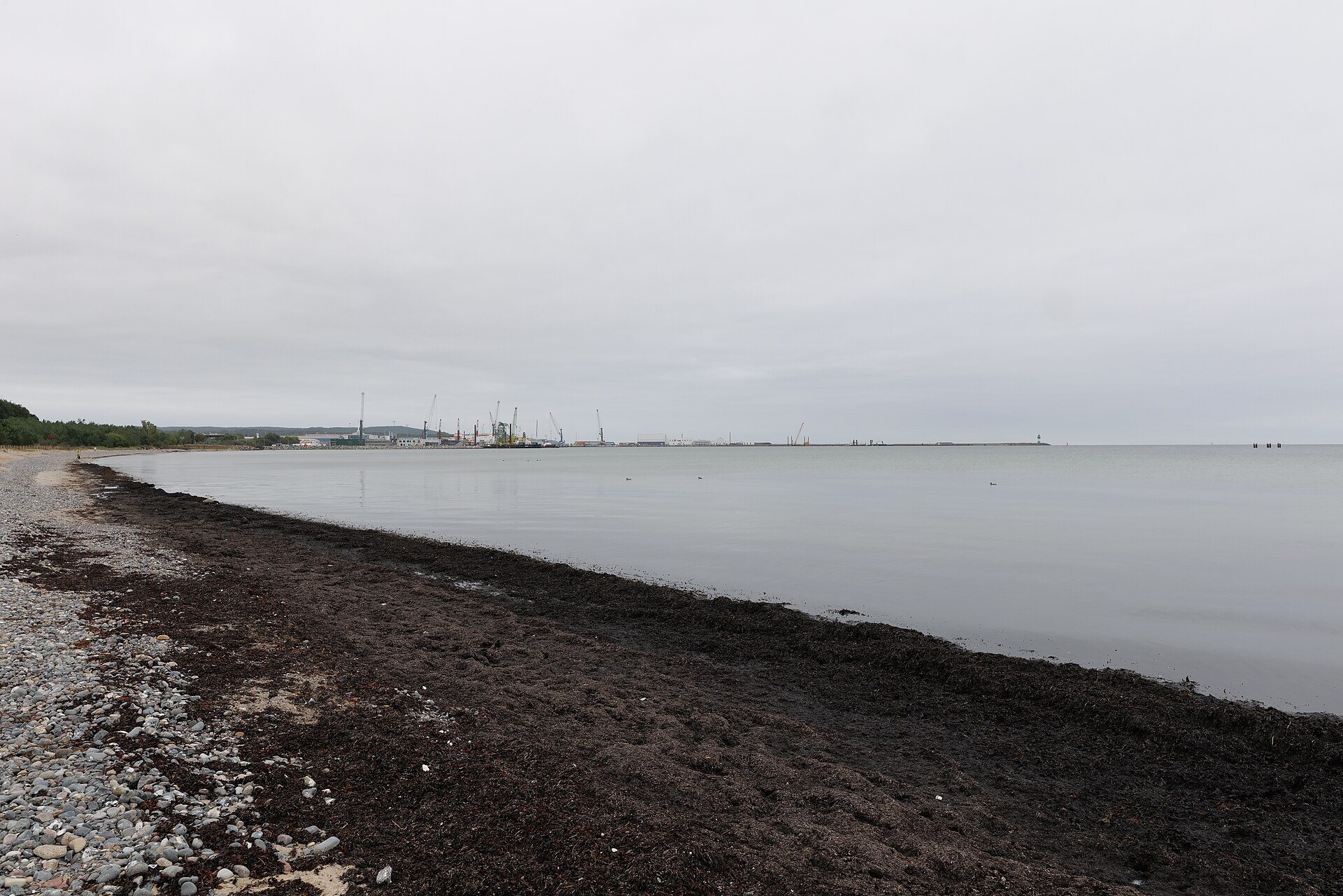
The southeast of Rügen is a biosphere reserve rather than a national park. Its ordinance (NatSGSORgenV, § 6(4) no. 12) forbids surfing in protection Zones I and II and running craft outside buoyed channels, with an exception for sail, paddle and rowing boats on the Having, the Kaming and the Zicker See that keep 100 m from the shore. Our understanding is that wing riding counts as surfing under that rule.