The boards are at the Huts, not in front of your hotel
Ask at the water sports concession on the sand in front of a Palm Beach hotel and you get a long list with no foil on it, and Red Sail's list has none either. Red Sail did have one once: in June 2021 the tourism board announced eFoil at Red Sail Aruba. Today every electric surfboard booking on the island goes to Vela Sports Aruba, the one business that sells the lesson.
Vela has two bases, and the boards live at only one of them. The Palm Beach Center, on the sand between the Marriott Stellaris and the Ritz-Carlton, deals in stand-up paddle boards, kayaks, floats, snorkel gear, yoga and bikes. The eFoil lives up at the Watersports Center, past the Ritz-Carlton at Fisherman's Huts, the beach Arubans call Hadicurari, where Vela also runs its kitesurfing, wing foiling, windsurfing and snorkeling.
What Vela sells is lessons only. A rider who already flies cannot take a board out by the hour, as eFoil Riders on Sint Maarten lets experienced riders do for $110 an hour. A beginner loses nothing by it, since a first flight comes with an instructor anyway.
Hadicurari, with Palm Beach and Eagle Beach to the south
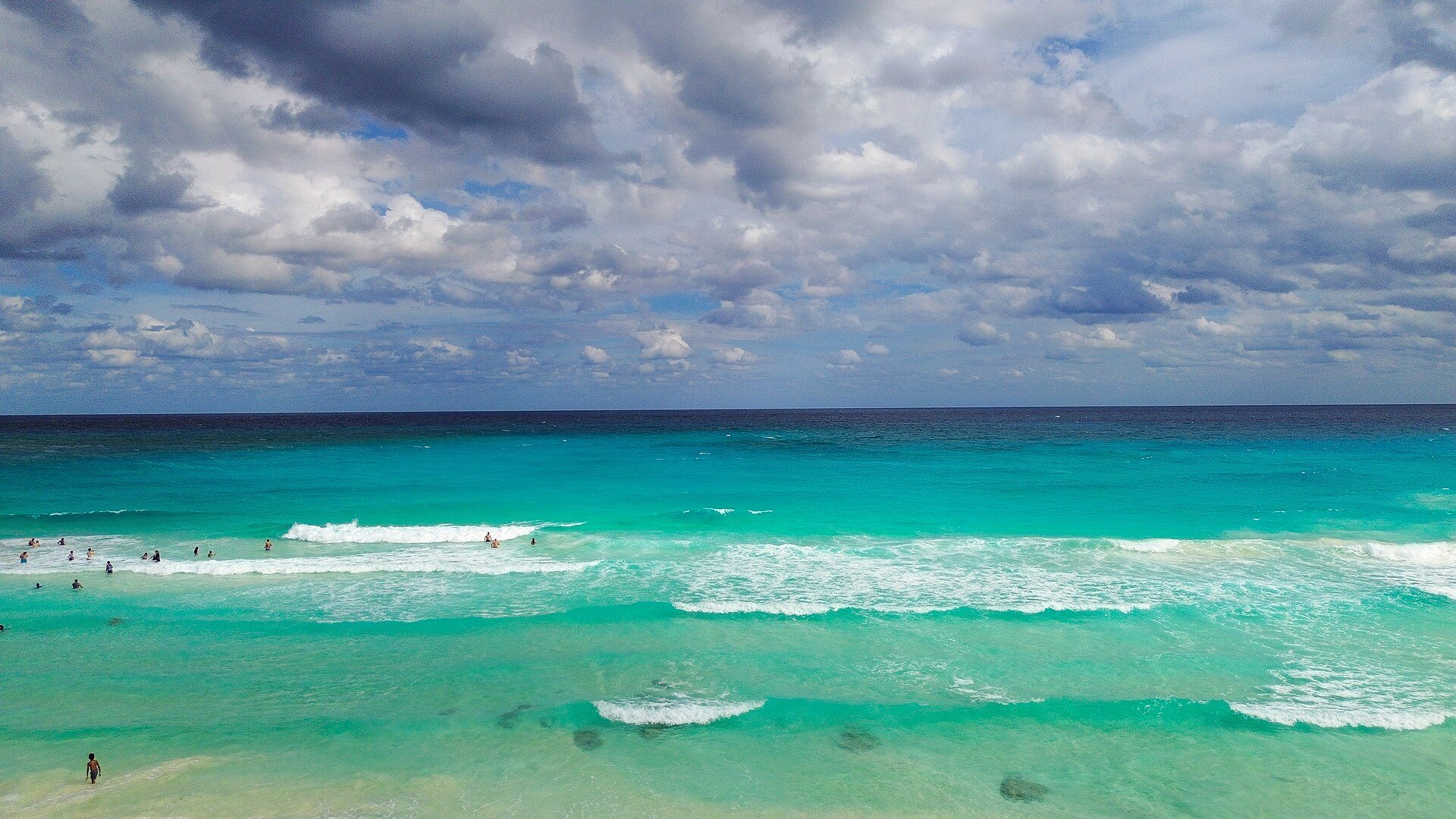
The fishermen's huts along the shore gave Hadicurari its name. The tourism board rates it the most popular wind and kite spot on the island: a rocky strip behind the Marriott Aruba Resort, lined with wind and kite schools, running from the Ritz-Carlton up to Malmok Beach. The water is very shallow and very flat, and local families bring their children. Underfoot there is white sand with pebbles and stones mixed in.
A guest in one of the Palm Beach towers stays on the same shore and moves a little north. Palm Beach is the two-mile strip of tall hotels with the water sports concessions in front, and its calm water suits swimmers and snorkelers. Eagle Beach, the widest beach on Aruba, has its low-rise hotels close by or across the road, and most of the island's sea turtle nests, from four species, are dug there.
No eFoil school works from either beach. Each has buoyed swim zones that no vessel may enter, and the west coast jet ski zone begins at the northernmost of Eagle Beach's swim zones. Whichever hotel you sleep in, the board is waiting at the Huts.
An hour and a half on a board, priced three ways
An eFoil booking at Vela is always the same lesson of an hour and a half. The price moves with how many people share it and how many boards go in the water. The wing lesson is the longer one at two hours, all of it on the water, with the instructor close by and a boat nearby.
Swipe sideways to see all columns
| Lesson | Length | List price |
|---|---|---|
| eFoil, private | 1.5 hours | $195 |
| eFoil, two people on one board | 1.5 hours | $245 |
| eFoil, two people on two boards | 1.5 hours | $345 |
| Wing foil, private | 2 hours | $190 |
| Wing foil, group of exactly two | 2 hours | $130 per person |
Shared on one board, the lesson costs about $120 a head, and the two of you take turns on it. Two boards keep both riders flying for about $170 each. The private lesson comes to $130 for every hour of it.
Vela says eFoiling can be enjoyed by all ages, describes Aruba's water as flat and calm and calls its boards super-stable and accessible. Its pages set no minimum age or weight limit and leave the board unnamed, so a parent booking for a child, or a heavier rider, settles those points in the booking message.

The first minutes are slow on purpose. Within 50 meters (about 165 feet) of the low-water line Aruban law caps every vessel at 10 km/h (about 6 mph), and a Fliteboard needs around 20 km/h (about 12 mph) to rise onto the foil, so you leave the beach slowly and fly where the instructor takes you. With the wind from the east and the Huts facing west, the water stays nearly free of waves; the same wind pushes a rider who stops away from the shore, so stay close to the instructor.
The wing needs the trade wind that the eFoil ignores. If flying hooks you during a breezy week, Vela's wing lesson is the obvious next step, and our wingfoil guide explains what changes without the motor.
Book with Vela, not with whoever walks the beach
The booking pages on Vela's own site take the reservation, and so does a message on WhatsApp. The same lessons turn up on booking platforms at prices the platforms set.
Somebody on the sand in front of your hotel offering a ride is a different matter. Article 27 of the 1987 beach decree forbids walking up and down a public beach, or taking up a post on it, to offer boats or services for hire or sale, unless the minister has granted an exemption. Booked at the base or on Vela's site, the question never comes up.
The hour matters more than the channel. Showers fall mostly in the early morning, in the rainy season also in the evening, which favors a mid-morning slot; Vela will say which day and hour it suggests. One date to check: Aruba Hi-Winds, the largest windsurfing event in the Caribbean by the tourism board's count, is held off Fisherman's Huts every year in June or July and fills the beach while it runs.
Pick the morning early, then Mangel Halto and Baby Beach
If your week is the hotel beach plus a few drives around the island, the eFoil takes one morning, and the earlier the better. Land on a Saturday, fly on Monday or Tuesday mid-morning, and four or five days remain to move the lesson if a shower gets in the way, or to add a wing lesson on a windy afternoon.
The rest of the week belongs to water you enjoy without a board. Mangel Halto on the south coast has calm, shallow water among mangroves, a reef that drops to 110 feet and some of the best snorkeling and kayaking on the island; it is one of the five marine park areas. Baby Beach, near San Nicolas and about 45 minutes' drive from the Palm Beach hotels, is a calm lagoon for families with small children and an official swim zone.
Boca Grandi, five minutes from San Nicolas, shows the other face of the trade wind: challenging waves, a strong current, swimming strongly discouraged, a spot for the most advanced kitesurfers in the tourism board's words. Watch the kites from the beach for a minute and the calm west coast explains itself as the place for a first flight.
A dry island with an east wind in every month
Aruba sits in the Southern Caribbean Dry Zone, where the easterly trade wind blows steadily. The weather service's normals for 1991 to 2020 put the island's mean wind at about 14 knots (17 mph) over the year, about 17 knots (20 mph) in June and about 11 knots (13 mph) in November, from the east in every month. Those are island means, and a morning at the Huts can sit above or below them. On an eFoil the wind is a matter of comfort, since the motor does the work.
The dry season runs roughly from February to June, the rainy season from September to January. Rain stays modest, about 450 mm (18 inches) a year, most of it from October to December. Airport normals count about two rain days a month from March to May and about ten in November and December. Thunder comes on 17 days a year, never from January to March and most often in October, with about six.
It is warm all year, about 28 °C (83 °F) on average, from about 27 °C (81 °F) in January to 30 °C (85 °F) in September. The sea around the ABC islands stays at about 26 to 28 °C (78 to 82 °F), warmest in September and October.
Hurricane season in the Atlantic runs from 1 June to 30 November with its peak around September, and Aruba lies on the southern fringe of the belt: the weather service counts considerable storm damage about once a century.
For the eFoil alone, any month works. October and November bring the lightest wind, but October also brings the most thunder and November and December the most rain days, so in those months leave a spare day after the lesson. March and April are the driest months, and June gives a wing lesson the most wind.
The Dutch decrees that govern a board off Aruba
The core text is the Landsbesluit openbare wateren en strandenof 23 November 1987 (AB 1987 no. 124), a decree on public waters and beaches, written in Dutch like the rest of Aruba's water law and silent on foils of any kind. Translations from the Dutch are ours.
Article 1 sets the definitions. A motorschip moves by its own mechanical means. A snelle motorboot, a fast motorboat, is under 15 meters and can exceed 20 km/h; jet skis, water scooters and similar craft are fast motorboats under 4 meters that turn short and quick. As we read it an eFoil is a motorschip and a fast motorboat, perhaps also a craft similar to a jet ski.
The class matters less than it seems, because two rules apply whichever one it is. Article 14 lets vessels sail only in the zones the minister designates, allows separate zones for jet skis and similar craft and for sailboards, and sets swim zones in which no vessel may be at all. Article 15 then covers the first 50 meters from the low-water line: no sailing faster than 10 km/h (about 6 mph), no water skiing, and no nuisance to others.
The zones come from the Regeling zwem- en vaarzones of 7 December 1989 (AB 1989 no. 66). On the west coast a swim zone reaches at most 75 meters (about 250 feet) from the low-water line, marked by yellow buoys joined by lines with smaller orange-red buoys (article 1). The west coast jet ski zone starts at the northern buoy line of the northernmost Eagle Beach swim zone and runs 700 meters (under half a mile) north (article 5). A regulation of 8 March 1994 (AB 1994 no. 12) added swim zones at Klein Lagoen, locally known as Baby Beach, and Rodgers Beach (article 1) and a second jet ski zone in Sint Nicolaasbaai (article 4).
Two rules therefore follow a board wherever it goes, as we read the decree: never into a buoyed swim zone, and no faster than 10 km/h inside the first 50 meters, which rules out flying there.
The Landsbesluit Parke Marino Arubaof 20 December 2018 (AB 2018 no. 77) creates five marine park areas: Arikok, Sero Colorado, Mangel Halto, Oranjestad I and Oranjestad II (article 2 and Annex II). Inside them nobody may catch, kill or needlessly disturb wild animals (article 8(a)). None of the five reaches Fisherman's Huts, which lies about 5 km (3 miles) further north, going by our reading of the coordinates.
A national ordinance of 27 November 2019 (AB 2019 no. 67, article 2(2) with Annex I Part C) forbids the import, manufacture, sale or free supply of sunscreens containing oxybenzone, in force since 1 July 2020 (AB 2019 no. 73). A law firm reads the import ban as covering a traveler's occasional import too, so pack a sunscreen without it.
This is our reading of the published texts, not legal advice. On the water, the instructor's word is the one that counts. For how other countries handle eFoils, see our eFoil rules guide.
How Aruba's price and format compare down the island chain
A first lesson costs from $85 a seat on Bonaire to $475 on Grand Cayman, and hardly two islands sell it in the same shape.
Swipe sideways to see all columns
| Island | Operator and session | List price |
|---|---|---|
| Aruba | Vela Sports Aruba, private lesson, 1.5 hours | $195 |
| Bonaire | E-foil Bonaire, one person, from a boat | $150 |
| Bonaire | Wave & Wheels, Flite duo lesson | $85 per person |
| Sint Maarten | eFoil Riders, Fliteboard lesson at Palapa Marina | $145 |
| Providenciales | Fly TCI, First Time Lesson, 75 minutes | From $250 |
| Dominican Republic | Kite Surf Punta Cana, beginner course, 1.5 hours | $290 |
| Puerto Rico | Seakindly Foil School, San Juan Bay, one person, 1 hour | $325 |
| Grand Cayman | Cayman eFoil, Introductory Demonstration, up to 2 hours | $475 |
Vela's $195 buys an hour and a half; Seakindly's $325 in San Juan Bay buys an hour. The Wave & Wheels duo on Bonaire, at $85 per person, is the cheapest seat on the list. Cayman eFoil sends everyone through its $475 Introductory Demonstration on a first visit, riders with years on a board included, from age 12 with consent. Our Grand Cayman, Turks and Caicos and Puerto Rico guides cover those schools in detail.
On Bonaire, next door, the boat is the base. Vela teaches from the sand in Aruba's lee, while E-foil Bonaire motors its riders out and keeps them close to the boat, for anyone over 10, with a Fliteboard, headset, helmet and impact vest included. A session runs one to three hours by group size: $150 for one person, $250 for two, up to $600 for six.
The fees differ as well. Before any lesson Bonaire charges a $75 visitor entry tax per stay and a $40 nature fee per calendar year for sea users (under 13 exempt), against Aruba's $20 Sustainability Fee. With daily flights from Aruba on Z Air, WinAir and Divi Divi Air, a boat session on Bonaire is an easy add-on to an Aruba week.
Aruba and Bonaire also lie at the southern edge of the hurricane belt, the other islands on the list farther north. The full island by island picture, with Martinique, the Bahamas and the British Virgin Islands as well, is in our Caribbean eFoil guide.
The ED card, the $20 fee and why your own board stays home
Every visitor fills in the online ED card up to seven days before arrival and shows the approval to the airline. Since 1 July 2024 arrivals by air also pay a $20 Sustainability Fee through the card, separate from the $3 environmental tax, with children under eight exempt. It is due once per 365 days; a repeat visitor within that period pays and then asks for a refund.
UK government travel advice gives visits of up to three months without a visa, with a passport valid for the whole stay. Flights to the United States clear US border control and TSA in Aruba before boarding.
Vela and the island's other operators price in US dollars, and the Aruban florin has sat at Afl. 1.79 to US$1.00 since 1 January 1986, so there is nothing to convert.
Nobody flies in with a board of their own, because passenger airlines do not carry eFoil batteries, and an owner books Vela's lesson like everyone else. Owning a board is another budget entirely; our eFoil price guide sets out what one costs.